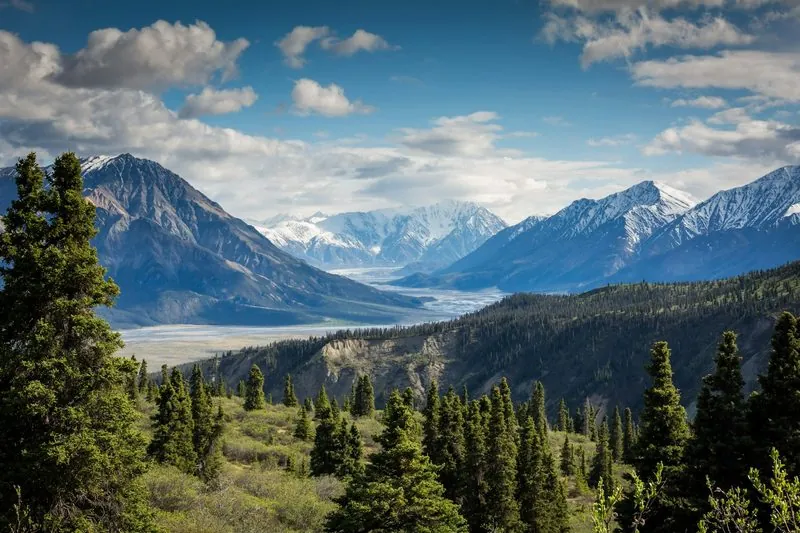
The world feels smaller every year. Instagram floods with the same overcrowded viewpoints. Tourist buses clog once-pristine trails. But beyond the reach of selfie sticks and souvenir shops, extraordinary places still exist, where silence holds and footprints stay rare.
These aren't theoretical destinations reserved for extreme mountaineers with unlimited budgets. Reaching them takes planning, determination, and often real money. But each one welcomes travelers who value authentic discovery over convenience.
You'll find volcanic islands where evolution took its own path, valleys where ancient ways of life continue unchanged. Ten destinations that prove the world still holds genuine surprises for those willing to seek them out.
1. Socotra Island, Yemen
Roughly 150 miles off the Horn of Africa in the Arabian Sea, Socotra is so isolated that a third of its plant species exist nowhere else on Earth. The island broke away from the Arabian Peninsula millions of years ago and has been evolving on its own terms ever since.
Its signature dragon's blood trees spread across the landscape like enormous umbrellas, their crimson resin once worth more than gold. Bottle trees bulge from clifftops. Twisted desert roses emerge from rocky ground in impossible shapes, while pristine beaches curve along the coastline, often completely empty.
A group charter via Jeddah reaches the island airstrip, though schedules depend on regional politics; our own Socotra expedition includes the routing. You won't find luxury resorts here. Power is limited, and most visitors sleep under brilliant star fields. Yemen's ongoing instability complicates access, but Socotra remains reachable through specialized operators who maintain local relationships and manage the logistics that would otherwise be impossible to navigate alone. The island's long isolation has preserved not just rare flora and fauna, but a way of life largely unchanged for centuries.
2. Kamchatka Peninsula, Russia
Larger than California but home to fewer than 400,000 people, Kamchatka holds more active volcanoes than anywhere else on Earth. Soviet restrictions kept outsiders away for decades, and when those barriers finally lifted, they revealed one of Earth's last great wilderness areas.
The Valley of Geysers rivals Yellowstone. The Tolbachik volcanic plateau looks so alien that Soviet scientists brought cosmonauts here for training. Brown bears vastly outnumber humans across most of the region, and salmon runs continue at scales that have disappeared almost everywhere else in the Pacific.
Access comes through Petropavlovsk-Kamchatsky, typically via Moscow or Vladivostok. Independent travel is heavily restricted: visitors need organized expeditions or special permits. There are no road connections to mainland Russia, making Kamchatka effectively an island reached only by air or sea.
Helicopter transport opens up the interior, where hot springs bubble in valleys ringed by snow-capped peaks and fishing feels less like a modern activity than something out of a different century entirely.
3. Tristan da Cunha, South Atlantic Ocean
The world's most remote inhabited island sits 1,500 miles from its nearest neighbor, Saint Helena. Tristan da Cunha's 250 residents share just seven family names, all descended from the original settlers who arrived in the early 1800s.
Life here operates like a time capsule. Everyone knows everyone. Doors stay unlocked. The single settlement, Edinburgh of the Seven Seas, functions more like an extended family than a town. You'll find one pub, one school, one hospital, plus a post office whose stamps collectors worldwide quietly seek out.
The only way there is aboard supply ships that run from Cape Town several times a year. Expect five to six days crossing some of the South Atlantic's roughest waters, and that's when weather allows, which isn't always. No flights serve the island, and visitors need advance permission along with proof they can cover their own costs.
The voyage itself is part of the experience, with whales, albatrosses, and other seabirds keeping you company across the South Atlantic. Those who make it find dramatic cliffs, unique wildlife, and a community that represents one of humanity's most isolated societies.
4. The Wakhan Corridor, Afghanistan
This narrow strip of Afghan territory stretches between Tajikistan and Pakistan toward China, creating one of Earth's most geopolitically complex yet visually stunning regions. For centuries it served as a buffer between competing empires, a role that accidentally preserved Silk Road culture in valleys the outside world mostly forgot.
Wakhi and Kyrgyz herders move their livestock between seasonal pastures just as their ancestors did generations ago. Ancient caravanserai ruins and trading post remnants dot the landscape, marking routes where merchants once connected East and West through these mountains.
Marco Polo sheep, the world's largest wild sheep species, roam the high pastures alongside snow leopards. The Pamir River traces Afghanistan's border with Tajikistan while the Hindu Kush and Pamir ranges create a backdrop of extraordinary scale.
Access typically requires entering through Tajikistan with special permits and joining expeditions equipped to handle serious security and logistical challenges. The corridor's remoteness has kept alive cultural traditions that have all but disappeared elsewhere in Central Asia.
5. Easter Island (Rapa Nui), Chile
About 1,300 miles from Pitcairn, its nearest inhabited neighbour, Easter Island is among the most isolated inhabited places on Earth. The moai are what most people come for, but they're really just the entry point into something far more layered. These statues represent one thread of a Polynesian culture that grew entirely on its own, cut off from outside influence for centuries.
The island holds more than stone figures. Volcanic craters have filled with freshwater lakes, black sand beaches line the coast, and archaeological sites continue turning up new finds. At just 64 square miles, most of Rapa Nui is walkable, yet the deeper you look, the more questions surface, especially around how Polynesian navigators ever located this tiny speck of land in the first place.
Commercial flights from Santiago or Tahiti provide the only regular access. The five-hour journey from Santiago alone makes the island's isolation feel real. Most tourist facilities are concentrated in the single town of Hanga Roa, while much of the island remains undeveloped and protected.
Recent archaeological work continues reshaping what we understand about Rapa Nui culture. The island's separation from continental influences preserved not just its archaeological record but an ecosystem that evolved entirely on its own terms.
6. South Georgia Island, South Atlantic
Many who've been there call it the world's most beautiful island. South Georgia combines Antarctic wildlife with subantarctic landscapes in a setting of almost absurd remoteness: 800 miles southeast of the Falkland Islands, it serves as a breeding ground for millions of seabirds, seals, and penguins.
King penguin colonies numbering in the hundreds of thousands create one of nature's greatest spectacles. Elephant seals battle on beaches while wandering albatrosses soar overhead. Mountains rising above 9,000 feet provide dramatic backdrops to wildlife encounters that feel almost too abundant to be real.
The human history adds another dimension. Abandoned whaling stations tell stories of early 20th-century industry, and Shackleton's grave marks the final resting place of one of exploration's most legendary figures.
Getting there means joining expedition cruises departing from Argentina or the Falklands. No regular flights serve the island, and independent travel is essentially impossible given the harsh conditions and strict environmental protections.
7. Pitcairn Islands, Pacific Ocean
Fifty residents. That's it. Pitcairn is one of the most isolated communities on Earth, and its origin story is unlike anything else: the final hiding place of the HMS Bounty mutineers, who blended 18th-century British traditions with Polynesian influences into a culture that exists nowhere else and has been quietly evolving ever since.
The island's geography helped make that isolation permanent. Sea cliffs rise straight from the Pacific on nearly every side, creating the natural fortress that kept the mutineers hidden for decades. Today, visitors find a community built on cooperation and self-sufficiency, where every resident fills multiple roles in island life.
Reaching Pitcairn takes real planning and flexibility. Supply ships arrive irregularly from New Zealand, passenger space is extremely limited, and there's no airport. Weather conditions frequently affect landing schedules.
Those who make the journey find not just a remarkable community but some of the Pacific's clearest waters, pristine coral reefs, and archaeological sites that reveal the island's pre-European Polynesian history.
8. Svalbard, Norway
Closer to the North Pole than to mainland Norway, Svalbard is one of Earth's northernmost inhabited places. Four months of continuous daylight followed by four months of polar night create an environment unlike anywhere else travelers can actually reach.
The landscapes combine Arctic desert with dramatic mountain ranges and massive glaciers. Polar bears outnumber human residents, making armed escorts mandatory outside the main settlement of Longyearbyen. The archipelago functions as a living laboratory for climate research and Arctic ecology.
The Global Seed Vault stores seeds from around the world in Svalbard's permafrost, a fitting symbol for islands that serve as a repository for Earth's biological heritage.
Regular flights from Oslo connect to Longyearbyen, but strict regulations govern nearly all activities. Most experiences require guided expeditions, and the extreme environment demands proper preparation.
9. Faroe Islands, North Atlantic
Eighteen islands scattered between Iceland and Norway, the Faroes sit in one of the North Atlantic's most punishing stretches of ocean, and the culture here reflects every bit of that. Grass-roof houses nestle into valleys where sheep outnumber people, and fishing villages grip clifftops above churning grey water as if they've been there long enough to become part of the rock.
That isolation did something interesting to the culture. Faroese is distinct enough that most Scandinavians can't follow a word of it, and it survived here precisely because the islands were too far removed for the language to be quietly absorbed into something else. The grindadráp, the communal whale hunts that have fed islanders for over a thousand years, survived the same way. These aren't museum pieces: they're still practiced, still debated, still very much alive.
The Faroes feel different from other Nordic destinations because modernity didn't arrive on anyone else's schedule. It came on the islands' own terms. Clifftop trails wind past hidden waterfalls and into villages where roads never ventured. Tunnels, bridges, and ferries link all 18 islands through engineering that seems to mock the harsh environment.
Flights from Copenhagen provide the main access, with seasonal connections from other European cities. Weather disruptions aren't a possibility, they're inevitable. Tourism infrastructure remains deliberately small-scale, which keeps the islands worth the journey.
10. McMurdo Dry Valleys, Antarctica
No snow. No ice. Almost no life. Antarctica's McMurdo Dry Valleys are so stripped back that NASA uses them to test Mars exploration equipment. The conditions are simply the closest thing to another planet that exists on this one.
The landscape earns that comparison. Katabatic winds have carved rocks into formations that don't appear anywhere else on Earth. Hypersaline lakes like Lake Vanda stay liquid despite sub-zero temperatures, sustaining ecosystems that push the boundaries of what we understand about life itself.
Scientists have found microorganisms living inside rocks here, a discovery that has real implications for the possibility of life in similarly extreme environments elsewhere in the universe. The dry valleys are Earth's closest approximation to extraterrestrial conditions.
Getting there requires joining a specialized Antarctic expedition, typically departing from New Zealand. Environmental protections strictly control access, and weather can strand you for days or weeks without warning.
Planning Your Journey to the World's Edge
These destinations require more than standard vacation planning. Each demands thorough research, real flexibility, and often substantial financial investment. Weather windows can be narrow, permits may take months to secure, and logistics often depend on factors beyond anyone's control.
Yet for travelers seeking experiences that genuinely shift perspective, these remote corners offer something increasingly scarce: places where human presence remains the exception rather than the rule.
The preparation itself becomes meaningful. Learning access routes, understanding local customs, preparing for harsh conditions, it all builds toward an arrival that feels earned. Many discover that the effort required to reach these places can't be separated from their ultimate value.
Why Remoteness Still Has Value
True remoteness delivers something you can't stream or scroll through, and as connectivity spreads everywhere, that difference becomes more precious. These places put human presence in proper perspective. Landscapes and communities that developed without constant outside influence look nothing like what you'll encounter closer to home.
The silence in genuinely remote places, interrupted only by wind, waves, or wildlife, creates mental space that connected environments simply can't provide. Travelers who've made these journeys tend to describe the effect as lasting: not a vacation feeling that fades on the flight home, but something that quietly changes how they see things afterward.
There's also what these places still contain. South Georgia's wildlife abundance, Socotra's evolutionary oddities: these aren't things that exist in diminished form somewhere more accessible. They exist here, and only here.
Traveling Responsibly in Remote Places
Visiting the world's most remote destinations carries real responsibilities. Ecosystems are often fragile, small communities can be overwhelmed by even modest visitor numbers, and infrastructure is limited by design.
Selecting operators who truly prioritize environmental protection and community benefit isn't just recommended. It determines whether your visit helps sustain these places or gradually harms them.
Remote travel comes with a substantial carbon footprint. Many travelers discover that spending more time in fewer places creates richer experiences while reducing environmental impact, a worthwhile exchange.
These are among the last places on Earth where you can still encounter the world more or less as it was before global connectivity reshaped everything. That's not a small thing. For travelers willing to sit with uncertainty, accept discomfort, and put in the real work of getting there, what waits on the other side is the kind of experience that most travel simply can't touch. Mystery and genuine discovery haven't been entirely mapped out of existence.
Whether you're drawn by rare wildlife, ancient cultures, or simply the desire to stand somewhere few people ever will, these places justify every challenge required to reach them.
Ready to Start Planning?