The Country at the Crossroads of Everything
For three thousand years, whatever moved between East and West moved through Afghanistan. The Silk Road branched and rejoined here. Alexander wintered here and married here. Buddhist monks carved whole monasteries into its cliffs centuries before Islam arrived and layered its own civilisation on top.
The result is a country stacked with history like almost nowhere else, and a name that stops conversations. Most Western governments advise against all travel to Afghanistan. That sentence belongs in the second paragraph of any honest guide, not the last, and nothing below it is written to argue you past it.
What this guide does is describe, plainly, what travel there currently looks like: what you would see, how the logistics work, what women travelers in particular need to know, and what experienced local partners can and cannot control. It is written for the traveler who has already understood the seriousness and wants the substance.
Why People Go
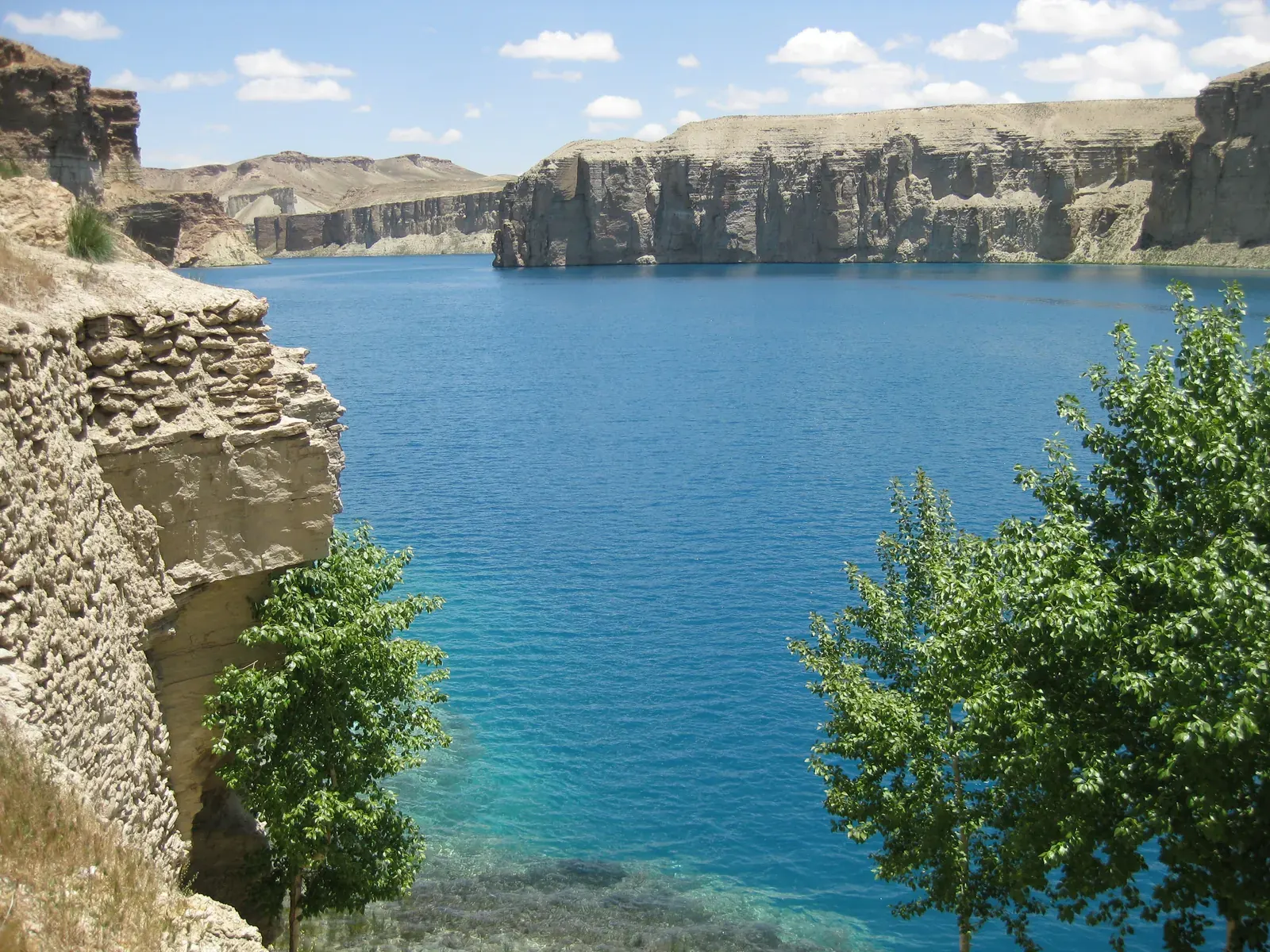
Nobody drifts into Afghanistan. The travelers who go, go deliberately: for Bamiyan's empty niches, which hold their absence the way a cathedral holds silence; for lakes of a blue that looks invented; for the Blue Mosque at Mazar-e-Sharif in its cloud of white doves; and for the experience of standing in a country that shaped world history for millennia and has been reduced, in most imaginations, to a single decade of it.
They also go for the Afghans they meet. Hospitality here is not a tourism product. It is an older code, offered seriously, and it recalibrates what you think a welcome is.
What You Would See
Kabul
A high city in a bowl of mountains. The terraced Gardens of Babur, where the first Mughal emperor chose to be buried; the lanes of the old bazaar and the restored courtyards of Murad Khani; the Koh Faroshi bird market, where songbirds and fighting partridges have been traded in the same alleys for generations. Kabul is guarded, complicated, and quietly beautiful in ways the news never had reason to show.
Trips begin here with a briefing and a first afternoon on foot: the Sakhi shrine's blue tilework, the climb up Bibi Mahru hill for the long view across the rooftops as the light goes. It is a gentler introduction than the city's reputation suggests, and it sets the tone for everything that follows.
The Bamiyan Valley
Two colossal Buddhas stood in their cliff niches here from the 6th century until 2001, when they were dynamited into rubble. The niches remain, vast and silent, and the cliff around them is honeycombed with the caves of the monks who lived and painted here for centuries.
Above the valley sit the ruins of Shahr-e Gholghola, the City of Screams, destroyed by Genghis Khan's armies in 1221. Bamiyan asks something of you as a visitor: attention, mostly. It is one of the most affecting places we know.
Band-e-Amir
A few hours west of Bamiyan, six lakes sit at 3,000 meters in bare rock mountains, held back not by concrete but by natural dams of travertine built up over tens of thousands of years. The water is a cobalt blue that photographs look dishonest about. Band-e-Amir became Afghanistan's first national park in 2009, and Afghans have made pilgrimages here for far longer than that.
Give it a full day: walking the travertine rims, watching the color shift as clouds cross, sharing the shoreline with Afghan families who have come, as pilgrims and picnickers, for generations. In a country this dry and this hard-edged, that much water in that much color reads as a small miracle. Afghans treat it as one.
Across the Hindu Kush: Mazar-e-Sharif and Balkh
The drive north crosses the Hindu Kush through the Salang tunnel, bored at 3,800 meters by Soviet engineers in the 1960s, and passes Takht-e Rostam, a Buddhist stupa and monastery carved down into the rock of a hillside rather than built up from it.
Mazar-e-Sharif holds the Shrine of Hazrat Ali, the Blue Mosque, a field of turquoise and cobalt tilework wrapped in white doves. Half an hour away lies Balkh, called the Mother of Cities, one of the oldest continuously inhabited places on Earth: a center of Zoroastrianism and Buddhism, the birthplace of Rumi, with the 9th-century No Gombad mosque, the oldest Islamic monument in the country, standing among its earthen walls.
The Practicalities
Visas and Paperwork
Afghan tourist visas are obtained in person or by post from a designated embassy or consulate before travel, supported by a letter of invitation from the operator. Rules and reliable issuing posts change; experienced operators track which embassies are currently straightforward and send step-by-step guidance. Nothing about the paperwork is difficult if it is managed early, and none of it should be improvised.
Insurance deserves its own sentence: standard travel policies exclude Afghanistan, so specialist cover (including medical evacuation) is required, and arranging it is a condition of joining any serious expedition here.
When to Go
Spring and autumn. Bamiyan and the passes sit above 2,500 meters, so winter is long and hard, and summer is hot in the northern plains. Organised departures generally run in the April to June and September to October windows.
Money
Afghanistan is a cash economy for visitors: bring US dollars in clean notes and change small amounts to afghanis as you go. International cards and ATMs are not part of the picture. Costs on the ground are low, and the major items (guiding, vehicles, permits, hotels) are arranged and paid through the operator in advance.
Conduct
Dress modestly regardless of gender: long sleeves, long trousers, nothing tight. Photograph people only with their permission, and never photograph checkpoints, officials, or anything military. Accept tea when it is offered, follow your guide's lead around prayer times, and let curiosity travel ahead of your camera. Conduct is not a footnote here; it is a large part of what keeps doors open, for you and for whoever comes after you.
What Women Travelers Need to Know
We will not soften this. Under the current authorities, women in Afghanistan live under restrictions that are among the most severe in the world, and visiting women travelers move within a version of those rules: hair covered, dress conservative, and access to certain sites or activities restricted in ways that can change at short notice.
Women do travel this route, accompanied throughout, and many describe the trip as profound precisely because of the conversations it made possible. But the constraints are real, they are not evenly applied, and they deserve a longer briefing than a paragraph. We give exactly that briefing, honestly, before anyone commits.
What Local Partners Handle, and What They Cannot
Trips here work only because of experienced local partners who live in the regions they operate. They hold the permits, register the itinerary, manage every checkpoint and introduction, choose where you sleep, avoid driving after dark, and read conditions day by day. When something changes, the itinerary changes, and postponement is always on the table.
What no operator can do is make Afghanistan an ordinary destination. Specialist insurance is required, consular support is minimal to nonexistent for most nationalities, and the situation can shift faster than any briefing. Managed risk is still risk. Anyone who tells you otherwise is selling something.
How We Run It
Our Afghanistan expedition runs seven days for a maximum of five guests at $2,595 USD per person: Kabul, two nights in Bamiyan with a full day at Band-e-Amir, the drive north over the Salang to Mazar-e-Sharif and Balkh, and a flight back to Kabul. The letter of invitation, permits, registrations, an expert local English-speaking guide, and all ground transport in 4WD vehicles are included.
It is a trip for resilient, flexible travelers comfortable with long drives, checkpoints, and basic guesthouses, not a first adventure. If the far northeast is what draws you, we have written a separate guide to the Wakhan Corridor, a different Afghanistan again: higher, remoter, and reached through its own logistics.
Afghanistan Travel FAQ
Is it safe to travel to Afghanistan?
Most Western governments advise against all travel to Afghanistan, and we state that plainly rather than around it. Experienced local partners manage permits, routes, checkpoints, lodging, and day-by-day security judgment, and they reroute or postpone when conditions change. That reduces risk; it does not remove it. This is a decision to make slowly, with current information and your own threshold honestly examined.
Can women travel to Afghanistan?
Yes, accompanied throughout, and women do join this route. But the constraints are real: hair covered, conservative dress, and access to some sites or activities that can be restricted and can change at short notice. We brief women travelers in detail on exactly what is and is not currently possible, so the decision is made with full information.
How do you get an Afghan visa?
Through a designated Afghan embassy or consulate before travel, in person or by post, supported by a letter of invitation that the operator provides. Which posts issue reliably changes over time; we advise on the current best option for your nationality and send step-by-step guidance to confirmed travelers.
How do you actually get to Kabul?
A handful of regional carriers connect Kabul with hub cities in the Gulf and Turkey, and routings change often enough that we advise on the current best option when you book. The expedition begins and ends at Kabul airport, with transfers and a briefing on arrival included.
What is the trip actually like day to day?
Long, spectacular drives in 4WD vehicles, regular checkpoints handled by your guide, simple guesthouses and the best available hotels, early nights, and no travel after dark. The rhythm is slow and deliberate. The rewards are Bamiyan, Band-e-Amir, the Blue Mosque, and conversations you will not have anywhere else.
When is the best time to visit Afghanistan?
Spring and autumn. Bamiyan and the passes sit high, so winter is severe, and summer is hot in the northern plains. Our departures run in the April to June and September to October windows.
Considering It Seriously?