Waypoint Journeys Presents
Afghanistan
The Crossroads of Asia
7 Days
Across the Hindu Kush — Bamiyan, the Band-e-Amir Lakes & the Blue Mosque
View Expedition Details ↓ Plan This Expedition →We reply within 24 hours
The Country at the Centre of Everything
For three thousand years everything that moved between East and West moved through Afghanistan. The Silk Road branched and rejoined here; Alexander married here; the Buddhist civilisations of Gandhara carved their monasteries into the cliffs here before Islam arrived from the west. The result is a country layered like nowhere else — Greek, Buddhist, Persian, Mongol, and Islamic, stacked one on top of another along the spine of the Hindu Kush.
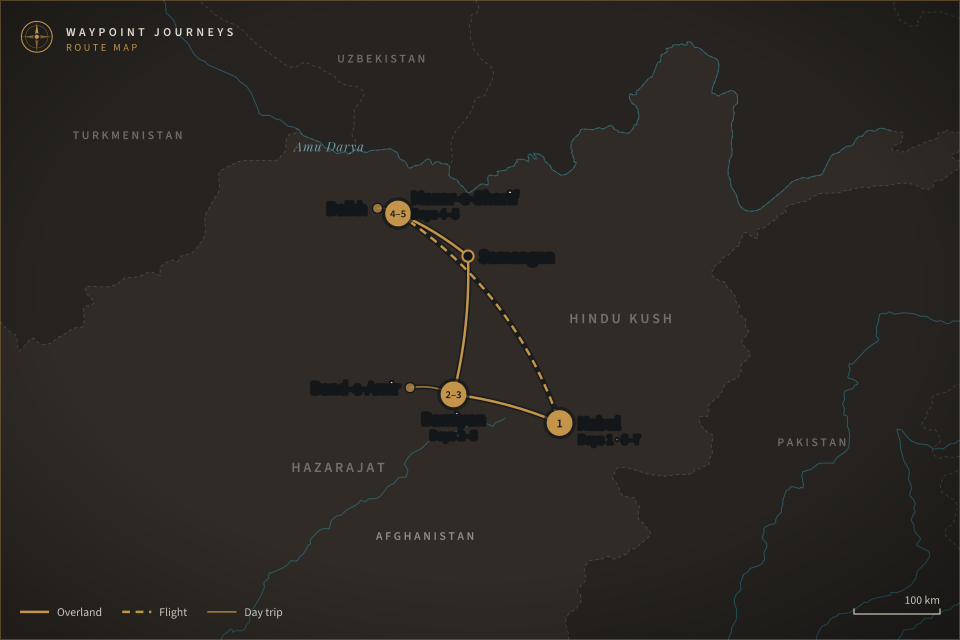
This expedition follows the heartland route: Kabul in its ring of mountains; the Bamiyan Valley, where the two great standing Buddhas stood in their niches for fourteen centuries until 2001 and where the empty niches remain; Band-e-Amir, a chain of impossibly blue lakes held back by natural mineral dams, Afghanistan's first national park; and Mazar-e-Sharif in the northern plains, with the blue-tiled shrine that is one of the most beautiful buildings in the Islamic world.
Few places carry a heavier reputation, and we do not pretend the journey is ordinary. It is run by experienced local partners who handle every permit, route, and night's lodging, and it suits the traveller who has weighed the risks and wants to see, with their own eyes, one of the great crossroads of human history — at a moment when almost no one does.
"The Silk Road branched and rejoined here, and the centuries stacked up along the Hindu Kush — Greek, Buddhist, Persian, Mongol, Islamic."

Cobalt Lakes, Empty Niches & the Mother of Cities
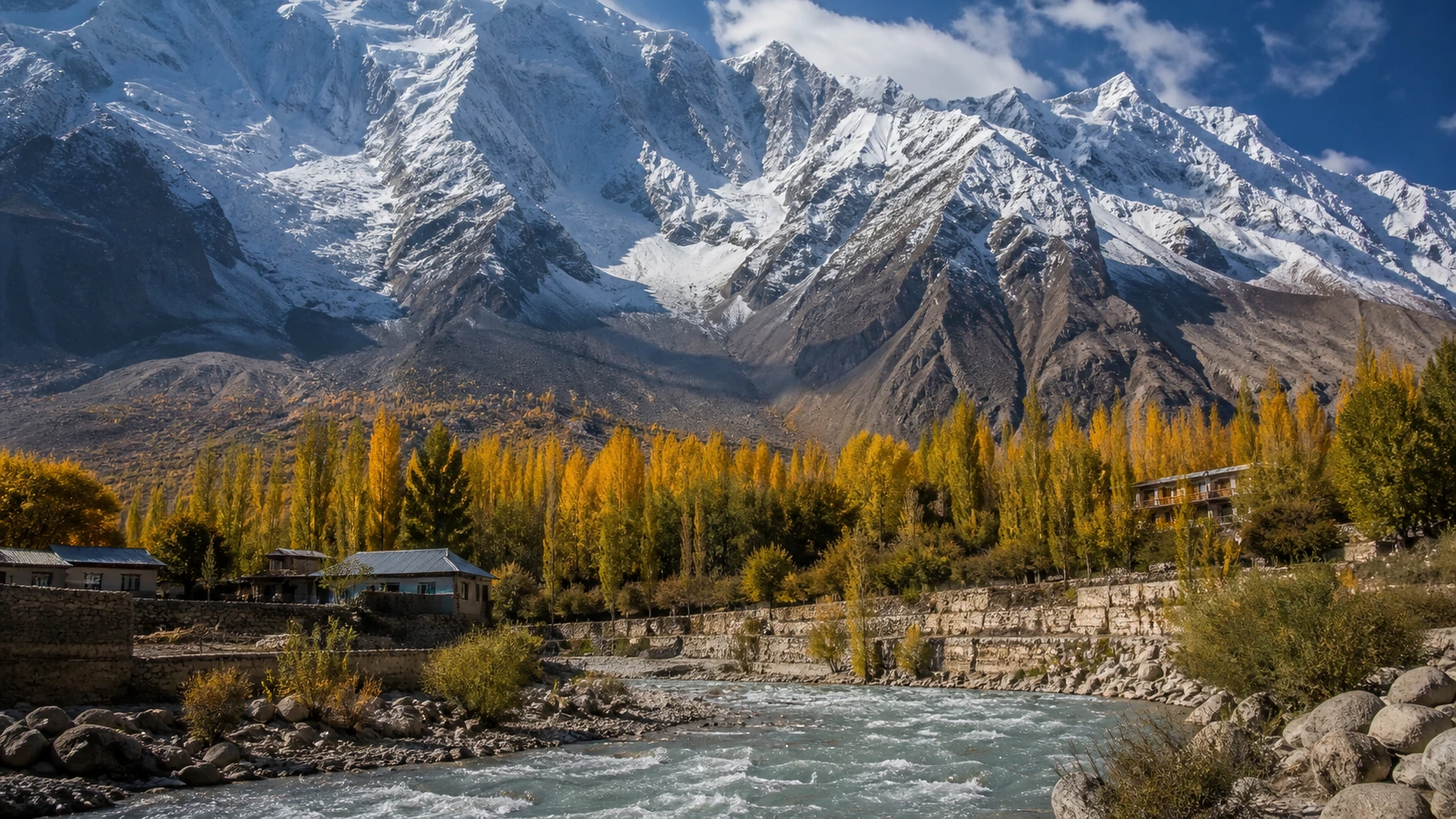
Afghanistan's first national park: six lakes of an unreal cobalt blue, dammed not by concrete but by natural travertine walls built up over millennia, set 3,000 metres high in the bare mountains of the Hindu Kush. One of the most startling landscapes in Asia, and almost completely empty of visitors.
Two colossal standing Buddhas were carved into this cliff in the 6th century and stood until 2001; the empty niches remain, vast and silent, honeycombed with the caves of the monks who once lived around them. Above the valley sit the ruins of Shahr-e Gholghola, the City of Screams, sacked by Genghis Khan.
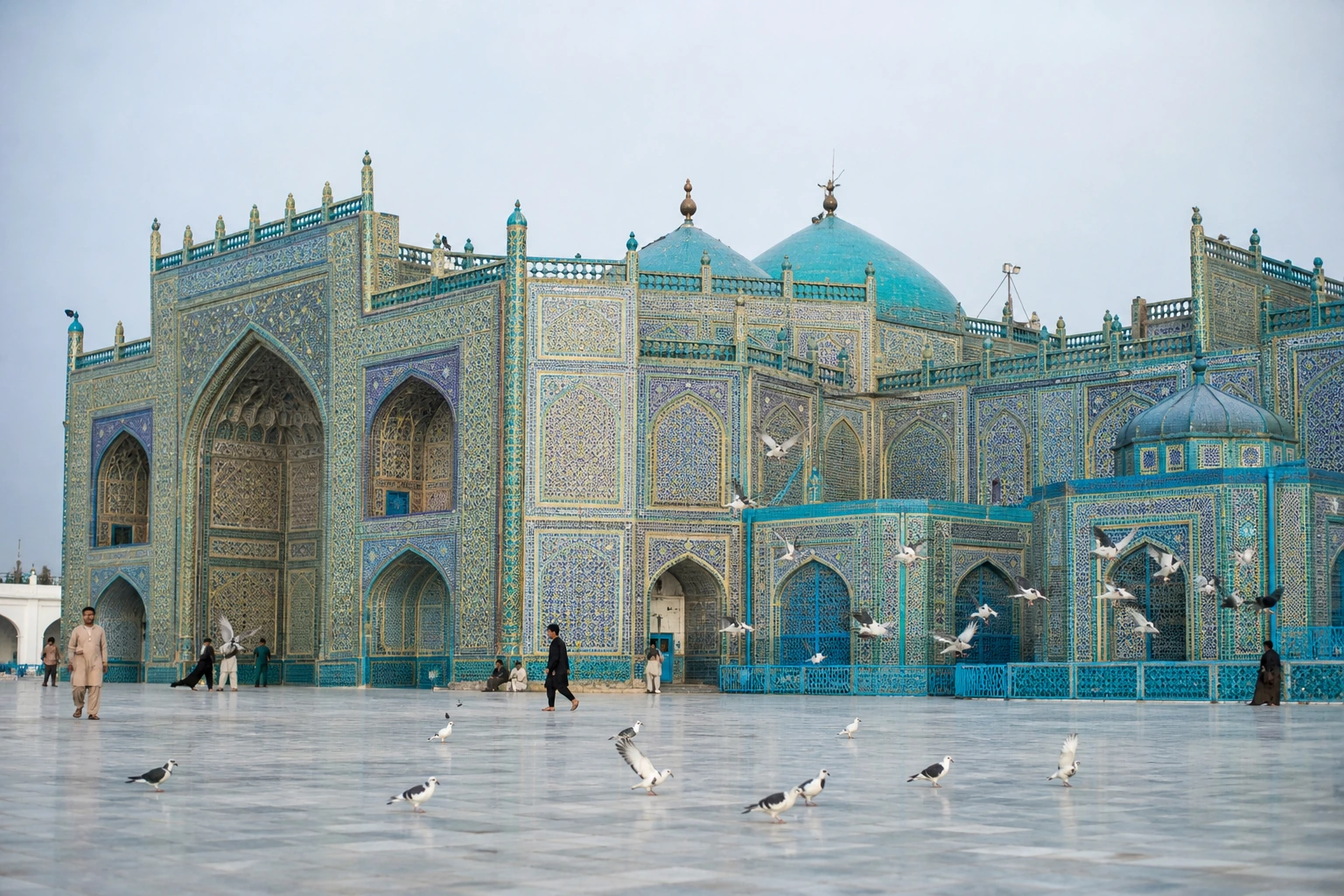
The Shrine of Hazrat Ali at Mazar-e-Sharif — the name means "noble shrine" — is a vision in turquoise and cobalt tilework, ringed by white doves, one of the most beautiful buildings in the Islamic world and the spiritual heart of northern Afghanistan.
One of the oldest cities on Earth — a centre of Zoroastrianism, Buddhism, and early Islam, where Rumi was born and where Alexander wintered. Among its ruined walls stands the 9th-century No Gombad, the "Nine Domes," the oldest Islamic monument in Afghanistan.
A high city in a bowl of mountains, layered with empire — the terraced Gardens of Babur, where the first Mughal emperor chose to be buried; the old bazaar; and the Koh Faroshi bird market, where men have bought and sold fighting partridges and songbirds in the same lanes for generations.
The drive north climbs through the high mountains by the Soviet-built Salang tunnel and the Tashkurgan gorge, passing the rock-cut Buddhist stupa of Takht-e Rostam at Samangan — a whole monastery hewn down into the hillside, hidden in plain sight on the road between Bamiyan and Balkh.
The Expedition
Seven days across the Afghan heartland — Kabul, Bamiyan and Band-e-Amir, and the northern plains of Mazar-e-Sharif and Balkh.
Arrive in Kabul, a high city ringed by mountains, and transfer to the hotel for a briefing before a first afternoon in the capital with our local guide. An introduction to the country through the Sakhi shrine, the terraced Gardens of Babur — where the first Mughal emperor chose to be buried, looking out over the city — and the climb up Bibi Mahru hill for the long view across the rooftops as the light goes.
The road west climbs out of Kabul into the central highlands and the valley of Bamiyan, the heart of the Hazarajat. Here two colossal Buddhas stood in their cliff niches from the 6th century until they were destroyed in 2001; the empty niches remain, immense and silent, the surrounding rock honeycombed with the caves where monks once lived and painted. Above the valley, the ruins of Shahr-e Gholghola — the City of Screams — sacked by Genghis Khan.
A full-day excursion to Band-e-Amir, Afghanistan's first national park, a couple of hours west of Bamiyan. Six lakes of a deep, improbable blue lie held back by natural dams of travertine — mineral walls built up grain by grain over tens of thousands of years — at 3,000 metres in the bare mountains. Time to walk the rims, take in the colour against the rock, and understand why Afghans have made pilgrimages here for centuries, before the drive back to Bamiyan.
A long and spectacular drive north over the Hindu Kush to the plains of the north and Mazar-e-Sharif. The route runs through the Tashkurgan gorge and the 2-kilometre Salang tunnel, bored at 3,800 metres by Soviet engineers in the 1960s, and passes Takht-e Rostam near Samangan — a complete Buddhist monastery and stupa cut down into the rock of the hillside. A full day on the road, with the mountains for company.
The day belongs to the north. The Shrine of Hazrat Ali — the Blue Mosque — sits at the centre of Mazar-e-Sharif in a haze of turquoise tilework and white doves, the spiritual heart of the region. A short drive away lies Balkh, the Mother of Cities: once a capital of Zoroastrianism and Buddhism, the birthplace of Rumi, where among the ruined earthen walls stands the 9th-century No Gombad mosque, the oldest Islamic monument in the country.
A morning flight back to Kabul returns the long road of the previous days in under an hour. The afternoon is for the old city on foot — the lanes of the bazaar, the restored quarter of Murad Khani, and the Koh Faroshi bird market, where men have traded songbirds and fighting partridges in the same alleys for generations. A final dinner in the capital.
The expedition closes with breakfast and a transfer to Kabul airport for onward flights — out over the ring of mountains that has guarded the city for three thousand years, with one of the great crossroads of Asia behind you.
What's Included
FREQUENTLY ASKED QUESTIONS
Common Questions About This Expedition
Expedition Investment
USD per person, twin share
Fully inclusive of the internal flight, accommodation, expert local guide, all permits and ground transport, and listed meals
Excludes international flights to Kabul, the Afghan visa (letter of invitation provided), specialist travel insurance, tips, and meals not listed. Single supplement $390. Departures run spring and autumn
Reserve Your SpotWe will not pretend Afghanistan is an ordinary destination. Most Western governments advise against all travel here, insurance must be arranged specially, and the situation can change at short notice. What makes the journey possible is the operator. We run it with experienced local partners who live and work in these regions, who handle every permit, registration, route, and night's lodging, and who manage security on the ground day by day. We avoid travel after dark, keep the itinerary flexible, monitor conditions continuously, and will reroute or postpone rather than take a risk we are not comfortable with. This is a trip for resilient, well-prepared travellers who have weighed the realities honestly — and for those who have, it is one of the most extraordinary journeys left in the world.