The Destination
An Island That Has Spent Eighty Million Years Inventing Its Own World
Madagascar broke away from Africa some 165 million years ago, parted from India about 88 million years ago, and has been on its own ever since. The result is a fourth-largest-island-in-the-world that is, biologically, almost a small continent: roughly nine out of every ten species you will see here exist nowhere else on Earth. Lemurs in a hundred shapes and sizes. Chameleons the length of your finger and others the length of your forearm. Baobabs of six species found nowhere else, when the rest of the planet has just two. Travellers have a name for what they discover here: the Eighth Continent.
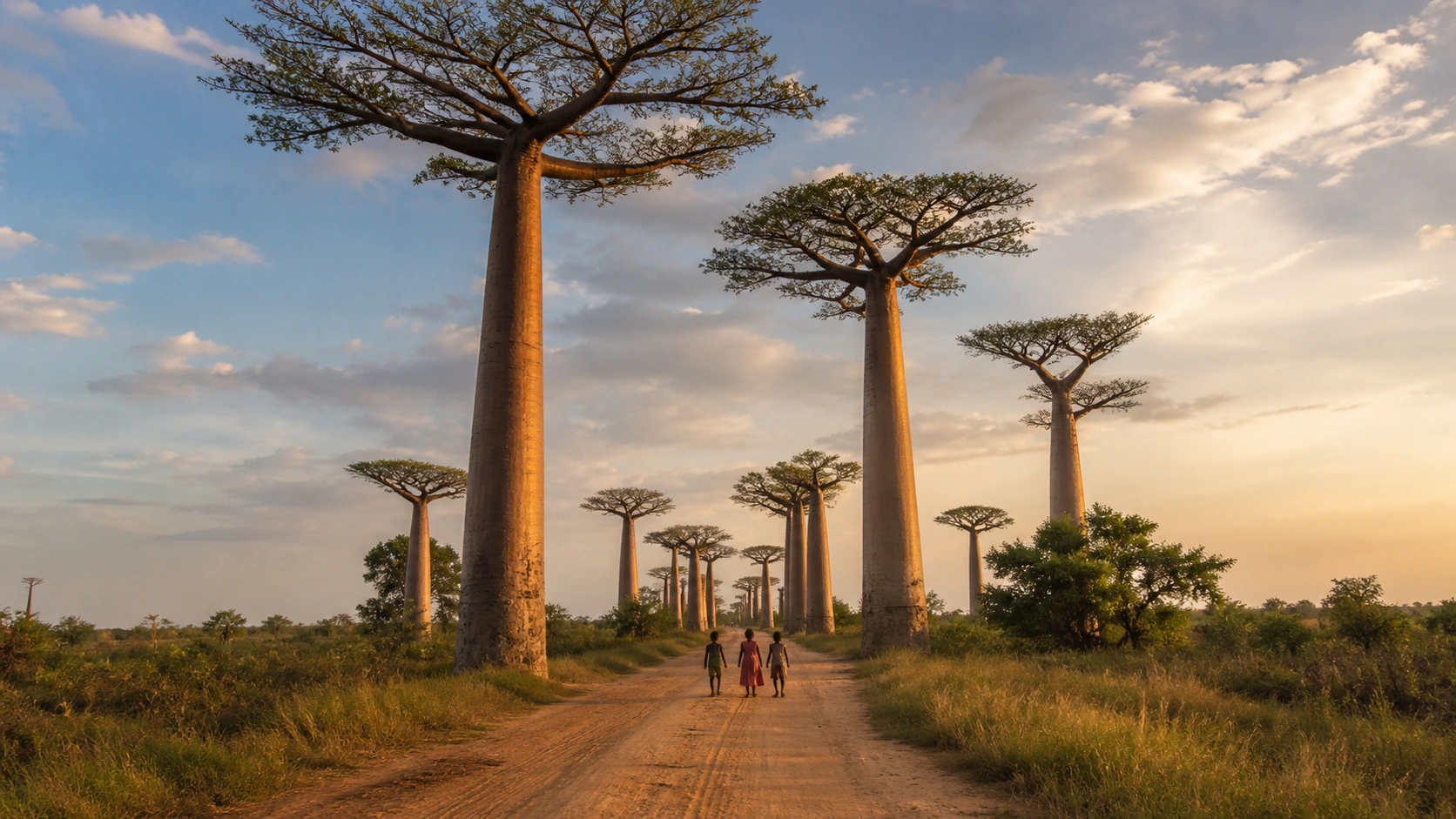
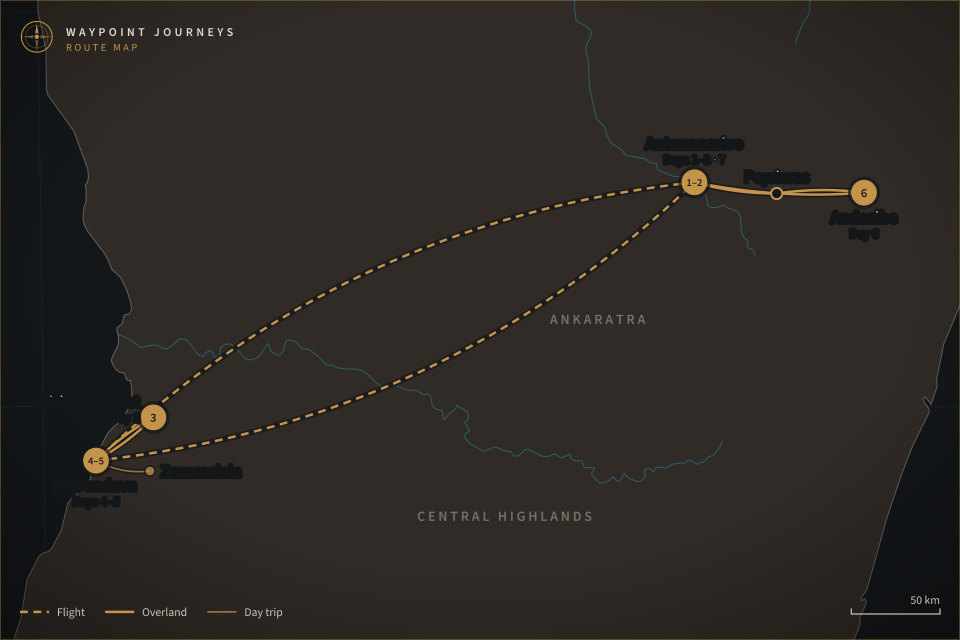
The journey we run is the classic loop. It begins in Antananarivo, the highland capital, with a half-day at Lemurs' Park to meet ring-tailed and Coquerel's sifaka up close. A short hop west to Morondava and the dry-deciduous Kirindy Forest, where a night walk reveals fork-marked lemurs and the legendary fossa, the island's apex predator. Then comes the moment every traveller comes for: the Avenue of the Baobabs at sunset, ancient sentinels casting hundred-metre shadows across the laterite road.
From Morondava we fly back to the highlands and drive east into a different Madagascar entirely, the rainforest corridor of Andasibe-Mantadia, home to the indri, the largest living lemur, whose dawn chorus carries kilometres through the canopy. For those with two more days, the optional Tsingy de Bemaraha extension adds a UNESCO-listed stone forest of razor-sharp limestone pinnacles, one of the strangest landscapes on the planet. Seven days is enough to fall hard for the Eighth Continent.
"The first time the indri calls at sunrise, the whole rainforest stops to listen. It's a sound you carry home with you for the rest of your life."