Waypoint Journeys Presents
Syria
Damascus, Palmyra, and the Cities Almost Nobody Has Reached
10 Days · From Beirut
Roman Theatres, Aramaic Prayers, Crusader Castles & the Old Cities of Damascus and Aleppo
View Expedition Details ↓Six UNESCO Sites, Two Old Cities and the Quiet Reopening of the Levant
Syria spent more than a decade closed to organised travel. Today the corridor we operate — Damascus, the coast at Tartus, Palmyra, Homs, Hama, Apamea, and Aleppo — is open again to a small and steady stream of foreign visitors, and the country is one of the most extraordinary places a traveller can go right now. Six UNESCO World Heritage Sites. Cities that have been continuously inhabited since the third millennium BC. Aramaic spoken in a mountain monastery the way it was spoken in the time of Christ. Damascus, the oldest continuously inhabited capital on Earth.
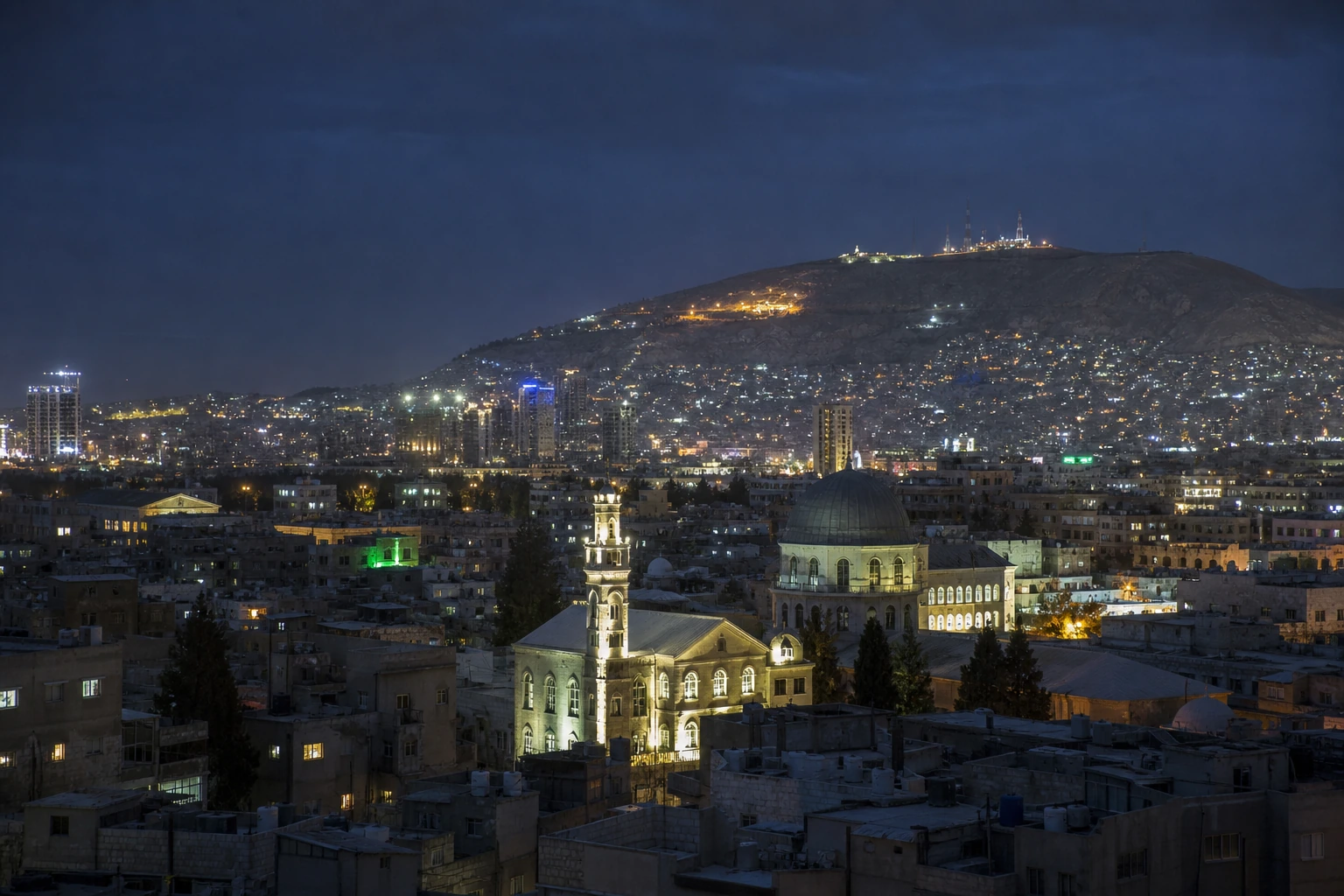
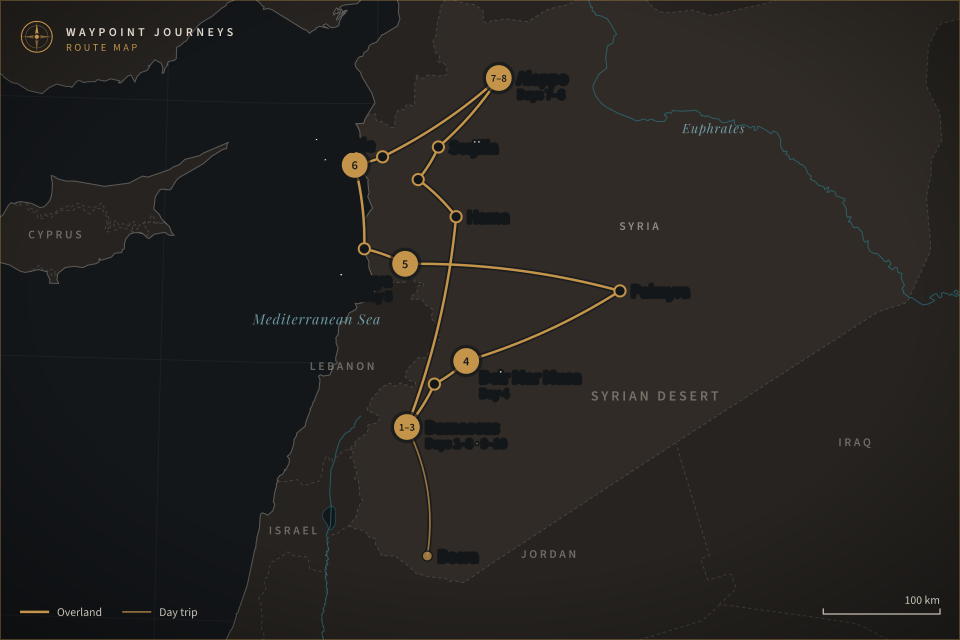
We begin and end in Beirut — a morning pickup at Rafic Hariri International, a three-hour drive across the Masnaa border, and into the Old City of Damascus by afternoon. The first two days walk Damascus on foot: the straight street where St. Paul met St. Ananias, the 7th-century Umayyad Mosque, Azem Palace, the souks of Hamidiah, Mount Qasioun at golden hour, and the hammams of the old quarter. Day 3 is the magnificent Roman theatre at Bosra. Day 4 climbs the Qalamun mountains to the Christian villages of Maaloula and Saidnaya and overnights with the monks at Deir Mar Musa, the great Crusader fortress of Krak des Chevaliers and the Phoenician coast at Tartus and Arwad follow on Day 5.
Day 6 is the long-awaited return of Palmyra — the oasis city in the Syrian desert, its colonnades and Temple of Bel partially restored, with empty horizons in every direction. Days 7 and 8 cover Homs, the ancient waterwheels of Hama, the legendary Masyaf Castle of the Assassins, and the longest Roman colonnade in the world at Apamea. The trip finishes with two days in the Old City of Aleppo — the largest covered souk on Earth, the citadel that dominates the city, the 8th-century soap factories, and the Armenian church where Sunday prayers are still in Armenian — before the drive back to Beirut.
"Most countries in the world have one or two great Roman sites. Syria has six UNESCO World Heritage cities, and you'll often have them entirely to yourself."

Six Reasons to Make the Journey
A UNESCO-listed medina that has been continuously inhabited for over five thousand years. The 7th-century Umayyad Mosque, Azem Palace, the straight street where St. Paul met St. Ananias, and the souks of Hamidiah — most travellers spend two days here and want a third.
The desert oasis-city that lit up the classical world is open again. We visit the Temple of Bel, the amphitheatre, the Roman arch, and the Bedouin tent at the natural spring — and we don't pretend the war didn't happen, because Palmyra also bears witness.
Built by the Hospitaller Knights in the 12th century, the best-preserved Crusader castle on Earth — a UNESCO World Heritage Site of vast concentric walls, dramatic ramparts, and views across the Homs Gap to Lebanon.
In the village of Maaloula, the 4th-century Monastery of Saints Sergius and Bacchus still holds prayer in Aramaic — the language Christ spoke. Combined with a stay at Deir Mar Musa, where you can join the monks for their hour of silent meditation.
A UNESCO World Heritage city that has been continuously inhabited for more than 6,000 years. The world's largest covered souk (13 km²), the massive citadel, and the original 18th-century soap factories still producing Aleppo soap by the same 8th-century recipe.
A magnificent 2nd-century Roman theatre at Bosra (UNESCO), the longest Roman colonnade in the world at Apamea (2 km of marble), the legendary Assassins' Castle at Masyaf, and the Phoenician island of Arwad — the last Crusader foothold in the Holy Land.
The Expedition
Ten days from Beirut, across the Levant, and back. Old Damascus, Bosra, the Aramaic villages, Crusader castles, Palmyra, and the Old City of Aleppo.
Morning pickup at Beirut–Rafic Hariri International Airport. Three- to four-hour drive across the Masnaa border crossing into Syria, arriving at the hotel in central Damascus by mid-afternoon. A walking tour of Old Damascus — a UNESCO World Heritage Site — takes us down the Straight Street where St. Ananias met St. Paul, into the Church of St. Ananias, through Asaad Basha Caravanserai for a cup of tea, the Azem Palace (a perfect Damascene house, now a folklore museum), the 7th-century Umayyad Mosque, and the lantern-lit Hamidiah souk and Handicrafts Market. Overnight in Damascus.
A morning at the National Museum, with its artefacts from every period of Syrian history. Up Mount Qasioun in the afternoon to the Shrine of the Forty — the panoramic vantage over the whole of Damascus, said to be the site of the first murder in history when Cain killed Abel. Late afternoon at a traditional hammam: the full bathhouse experience, mint tea and shisha after. In the evening, a small pub-crawl through the bars of the Old City, where young Damascenes go out. Overnight in Damascus.
Day trip south to Bosra, a UNESCO World Heritage Site that was the capital of the Roman province of Arabia and later a great stopover on the caravan route to Mecca. The magnificent 2nd-century Roman theatre, the early Christian ruins, and the mosques inside the great basalt walls. Back in Damascus by evening for a guided food crawl through the Old City — sweet and savoury Syrian street food, the way the locals eat. Overnight in Damascus.
Drive into the Qalamun Mountains. In Saidnaya (1,500 m), the 6th-century Virgin Mary Monastery, built after a vision of the Virgin to a Byzantine emperor. On to Maaloula and the 4th-century Monastery of Saints Sergius and Bacchus, where prayers are still spoken in Aramaic — the language Christ spoke — followed by a short trek up the rocky cliffs to the cave-tomb of Saint Thecla. Continue to Deir Mar Musa al-Habashi — a hermitage perched in the Qalamun cliffs since the 5th century, where we'll see the largest surviving Middle Ages church mural, hear prayers in Syriac, and join the monks for their hour of silent meditation. Overnight at Deir Mar Musa.
A full day on the Crusader and Phoenician coast. Krak des Chevaliers — a UNESCO World Heritage Site and the best-preserved Crusader castle on Earth, built by the Hospitaller Order in the 12th century. Down to Tartus and the island of Arwad, the only inhabited island on the Syrian coast and the last Crusader foothold in the East. Then Amrit, a Phoenician port founded in the 3rd millennium BC — its temple, pre-Olympic stadium, and necropolis are remarkable. Overnight in Homs.
Drive northeast into the Syrian desert to Palmyra — the oasis city, a UNESCO World Heritage Site, and one of the most important cultural centres of the classical world. The Temple of Bel, the amphitheatre, the natural spring, the Roman arch, and a Bedouin tent for tea on the desert floor. We also bear witness to the destruction left by ISIS in 2015 — Palmyra reopened to visitors, but it doesn't pretend the war didn't happen. Overnight back in Homs.
In Homs, we see the destruction the civil war left in the city and visit the Saint Mary Church of the Holy Belt — which contains a relic of the Virgin Mary's belt, rediscovered in the 19th century — and the Khalid Ibn al-Walid Mosque, with the mausoleum of the famous Muslim general. North to Hama and its great wooden waterwheels (norias), still turning along the Orontes River as they have been since the 13th century. Overnight in Hama.
Drive to Masyaf to visit Masyaf Castle — the legendary capital of the Assassins, the seat of "the Old Man of the Mountain," and the main base of the medieval order whose mere name terrified Crusaders and Muslim generals alike. Then Apamea, the Greek-Roman fortified city with the longest colonnade in the Roman world: nearly 2 km of marble columns along its main street, plus the walls and gates. Continue to Aleppo for overnight.
A full day in the UNESCO-listed Old City of Aleppo, continuously inhabited for more than 6,000 years. From the Antioch Gate into the world's largest covered souk (13 km²) and the medieval caravanserais scattered among its lanes. The Citadel — the largest in the world and the masterpiece of Islamic military architecture. Finally, the original 18th-century Laurel Soap Factory, where Aleppo soap is still made by the same recipe passed down since the 8th century. Overnight in Aleppo.
Morning prayer in Armenian at the Forty Martyrs Church — a 15th-century Armenian cathedral whose 19th-century icon of the Day of Judgement is one of the finest in the eastern Mediterranean. A short walk through one of the most beautiful plazas in old Aleppo, with a stop at the Maronite Cathedral that sat on the war's frontline. One last Syrian meal together, then the drive south and west, across the Masnaa border, and back to Beirut. Ten days that will redraw the map of the Levant in your head.
What's Included
FREQUENTLY ASKED QUESTIONS
Common Questions About This Expedition
Expedition Investment
USD per person · 10-day expedition · max 5 guests
Fully inclusive of Beirut–Damascus–Beirut overland transfers, private vehicle throughout, licensed English-speaking guide, all hotel accommodation, all entrance fees, and the security clearance and travel permits required for entry. Daily breakfast included.
International flights to Beirut, Syrian visa fee at the border (~$80), lunches and dinners, tips, and travel insurance not included
Reserve Your SpotSyria carries advisories — we take that seriously. The corridor we operate (Damascus, Bosra, Maaloula, Saidnaya, Deir Mar Musa, Krak des Chevaliers, Tartus, Palmyra, Homs, Hama, Apamea, and Aleppo) has been stable and well-travelled by a small community of foreign visitors throughout the past year. Our in-country partner handles every transfer, hotel, and the security clearance and travel permits required by the authorities. You are picked up at Beirut–Rafic Hariri International Airport, driven overland across the Masnaa border, and accompanied by a licensed English-speaking guide for the entire ten days. We monitor advisories continuously, and we will not operate any segment that has become unstable — full refund applies if we have to cancel for safety. We're happy to discuss any specific question about the route or current conditions.