Waypoint Journeys Presents
Galápagos
The Enchanted Isles
7 Days
San Cristóbal · Santa Cruz · Isabela — Island-Hopping Through Darwin's Living Laboratory
View Expedition Details ↓ Plan This Expedition →We reply within 24 hours
The Islands That Rewrote Life on Earth
Six hundred miles off the coast of Ecuador, a scatter of volcanoes rises from one of the richest stretches of ocean on the planet. The Spanish charted them as the Enchanted Isles because the currents made them seem to drift; a young naturalist aboard the Beagle spent five weeks here in 1835 and left with the seed of the idea that would reorder biology. Nearly two centuries later, the Galápagos remain what Darwin found: a living laboratory where evolution is not a theory in a book but a thing you watch happen on the rocks in front of you.
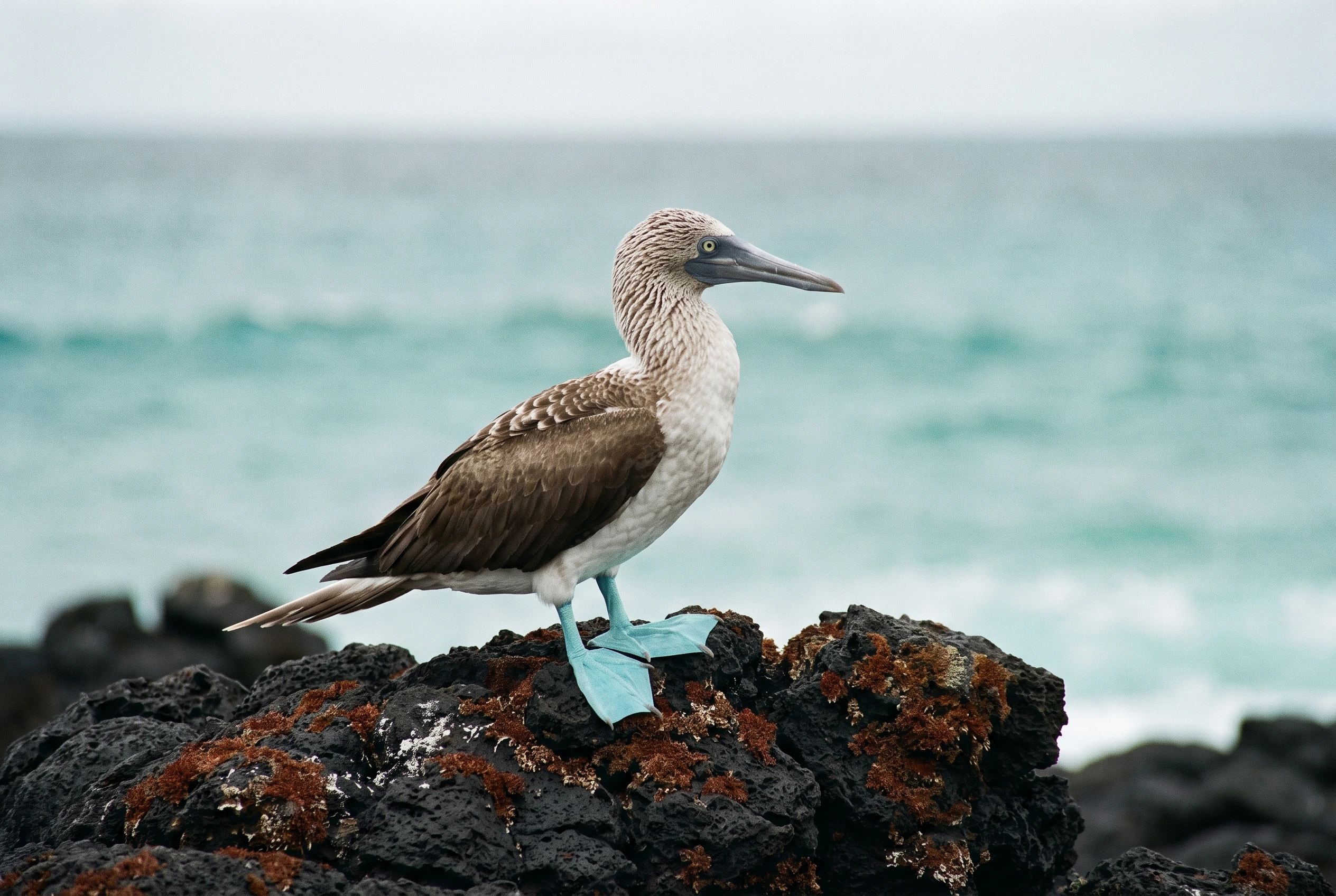
What no photograph prepares you for is the fearlessness. Sea lions doze across the harbour benches. Marine iguanas — the world's only seagoing lizard — pile black and indifferent on the lava at your feet. Blue-footed boobies court a few steps from the trail, and in the water the turtles simply keep grazing as you drift overhead. Ninety-seven percent of the archipelago is national park, the wildlife has never learned to fear people, and the effect on even seasoned travellers is something close to disbelief.
This expedition crosses the archipelago the way its own residents do — by boat, island to island, sleeping ashore. Seven days across San Cristóbal, Santa Cruz and Isabela: the hammerhead channel at Kicker Rock, giant tortoises wild in the misty highlands, the vast caldera of Sierra Negra on foot, and the drowned lava labyrinth of Los Túneles — with evenings in three port towns where the day boats leave and the beaches empty out.
"Nowhere else on Earth does the wild come to meet you. In the Galápagos, you are simply the one animal the others never learned to fear."

Three Islands, Two of the World's Great Snorkels, and a Caldera Six Miles Wide
The eroded cone of an ancient volcano stands nearly 150 metres out of the sea off San Cristóbal, split by a channel that ranks among the finest snorkels in the Pacific. Drift the gap between the towers and the deep blue below fills with life — turtles, spotted eagle rays, shimmering walls of fish, and the unmistakable silhouettes of hammerhead sharks cruising the thermocline.
In the mist-fed hills of Santa Cruz, giant tortoises weighing a quarter of a tonne graze wild through the guava and grass as they have for a million years. At a working highland reserve you walk quietly among them — no fences between you and animals that may have hatched before your grandparents were born — then duck underground into the lava tunnels the volcano left behind.
Isabela is five volcanoes fused into one island, and Sierra Negra is its dark heart — an active shield volcano whose summit caldera stretches roughly ten kilometres across, one of the largest on Earth. The hike along the crater rim crosses fresh black lava fields and, on a clear day, opens views across half the archipelago's volcanic spine.
Off southern Isabela, old lava flows collapsed into the sea and left a maze of arches, bridges and turquoise channels. Galápagos penguins — the only penguin north of the equator — stand sentry on the rock beside nesting blue-footed boobies, and in the sheltered water below, sea turtles queue at cleaning stations, white-tip reef sharks rest in the caves, and seahorses hide in the mangrove roots.
Santa Cruz keeps two of the archipelago's most beautiful corners within reach of town: Tortuga Bay, a kilometre of flour-white sand patrolled by marine iguanas and reef sharks in the mangrove lagoon, and Las Grietas, a deep crevice in the lava where filtered sea water glows a glassy blue-green between sheer rock walls — the island's natural swimming hall.
Because you sleep ashore, the islands keep performing after the day boats leave. Sea lions claim the benches of Puerto Baquerizo Moreno's waterfront at dusk, pelicans work the fish market in Puerto Ayora, and flamingos wade the lagoon behind Puerto Villamil's beach. Three port towns, three characters — and the wildlife commutes through all of them.
The Expedition
Seven days west across the archipelago — San Cristóbal to Santa Cruz to Isabela, linked by speedboat, every night ashore, every park fee and crossing already handled.
Fly from Quito or Guayaquil into San Cristóbal, the easternmost inhabited island and the one Darwin saw first. Your transit card is checked, your park entrance is already paid, and our team meets you at the airport for the five-minute transfer into Puerto Baquerizo Moreno. The afternoon is deliberately unscheduled — the town does the introductions itself. Sea lions own the waterfront here in the hundreds, hauled out on benches, steps and fishing boats; walk the malecón, visit the Interpretation Center on the headland, and take a first swim at Playa Mann as the sun drops into the Pacific.
The day the divers envy. A morning boat runs out to Kicker Rock — León Dormido, the sleeping lion — where two sheer volcanic towers rise from open ocean, split by a channel a few metres wide and forty deep. Mask on, you drift the gap while the blue beneath you organises itself into turtles, spotted eagle rays, dense schools of fish, and — most days — hammerhead sharks patrolling below the thermocline. It is one of the great snorkelling moments anywhere on Earth. Afterwards the boat eases into Puerto Grande, a secluded white-sand cove on San Cristóbal's sheltered coast, for lunch, a swim, and an hour of doing absolutely nothing before the run home.
An early speedboat crossing — about two and a half hours west — lands you in Puerto Ayora, the archipelago's lively capital on Santa Cruz. From the dock you climb straight into another climate: the highlands, where mist feeds green pasture and the island's giant tortoises wander wild. At a working highland reserve you walk among animals up to a century and a half old with a guide who knows their habits, then drop into the lava tunnels beneath the farmland. The afternoon is yours for one of the Galápagos' finest walks — the trail to Tortuga Bay, where a kilometre of brilliant white sand meets turquoise water, marine iguanas by the hundred, and a mangrove lagoon where reef sharks cruise the shallows.
The morning explores Puerto Ayora's own bay by boat. Academy Bay hides more than its harbour suggests: the German settlers' beach of Playa de los Alemanes, the channel where white-tip reef sharks gather, Playa de los Perros with its iguana colonies, and Las Grietas — a flooded crevice in the lava where you swim between sheer walls in water so clear it barely seems to be there. Back for lunch and an idle hour on the waterfront, then the mid-afternoon speedboat west to Isabela — the archipelago's largest island and its most laid-back — where the dock fee is already handled and the sand streets of Puerto Villamil are waiting. Dinner steps from the beach.
Into the highlands early, before the cloud lifts off the volcano. Sierra Negra is a live shield volcano — it last erupted in 2018 — and its summit caldera is a black plain roughly ten kilometres across, ringed by a rim trail that feels like walking the edge of another planet. The hike is unhurried and mostly gentle, through fern and guava to the crater's edge; in clear weather the view runs across the lava fields to the fumaroles of Volcán Chico and the volcanoes marching north up the island. Back in Puerto Villamil by mid-afternoon, the rest of the day belongs to the town's endless beach — and the flamingo lagoon behind it, at its pink best in the late light.
The boat runs down Isabela's wild southern coast to Cabo Rosa, where lava once poured into the sea and collapsed into a drowned labyrinth of arches and bridges — Los Túneles. Ashore on the rock, you walk carefully between Galápagos penguins and blue-footed boobies nesting an arm's length from the trail. Then into the calm, glass-clear channels: green turtles at their cleaning stations, white-tip reef sharks stacked in the caves, golden rays gliding under the arches, and — for the sharp-eyed — seahorses curled into the mangrove roots. It is the gentlest spectacular snorkel in the islands, and a fitting last full day. The evening closes with a farewell dinner in Puerto Villamil.
An early speedboat retraces the channel to Puerto Ayora, where a private vehicle carries you up and over the green spine of Santa Cruz to the Itabaca Channel. The short ferry hop and airport shuttle put you at Baltra with time to spare for the flight back to Quito or Guayaquil — every leg of the four-part transfer sequenced and escorted, so the only thing you manage is a window seat. Most guests land on the mainland by early afternoon; we are glad to build the Andes, the Amazon, or simply a good hotel and a long dinner onto the far end.
What's Included
FREQUENTLY ASKED QUESTIONS
Common Questions About This Expedition
Expedition Investment
per person, twin share
Fully inclusive of the $200 Galápagos National Park entrance fee, $20 transit control card and $10 Isabela dock levy; six nights' boutique accommodation across three islands; both inter-island speedboat crossings and every transfer; all five signature excursions with licensed naturalist guides and snorkelling equipment; daily breakfast and lunch on both full boat days
Excludes flights between mainland Ecuador and the islands (Quito/Guayaquil round trip, typically $400–550 USD — we are glad to book them), international flights, travel insurance, remaining meals, alcohol, and tips. Single supplement $595 USD
Reserve Your SpotThe Galápagos is among the safest destinations we operate — a well-policed national park with decades of tourism infrastructure and essentially no crime against visitors. What deserves respect here is nature's paperwork and the ocean's moods. The park runs on rules: licensed guides on excursions, two metres from all wildlife, nothing taken and nothing left, and fees and permits checked at every dock — all of which we handle before you land. The inter-island crossings are open-ocean speedboat rides of about two and a half hours that can be lively in the June–November season; we brief you honestly, board you early for the good seats, and carry the remedies. The equatorial sun is fierce even under cloud, and the snorkel sites are chosen daily by guides who read the current before anyone gets wet. Bring reef-safe sunscreen and listen to the briefings — the islands do the rest.