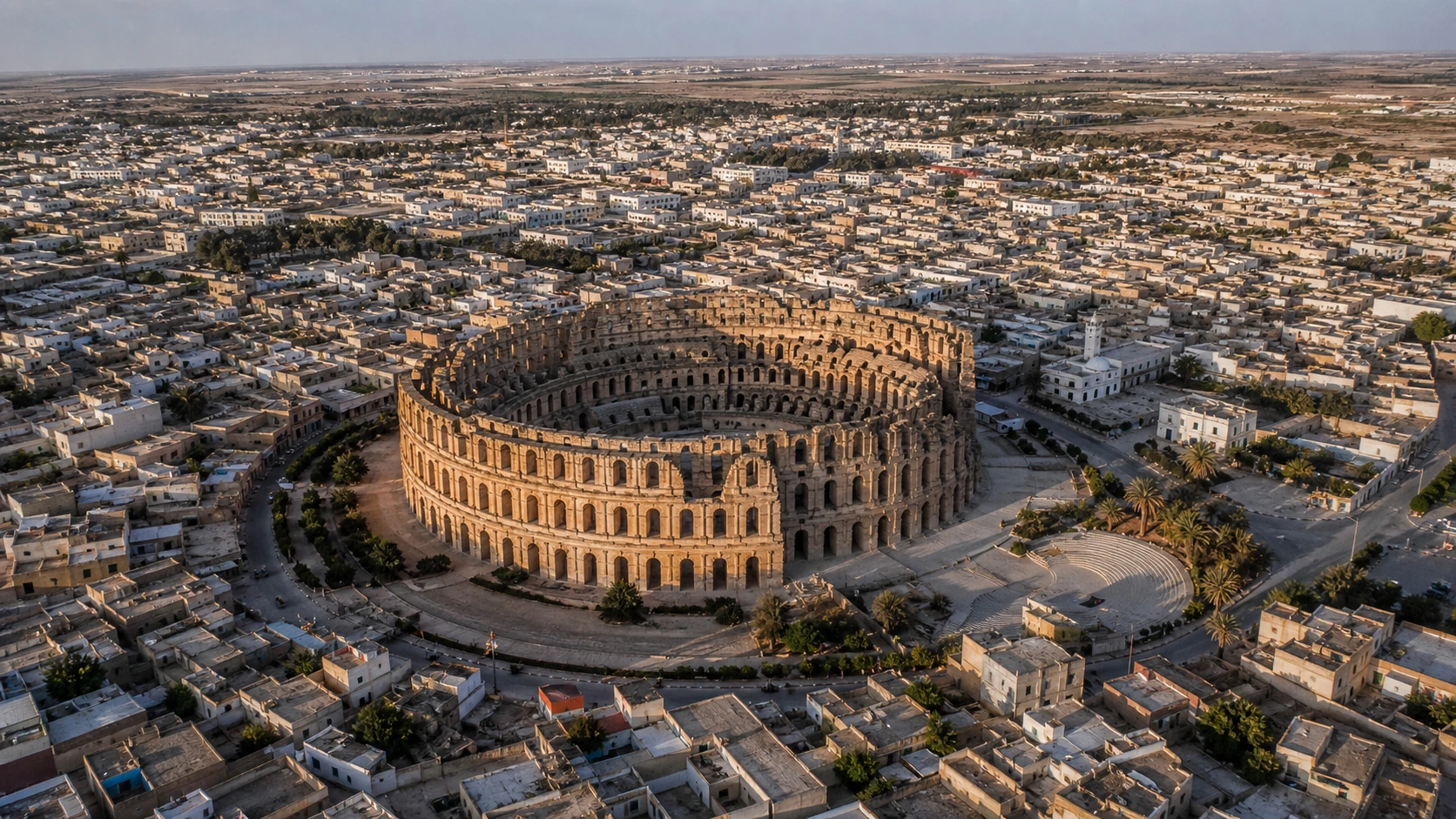
Waypoint Journeys Presents

Libya

Leptis Magna, Sabratha, and the Sahara Most Travellers Will Never See

Choose 2, 5 or 12 Nights

Roman Africa, Berber Oases, and the Rock Art of the Acacus

View Expedition Details ↓ Plan This Expedition →

We reply within 24 hours

A Country Most Travellers Will Never See — Built on Roman Africa and the Sahara

Libya sits in a strange place on the world map: a Mediterranean country with two of the most spectacular Roman cities ever built, an interior of Berber mountains and oasis towns, and one of the most extraordinary stretches of the Sahara — and a foreign-tourist count so low that for years it barely registered in international statistics. After a quiet reopening of organised travel, a small number of professional operators are running tightly-curated expeditions to a country where, on any given week, you may have a UNESCO World Heritage Site essentially to yourself.

Leptis Magna is the headline. Founded by the Phoenicians and expanded into a showpiece capital by Emperor Septimius Severus — a Libyan-born Roman — it is one of the most complete Roman cities anywhere in the Mediterranean: marble colonnades, an Arch of Severus, a basilica, an amphitheatre, and an ancient harbour, almost all of it still standing. Sabratha, an hour west of Tripoli, is its quieter twin — a seaside theatre that catches the light like a postcard. Tripoli's Old City wraps Ottoman souks around a Red Castle that has been a fortress for two thousand years.

Beyond the coast is another country entirely. The Nafusa Mountains hold Berber granaries, fortified villages, and Gharyan's troglodyte houses carved into the limestone. Ghadames, the "Pearl of the Desert," is a UNESCO-listed oasis city of covered streets and whitewashed houses where you can still meet families who have lived inside the medina for centuries. And the Tadrart Acacus — reached by an overland drive south via Sebha and days of 4×4 — is a sandstone-and-dune wilderness covered in 12,000-year-old rock art. We offer three trip lengths so you can choose how deep to go.

"Leptis Magna at golden hour, with nobody else in the forum but you and the wind off the Mediterranean — there is nothing else like it left in the Roman world."
A traveller in a whitewashed lane of the old city of Ghadames, Libya
The whitewashed lanes of Ghadames

Six Reasons to Make the Journey

Leptis Magna

One of the most complete Roman cities in the Mediterranean — Septimius Severus's marble showpiece, with an arch, an amphitheatre, the basilica, and an ancient harbour. Featured on every itinerary length we offer, because it is the reason most people come to Libya.

Sabratha by the Sea

A UNESCO World Heritage Site an hour west of Tripoli, with a theatre that catches the Mediterranean light like a postcard. A Phoenician trading post turned Roman city, smaller and quieter than Leptis Magna — and on most days, almost empty.

Tripoli's Old City

A walled medina of Ottoman souks, Italianate arcades, and the Red Castle Museum — one of the great unexplored North African capitals. Espresso in the old Italian cafés, mint tea in the souks, and a working harbour that has been a working harbour for two and a half millennia.

Ghadames — Pearl of the Desert

A UNESCO-listed oasis city on the Algerian-Tunisian frontier — a labyrinth of covered streets, whitewashed houses, palm gardens, and a way of life designed entirely for desert heat. We overnight here on the 5- and 12-night itineraries.

The Berber Nafusa Mountains

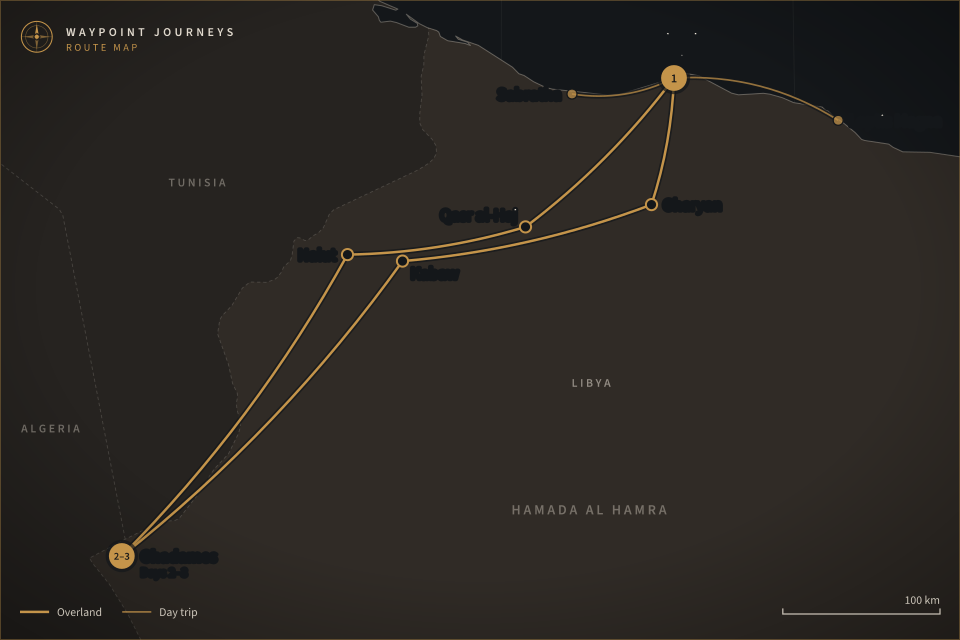
Gharyan's troglodyte homes carved into limestone, and the dramatic Berber granaries and hilltop fortresses of Qasr Al-Haj, Nalut, Kabaw, and Tarmisa — all on the 5- and 12-night routes.

The Tadrart Acacus & Ubari Lakes

The deep Sahara, reached by an overland drive south via Sebha and 4×4: UNESCO-listed prehistoric rock art carved into sandstone, the Maghadet dunes, and the impossibly turquoise oases of the Ubari Lakes hidden between high dunes. Available on the 12-night Magic of the Desert.

Three Ways to Experience Libya

From a long weekend at the Roman cities to a thirteen-day Sahara expedition. Pick the depth that fits.

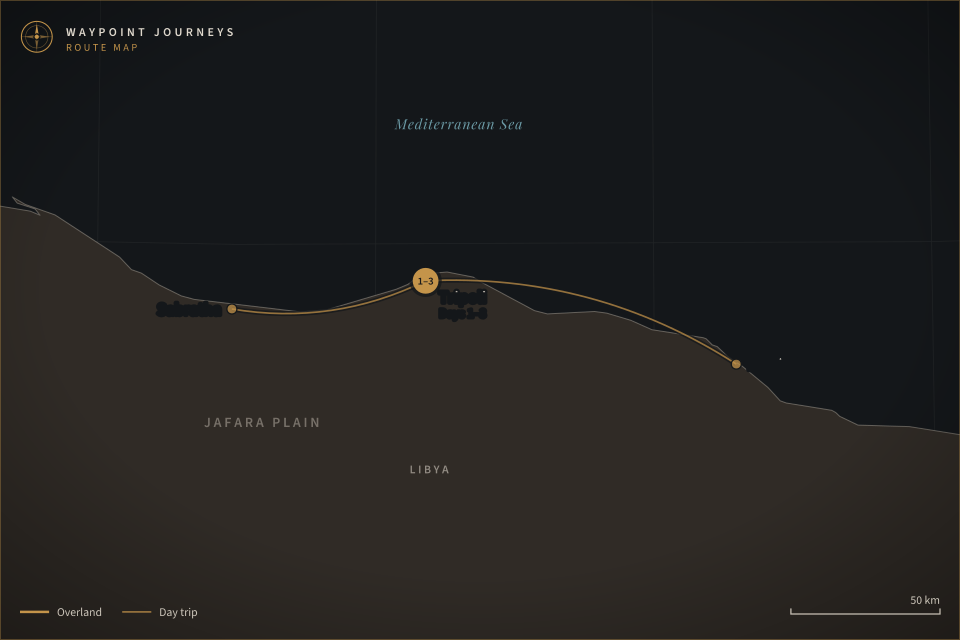
Every version of this journey shares the same spine — the Roman seafront at Sabratha, a full, unhurried day inside Leptis Magna, and the walled Ottoman heart of Tripoli — then travels as far into the country as your days allow. Two nights is a long weekend among the ruins. Five adds the Berber granaries and hill-towns of the Nafusa Mountains and two nights inside the walls of Ghadames, the Pearl of the Desert. Twelve carries you overland to where the tarmac ends — deep into the Tadrart Acacus for rock art older than the pyramids, silent dune fields, and the turquoise Ubari Lakes.

The style never changes: no more than five guests, a licensed guide with you from arrival to departure, and a pace set by the light rather than the clock. We meet you at Mitiga airport, keep a comfortable four-star base in Tripoli between excursions, and arrange every permit, transfer, and Letter of Invitation long before you land — so all that’s left to decide is how deep to go.

Option 1 · 3 Days / 2 Nights

Classical Libya

The essential first taste — and a complete one. Three days built around two of the greatest Roman cities in Africa: the seaside theatre at Sabratha, a full day among the marble colonnades of Leptis Magna, and Tripoli’s walled Old City, where the souks and Ottoman mosques wrap around the Red Castle. Perfect for a long weekend, or as the opening act before the desert.

From $1,195 USD per person
Day 1
Arrival & Sabratha
Day 1

Met on arrival at Tripoli's Mitiga International Airport. Drive west along the coast to Sabratha, a UNESCO World Heritage Site whose seaside theatre, temples, and mosaics flourished in the 2nd and 3rd centuries AD as a Phoenician-Roman trading port between Africa and the Mediterranean. Return to Tripoli for overnight in a 4★ hotel.

Day 2
Leptis Magna
Day 2

Travel east to Leptis Magna — founded by the Phoenicians and expanded by the Libyan-born Emperor Septimius Severus into one of the most spectacular Roman cities ever built. Walk the Arch of Severus, the basilica, the amphitheatre, the ancient harbour, and the marble forum. Return to Tripoli for overnight.

Day 3
Tripoli & Departure
Day 3

Explore Tripoli's Old City — its lively souks, the Red Castle Museum, and the Ottoman-era arcades and mosques. If time allows, a coffee by the Mediterranean before transfer to Mitiga Airport for your onward flight.

Option 3 · 13 Days / 12 Nights

Magic of the Desert

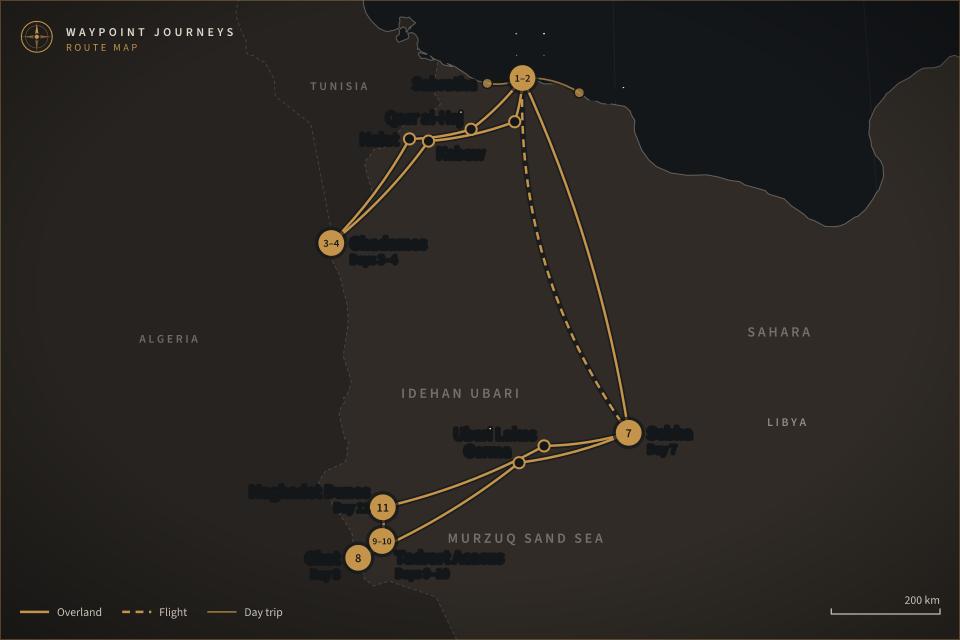
The deepest experience we run — and, for many, the whole reason to come. It begins with the full coast-and-culture loop (Sabratha, the Nafusa Mountains, Ghadames, Leptis Magna), then turns south on a two-day overland drive via Sebha into the Tadrart Acacus: several nights of 4×4 expedition and camping beneath some of the darkest skies on earth, among 12,000-year-old rock art, the Maghadet dunes, and the turquoise Ubari Lakes, before a domestic flight north to Tripoli. One domestic flight included.

From $5,495 USD per person
Day 1
Arrival & Sabratha
Day 1

Met on arrival at Mitiga Airport and driven west to Sabratha for a guided walk through its Roman theatre and seafront temples. Return to Tripoli for the night.

Day 2
Tripoli: Museum & Old City
Day 2

A full day in the capital. The National Museum and its Roman and Garamantian collections, then the Ottoman-era Old City with its covered markets, mosques, and the Red Castle above the harbour. Overnight in Tripoli.

Day 3
Nafusa Mountains & Ghadames
Day 3

Cross the Berber Nafusa Mountains, stopping at Gasr Al-Haj, a circular fortified granary, and Nalut with its hilltop qasr. Continue to Ghadames, the UNESCO oasis known as the Pearl of the Desert. Overnight at the traditional Dar Ghadames.

Day 4
Ghadames
Day 4

A full day inside old Ghadames, a covered maze of whitewashed houses, shaded passages, and oasis gardens built for desert life. Meet local families, with an optional Tuareg music evening. Overnight in Ghadames.

Day 5
Kabaw, Tarmisah & Gharyan
Day 5

Return toward the coast through Kabaw, a fortified village with a panoramic castle, and the mountain town of Tarmisah. Stop at Gharyan to see its underground troglodyte homes, then continue to Tripoli. Overnight in Tripoli.

Day 6
Leptis Magna
Day 6

A full day at Leptis Magna east of Tripoli, one of the most complete Roman cities left anywhere in the world. Return to Tripoli for the night.

Day 7
Tripoli to Sebha
Day 7

Begin the drive south into the interior. A long day on the road brings the first desert overnight in Sebha, at the hotel.

Day 8
Sebha to Ghat via Germa
Day 8

Continue southwest, stopping at Germa, capital of the ancient Garamantes, before reaching Ghat at the edge of the Acacus Mountains. Overnight in Ghat.

Day 9
Into the Tadrart Acacus
Day 9

Transfer into 4×4s and enter the desert. The Tadrart Acacus is a UNESCO World Heritage site of prehistoric rock art carved into sandstone, natural arches, and golden dunes. Overnight camping under the stars.

Day 10
Tadrart Acacus
Day 10

A full day deeper into the Acacus, its canyons, rock-art galleries, and towering formations, with the silence of an empty desert. Overnight camping.

Day 11
Maghadet Dunes
Day 11

Cross into Maghadet, a sea of high golden dunes and some of the most dramatic desert scenery in the Sahara. Overnight camping.

Day 12
Ubari Lakes & Flight North
Day 12

Reach the Ubari Lakes, Gabroun and Umm Al-Maa, turquoise water hidden between high dunes. Transfer to Sebha for a domestic flight back to Tripoli. Overnight in Tripoli.

Day 13
Departure
Day 13

Transfer to Mitiga Airport for your onward flight.

Every itinerary here is a starting point. We take one group at a time, so your dates are private to your party and can be lengthened, combined, or reshaped around what you most want to see — an extra day at Leptis Magna, a photographer’s golden hours, a new moon over the Acacus. We run the coast from October through April and the deep desert from November to February. Tell us when you’d like to travel, and we’ll build the days around you.

Sahara dunes at dawn, Libya

Small Group Expedition

Every Detail Arranged.
Every Moment Yours.

What's Included

Duration 2, 5, or 12 nights — choose your itinerary length above
Group Size Small group expedition: maximum 5 guests, intimate and unhurried
Flights 2- and 5-night options: no domestic flights required. 12-night option: an overland drive south to the desert via Sebha, with one domestic flight on the return (Sebha → Tripoli). International flights to Tripoli are not included on any option.
Accommodation 4★ hotels in Tripoli throughout the coastal route; the traditional Dar Ghadames Hotel inside the medina on the 5- and 12-night options; desert camping under the stars in the Acacus on the 12-night option
Meals Daily breakfast included on all options; full board (lunch and dinner included) during desert camping nights on the 12-night option. Other lunches and dinners typically at local restaurants — not included unless specified.
Transport AC vehicle throughout the coastal and Nafusa segments; 4×4 vehicles for the desert sections of the 12-night option; licensed English-speaking guide with you the entire trip. All entrance fees, park permits, and airport transfers are included.
Not Included International flights to Tripoli; Libya visa fee (~$63 USD — invitation letter is included); travel insurance; tips for driver and guide; photography permits at sensitive sites; alcohol and additional beverages; non-included lunches and dinners.

FREQUENTLY ASKED QUESTIONS

Common Questions About This Expedition

The routes we operate — Tripoli, Sabratha, Leptis Magna, the Nafusa Mountains, Ghadames, and the southern Acacus — are stable and well-travelled. Our in-country partner handles every permit, transfer, and itinerary registration with the authorities. You are met at Mitiga Airport and accompanied by a licensed English-speaking guide throughout. We monitor advisories continuously and will not operate any segment that has become unstable.
For first-time visitors with limited time: the 2-night Classical Libya covers Sabratha, Leptis Magna, and Tripoli — the three iconic sights. The 5-night Desert and Coastline Wonders is our most popular, adding the Nafusa Mountains, Gharyan's troglodyte homes, and a two-night stay in the UNESCO-listed Ghadames oasis. The 12-night is a deep desert expedition into the Tadrart Acacus and Ubari Lakes, reached by an overland drive south via Sebha, for travellers who want the full Libya experience.
Yes. Libya requires a visa for almost all nationalities. We arrange the required Letter of Invitation through our in-country partner — included in every option. The visa fee (~$63 USD) is paid by you at the embassy or on arrival. Plan on roughly three to four weeks of lead time for invitation approval.
We operate October through April, when temperatures across the north are mild and the Sahara is cool enough for desert travel. November–February is the prime window for the 12-night Acacus expedition. The Mediterranean coast (Sabratha, Leptis Magna, Tripoli) is pleasant throughout the winter months.

Expedition Investment

Three Options, Three Prices

All-inclusive of accommodation, AC vehicle (and 4×4 on the 12-night), licensed English-speaking guide, all park entrance fees, and the Libya invitation letter. Daily breakfast on every option; full board during desert camping on the 12-night. International airfare to Tripoli and the Libya visa fee (~$63 USD) are not included.

Email Us for Help Choosing
A Note on Safety

Libya carries advisories — we take that seriously. The corridor we operate (Tripoli, Sabratha, Leptis Magna, the Nafusa Mountains, Ghadames, and the southern Acacus) is stable and well-travelled by a small community of foreign visitors. Our in-country partner has been running professional expeditions for years and handles every transfer, permit, and itinerary registration with the authorities. You are met at Mitiga Airport and accompanied by a licensed English-speaking guide throughout the trip. We monitor advisories continuously, and we will not operate any segment that has become unstable — full refund applies if we have to cancel for safety. We're happy to address any specific question directly.