Waypoint Journeys Presents
Uruguay
The Quiet Capital
4 Days
Montevideo, the Rambla & a Day on the Coast or in the Vines
View Expedition Details ↓ Plan This Expedition →We reply within 24 hours
South America's Calmest Country, Hiding in Plain Sight
Wedged between two giants, Uruguay has spent two centuries quietly perfecting the things its neighbours argue about. It is the continent's most stable democracy and its safest country; it legalised the siesta-adjacent pleasures of life long ago and drinks more mate per person than anywhere on Earth. Its capital faces the Río de la Plata — a river so wide it behaves like a sea — along twenty-two kilometres of beach promenade where, every evening, half the city walks, jogs, fishes and passes the gourd.
Montevideo rewards the traveller who likes cities with texture rather than spectacle. Ciudad Vieja, the old quarter on its little peninsula, stacks four centuries — colonial gateway, art-deco towers, tango bars, and the smoke-filled iron hall of the Mercado del Puerto, where lunch means beef over open fire and no menu is really necessary. Candombe drums roll through the streets on weekend evenings; the world's first football World Cup was won here and never quite ended.
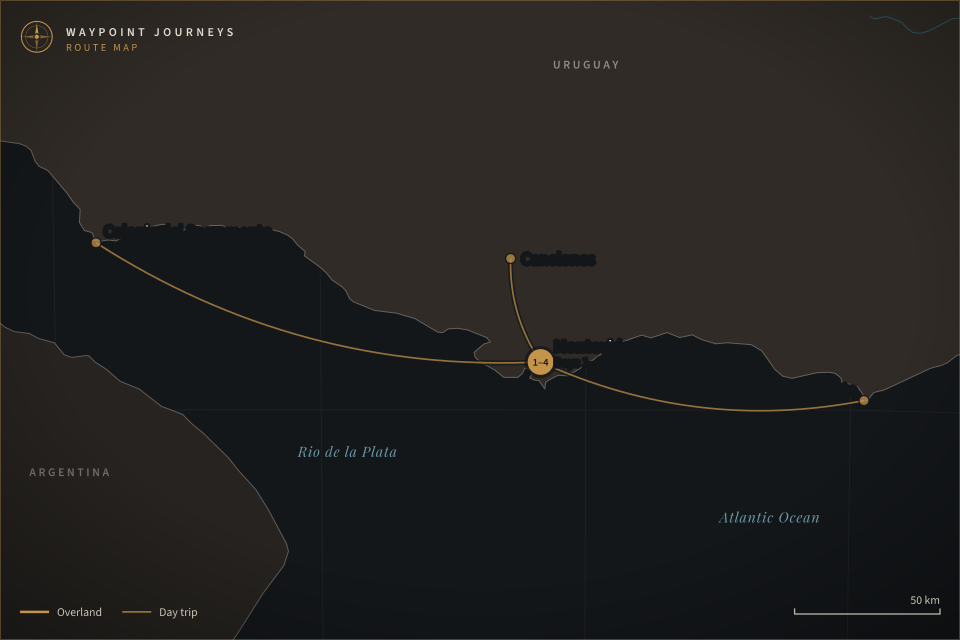
This is our shortest South American expedition and our most affordable after Moldova: four unhurried days with a private guide — the old city and the market done properly, the rambla at golden hour, and a full-day excursion of your choosing to the glamour of Punta del Este and Casapueblo, the tannat bodegas of Canelones, or the cobbled UNESCO time capsule of Colonia del Sacramento. It pairs with Buenos Aires as naturally as steak with tannat.
"Uruguay never shouts. It pours you something, pulls out a chair, and lets the river do the talking."

A Grand Old Port, the World's Longest Promenade, and the Continent's Best Table
Through the last surviving gate of the colonial citadel, the old town runs to the water in streets of sycamores and faded splendour — Plaza Independencia with the mausoleum of Artigas beneath it, the mad art-deco spire of Palacio Salvo, the gilded horseshoe of Teatro Solís, and café doors that have not closed since the 1880s.
Under a Victorian iron roof by the docks, a dozen parrillas have been grilling over wood embers since 1868. Lunch here is the country's true national ceremony — asado cuts, provoleta, chorizo and sweetbreads straight off the fire, a glass of tannat or the local medio y medio, and the theatre of the grill-masters working the coals a metre from your plate.
Twenty-two kilometres of riverside promenade — the longest continuous sidewalk in the world — stitch the city to its water. At golden hour the whole of Montevideo turns out: joggers, fishermen, guitarists, families with thermos and gourd. Walking or cycling a stretch of it, mate in hand, is the fastest way to understand the national temperament.
Two hours east, the continent's glossiest resort town spreads between the calm Playa Mansa and the surf-side Playa Brava with its famous half-buried hand. Around the headland at Punta Ballena, Casapueblo — the wave-white, hand-built villa of painter Carlos Páez Vilaró — cascades thirteen storeys down the cliff and hosts a spoken ceremony to the sunset every single evening.
Uruguay took a rustic French grape and made it a national signature: tannat, dark and structured, at its best with smoke and beef. The family bodegas of Canelones — many still third- and fourth-generation — sit under an hour from the capital, pouring barrel samples in the cellar and long asado lunches under the vines.
Montevideo's culture runs on three rhythms: the candombe drum lines that roll through Barrio Sur on weekend evenings — a UNESCO-listed Afro-Uruguayan tradition; the mate gourd, passed hand to hand everywhere from boardrooms to bus stops; and football, whose first World Cup was lifted here in 1930 at the Estadio Centenario, still standing and still holy.
The Expedition
Four unhurried days — the old city and the market done properly, the rambla at golden hour, and a full-day excursion chosen to taste: coast, vines, or cobbles.
Land in Montevideo — or step off the Buenos Aires ferry — and transfer to a boutique hotel between the old city and the water. The first afternoon is a gentle calibration: a stroll along the rambla as the light goes long and half the city comes out with thermos and mate gourd, an introduction to the essential vocabulary (chivito, tannat, tranquilo), and dinner at a neighbourhood parrilla where the grill has been warm since the Battle era. Montevideo does not perform for visitors; it simply makes room at the table.
The full old-city day, on foot with your guide. Plaza Independencia first — the Artigas mausoleum beneath the statue, the presidential Torre Ejecutiva, and the gloriously eccentric Palacio Salvo, once the tallest building in South America. Through the citadel gate into Ciudad Vieja's grid: Teatro Solís behind its columns, the peatonal Sarandí with its street tango, a coffee at the marble tables of Café Brasilero, pouring since 1877. Lunch is the main event — the Mercado del Puerto, where the parrillas work open embers under the iron roof and the asado arrives still arguing with the fire. The afternoon rolls through the port murals and craft markets, and ends — if the drums are out — with candombe echoing through Barrio Sur.
A full day out, chosen when you book. East to Punta del Este: the beaches of Mansa and Brava (and the Hand rising from the sand), lunch at the fishing port of La Barra, and Casapueblo at Punta Ballena for the nightly sunset ceremony over the water. Or north into Canelones wine country: two family bodegas, tannat from the barrel, and a long asado lunch under the vines. Or west along the river to Colonia del Sacramento: the UNESCO-listed Portuguese contraband port whose sycamore-shaded cobbles, lighthouse and drowsy plazas feel lifted from another century. Whichever you choose, you are back in Montevideo for a late, unhurried dinner.
The last morning bends to your flight time and your appetite. Sunday travellers get the Feria de Tristán Narvaja — a kilometre of antiques, books, birds and general glorious junk. Football pilgrims get the Estadio Centenario and its museum, where the 1930 World Cup began. The unhurried get Pocitos beach and one more café con leche facing the river. Then the airport — or the ferry across to Buenos Aires, for which we are glad to build the second act.
What's Included
FREQUENTLY ASKED QUESTIONS
Common Questions About This Expedition
Expedition Investment
per person, twin share
Fully inclusive of three nights' boutique accommodation, private guide and vehicle on all touring days, the guided Ciudad Vieja day with Mercado del Puerto parrilla lunch, the full-day excursion of your choice with lunch and tastings, daily breakfast, and both arrival and departure transfers
Excludes international flights and ferries, travel insurance, dinners, alcohol beyond the listed tastings, and tips. Single supplement $180 USD. One of our most affordable expeditions — and the easiest to bolt onto Buenos Aires
Reserve Your SpotUruguay is routinely ranked the safest country in South America, and Montevideo feels like it — a capital where the evening crowd on the rambla is families, not patrols. The practical notes are modest: ordinary big-city awareness in parts of Ciudad Vieja after dark (your guide will be candid about which blocks), a windproof layer for the river breeze in any season, and a warning that mate hospitality and second helpings of asado are both effectively mandatory. Logistics are simple — good roads, short distances, reliable ferries — which is exactly why this expedition can do so much in four days without ever feeling rushed.