The Destination
The City You Negotiate With
Lagos is not a city you visit: it is a city you negotiate with. Somewhere above twenty million people live on a lagoon at the edge of the Atlantic, in Africa's largest metropolis, and the city works less like a set of monuments than like a living system: generators humming where the grid fails, yellow danfo buses stitching the mainland to the islands, whole economies improvised in the gaps the planners left behind. To move through it is to read that system in real time.
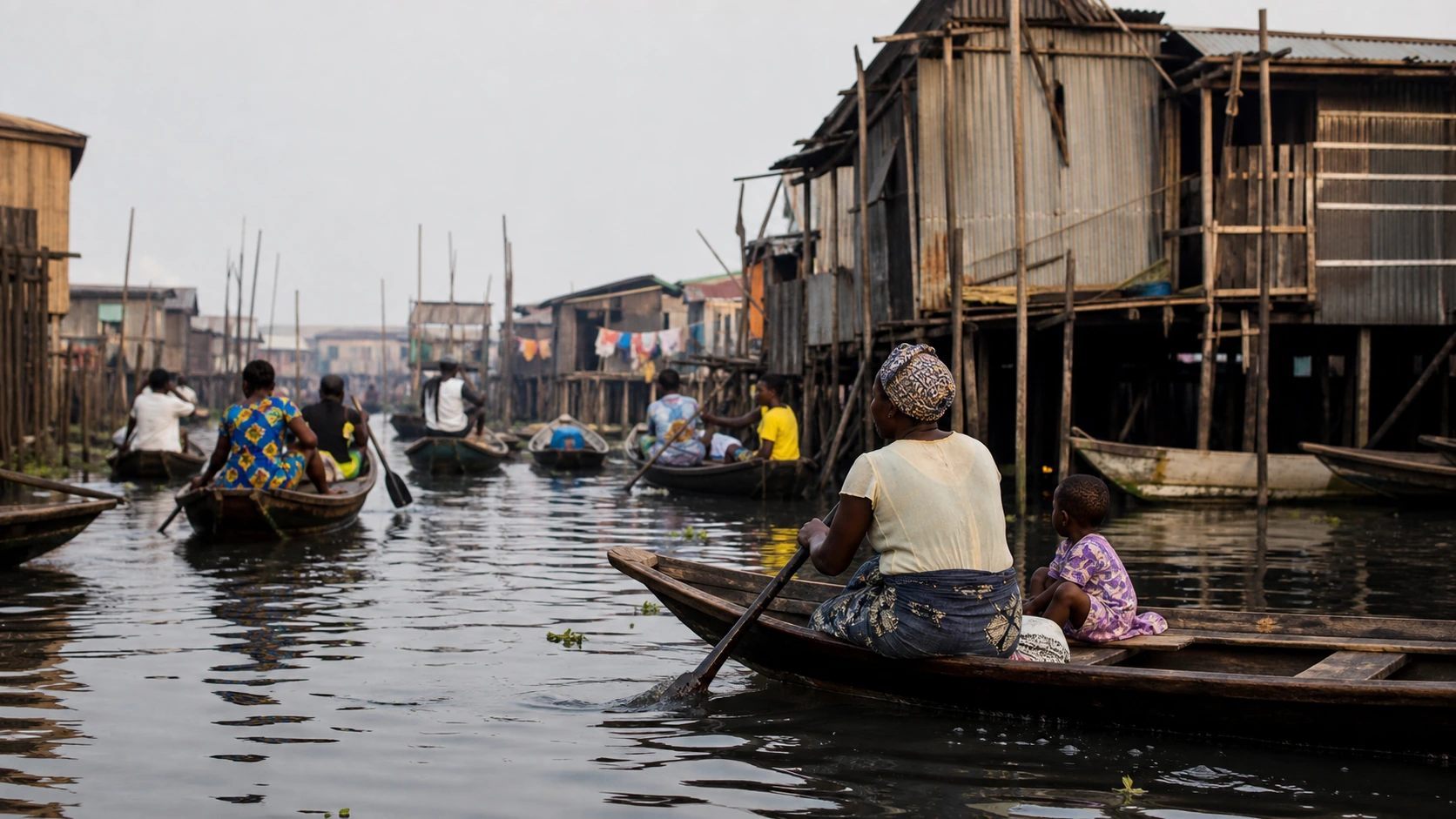
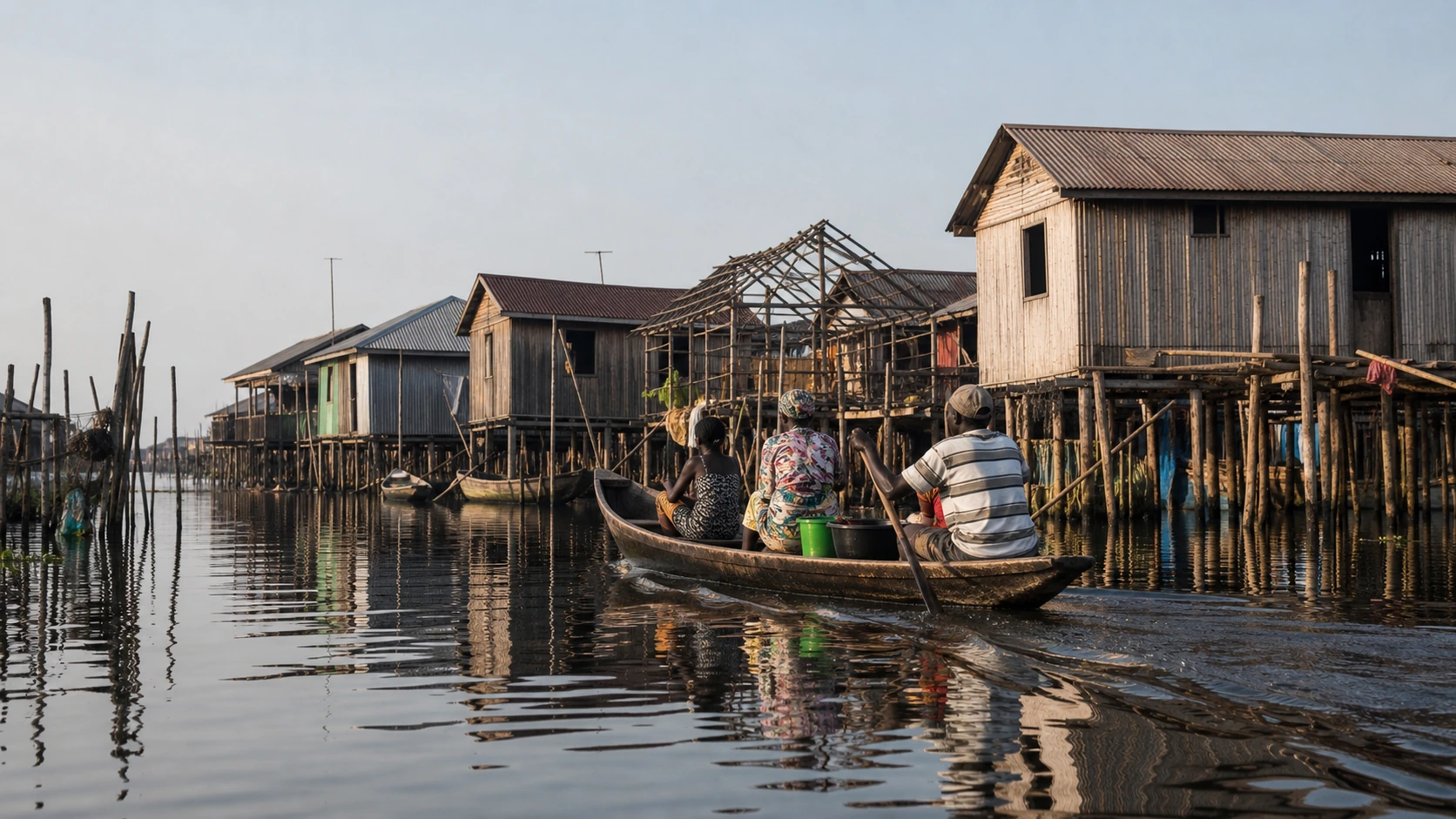
Nowhere reads more clearly than Makoko. On maps the stilt settlement off the Third Mainland Bridge is often a blank, and it is often misrepresented as absence, a slum to be photographed from a distance. In reality it is a parallel city, running on water instead of roads: canoe channels for streets, a floating school, fish smokehouses, boat-builders' yards, a market that moves hull to hull. We enter it the only honest way, by canoe, with the residents who navigate it every day.
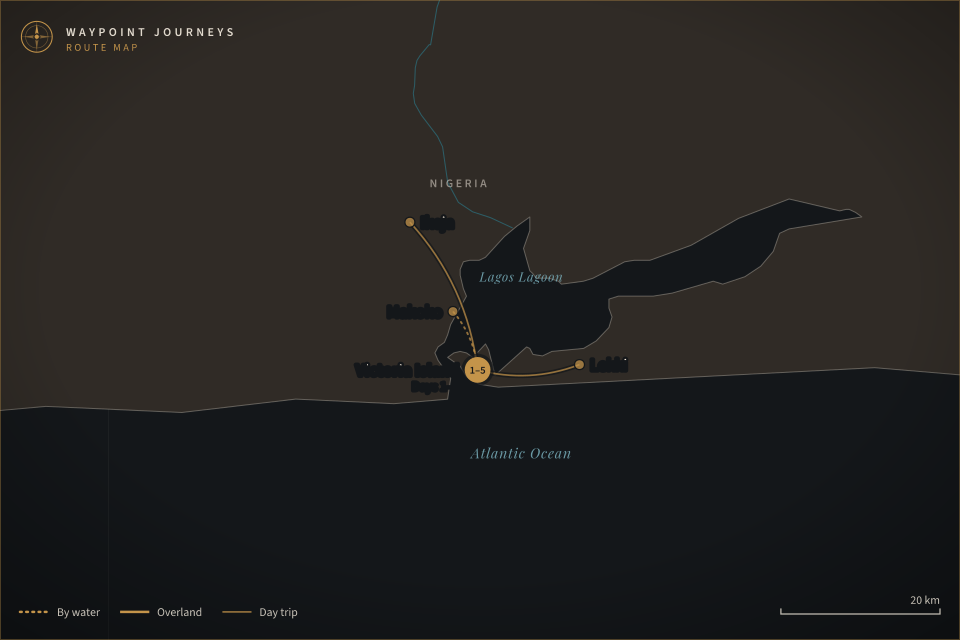
Around the lagoon, the rest of Lagos runs at full velocity. The mainland holds the great markets and their dense systems of trade, the street studios and galleries of a ferocious creative scene, and the Afrobeat lineage that runs back to Fela. South and east at Lekki, the city is still being manufactured: land reclaimed from the Atlantic, a shoreline under negotiation with the ocean itself. This expedition draws a line through all of it in five days, from a single base on Victoria Island.
"Makoko is often misrepresented as absence. It is a parallel city, running on water instead of roads."