Waypoint Journeys Presents

Papua New Guinea

The Last Great Frontier

8 Days

Highlands, Tribes & the Crossing to West Papua

View Expedition Details ↓ Plan This Expedition →

We reply within 24 hours

The Island of Eight Hundred Languages

Papua New Guinea holds more than eight hundred living languages — better than one in ten of all the languages spoken on Earth — folded into the eastern half of a single island. The geography explains it: a spine of mountains runs the length of the country, and for millennia its deep valleys kept whole cultures apart, each growing its own tongue, its own dress, its own way of seeing the world. When outsiders first flew into the Highlands in the 1930s expecting empty mountains, they found a million people living in them.

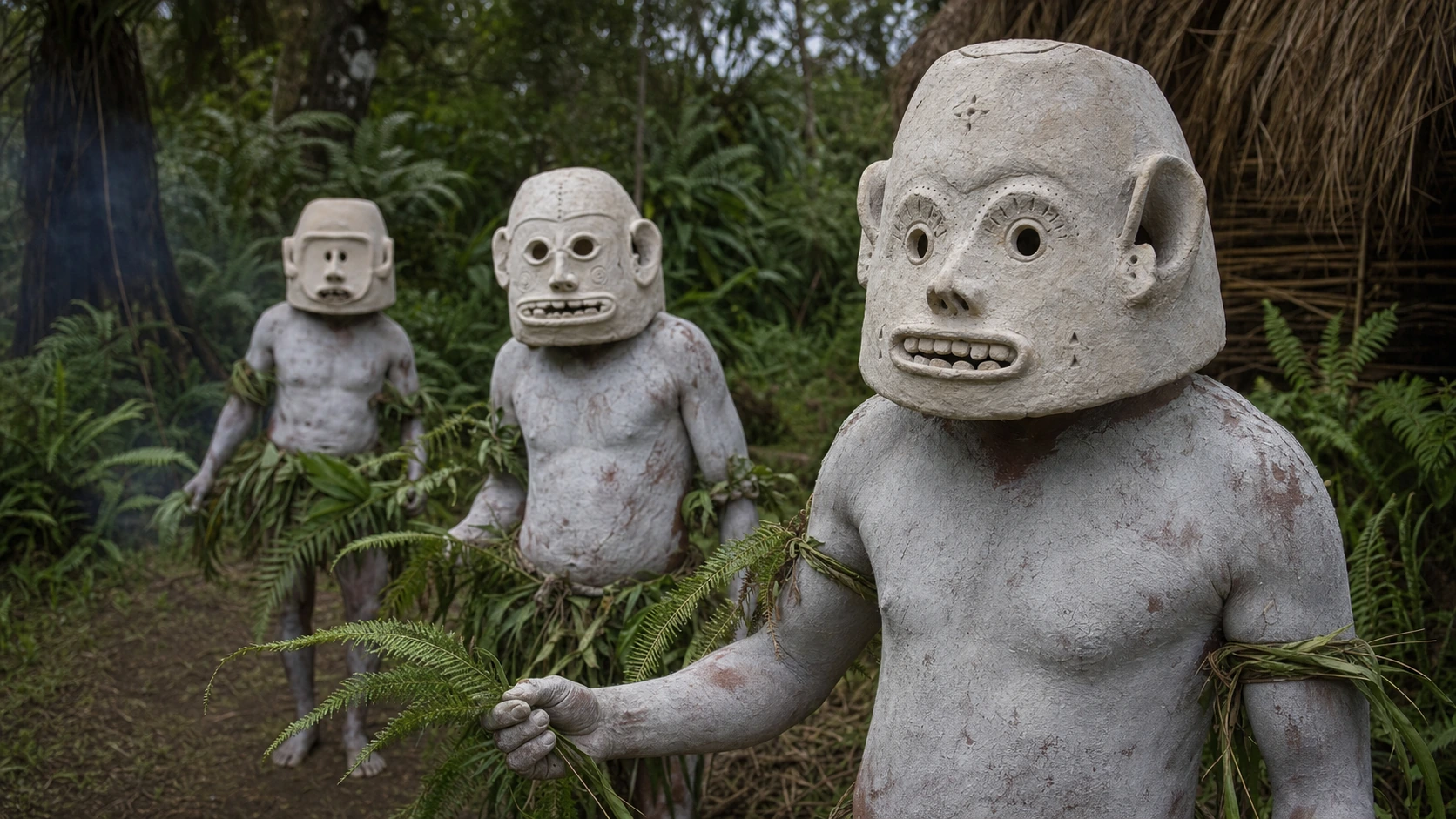
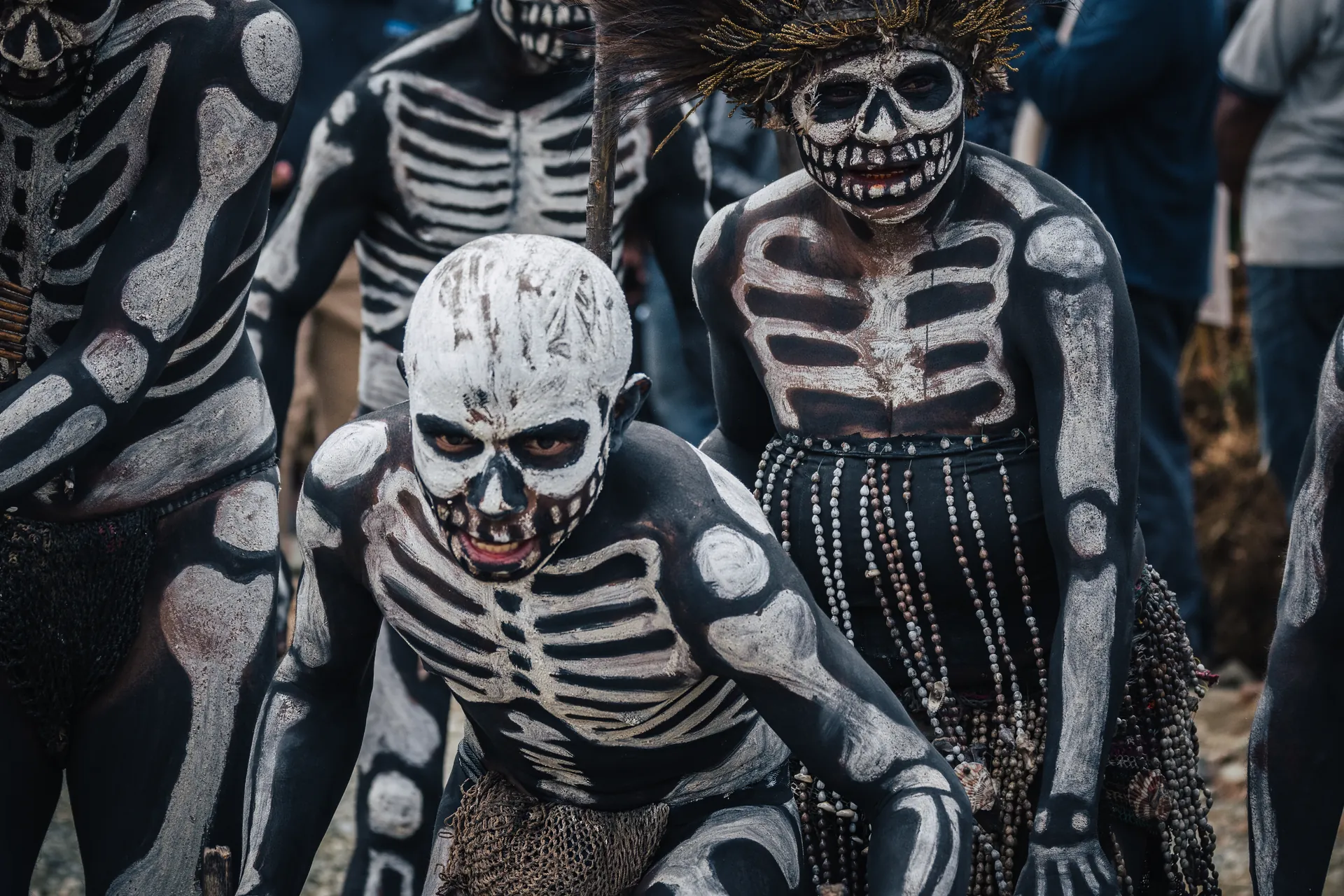
The heart of it is the Highlands. Around Mount Hagen the valleys are a patchwork of sweet-potato gardens and clan lands, and tradition is not a museum piece but the ordinary fabric of life. In the Asaro valley, men move out of the trees under masks of pale clay — the Mudmen, re-enacting the ghost-ambush that once scattered their enemies. In Simbu, dancers painted bone-white on black perform as the Skeleton Tribe, a dance about death and the spirits that hold the mountains.

And then this expedition does what almost no journey here does: it keeps going. From Vanimo on the north coast we cross one of the least-used international borders in the world into Indonesian Papua, and finish in Jayapura — the same island under a different flag, in what can feel like a different century. One island, two worlds: eight days from a private island in the Coral Sea to a market above Youtefa Bay.

"There are few places left where the modern world still feels like a distant rumour. Papua is one of them."
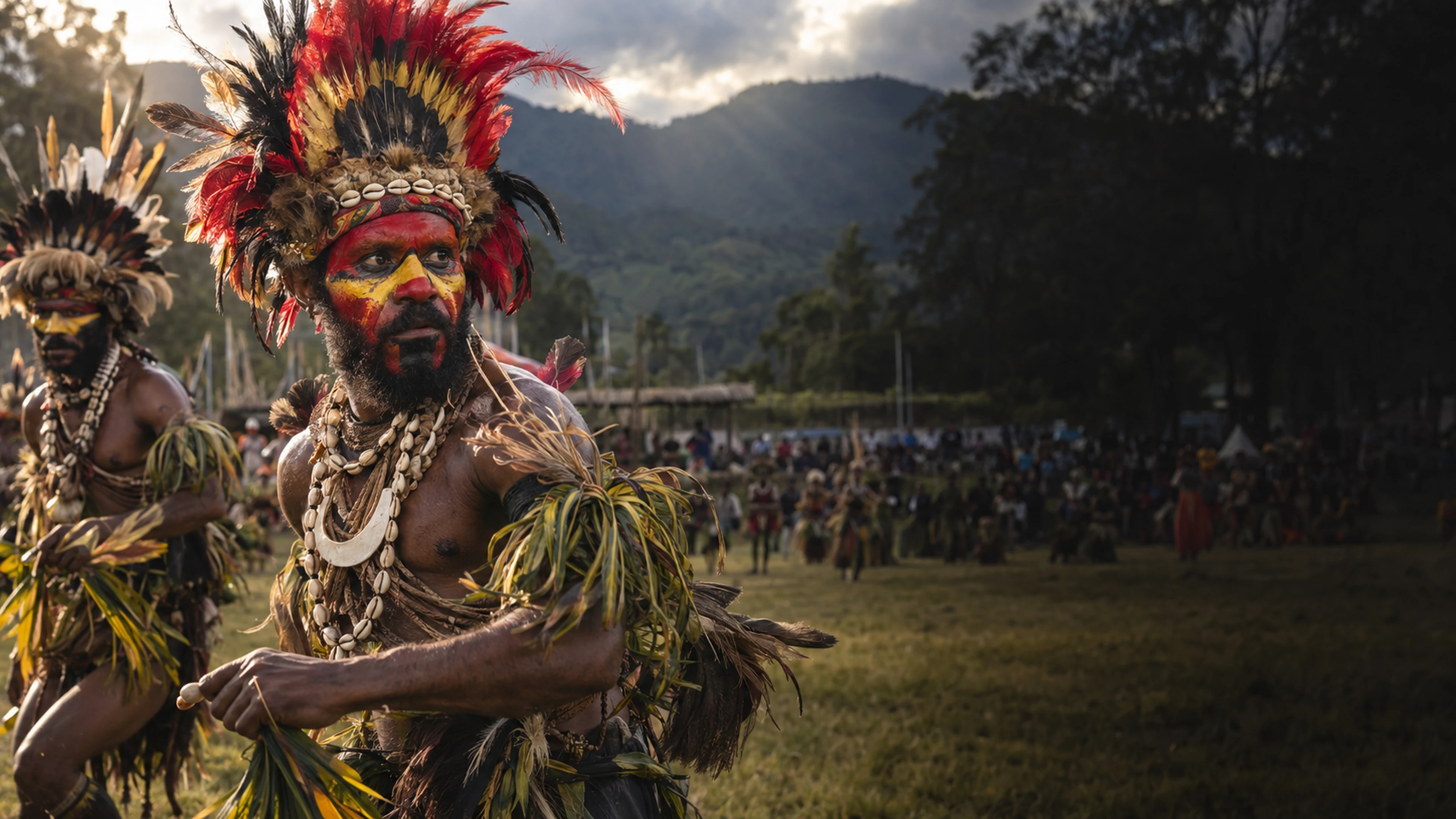
A Huli wigman in ceremonial face paint, Papua New Guinea Highlands
A Huli wigman of the Highlands — ceremonial dress as living tradition

Eight Hundred Languages, and the Valleys That Kept Them

The Highlands Sing-Sing

A full day as the guests of a Highlands village near Mount Hagen: welcomed by the elders, painted in the clan's ceremonial face and body designs, and fed from a Mumu — the earth oven in which pork, sweet potato, and greens cook slowly beneath hot stones. Music, dance, and storytelling carry the afternoon; none of it is staged for a schedule.

The Asaro Mudmen

Ghost-grey figures in heavy clay masks, moving out of the trees in slow silence. The men of Asaro, the story goes, once fled into the river and rose coated in pale mud — and their enemies, taking them for the dead returned, fled in turn. The disguise became a tradition, and it remains one of the most arresting sights in the Pacific.

The Simbu Skeleton Tribe

In the valleys of Simbu, dancers painted bone-white on black perform as living skeletons — a tradition made to frighten enemies and to appease the spirits believed to hold the mountains. Set against the green of the Highlands, it is theatre, memory, and belief in a single frame.

Birds of Paradise at Dawn

Before first light, an optional excursion climbs into the moss forest to wait beneath a display tree. New Guinea is the home island of the birds of paradise, and to watch a male throw open his plumes in the half-dark is worth every lost hour of sleep.

Loloata Island

The expedition opens on a private island fifteen minutes off the Port Moresby coast, where the reefs of Bootless Bay begin at the jetty. It is a soft landing in a hard country: snorkel the coral gardens, watch the Coral Sea go gold at dusk, and meet the group over the welcome dinner.

The Border Crossing to Jayapura

Almost no one crosses from Papua New Guinea into Indonesian Papua by land. We do — through the Wutung post to Jayapura, where the Papua State Museum keeps the island's material memory, the Youtefa market spills over with the produce of two worlds, and the farewell dinner is papeda and fresh seafood above the bay.

The Expedition

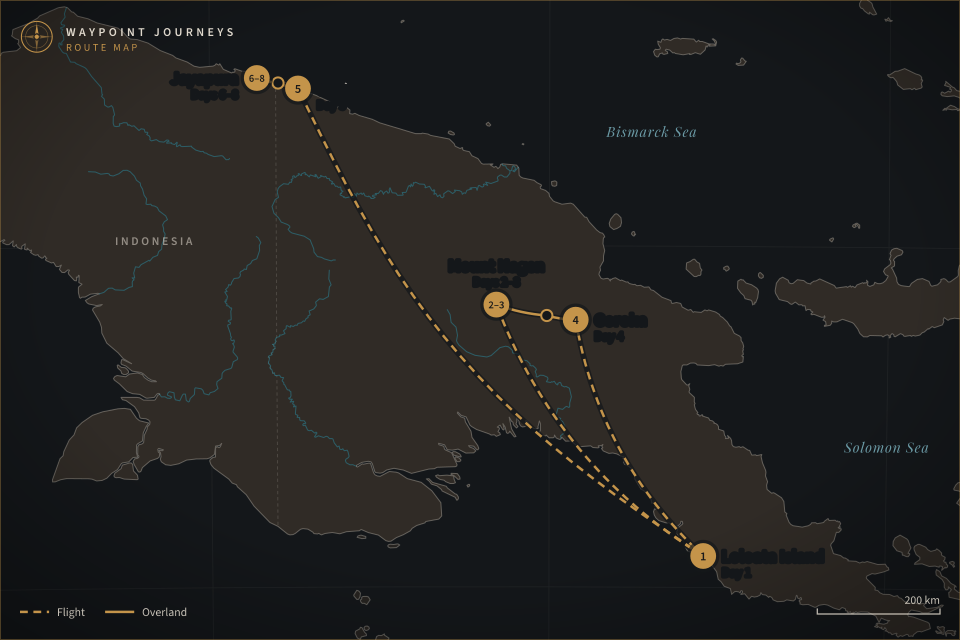
Eight days from a private island off Port Moresby to the Highlands of Mount Hagen and Goroka, then over the border at Vanimo into West Papua — ending in Jayapura, Indonesia.

Day 1
Arrive Port Moresby · Loloata Island
Day 1

Arrive at Port Moresby's Jacksons International and transfer past the city to the coast, where a boat crosses the fifteen minutes to Loloata Island — a private-island resort on the reefs of Bootless Bay. The afternoon is for the water: snorkel the house reef among coral heads and reef fish, or simply watch the Coral Sea settle towards evening. The group gathers over the welcome dinner for a briefing on the days ahead.

Day 2
Fly to Mount Hagen · capital of the Highlands
Day 2

A morning boat and a short drive return us to Jacksons for the flight into the middle of the island — up over the ridges and the cloud to Mount Hagen, at some 1,700 metres the rough-and-ready capital of the Highlands. The afternoon belongs to its markets, among the best in the country: bilum string bags in every pattern, carvings, feathers, and the full theatre of Highlands commerce. Evening settles over the Wahgi Valley.

Day 3
The Highlands village day · the Mumu feast
Day 3

A full day as the guests of a Highlands community. The elders make the welcome; the morning goes to ceremonial face and body painting in the clan's designs, and to preparing the Mumu — the earth oven in which pork, sweet potato, and greens cook slowly beneath hot stones. The feast is eaten together, and the afternoon runs long with music, dance, and storytelling: a sing-sing shared with you, not performed at you.

Day 4
Simbu & the Skeleton Tribe · the Asaro Mudmen · Goroka
Day 4

For the early risers, an optional pre-dawn excursion climbs into the forest to watch birds of paradise display at first light. Then the expedition takes to the road for one of the great Highlands drives — east through the Wahgi Valley into Simbu, where the Skeleton Tribe perform their bone-white dance of death and the mountain spirits, and on into the Asaro valley, where the Mudmen emerge from the trees in their grey clay masks. Night falls in Goroka.

Day 5
Fly Goroka → Port Moresby → Vanimo
Day 5

A flying day, and a long leap across the country: down from Goroka to Port Moresby, then north-west along the top of the island to Vanimo, a surf town on the Pacific coast a short drive from the Indonesian border. The evening is deliberately simple — a walk on the beach among fishing boats and surfboards, dinner by the water, and the sun going down on the last town in Papua New Guinea.

Day 6
Vanimo → Jayapura · crossing the border
Day 6

The morning belongs to the coast west of Vanimo — the drop of Awawi Falls and a lookout over the Pacific — before the short drive to Wutung, and one of the least-used international borders on Earth. We assist with every formality; on the far side, the same island becomes Indonesian Papua. The road to Jayapura runs through rainforest and coastal villages, and arrives as the lights come on around Yos Sudarso Bay.

Day 7
Jayapura · West Papua
Day 7

A day inside the other Papua. The Papua State Museum keeps the island's carvings, bark cloth, and material memory; the old Dutch colonial district holds its faded administrative grandeur; and the Jayapura City Tower looks out over the full sweep of Youtefa Bay. The Youtefa market is the sensory finale — smoked fish, betel nut, mountains of sago — before the farewell dinner, eaten the local way: papeda, the glass-smooth sago porridge, with fresh-caught seafood.

Day 8
Depart Jayapura
Day 8

The expedition closes with breakfast above the bay and the transfer to Sentani airport. Jayapura connects onward through Indonesia — Jakarta, Bali, or the reefs of Raja Ampat for those not yet finished with the island world — or homeward. Eight days, two countries, one island: the last great frontier, crossed end to end.

Asaro Mudmen in their clay masks at a Highlands sing-sing, Papua New Guinea

Small Group Expedition

Every Detail Arranged.
Every Moment Yours.

What's Included

Duration8 days / 7 nights, Port Moresby to Jayapura (one way)
Group SizeSmall group expedition: maximum 5 guests
Internal FlightsDomestic flights within Papua New Guinea (Port Moresby–Mount Hagen, Goroka–Port Moresby–Vanimo), all arranged
Border CrossingOverland crossing from Vanimo into Indonesian Papua with full assistance (Day 6)
AccommodationSeven nights: Loloata Island Resort (x1), Mount Hagen (x2), Goroka (x1), Vanimo Beach Hotel (x1), Jayapura (x2)
Included ExperiencesHighlands village day with Mumu feast (Day 3); Skeleton Tribe and Asaro Mudmen performances (Day 4); Awawi Falls (Day 6)
GuideEnglish-speaking expedition leader throughout; local tribal guides and cultural hosts
MealsAll meals daily — breakfast, lunch, and dinner — plus drinking water throughout
Not IncludedInternational flights, PNG and Indonesian visas, travel insurance, optional activities (incl. the dawn Birds of Paradise excursion), tips, personal expenses

FREQUENTLY ASKED QUESTIONS

Common Questions About This Expedition

The tribal areas we visit are the safest part of the journey: we arrive as the invited guests of communities our local partners and hosts have worked with for many years, not as strangers. Port Moresby — where most of the country's risk is concentrated — is managed with private transfers, vetted hotels, and no unaccompanied time in the city; petty crime is the main urban risk. This is expedition travel rather than resort travel, but it is well handled: a small group, an experienced leader, and local hosts at every stage.
The Vanimo–Jayapura crossing at Wutung is one of the least-used international borders in the world, and it is the quiet climax of this expedition. We assist in full: transport to the post, the formalities on both sides, and our Indonesian team waiting beyond them. You will need an Indonesian visa or eVisa arranged in advance — we send complete guidance to confirmed travellers. The expedition ends in Jayapura, which connects onward through Indonesia via Jakarta, Bali, or Raja Ampat.
An honest answer: sing-sings are living traditions, performed both for ceremony and for visitors — and they endure in part because performing sustains them. Our village day is hosted by communities our partners have worked with for many years, not assembled for a tour bus, and the fees paid go to the communities themselves. What you will see is real culture presented on its own terms: the paint, the dances, and the stories belong to the people showing them to you.
Light to moderate. Expect walking through villages on uneven ground, gentle forest trails on the optional dawn birds of paradise excursion, tropical heat and humidity, and several legs in small aircraft. No trekking experience is required; a reasonable level of fitness and a flexible traveller's temperament are all the expedition asks.

Expedition Investment

$3,495

USD per person, twin share

Fully inclusive of domestic flights within Papua New Guinea, the assisted border crossing into Indonesian Papua, accommodation, expedition leader and local hosts, all ground and boat transport, and all meals daily

Excludes international flights, PNG and Indonesian visas, travel insurance, optional activities, and tips. Single supplement $420. Departures year-round; the Mount Hagen and Goroka cultural-show seasons (August–September) book out far in advance

Reserve Your Spot
A Note on Safety & Logistics

Papua New Guinea carries a reputation, and we do not pretend otherwise. Most of it concerns urban crime in Port Moresby, and we manage the city accordingly: private transfers, vetted accommodation, and no unaccompanied time on the streets. The Highlands, where this expedition spends its days, run on relationships — and ours are long-standing, built over years with the local partners, village hosts, and tribal guides who make each stage possible. The other honest variable is weather: this is a country that moves by small aircraft, mountain cloud can reshuffle a morning, and the routing carries the flexibility to absorb it. This is expedition travel in the true sense — remote, occasionally improvised, and profoundly rewarding — run by people who know it well.