Waypoint Journeys Presents
Ethiopia
The Fire and the Faith
8 Days
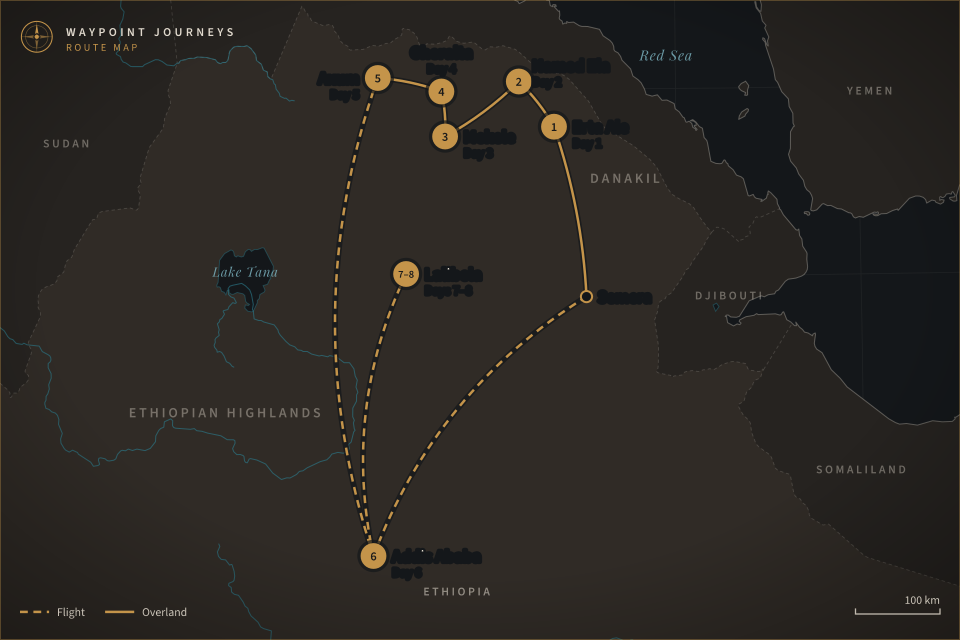
From the Lava Lakes of the Danakil to the Rock-Hewn Churches of Lalibela
View Expedition Details ↓One of the Oldest Places on Earth
Ethiopia is one of the oldest continuously inhabited places on Earth. It has never been colonised. Its alphabet predates the Roman Empire. Its churches were carved from living rock by hand. Its northern highlands hold monuments that rival anything in Egypt or Greece, and almost nobody comes.
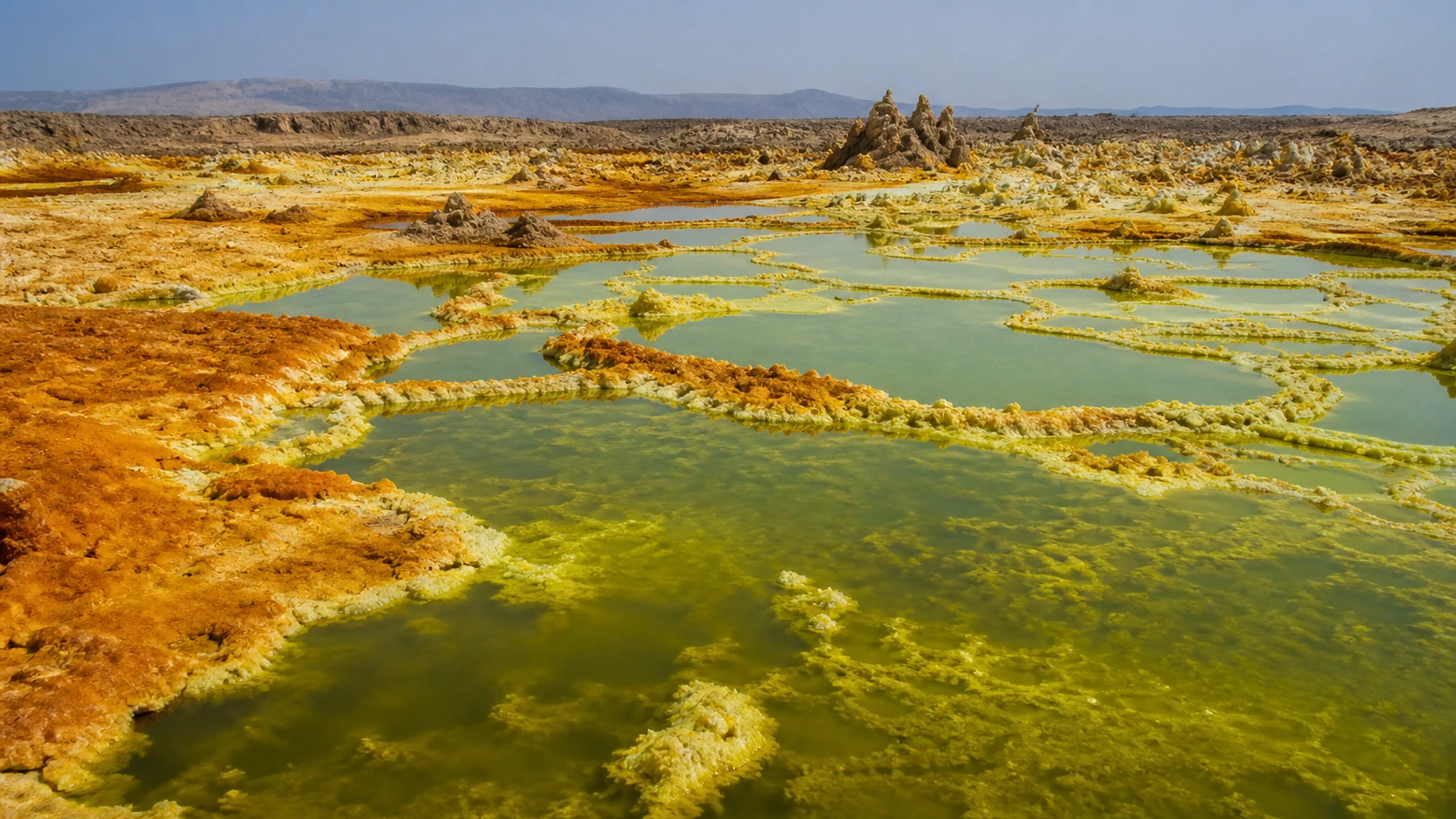
The Danakil Depression, straddling the north-east, is the most inhospitable landscape on the continent and one of the most visually alien places on the planet: the active lava lake of Erta Ale, the acid pools and neon mineral crusts of Dallol, salt flats below sea level, and temperatures that regularly exceed 50°C. It is the 'fire' of this expedition — and the counterpoint to the 'faith' of the highland north.
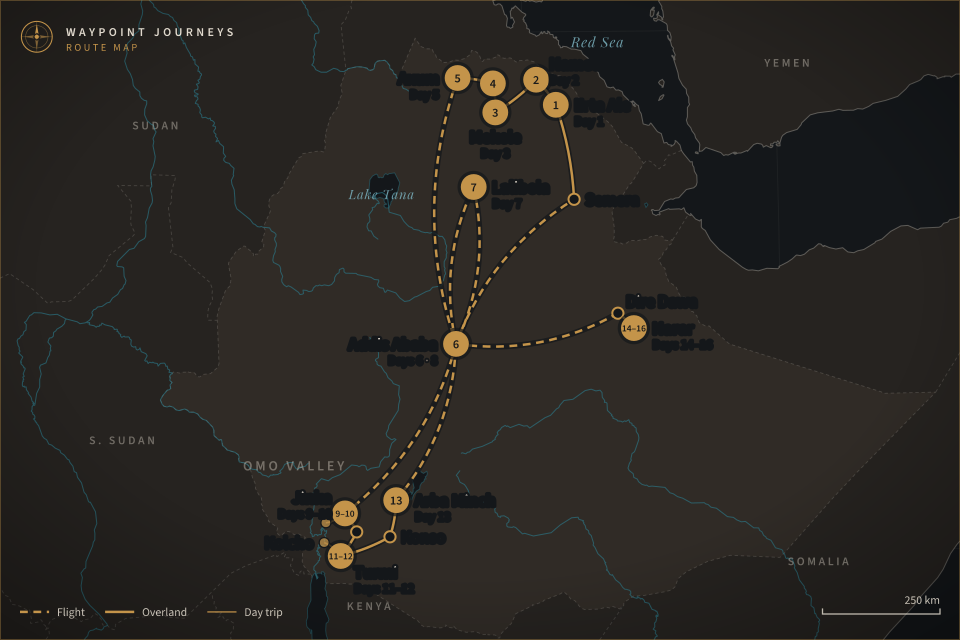
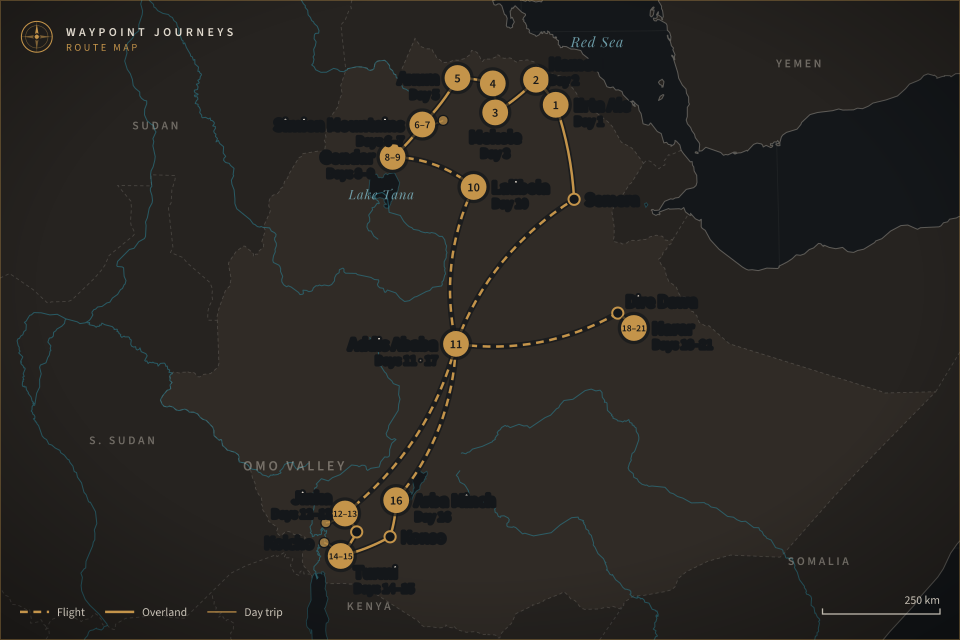
The 'faith' is the rock-hewn churches: the fifth-century murals of Abuna Yemata, reached by a 500-metre climb and a squeeze through a cliff fissure; the 3,000-year-old stelae of Axum and the chapel that claims guardianship of the Ark of the Covenant; and Lalibela, where eleven churches were carved down into the rock, Bet Giyorgis set alone in its cruciform pit. This is the 8-day Core expedition; a 16-day Extended version adds the Omo Valley and the walled city of Harar.
"Its churches were carved from living rock by hand. Its highlands hold monuments that rival anything in Egypt or Greece, and almost nobody comes."

Fire, Faith, and the Ancient World
A smoking mountain that has held an active lava lake longer than records have been kept. A sunrise hike to the caldera rim — the glow, the roar, the sulphur wind — is one of the rawest volcanic experiences accessible anywhere on Earth.
One of the lowest points on the surface of the Earth — a hallucinatory landscape of acid pools, neon mineral crusts, and salt formations in colours that have no business existing in nature. Among the hottest places on the planet.
In the Gheralta massif, ancient communities carved churches into cliff faces hundreds of metres above the valley. Abuna Yemata is reached by a 500-metre climb and a squeeze through a rock fissure, opening into a chamber whose fifth-century murals are perfectly preserved.
The weight of empire made physical: 3,000-year-old stelae, the crumbling palaces of ancient kings, and the chapel that claims guardianship of the Ark of the Covenant. The road there passes through Yeha — Ethiopia's oldest city, with 2,800 years of continuous presence.
Ethiopia's spiritual heartland: eleven churches carved down into the rock in the twelfth century. Bet Medhane Alem is the largest monolithic church on Earth; Bet Giyorgis, alone in its cruciform pit, is the single most iconic image in all of Ethiopian heritage.
An optional 16-day version adds the Omo Valley — Mursi, Karo, and Hamar peoples, among the most distinct cultures on Earth — and Harar, one of Islam's holiest cities, with 99 mosques inside its walls and the centuries-old tradition of feeding wild hyenas at the city gates after dark.
The Core Expedition
Eight days — the Danakil and the highland north. The 16-day Extended version adds the Omo Valley and Harar.
The expedition opens before dawn with a short domestic flight north to Semera or Mekele (we recommend arriving into Addis the previous evening). From the airstrip, our vehicles head out across the Danakil, breaking the drive at Lake Afdera — a brine lake far below sea level in the depression's shimmering heat. By late afternoon we reach the Dodom camp at the base of Erta Ale, the restless smoking mountain that has been erupting continuously for longer than anyone can remember.
We rise for the hike to the summit lava lake as first light breaks across the caldera — the glow, the heat, the sulphur smell. Down from the volcano, the day shifts to the Dallol Depression: a hallucinatory landscape of acid pools, neon mineral crusts, and salt formations stacked in colours that have no business existing in nature. The evening closes at Lake Karum, where the salt flats turn amber and copper as the sun drops into the depression.
An early start brings us deeper into the Dallol — one of the lowest points on the surface of the Earth. We spend the morning among the geothermal vents and crystalline salt formations before visiting a traditional mining site where Afar workers still carve salt slabs from the ancient lake bed entirely by hand. If the timing is right, a camel caravan will be moving through — a sight that feels genuinely untouched by the century. By afternoon we are on the road to Mekele, regional capital of Tigray.
We drive into the Gheralta massif, where ancient Tigrinya communities carved their churches directly into cliff faces hundreds of metres above the valley floor. The morning is given to Abrha We Atsbha, an architectural wonder still used for worship today. In the afternoon we make the ascent — roughly 500 metres of climbing — to reach Abuna Yemata, accessed through a narrow rock fissure that opens into a chamber whose ceiling and walls are covered in murals perfectly preserved since the fifth century. There are few rooms on Earth quite like it.
The road to Axum passes through Yeha, Ethiopia's oldest city — more than 2,800 years of continuous human presence, a ruined Moon God temple, and almost no other visitors. Axum is the weight of empire made physical: 3,000-year-old stelae, the crumbling palaces of ancient kings, and the chapel that claims guardianship of the Ark of the Covenant. We spend the afternoon and evening here slowly.
A final morning in Axum — the Queen of Sheba's Palace, the baptismal pools, the museum — before flying south to Addis Ababa and a short afternoon circuit of the capital: the National Museum (home to the fossil Lucy), the Piazza quarter, and dinner at one of the city's genuinely excellent restaurants.
We fly north to Lalibela, Ethiopia's spiritual heartland, and spend the afternoon with the first cluster of the famous rock-hewn churches: Bet Medhane Alem — the largest rock-cut church on Earth — Bet Maryam with its celebrated carved reliefs, and the perfectly proportioned Bet Giyorgis, set alone in its cruciform pit and arguably the single most iconic image in all of Ethiopian heritage.
One final early morning among the churches — the second cluster this time, including Bete Emanuel, with its finely articulated exterior façade, and Bete Abba Libanos, partly carved from a cliff face that still forms its rear wall. Then a transfer to the airstrip, back to Addis Ababa, and onward international connections. Ethiopia has a way of staying with you.
What's Included
FREQUENTLY ASKED QUESTIONS
Common Questions About This Expedition
Expedition Investment
USD per person, twin share — Core 8 days from $3,295 · Extended 16 days from $7,995
Fully inclusive of accommodation, expert guides and Danakil escort, all domestic flights, private 4WD transport, all permits and entrances, and all meals
Excludes international flights, Ethiopian e-visa (~$82), travel insurance, gratuities, and alcohol. Core: single supplement $450, small group supplement $350 (groups of 3 or fewer). Extended: single supplement $850, small group supplement $650
Reserve Your SpotThe Danakil Depression requires a mandatory military escort, which we arrange in full, and our in-country logistics team has operated in the region for over a decade. The physical demands are genuine — temperatures regularly exceed 50°C, the terrain is rough, and Erta Ale involves an overnight hike — but the security situation is well-managed for organised expeditions. We travel with expert local guides throughout, monitor regional conditions continuously, and confirm the operational status of each leg honestly at the time of enquiry. We're glad to discuss fitness, pacing, and current conditions directly before you book.