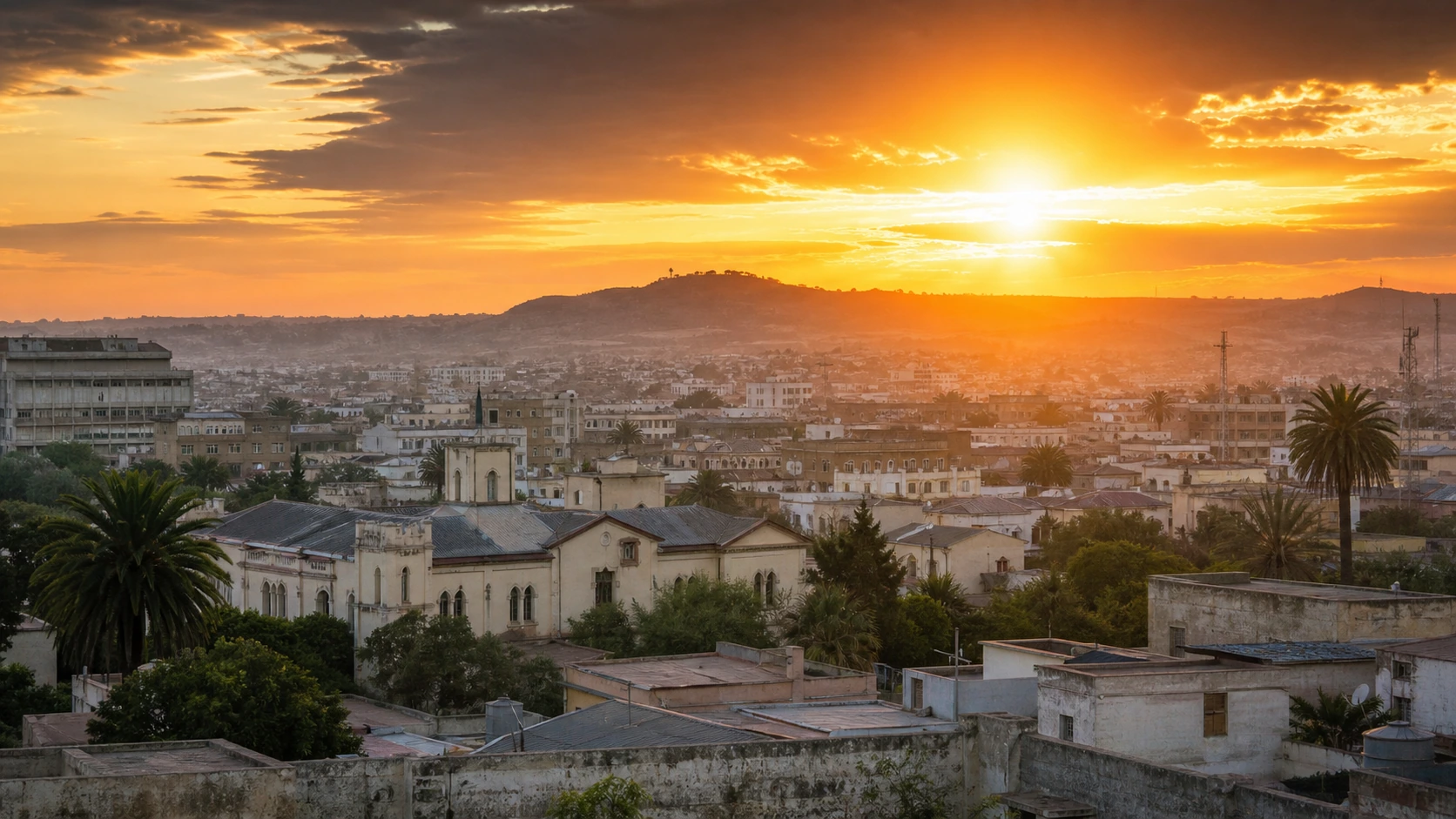
Waypoint Journeys Presents

Turkmenistan

The Door to Hell, Ancient Merv, and the White Marble City

7 Days

Seven Days Across the Strangest Country in Central Asia

View Expedition Details ↓

A Country Built on Ruins, Marble, and a Burning Door to Hell

Turkmenistan is one of the least-visited countries on Earth — fewer foreign visitors arrive in a year than show up in a single morning at most European capitals. It sits at the heart of Central Asia, bordered by the Caspian Sea, the Karakum Desert, and the historic Silk Road, and it has, by deliberate policy, stayed almost entirely closed to the outside world. Independent travel is not really possible. With the right local partner — and we work with the best — the country opens up.

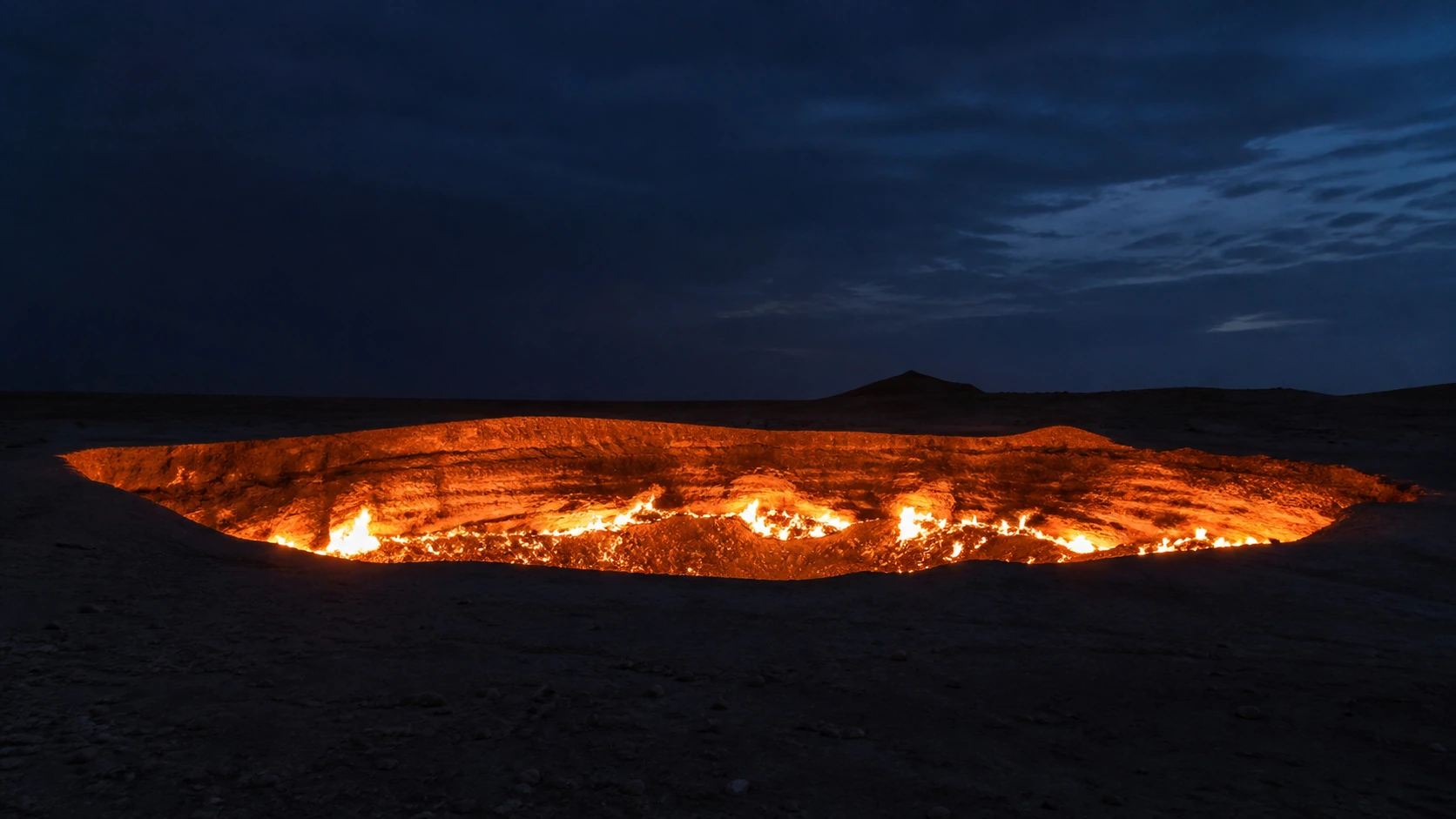
The list of reasons to come is short and overwhelming. Ancient Merv was once one of the largest cities on Earth, the second city of the Islamic world after Baghdad, before Genghis Khan razed it in 1221. Konye-Urgench was the capital of the Khwarezmid Empire and is still walked over by camels grazing among 12th-century minarets. The Darvaza Gas Crater — a 70-metre-wide pit of natural gas that has been burning continuously in the desert since 1971 — is one of the most surreal sights on the planet, and we sleep in tents on its rim.

Then there is Ashgabat, the capital — the largest concentration of white marble buildings anywhere in the world, a city of gold-domed ministries, fountains, and ten-lane boulevards, almost empty of traffic, set against the foothills of the Kopet Dag. The Yangykala Canyon, where the floor of an ancient ocean was lifted and weathered into striped pink and gold cliffs. Old Nisa, the Parthian royal capital. And, in the canyons of Nokhur, mountain villages whose graveyards bristle with the horns of mountain goats. Seven days is the right length to see it properly.

"You stand on the rim of the Darvaza crater at midnight, the heat pushes against your face, and you realise no photograph has ever conveyed it."
White marble government building in Ashgabat, Turkmenistan
Ashgabat — the white marble city

Six Reasons to Make the Journey

The Darvaza Gas Crater

A 70-metre-wide flaming pit in the middle of the Karakum Desert that has been burning since 1971. We arrive at sunset, watch the colour shift from copper to gold to deepest red as night falls, and sleep in tents on the rim with the sound of fire and wind.

Ancient Merv

A UNESCO World Heritage Site of vast scale: Gyz Gala, Erk Gala, Soltan Gala, the Mausoleum of Sultan Sanjar. Once the second-largest city in the Islamic world, Merv stood at the heart of the Silk Road for 2,000 years before the Mongols destroyed it in a single week.

White-Marble Ashgabat

The capital holds the Guinness record for the largest concentration of white marble buildings on Earth — gold-domed ministries, the Arch of Neutrality, the Constitution Monument, and ten-lane boulevards almost empty of traffic, against the backdrop of the Kopet Dag mountains.

Konye-Urgench

The capital of the Khwarezmid Empire before the Mongols arrived. Its 12th-century minaret of Kutlug Timur — at 60 metres, the tallest in Central Asia — still stands amid mausolea, madrasas, and the wind-blown desert that has slowly reclaimed the rest.

Yangykala Canyon

The floor of an ancient ocean, lifted and weathered into a 25-kilometre-long canyon of striped pink, white, and gold cliffs. The "Fire Canyon" — fewer than a thousand foreign visitors a year, and one of the most photogenic places on the continent.

Old Nisa and the Parthians

A UNESCO-listed Parthian royal capital, 18 km west of Ashgabat. One of the most important archaeological sites in Central Asia, where the rituals and the rhythms of an empire that once rivalled Rome are still being uncovered.

The Expedition

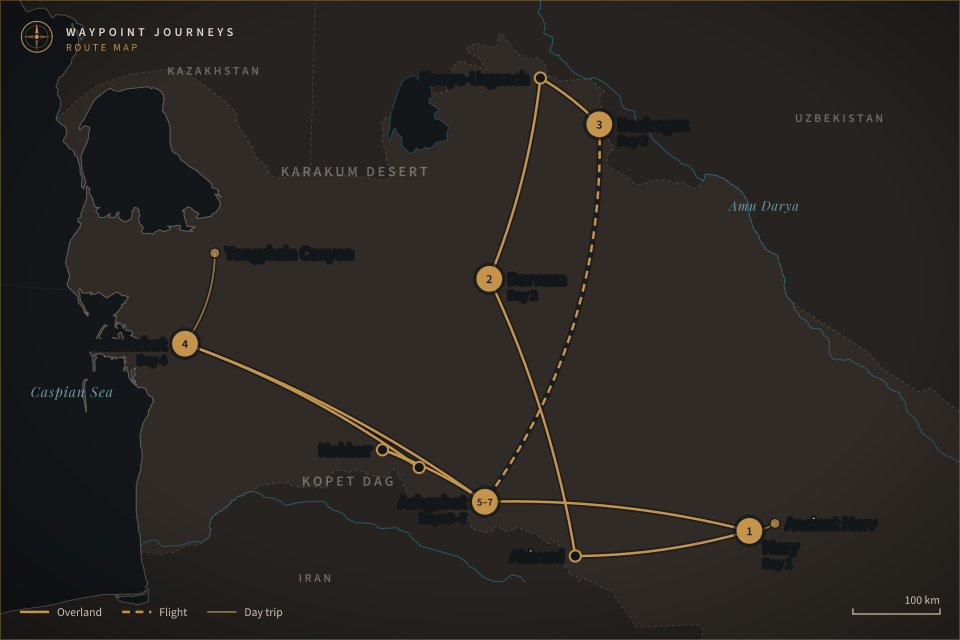
Seven days across the Karakum Desert, the Silk Road ruins, and the white-marble capital.

Day 1
Arrive Ashgabat — drive to Mary — Ancient Merv
Day 1

Met on arrival at Ashgabat International. Drive east to Mary city and check in at the hotel. After lunch, the afternoon is given to Ancient Merv — once the second city of the Islamic world, on a par with Baghdad, Cairo, and Damascus. Walk the ramparts of Gyz Gala and Erk Gala, the Mausoleum of Sultan Sanjar, and the smaller mausolea of Yusup-Hamadani and Ibn Zeid. Return to Mary for dinner at a local restaurant. Overnight at Hotel Margush.

Day 2
Mary — Abiverd Ruins — Darvaza Gas Crater
Day 2

After breakfast, drive north toward the Darvaza Gas Crater, stopping en route at the Abiverd ruins near Kaakhka — a once-great medieval Silk Road town reduced to silent earth walls. Lunch in the car. Arrive at Darvaza in the late afternoon for the daylight view of the crater, then return after dinner to feel the heat, hear the wind, and watch the colour shift through dusk into deepest red night. Overnight in tents on the rim.

Day 3
Darvaza — Konye-Urgench — Dashoguz
Day 3

A slow breakfast at the crater, then drive north through the Karakum Desert — the desert fauna and flora of one of the great empty places on Earth. Lunch in a local restaurant or in the car. Arrive at Konye-Urgench, the UNESCO-listed Silk Road capital of Khwarezm, and walk the squares and monuments: the Kutlug Timur minaret (60 metres, the tallest in Central Asia), the Sultan Tekesh and Najmuddin Kubra mausolea. Continue to Dashoguz for dinner. Overnight at Hotel Dashoguz.

Day 4
Dashoguz — Ashgabat — Balkanabat — Yangykala
Day 4

Morning transfer to Dashoguz International for the 45-50 minute flight back to Ashgabat. On arrival, drive west to Balkanabat for lunch and a brief check-in at the hotel. After a short rest, drive on to the Yangykala Canyon — the floor of an ancient ocean lifted and weathered into 25 kilometres of striped pink, white, and gold cliffs. Watch the late light walk across the canyon walls before driving back to Balkanabat for dinner. Overnight at Hotel Nebitchi.

Day 5
Balkanabat — Kovata — Nokhur — Old Nisa — Ashgabat
Day 5

Check out after breakfast and drive back toward Ashgabat. Stop at Kovata Cave, an underground sulphur lake hidden beneath the Kopet Dag, then on to the mountain villages around Nokhur — graveyards bristling with mountain-goat horns, weavers, and a way of life unchanged for centuries. After lunch, visit Old Nisa, the UNESCO-listed Parthian royal capital 18 km west of Ashgabat. Continue into the city and check in. Dinner at a local restaurant. Overnight at Hotel Oguzkent.

Day 6
Ashgabat — the White-Marble City
Day 6

A full day in the surreal capital. The Arch of Neutrality, the Monument to the Constitution, the Memorial Complex, and the Alem Cultural and Entertainment Center (home to the world's largest indoor Ferris wheel, fully enclosed in glass). After lunch, free time and then a drive through the Russian Bazaar, the Berkarar shopping centre, and the lit boulevards of the new city, with a stop at the Palace of Happiness — Ashgabat's wedding palace, a marble-and-gold cube the size of a city block. Dinner in town. Overnight at Hotel Yyldyz.

Day 7
Departure from Ashgabat
Day 7

An early-morning transfer to Ashgabat International Airport for your onward flight. Seven days that will rearrange what you thought you knew about Central Asia.

Darvaza Gas Crater glowing at night in the Karakum Desert

Small Group Expedition

Every Detail Arranged.
Every Moment Yours.

What's Included

Duration 7 days / 6 nights
Group Size Small group expedition: maximum 5 guests, intimate and unhurried
Flights One domestic flight included (Dashoguz → Ashgabat) on Day 4. International flights to Ashgabat are not included.
Accommodation Hotel Margush, Mary (1 night) · Tents on the rim of the Darvaza crater (1 night) · Hotel Dashoguz (1 night) · Hotel Nebitchi, Balkanabat (1 night) · Hotel Oguzkent, Ashgabat (1 night) · Hotel Yyldyz, Ashgabat (1 night)
Meals All breakfasts, lunches, and dinners included throughout. Mineral water (0.5 L per person per day) included. Beverages and alcohol not included.
Transport Private vehicle with experienced English- or Russian-speaking driver-guide throughout; one domestic flight (Day 4); all airport transfers included
Not Included International flights to Ashgabat; Turkmenistan visa fee (~$40 USD) and migration fee (~$12 USD plus $4 bank fee) collected on arrival; PCR test if required (~$30 USD); photo and video permits at sensitive sights; travel insurance; tips for driver and guide; folklore concerts and shows; alcohol and additional beverages.

FREQUENTLY ASKED QUESTIONS

Common Questions About This Expedition

Turkmenistan is one of the most orderly and safest destinations in Central Asia. Violent crime is virtually nonexistent, the cities are immaculately maintained, and our in-country team in Ashgabat coordinates every permit, vehicle, and guide directly. Internal movement requires an itinerary registered with the authorities, which we arrange in full before arrival.
The crater has been burning continuously since 1971 and remains visible. The government has stated an intention to extinguish it, and recent reporting suggests the flames have diminished compared with their peak — but at the time of writing it is still alight at night, and the heat, the sound, and the visual scale make it one of the most extraordinary places on Earth. We recommend visiting sooner rather than later.
Yes. A Letter of Invitation (LOI) issued by our partner operator is required before you can apply, and the visa itself is collected on arrival at Ashgabat International Airport. We handle the LOI process end-to-end. Plan on approximately three to four weeks of lead time for LOI approval before travel.
Few countries in the world combine ruins of this scale, landscapes this strange, and architecture this surreal. Ancient Merv was once one of the largest cities on Earth. Konye-Urgench was the capital of Khwarezm before the Mongols. Ashgabat is the world's largest concentration of white marble. The Darvaza Gas Crater is unlike anything else. And almost nobody has been — Turkmenistan receives a fraction of the tourists of any of its Central Asian neighbours.

Expedition Investment

$3,495

USD per person

Fully inclusive of accommodation, ground transportation, the Dashoguz–Ashgabat domestic flight, all meals, permits, entrance fees, and English- or Russian-speaking guide

International airfare to Ashgabat, visa and migration fees, and travel insurance not included

Reserve Your Spot
A Note on Safety

Turkmenistan is quiet, orderly, and among the safest countries to visit in Central Asia. Crime against tourists is virtually unheard of, the cities are immaculately maintained, and our in-country partner in Ashgabat has been running expedition logistics for two decades. Every internal move is pre-permitted and pre-registered with the authorities. The one practical note: photography of government buildings, military sites, and the presidential palace is restricted, and your guide will let you know exactly where the line falls. We are happy to address any specific questions about safety directly.