Waypoint Journeys Presents

The Atlantic Frontier

Seven Countries, One Road

14 Days

Banjul to Abidjan — Overland Through Seven Countries

View Expedition Details ↓ Plan This Expedition →

We reply within 24 hours

Not a Destination, but a Passage

West Africa is not a destination. It is a passage — a coast where countries stack against each other like pages, none of them large, every one of them distinct, and the only honest way to read them is in order. This expedition drives that passage whole: a continuous supported 4WD convoy from the mouth of the Gambia River to the Ebrié Lagoon at Abidjan, seven countries in fourteen days, one unbroken line down the Atlantic frontier of the continent.

The line passes through places that barely appear in the brochures of the world. The mangrove rivers of the Casamance, where Senegal turns green and slow. Guinea-Bissau's faded Portuguese capital, its grand avenues dissolving quietly back into the heat. The Fouta Djalon, the water-rich highlands that give Guinea its interior identity — green plateaus, waterfalls, air that surprises you by being cool. Then Freetown on its Atlantic hills, Monrovia with America written in its street names, and at the end, rising out of the bush at Yamoussoukro, a basilica on the scale of St Peter's.

None of it is smooth, and none of it is meant to be. The borders feel improvised because some of them are; the tarmac dissolves into red earth and returns without warning; a crossing can take an hour or an afternoon. Unpredictability is not a flaw in this expedition — it is part of the design, planned for, staffed for, and absorbed by a convoy built to carry it. What you get in exchange is the rarest thing in modern travel: a region read whole, in order, at ground level.

"West Africa is not a place you pass through. It is a place that passes through you."
The Basilica of Our Lady of Peace rising over the lake at Yamoussoukro, Côte d'Ivoire
The Basilica of Our Lady of Peace at Yamoussoukro — one of the largest churches on Earth

Seven Countries, Six Borders, and a Basilica in the Bush

Seven Countries, One Road

The Gambia, Senegal, Guinea-Bissau, Guinea, Sierra Leone, Liberia, Côte d'Ivoire — one of the most complex border-crossing expeditions in Africa, run as a single continuous convoy. Six overland frontiers, every permit, stamp, and roadside negotiation handled, so the line on the map stays unbroken.

The Casamance

South of the Gambia, Senegal changes register: the Casamance is a land of slow rivers and mangrove networks, of pirogues and shaded river ports, ending at Cap Skirring — where the Atlantic sunsets are among the finest on the whole West African coast.

The Fouta Djalon Highlands

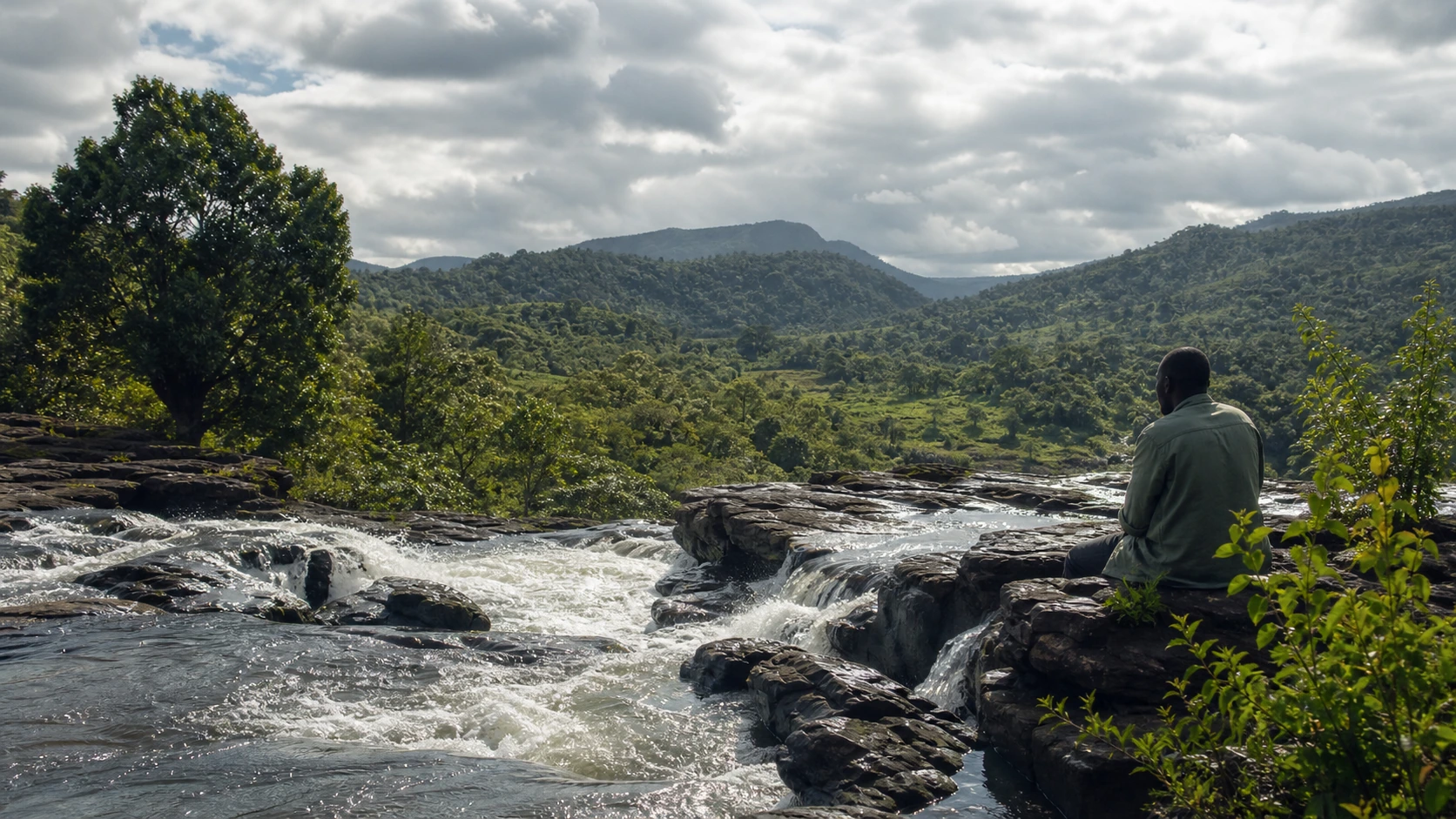
The water tower of West Africa — green plateaus and forested valleys where the Gambia and Senegal rivers rise. Waterfalls drop off the plateau edges, the air cools with the altitude, and Guinea's interior identity — Fula, pastoral, self-contained — comes slowly into focus.

Freetown & Monrovia

Two capitals founded as answers to slavery — Freetown by freed slaves under Britain, Monrovia by freed slaves from America — their founding stories still written in their street names. Few travellers see either; almost none see both in a single journey.

The Basilica of Yamoussoukro

In the middle of the Ivorian bush stands one of the largest churches on Earth — the Basilica of Our Lady of Peace, its dome answering St Peter's, its colonnades facing the forest. Whatever you decide it means, the scale of it, out here, is one of the strangest and most memorable sights in Africa.

Zaouli Masked Dance

In the Guro villages of central Côte d'Ivoire, the Zaouli mask dances at a speed the eye struggles to follow — feet blurring beneath a serene carved face. It is one of West Africa's most striking living traditions, and we see it where it belongs: in the villages that keep it.

The Expedition

Fourteen days overland from Banjul to Abidjan — seven countries in one supported convoy, with a single flight over the hardest gap.

Day 1
Arrival Banjul · convoy briefing
Day 1

Arrive in Banjul, the smallest capital on Africa's Atlantic coast, where the expedition vehicles are waiting. The evening opens with the convoy briefing — the route, the protocol, the seven countries ahead — and closes with sunset over the mouth of the Gambia River, where the line begins.

Day 2
Banjul → Ziguinchor · into the Casamance
Day 2

The convoy rolls south over the Gambian border and into Senegal's Casamance, a region of slow rivers and mangrove channels that feels like a country of its own. The day ends in Ziguinchor, the old river port on the Casamance River, its waterfront unhurried in the evening heat.

Day 3
Ziguinchor → Cap Skirring · the Atlantic coast
Day 3

A shorter day west along the Casamance's back roads to the Atlantic at Cap Skirring, through fishing villages and sacred-forest country. The afternoon belongs to the coastline and its communities; the evening belongs to one of the finest sunsets in West Africa.

Day 4
Into Guinea-Bissau → Bissau
Day 4

The first rugged border of the expedition takes the convoy into Guinea-Bissau, one of the least-visited countries on Earth. The day ends in Bissau, its faded Portuguese capital — grand colonial avenues, a crumbling presidential palace, and a slow, likeable rhythm all its own.

Day 5
Bissau → Gabu · the deep interior
Day 5

East through savannah and cashew country, the villages thinning and the horizons widening, into the market towns of the deep interior. Gabu — once the seat of its own kingdom — is the night's stop, and the staging post for the climb into Guinea.

Day 6
Guinea border → Labé · into the Fouta Djalon
Day 6

A remote crossing lifts the convoy into Guinea and up onto the Fouta Djalon, the green highland heart of the country. The air cools with the altitude on the climb to Labé, the plateau's Fula capital and the base for the highland days.

Day 7
Fouta Djalon → Kindia · waterfalls and valleys
Day 7

A long highland day south through the Fouta Djalon's waterfalls and forested valleys, with the stops dictated as much by the road as by the plan. The plateau gives way stage by stage toward Kindia, the convoy's last night before the coast.

Day 8
Kindia → Freetown · the hardest border day
Day 8

The expedition's hardest border day: the crossing into Sierra Leone can take an hour or an afternoon, and the convoy is built for either. On the far side waits one of the great arrivals in Africa — Freetown, spread over its green hills above the Atlantic.

Day 9
Freetown immersion
Day 9

A full day in Freetown without the vehicles: the markets, the colonial-era landmarks of the freed-slave settlement, the white-sand beaches down the peninsula, and time with the community projects we support here. Few capitals reward a day on foot the way this one does.

Day 10
Freetown → Monrovia · the defining overland segment
Day 10

The defining overland segment of the expedition — a long day through remote south-eastern Sierra Leone to the Liberian border, one of the most complex crossings on the route. Terrain, not distance, sets the pace, and Monrovia's lights at the end of it feel earned.

Day 11
Monrovia exploration
Day 11

A day in Monrovia, the capital founded by freed American slaves and still carrying America in its street names, its flag, and its accents. We explore its coastal districts and its layered history with people who lived that history's most recent chapters.

Day 12
Fly Monrovia → Abidjan · on to Yamoussoukro
Day 12

The one flight of the expedition lifts over the roadless gap between Monrovia and Abidjan, where the Ivorian vehicles are waiting. The drive north ends at Yamoussoukro for the reason everyone comes: the Basilica of Our Lady of Peace at sunset — one of the largest churches on Earth, alone against the bush.

Day 13
Zaouli villages → Abidjan · closing dinner
Day 13

In the Guro villages beyond Yamoussoukro, the Zaouli mask dances — feet moving faster than the eye can follow beneath a serene carved face, one of West Africa's most striking living traditions. Then south to Abidjan, the lagoon city, for the expedition's closing dinner.

Day 14
Departure Abidjan
Day 14

Fourteen days, seven countries, one road behind us. Breakfast, a last look over the lagoon, and transfers to Abidjan's airport for onward flights — the line from the Gambia River to the Ebrié Lagoon complete.

The green highlands of the Fouta Djalon, Guinea

Small Group Expedition

Every Detail Arranged.
Every Moment Yours.

What's Included

Duration14 days / 13 nights, Banjul to Abidjan (one way)
Group SizeSmall group expedition: maximum 5 guests
ConvoyAll overland travel in a supported 4WD convoy with professional expedition leader and local fixer teams in every country
BordersSix overland border crossings plus the Monrovia–Abidjan flight — all assistance, permits and paperwork handled
AccommodationThirteen nights: hotels throughout — the best available on each stage, from boutique in the capitals to simple in the deep interior
Included ExperiencesCasamance and Cap Skirring; the Fouta Djalon; Freetown and Monrovia city immersions; the Basilica of Yamoussoukro; Zaouli masked dance
FlightMonrovia → Abidjan (Day 12) included
MealsBreakfast daily; selected lunches and dinners on remote days — most city meals independent
Not IncludedInternational flights (arrive Banjul / depart Abidjan), visas for the seven countries, travel insurance, most city meals, alcohol, tips

FREQUENTLY ASKED QUESTIONS

Common Questions About This Expedition

Honestly: this is the roughest itinerary we run in Africa. Expect long convoy days, real heat, hotels that drop to basic on some stages, and borders that can take an hour or an afternoon — nobody can tell you which in advance. The reward is a continuous line across a region almost nobody crosses, and days that feel earned because they are. Travellers who need certainty about what each day will hold should choose another expedition; travellers who can ride with the road tend to call this the best thing we run.
This is the admin Everest of our catalogue: depending on your nationality, up to six visas for the seven countries. We do not leave you alone with it. Confirmed travellers receive a complete visa dossier, letters of invitation where they are needed, and a recommended application sequence, all months in advance — you follow the sequence, we track the progress, and by departure the paperwork is a solved problem.
Each of the seven countries is assessed separately and continuously, not as a single headline. We route around any region in doubt, we travel only by day, and the convoy moves under a strict protocol with the vehicles in constant contact. Our fixer network in each country is the core of this product — it is how we know what the road ahead actually holds. Across the region, the overall risk is dominated by the roads themselves, not by crime, which is exactly why we drive the way we do.
Because of what it takes to keep the line unbroken: fourteen days of convoy logistics, fixer teams in seven countries, six border crossings with every permit and paper handled, an internal flight, and a contingency margin built into every stage for the days when West Africa improvises. The price is not the hotels — it is the machinery that makes the line on the map possible.

Expedition Investment

$6,950

USD per person, twin share

Fully inclusive of the supported 4WD convoy and expedition leader, local fixer teams in all seven countries, six border crossings handled end to end, the Monrovia–Abidjan flight, thirteen nights' accommodation, and all listed meals and experiences

Excludes international flights, all visas, travel insurance, most city meals, and tips. Single supplement $520. Runs in the November–February dry window; routing may adjust in real time with road and border conditions

Reserve Your Spot
A Note on Safety & Logistics

This expedition crosses seven countries, and we treat each one on its own terms: every region on the route is assessed separately and continuously, and our expedition leader carries the authority to reroute at any point if conditions call for it. The convoy runs under a strict protocol — daylight driving only, vehicles in constant contact, and local fixer teams ahead of us at every stage and every border. It is worth saying plainly that across this region the main risk is the road itself, not crime, and the whole design of the trip — the convoy, the pace, the daylight rule — exists to manage exactly that. We monitor conditions continuously and brief every confirmed traveller in detail before departure.