Waypoint Journeys Presents
The Granite Teeth
Torres del Paine · The Classic W Trek
6 Days
Glaciers, Granite & the Wind at the End of the World
View Expedition Details ↓ Plan This Expedition →We reply within 24 hours
The Most Beautiful Walk on Earth Has a Shape
At the bottom of the Americas, where the Andes make their last stand before the ice, a knot of granite erupts two kilometres out of the steppe: Torres del Paine. Glaciers calve into lakes the colour of antifreeze, guanacos graze beneath condors with three-metre wingspans, and the wind — the famous, furious Patagonian wind — polishes everything it touches, including you.
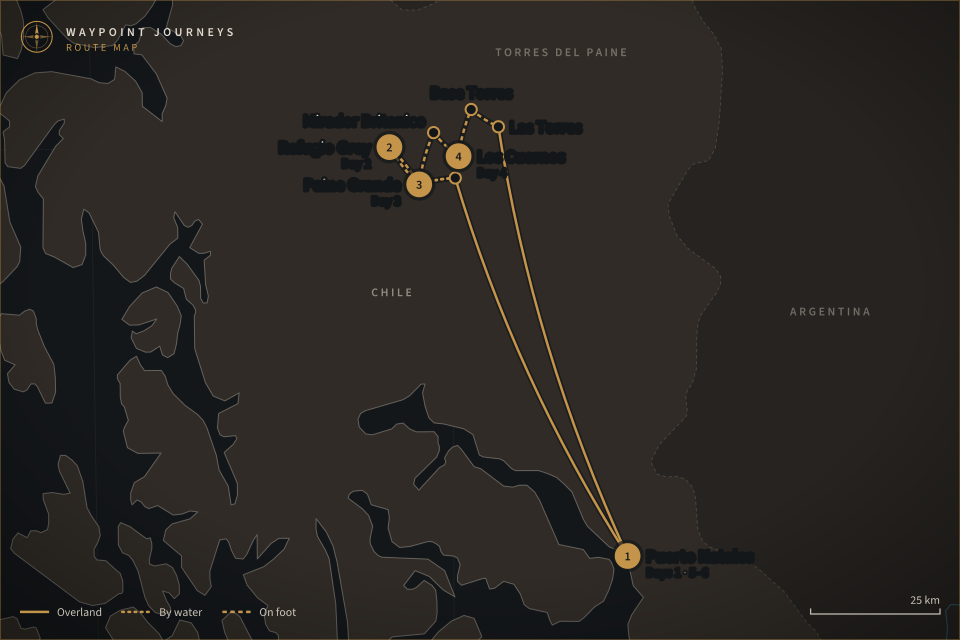
The W is the classic way through it: a five-day line traced up three valleys and across two lake shores, west to east, each stroke of the letter ending at something implausible — the blue wall of the Grey Glacier, the thunder of avalanches off Paine Grande in the French Valley's amphitheatre, the two-tone horns of Los Cuernos, and finally, at dawn on the last hiking day, the three towers themselves rising sheer above their frozen lake.
We run it properly: a licensed trekking guide, refugio bunks booked solid on a route where beds sell out months ahead, full board from trailhead to trail's end, the catamaran, the park fees, and the transfers — so all you carry is a daypack and all you decide is where to point the camera. Maximum five guests. Boots required; superlatives provided.
"Five days, three valleys, two shoulders of lakeshore, one dawn beneath the towers — the finest walking on the planet, spelled in a single letter."

A Calving Glacier, a Granite Amphitheatre, and Dawn at the Feet of the Towers
The finale the whole trek is named for: a pre-dawn climb up the Ascencio Valley and a final scramble over moraine to arrive as first light sets the three granite towers burning orange above their milky glacial lake. It is the single most celebrated sunrise in South American trekking — and you are standing in it.
A six-kilometre-wide river of ice pouring off the Southern Patagonian Ice Field — the third-largest freshwater ice reserve on Earth — into a lake it fills with drifting blue bergs. You hike above it to the swinging suspension bridges, and can sail (optionally) to within metres of the calving face.
The middle stroke of the W climbs into a natural amphitheatre ringed by granite walls, where hanging glaciers on Paine Grande crack and avalanche on schedule all afternoon — a sound like distant artillery you will never forget. The Mirador Británico at its head is the finest 360 in the park.
You sleep on the trail itself — mountain lodges under the horns and beside the glacier, with hot dinners, hot showers and other people's summit stories. Bunks on the W sell out months in advance; ours are locked in with your booking, bedding and all, so you trek with a daypack and nothing else.
The steppe belongs to the animals: herds of guanaco backlit on the ridgelines, Andean condors surfing the updrafts on three-metre wings, Darwin's rheas sprinting the grass, and — for the very lucky, usually at dawn — the tawny shape of a puma moving through its kingdom. This is the big-sky wildlife of the deep south.
The trek begins the only way worthy of it: sailing across Lago Pehoé's impossible turquoise with the entire Paine massif filling the windscreen — horns, towers and glaciers arranged like a curtain-raiser. Thirty minutes of water so vividly coloured that every photographer on board quietly stops trusting their own camera.
The Expedition
Six days from Puerto Natales — the Classic W west to east: Grey Glacier, the French Valley, Los Cuernos, and dawn at the base of the Towers.
Arrive in Puerto Natales, the low, corrugated-iron town on Last Hope Sound where every conversation is about weather and every window frames a mountain. Meet your guide and group this evening for the expedition briefing — route, forecast, gear shakedown (rentals arranged on the spot for anything missing) — then king crab and calafate sours on the waterfront. Sleep well; the W begins at dawn.
North by road into Torres del Paine — guanacos on the steppe, the massif growing until it fills the sky — then the catamaran across Lago Pehoé's turquoise to Paine Grande, where the trail begins. The first stroke of the W climbs gently past Laguna Los Patos to a ridge where Lago Grey opens below, dotted with drifting icebergs the size of houses. Into Refugio Grey by late afternoon, the glacier grumbling beyond the trees. First refugio dinner; first summit stories.
The glacier day. Morning on the trail north above the ice, out onto the swinging suspension bridges that hang over side gorges with the full six-kilometre width of Grey pouring past below — the Southern Ice Field's third tongue, blue as gas flame where it fractures. Option to swap the high bridges for the boat: a navigation across the berg-strewn lake to within metres of the calving face. Then back down the lakeshore to Paine Grande, the busiest, best-placed refugio in the park, for sunset over Pehoé.
The big middle stroke, and the longest day. Along Lago Skottsberg to the Italiano bridge, then up the French Valley as it narrows into a granite amphitheatre — hanging glaciers on Paine Grande's east face cracking off avalanches that echo like artillery. At the Mirador Británico the whole cirque stands around you: Catedral, Espada, Cuerno Norte. Back down and east beneath the two-tone horns to Refugio Los Cuernos, wedged between mountain and lake, where the wind sings you to sleep.
Alpine start. East along Lago Nordenskjöld and up the wind-funnel of the Ascencio Valley — past Refugio Chileno, through the last lenga forest — to the final hour: a steep scramble up the moraine that ends, suddenly, at the lake. Above it, the three towers: sheer granite, a kilometre of it, catching the sunrise like filament. It is everything the posters promised and the posters undersold it. Long descent to Central, a heroic late lunch, and the transfer back to Puerto Natales for hot showers and a celebration dinner.
Breakfast with legs that have opinions and a camera roll that needs its own backup drive. The expedition ends this morning: onward buses run to Punta Arenas for flights, or across the border to El Calafate for those continuing to the Argentine side — we're glad to help you plan either. You came for a letter of the alphabet; you leave with the best walk of your life.
What's Included
FREQUENTLY ASKED QUESTIONS
Common Questions About This Expedition
Expedition Investment
per person
Fully inclusive of five nights' accommodation (Puerto Natales hotel plus refugios Grey, Paine Grande and Los Cuernos with all bedding), full board on trek from Day 2 breakfast to Day 5 dinner, the Torres del Paine park entrance, the Lago Pehoé catamaran, all park transfers, and your licensed trekking guide throughout — beds on the W sell out months ahead; booking with us locks the whole line in one stroke
Excludes flights, travel insurance (required), meals in Puerto Natales, the optional Grey Glacier ice navigation, personal trekking gear (local rental arranged), and tips
Reserve Your SpotChile is South America's most orderly country and Torres del Paine its best-run park; the serious variable is weather. Patagonian wind can exceed 100 km/h and rain arrives horizontally — a proper shell jacket and pants, broken-in boots and layered synthetics are required kit (full list with your booking; anything missing rents cheaply in Puerto Natales). Your guide carries radio and first aid, holds go/no-go authority on exposed sections, and reorders the days if the mountain insists. Trails are well marked and busy in season; river water is drinkable; fires are strictly forbidden — the park still bears scars from careless stoves. Sun protection matters at this latitude's ozone. Come fit, come waterproof, and let the wind do its worst.