Skip to content

Waypoint Journeys Presents

The Middle Kingdom

A China Luxury Expedition

14 Days

Pandas, Gorges, Avatar Mountains, and the Weight of Five Thousand Years

14 DaysFrom $8,995 USDMax 5 guests

We reply within 24 hours

The Greatest Contrasts in Asia, in a Single Arc

China resists a single itinerary. The country is a continent — thirty-four provinces, eight major language groups, landscapes that range from subtropical rainforest to high Tibetan plateau to coastal megalopolis. This expedition takes the route that covers the most visually and culturally distinct ground in the smallest arc.

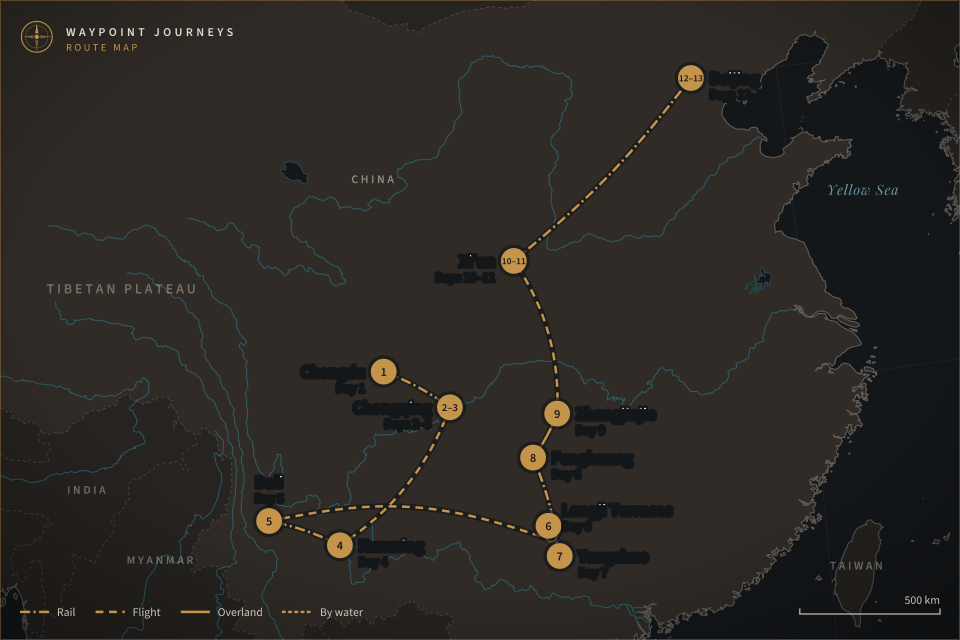
The panda sanctuaries and hot-pot capital of Chengdu, the vertical sci-fi city of Chongqing, the stone forest of Yunnan, the ancient town of Dali, the Li River karst dreamscape of Guilin, the Fenghuang ancient town on the water, the Avatar peaks of Zhangjiajie, the terracotta army of Xi'an, and the imperial capital of Beijing — fourteen days on high-speed rail and domestic flights, entirely private.

With guides who know each city as residents rather than tour leaders, and landscapes that look like they were painted rather than formed. This is the route that earns every destination its place.

"Landscapes that look like they were painted rather than formed — and a city that functions in three dimensions where others manage two."
The Mutianyu section of the Great Wall of China along a forested ridge
The Mutianyu Great Wall, north of Beijing

The Most Distinct Ground in the Smallest Arc

Giant Pandas, Chengdu

An early-access morning at the Giant Panda Breeding Research Base, which holds the world's largest captive population — more than two hundred animals. The cubs, usually visible in the nursery from August through November, are among the most affecting sights in China.

Chongqing, the Vertical City

A city built upward rather than outward — skyscrapers on ridgelines, a monorail threading through the fourteenth floor of an apartment block, highways stacked four levels high. The night view from Nanshan, the entire density lit across the river gorges, is unlike anywhere on Earth.

Zhangjiajie's Avatar Mountains

More than three thousand sandstone columns, up to 300 metres tall, rising from subtropical forest — the real landscape James Cameron's team photographed as the reference for Pandora in Avatar. The vertical scale is what photographs cannot convey.

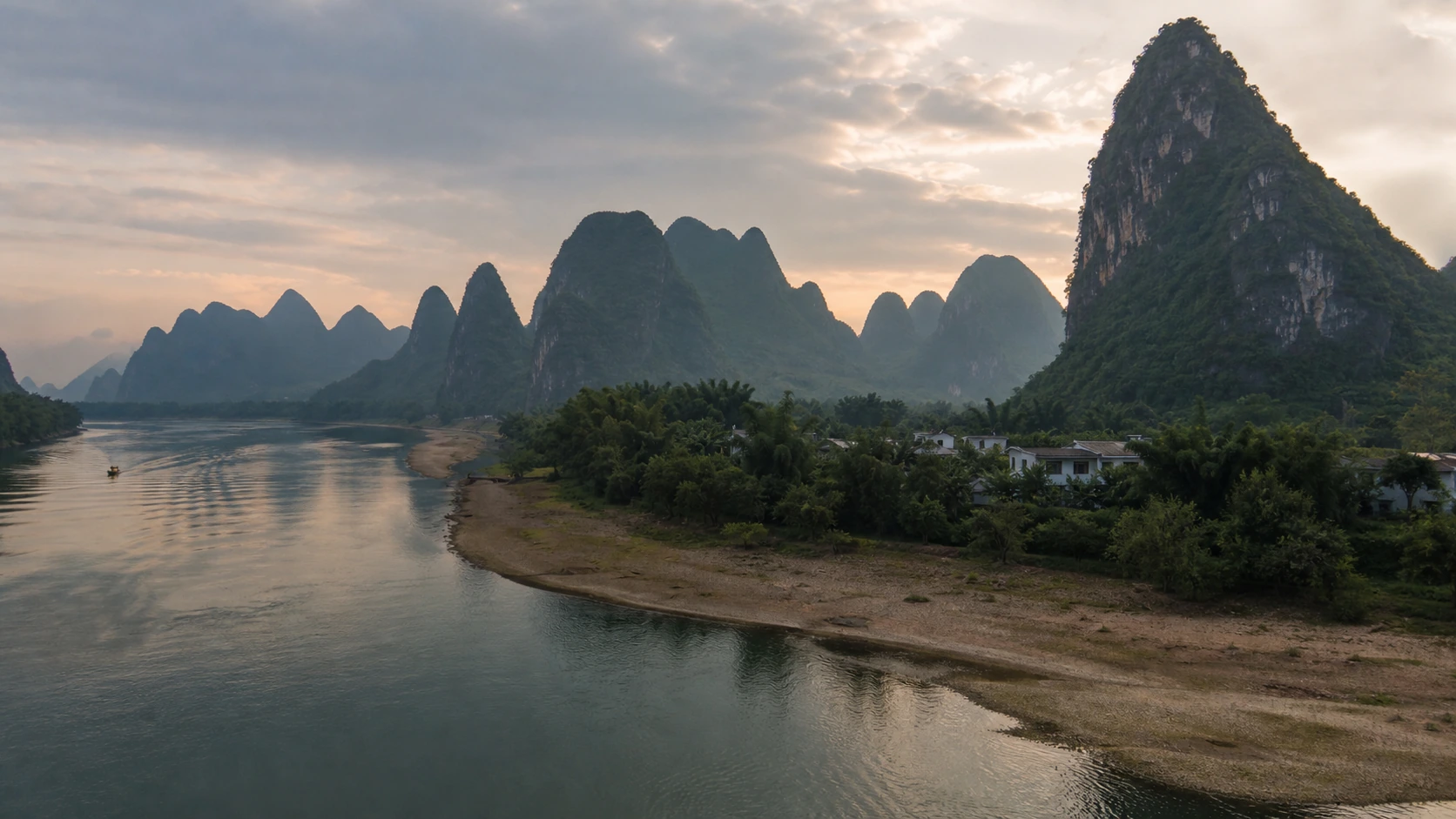
The Li River Karst

A four-hour private cruise through the landscape that appears on the twenty-yuan note — karst formations rising from the flat river plain in shapes that have defined Chinese landscape painting for a thousand years. Then the rice terraces of Longji and the back lanes of Yangshuo.

The Terracotta Army, Xi'an

8,000 life-size soldiers, horses, and chariots buried in 210 BC as the funerary guard of the First Emperor — each face individually modelled, the rank insignia, hairstyles, and articulated fingers still legible. Xi'an was the capital of unified China for eleven dynasties.

The Forbidden City & Great Wall

Beijing closes the journey: 72 hectares of the Forbidden City — 980 buildings, the largest collection of preserved imperial wooden architecture in the world — and the Mutianyu Great Wall, where restored sections give way to roofless watchtowers and crumbling parapets along the ridge.

The Expedition

Fourteen days by high-speed rail and private domestic flights — entirely private, with a resident guide in every city.

Day 1
Chengdu · Giant Panda Base

Chengdu is one of China's most relaxed and food-obsessed cities — a Sichuan basin capital that has spent centuries perfecting hot pot, tea culture, and the art of taking an afternoon slowly. The morning at the Giant Panda Breeding Research Base is best done early, when the pandas are fed and active; the base holds the world's largest captive population. The rest of the day is Chengdu itself: the Jinli ancient street, the Wuhou Shrine, and the face-changing finale of Sichuan opera in the Shufeng Yayun teahouse.

Day 2
Chongqing · the Mountain City

The high-speed train from Chengdu to Chongqing takes ninety minutes and deposits you in a city unlike anywhere else on Earth. Built upward rather than outward, Chongqing functions in three dimensions where other cities manage two — skyscrapers on ridgelines, a monorail passing through the fourteenth floor of a building, highways stacked four levels high. The Ciqikou ancient town, Hongya Cave, and the old Shibati neighbourhood give the day structure before the night view from Nanshan closes it.

Day 3
Wulong Karst · Fengdu Ghost City

A day excursion into the Wulong Karst southeast of the city — UNESCO-listed geology of collapsed sinkholes, three natural sky bridges, and underground river systems. The Three Natural Bridges span gorges up to 300 metres deep, each a single arch of rock formed when the cave roof above collapsed. A filming location for Transformers: Age of Extinction, with almost no international visitors. In the afternoon, a brief stop at Fengdu Ghost City, a hillside complex of temples dedicated to the afterlife above the Yangtze.

Day 4
Kunming · Stone Forest

A morning flight southwest to Kunming, the capital of Yunnan and one of the most climatically pleasant cities in China — 1,890 metres of altitude producing a permanent spring temperature. An hour from the city, the Shilin Stone Forest is a UNESCO World Heritage Site: a 400-square-kilometre field of limestone formations carved over 270 million years into towers, columns, and spires between two and thirty metres tall. The Sani Yi people have lived alongside the stone forest for centuries; their embroidery is among the finest folk textiles in Yunnan.

Day 5
Dali Old Town · Erhai Lake

The high-speed train from Kunming to Dali crosses the Yunnan plateau in two hours, arriving below the Cangshan range whose nineteen peaks line the horizon behind the old town. Dali was the capital of two successive independent kingdoms before its incorporation into the Mongol Yuan dynasty. The ninth-century Three Pagodas of Chongsheng Temple stand on the plain between town and mountain. The old town is a grid of stone-paved lanes and Bai minority architecture; an afternoon boat on Erhai Lake, mountains behind and water in front, is the right closing frame.

Day 6
Guilin · Longji Rice Terraces

A morning flight from Dali to Guilin, the karst-mountain city that has been the standard reference for Chinese landscape painting for a thousand years. The afternoon drive north reaches the Longji Rice Terraces — 800-year-old stepped fields cut into the steep hillsides by Zhuang and Yao farmers, climbing from 300 to 1,100 metres — for the last of the afternoon light. Overnight in the Ping'an village guesthouse; the terraces are green in spring and summer, golden from late September.

Day 7
Li River Cruise · Yangshuo

Back to Guilin and onto the Li River by private boat: four hours downstream through the landscape on the twenty-yuan note, the karst formations rising from the flat river plain in shapes the Chinese classical tradition reads as animals and creatures — the Nine Horses Fresco Hill, the Xingping ancient town. The river shallows and the boat slows; the water is clear enough to watch the riverbed. Yangshuo at the journey's end retains, in its back streets and the nearby Yulong River valley, the pace that made it famous — a bicycle ride along the Yulong, past bamboo groves and stone arch bridges, closes the afternoon.

Day 8
Fenghuang Ancient Town

A high-speed train east from Guilin toward Hunan, then a private transfer to Fenghuang — one of the best-preserved Ming and Qing dynasty towns in China, built along the Tuojiang River on the edge of a canyon, its stilted wooden houses hanging out over the water on teak poles that have been there for three hundred years. Fenghuang means Phoenix, and the town's riverside silhouette — the lanterns, the water reflections, the old city walls — suggests how the name was earned. Cross the river by stepping stones and walk the upper town in the morning before the day-trippers arrive.

Days 9–10
Zhangjiajie · Avatar Mountains

Zhangjiajie National Forest Park is a place where the photographs are not an exaggeration. More than three thousand sandstone columns, up to 300 metres tall, rise from a floor of subtropical forest — the real landscape Avatar photographed as the reference for Pandora; one column was officially renamed the Avatar Hallelujah Mountain in 2010. Day 9 opens with the Bailong Elevator, the world's tallest outdoor lift (326 metres in 66 seconds), to the Yuanjiajie plateau and the First Bridge Under Heaven. Day 10 turns to Tianmen Mountain: a 7.5-kilometre cable car, the naturally formed Tianmen Cave, and the glass skywalk extending from the cliff face over empty air.

Day 11
Xi'an · Terracotta Warriors

A morning flight northeast to Xi'an, the capital of unified China for eleven dynasties and the eastern terminus of the Silk Road. The Terracotta Army, discovered by farmers digging a well in 1974, is the funerary guard of the First Emperor Qin Shi Huang: 8,000 life-size figures buried in three pits in 210 BC, each face individually modelled and originally painted in vivid colour. Pit 1 is the size of an aircraft hangar. The detail — the rank insignia, the different hairstyles of different units, the individually articulated fingers — is the reason the site earns full-day attention.

Day 12
Xi'an · City Walls · Muslim Quarter

Xi'an is not only the terracotta warriors. The city walls — 14 kilometres of Tang-era fortifications still intact and walkable by bicycle — give the full scale of the ancient capital. The Muslim Quarter, home to the Hui Muslim community that arrived along the Silk Road and never left, is the most genuinely atmospheric street food district in China: lamb skewers, roujiamo (the original hamburger, documented here since the Qin dynasty), and the Great Mosque of Xi'an — founded in 742 AD, its architecture entirely Chinese, the prayer hall facing Mecca from behind a succession of traditional garden courtyards. A Tang Dynasty dinner show closes the evening.

Day 13
Beijing · Forbidden City · hutongs

A morning high-speed train north to Beijing: five hours through the North China Plain, arriving in early afternoon. The Forbidden City, begun in 1406 and completed in 1420, is 72 hectares of palace complex — 980 buildings, 8,700 rooms, the largest collection of preserved wooden imperial architecture in the world. The afternoon is for the hutong neighbourhoods around the Drum Tower and the Shichahai lakes — the narrow alley districts that are the residential fabric of old Beijing, navigated on foot or by rickshaw.

Day 14
Beijing · Great Wall · departure

No account of China ends without the Great Wall. The Mutianyu section, 70 kilometres north of Beijing, balances accessibility with relatively restrained crowds and sufficient length to walk a serious stretch across the forested ridge. The restored sections give way within a few hundred metres to unrestored masonry — roofless watchtowers, crumbling parapets, the wall continuing along the ridge as far as the eye follows. Transfer to Beijing Capital International Airport for onward international flights.

The karst peaks and bend of the Li River near Xingping, Guilin, China

Private Luxury Expedition

Entirely Private.
A Resident Guide in Every City.

What's Included

Duration14 days / 13 nights, Chengdu to Beijing
Group SizeSmall group expedition: maximum 5 guests — entirely private, no group tours
Accommodation13 nights at luxury hotels and boutique properties (The Temple House, Capella, Banyan Tree, Rosewood/Aman and similar)
GuidesPrivate licensed guide in every city — residents, not tour leaders; private vehicles and drivers throughout
TransportAll inter-city high-speed rail (first class) and domestic flights; Li River private boat cruise
Included ExperiencesPanda Base early access, Wulong karst, Longji terraces, 2 days Zhangjiajie, Tianmen cable car, expert Terracotta guide, Great Wall, Tang Dynasty show
MealsAll breakfasts daily; lunches on Days 3, 6, 7, 11, and 14; welcome dinner Day 1; farewell dinner Day 13
Not IncludedInternational flights to Chengdu / from Beijing, China visa (where required), travel insurance, and alcohol

FREQUENTLY ASKED QUESTIONS

Common Questions About This Expedition

April–May and September–October are optimal across the full route. Spring brings the rice terraces green and the rhododendrons in bloom on Zhangjiajie; autumn turns Longji gold and Zhangjiajie amber. Summer is viable but humid in the south and busy at major sites. Winter closes some mountain access and brings cold to Xi'an and Beijing.
Most Western nationalities now benefit from China's expanded visa-free transit policies, or the full 15/30-day visa-free agreements introduced in 2024–25. Requirements change; we provide up-to-date guidance at time of booking. A single-entry tourist visa is straightforward where required.
China's internet restrictions apply to major international platforms (Google, WhatsApp, Instagram, most Western news sites). We provide guidance on VPN setup before departure. Chinese equivalents for maps (Baidu Maps), messaging (WeChat), and payment (WeChat Pay / Alipay) are set up as part of pre-departure briefing.
China's high-speed rail network is the best in the world, and several legs (Chengdu–Chongqing in 90 minutes, Kunming–Dali in two hours) are faster and far more comfortable than flying when airport transfers are counted. We use first-class rail where it wins and domestic flights where distance requires — the routing is optimised leg by leg.

Expedition Investment

$8,995USD

per person, twin share — luxury accommodation throughout

Fully inclusive of luxury accommodation, private guides in every city, all high-speed rail and domestic flights, private transport, listed experiences, and listed meals

Excludes international flights, China visa (where required), travel insurance, and alcohol. Single supplement $1,850 USD. Solo traveller supplement $800 USD

Reserve Your Spot
A Note on Travel in China

China is one of the safest countries in the world for travellers, with very low crime and excellent infrastructure. The practical challenges are logistical rather than physical: the language barrier, the cashless payment ecosystem, and the internet restrictions on Western platforms. We handle all of it — private resident guides in every city, all rail and flights pre-booked, and a full pre-departure briefing covering VPN setup, WeChat Pay / Alipay, and Baidu Maps. You travel entirely privately, at your own pace.