Waypoint Journeys Presents
South Sudan
The Cattle Camps of the White Nile
4 or 8 Days
The Mundari Cattle Camps & the White Nile
View Expedition Details ↓ Plan This Expedition →We reply within 24 hours
The World's Youngest Country, and One of Photography's Last Great Subjects
South Sudan is the youngest country on Earth, and it holds one of photography's last great subjects. On the White Nile floodplain outside Terekeka, the Mundari raise their Ankole-Watusi cattle in camps of extraordinary scale — thousands of animals returning across the plain at dusk, lyre-shaped horns against the failing light, a single slow tide of dust and sound.
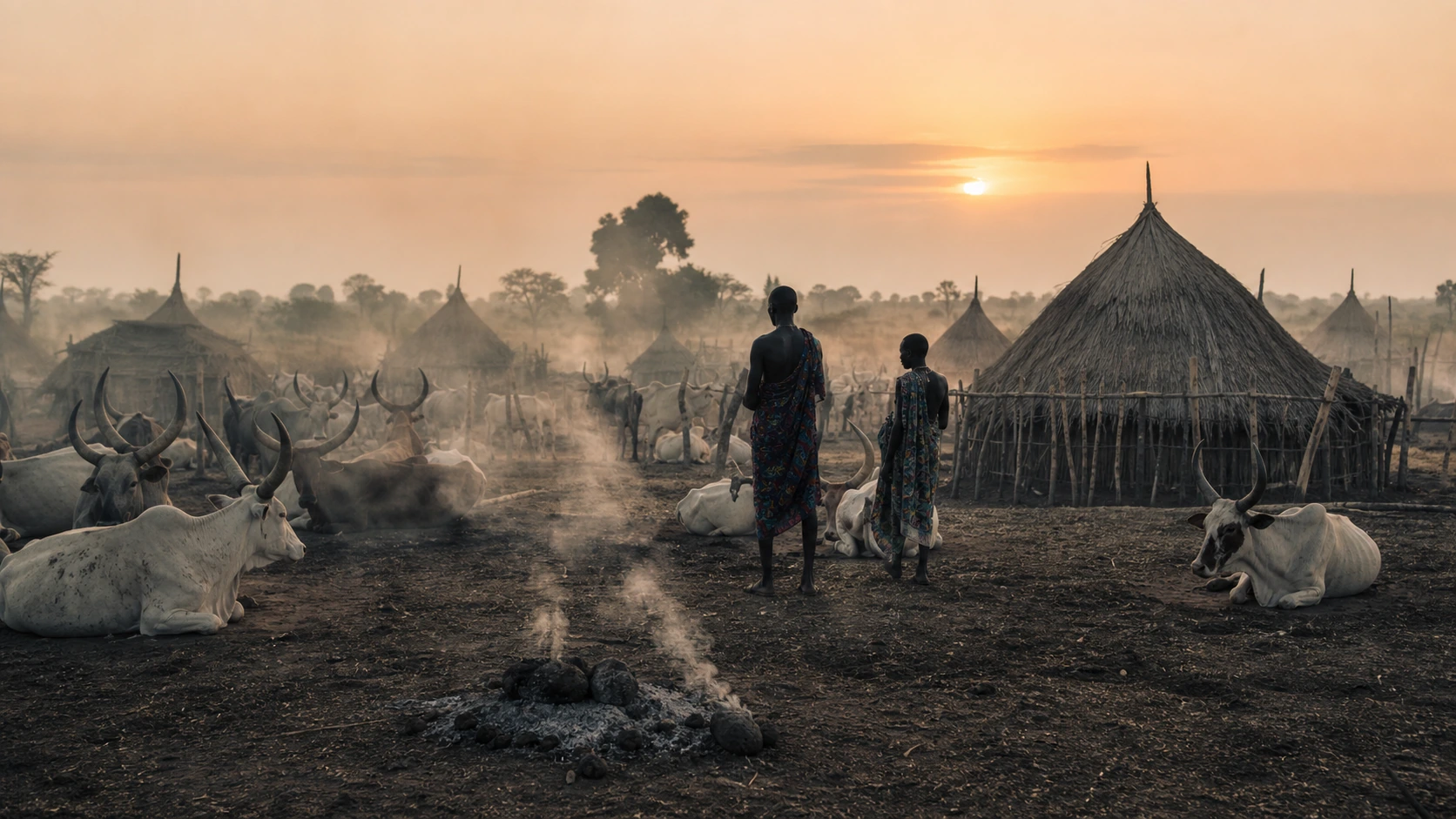
Life in the camps has changed very little in centuries. Dung fires burn through the night to keep the insects from the herds, and at dawn their smoke hangs over the animals in an orange haze cut through by the first shafts of light. Families live in complete symbiosis with their cattle — wealth, status, dowry, and companion at once, almost never slaughtered — and the day moves to the herd's rhythm: out to pasture in the morning, back across the floodplain at dusk, the fires lit again.
There are two ways to do it. The 4-day Express is the camps distilled — weekend-scale, two nights among the herds, built around the dawn and dusk hours. The full 8-day expedition takes the same days at their proper rhythm and adds everything around them: the villages and riverside settlements of the White Nile, the unhurried middle days, and Juba, the young capital on the river. Either way, it is a journey to a place almost nobody goes — run the way it has to be run.
"Smoke drifts through the dawn light, and some of Africa's most striking pastoral traditions continue exactly as they always have."

Dawn Smoke, Ten-Foot Horns & the White Nile
We sleep inside the camps, not in a hotel an hour's drive away. Nights in camp mean the fires after dark, the herds stirring before first light, and the hours no day-trip ever sees — the difference between photographing the Mundari and being their guests.
The great photographic hours: dung-smoke hanging low through the herds at first light, and the dust of thousands of returning cattle burning gold at sunset. Between the smoke, the horns, and the ash-covered herders, the camps at these hours look like nowhere else on Earth.
Cattle bred for their horns across generations — sweeping lyres of pale bone spanning up to ten feet. Each animal is known by name, sung to, polished with ash, and almost never slaughtered: a family's wealth, status, and dowry, treated with a tenderness that surprises every visitor.
The camps sit where the White Nile spreads itself across a plain of grass and water on its long journey north. River light in the mornings, fishing canoes and riverside settlements along the banks, and the herds moving between water and pasture — the geography that makes this whole way of life possible.
On the 8-day route the villages get their due: markets, homesteads, and riverside communities where introductions are made properly — through the guides and elders who know the families — rather than through a windscreen. The quieter half of the journey, and for many the more affecting one.
The capital of the world's youngest country, on the banks of the White Nile: Konyo Konyo market in full voice, craftsmen and artisans at work, and the bridge where the city crosses its river. Young, raw, and hopeful — a capital still deciding what it will become.
The Expedition
Eight days in the world's youngest country — Juba, the Mundari cattle camps at Terekeka, and the villages of the White Nile. The 4-day Express distils the same journey into a long weekend.
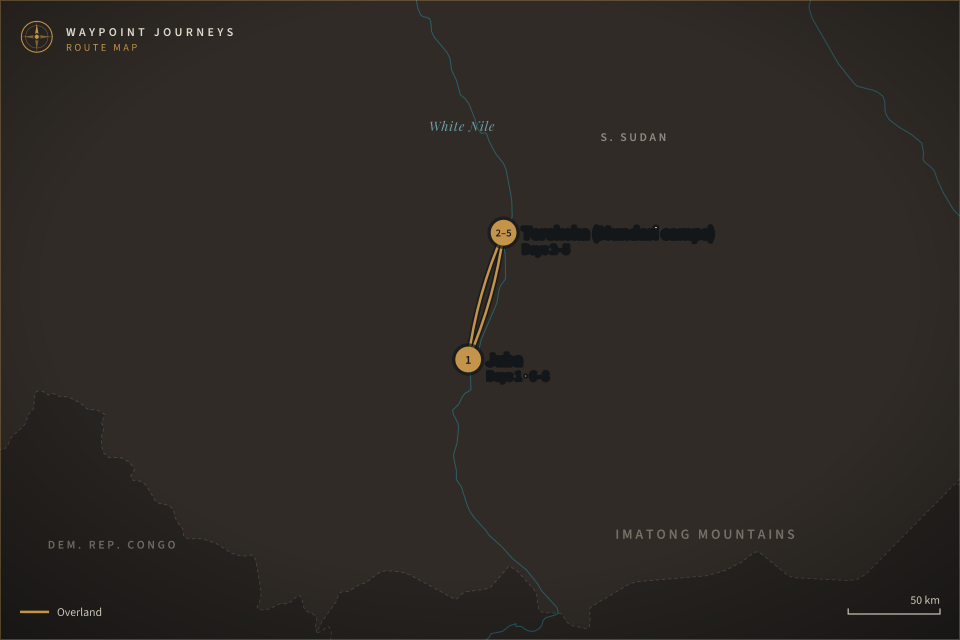
Arrive in Juba, capital of the world's youngest country, on the banks of the White Nile. Meet your expedition leader, complete the registrations South Sudan still asks of every traveller, and take a first guided turn through the city — the river, the pace, the feel of a capital barely a decade and a half old — before an evening briefing over dinner on the days ahead.
Drive north out of Juba along the Nile road to Terekeka and out onto the floodplain — into Mundari country. Camp is standing by the time the light lowers, and the day ends with the event the whole journey is built around: the herds returning across the plain at sunset, thousands of animals walking out of their own dust with ten-foot horns against the sky. The 4-day Express follows the same road, compressing the expedition to two nights here in the camps.
Wake in the dark to be standing among the cattle as the first light comes through the dung-smoke — the hour photographers cross continents for. The whole day belongs to camp life: the milking, horns polished with ash, portraits and conversations over tea, boys leading calves, the fires rebuilt at dusk. On the 4-day Express as on the 8, this day is the heart of the expedition.
A day outward from camp along the river: neighbouring settlements and riverside communities, fishing canoes on the White Nile, introductions made properly through our Mundari guides. Return to the herds for the evening fires and a night under more stars than most travellers have ever seen — one of the days the 4-day Express, with its two nights in the camps, has to leave out.
A deliberately flexible day, shaped by what the days before have opened up: walking out to pasture with the herders, photography at an unhurried pace, a second dawn in the smoke, or simply the slow rhythm of the plains. Express travellers have already turned for Juba — this unhurried middle day belongs to the 8-day route, and it is when the camps stop being a spectacle and become a place.
A last sunrise with the herds, then the drive south at an easy pace with rural stops along the Nile road — villages, markets, whatever the morning offers. Juba by late afternoon: a hot shower, a comfortable hotel, and a good dinner in the capital, with the smoke of the camps still on your gear.
A full day in the young capital with our local guide: the din and colour of Konyo Konyo market, workshops and artisans, the cathedral and the cultural sites of a city assembling its own story, and the bridge over the White Nile at golden hour. A farewell dinner by the river closes the expedition proper.
Breakfast in Juba and a transfer to the airport for onward flights — out over the White Nile and the floodplain where, somewhere below, the herds are already walking out to pasture.
What's Included
FREQUENTLY ASKED QUESTIONS
Common Questions About This Expedition
Expedition Investment
USD per person, twin share — 4-Day Express
4-Day Express from $1,950 · 8-Day Expedition from $2,950 — fully inclusive of all South Sudan permits and photography permissions, the expedition camp among the herds, Juba hotel nights, expedition leader and Mundari-community guides, all ground transport, and listed meals
8-day expedition from $2,950. Excludes international flights, South Sudan visa (~$100–160), travel insurance, and tips. Single supplement $260. Dry season (December–April) offers the most reliable access
Reserve Your SpotWe will not pretend South Sudan is an ordinary destination. Most Western governments advise against travel here, and we say so plainly. What makes this expedition possible is its geography and its operator: the Juba–Terekeka corridor we use has run stably for years, well away from the areas that make the headlines, and we run it with experienced local partners who live and work along it, who hold every permit and registration, and who read conditions day by day. We keep the itinerary flexible, avoid movement after dark, monitor continuously, and will reroute or postpone rather than take a risk we are not comfortable with. This is frontier travel for prepared travellers — and for those who come prepared, the cattle camps at dawn are among the most extraordinary sights left in Africa.