Waypoint Journeys Presents
Where the Volcanoes Meet
Burundi · Rwanda · Uganda · the DRC Border
10 Days
Gorillas, Lava Lakes, and the Peak Where Three Countries Touch
View Expedition Details ↓More Than Half the World's Mountain Gorillas
The Virunga Mountains run in a chain of eight volcanoes along the borders of Uganda, Rwanda, and the Democratic Republic of Congo, and they contain more than half of the world's remaining mountain gorillas — approximately 1,100 individuals across habituated families in four national parks. Two of the eight volcanoes are among the most actively erupting on the planet.
The summit of Mt Sabyinyo is the only point in the world where three countries share a single geographic coordinate. Lake Tanganyika — the world's longest freshwater lake, the second-deepest, and the second-oldest — forms the western border of Burundi and is where the expedition begins. Burundi is one of Africa's least-visited countries. This itinerary connects all four countries and their defining experiences in a logical arc from south to north.
A note on the DRC component: Nyiragongo Volcano sits in North Kivu province, a region with a complex and ongoing security situation. The Virunga Foundation has maintained secure tourist operations since 2021 and the park is currently open, but we make the DRC crossing conditional on confirmed safe access at the time of travel — and if conditions do not allow it, a full programme substitution within Rwanda and Uganda is available. The Mt Sabyinyo three-country summit is reached from Uganda and requires no entry into the DRC.
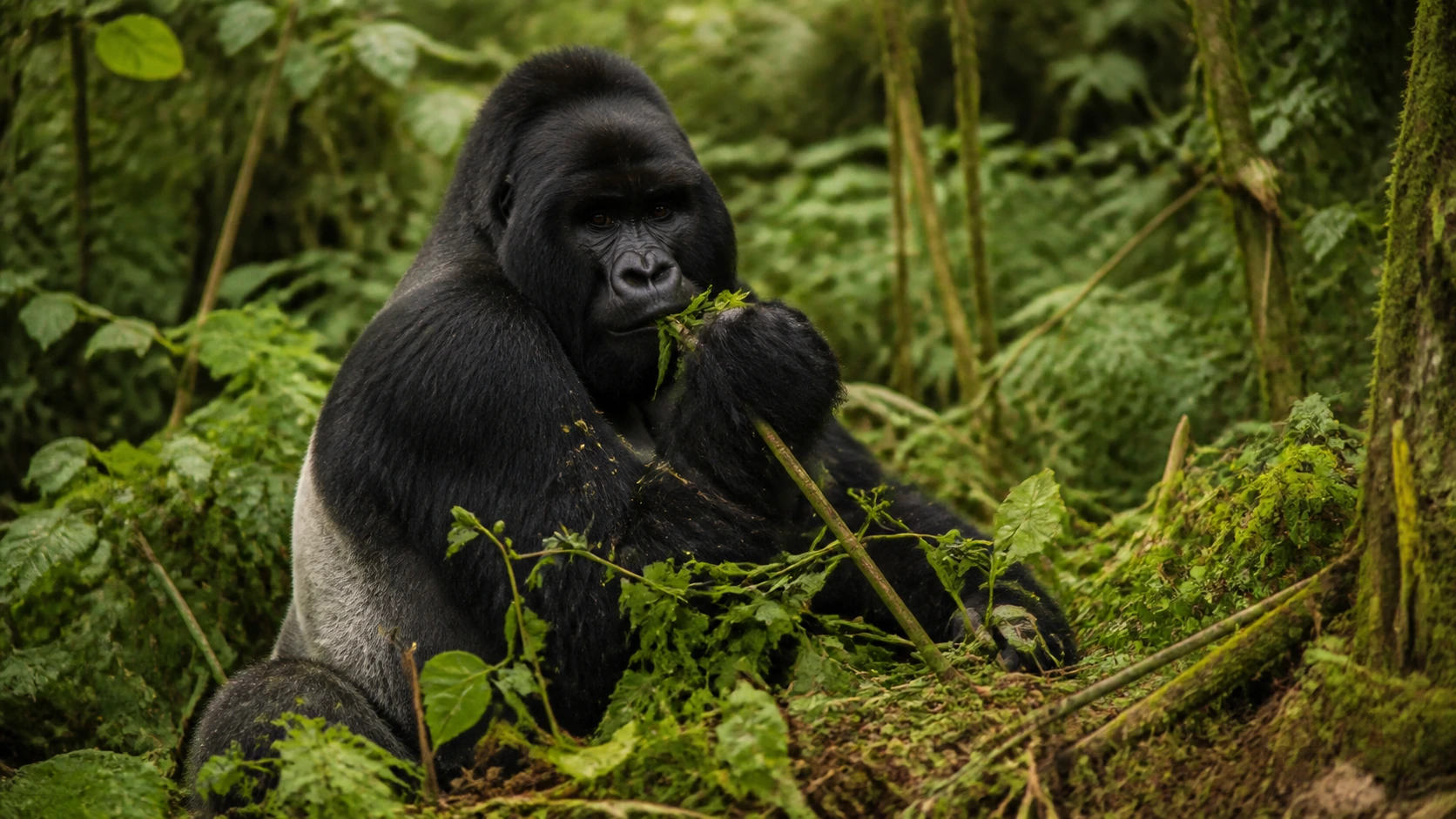
"A silverback in the wild, at close range, in its own habitat, is a creature of such physical presence that the usual human categories do not apply."

Four Countries, One Rift
Two gorilla treks — Rwanda's Volcanoes National Park (faster, more accessible) and Uganda's Bwindi Impenetrable Forest (denser, older, more primeval). The fixed hour spent with a habituated family is the hour most guests identify as the most significant of their lives.
One of only four persistently active lava lakes in the world — a roiling body of liquid rock 200 metres across, glowing orange from a kilometre away. An overnight on the crater rim, waking at 3 a.m. to the lake in full eruption beneath the Milky Way. (Subject to confirmed DRC access.)
The summit of Mt Sabyinyo (4,127m), reached from Uganda's Mgahinga, is the only point on Earth where three countries share a single coordinate — stand on it and you occupy Uganda, Rwanda, and the DRC simultaneously. The final approach moves between three rocky peaks connected by ladders.
A smaller, faster primate than the gorilla, golden monkeys move through the bamboo canopy in noisy troops of a hundred or more — their burnt-orange faces and black-and-gold coats among the most visually striking fur patterns in the primate family.
The expedition begins on the world's longest freshwater lake, 1,470 metres deep and so ancient (nine to twelve million years) it has evolved 1,500 endemic species. Burundi's lakeside capital, Bujumbura, is one of Africa's least-visited — the Congo mountains visible across the water from a single beach chair.
One of Africa's most biodiverse parks. The Kazinga Channel boat cruise passes within metres of some of the largest hippo concentrations in Africa, Nile crocodiles on every sandbank, and buffalo herds in their hundreds. Uganda's tree-climbing lions rest in the fig trees of the Ishasha sector.
The Expedition
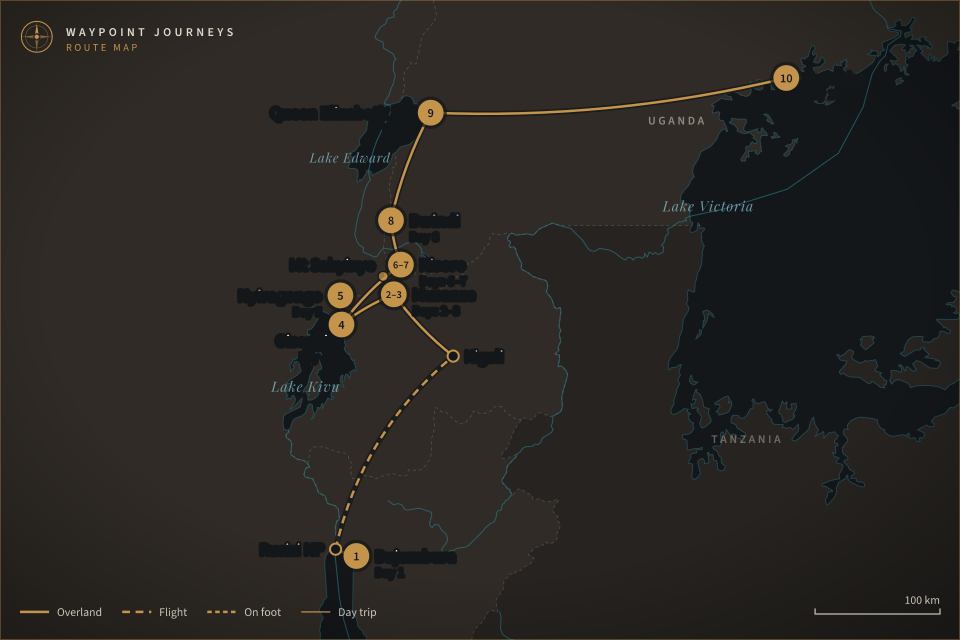
Ten days across the Albertine Rift — south to north, from Lake Tanganyika to the Ugandan savanna.
The expedition opens at Bujumbura, on the eastern shore of Lake Tanganyika at the southern end of the Albertine Rift. The lake is extraordinary: 673 kilometres long, 1,470 metres deep, and so ancient (nine to twelve million years old) that it has developed 1,500 endemic species found nowhere else on Earth, including 250 species of cichlid fish. The Bujumbura lakeshore at sunset — the Congo mountains visible across the water, a view of two countries from a single beach chair — is the right introduction to a region whose geography is inseparable from its politics.
A morning game drive in Rusizi National Park on the delta where the Rusizi River enters the lake — hippo pods in the channels, crocodiles on the sandbanks, and the birdlife of the delta wetlands including the rare shoebill, which stands motionless in the shallows like a prehistoric miscalculation. The afternoon drive north through the Burundian highlands crosses the border into Rwanda at Nemba, the road climbing into tea and coffee country to Musanze (Ruhengeri) at the base of the Virunga volcanoes — the gateway for gorilla trekking in Volcanoes National Park.
The gorilla permit brief at park headquarters begins at 7 a.m. Groups of eight maximum are assigned a habituated family and set off with a ranger and two trackers through the bamboo forest on the lower slopes. Trekking time varies from forty-five minutes to four hours depending on where the family has spent the night; the hour with the gorillas, once located, is fixed by conservation regulation. A silverback in the wild, at close range, in its own habitat, is a creature of such physical presence that the usual human categories — 'wildlife,' 'experience,' 'attraction' — do not apply. In the afternoon, the Gorilla Guardians cultural experience tells the other side of the conservation story: the farmers who share their land with gorillas, and the economic model that makes coexistence viable.
The morning golden monkey trek in Volcanoes National Park — a smaller and faster primate than the gorilla, moving through the bamboo canopy in noisy troops of a hundred or more, their burnt-orange faces among the most striking fur patterns in the primate family. Then the drive west to Gisenyi on the shore of Lake Kivu — a highland lake trapped above the rift valley, its water underlaid by vast dissolved reserves of methane and carbon dioxide at depth, making it one of a small number of exploding lakes in the world. The lakeside town of Gisenyi has one of the finest colonial-era beach settings in East Africa, the Congolese town of Goma visible across the border a few kilometres south.
Subject to current security conditions — see the note below. The border crossing from Gisenyi into Goma is a short walk. From the Kibati ranger post, the hike to the summit of Nyiragongo begins: a 3,470-metre active stratovolcano that has erupted more than thirty times in recorded history, most recently in 2021. The crater at the top contains one of only four persistently active lava lakes in the world — a roiling body of liquid rock 200 metres across that glows orange from a kilometre away. The hike takes four to six hours; the metal-framed cabin accommodation at the crater rim is basic, and the heat from below raises the temperature well above the surrounding mountain air. Waking at 3 a.m. to the lava lake in full eruption beneath a clear-sky Milky Way is an experience that has no terrestrial equivalent.
The descent from Nyiragongo takes three to four hours. Return to Gisenyi and the border crossing back into Rwanda, then the drive north along the Albertine Rift escarpment into Uganda, crossing at Cyanika and continuing to Kisoro in the extreme southwest of Uganda — a small highland town at the base of Mgahinga Gorilla National Park.
Mgahinga Gorilla National Park is Uganda's smallest and the least-visited section of the Virunga chain — a single row of three volcanoes forming a wall on the southern horizon. The hike to the summit of Mt Sabyinyo (4,127 metres) is the signature experience: six to eight hours of steep climbing through forest, bamboo, and giant heather, arriving at a jagged ridge whose local name — sabyinyo means 'old man's teeth' — describes the serrated summit profile exactly. The final approach moves between three rocky peaks connected by ladders. The summit itself is the single geographic point shared by Uganda, Rwanda, and the DRC — standing on it, you occupy all three countries simultaneously, with only one permit required from whichever country you started.
A morning drive east to Bwindi Impenetrable National Park — the forest in which half the world's mountain gorilla population lives. Where Volcanoes National Park in Rwanda is managed for a faster, more accessible experience, Bwindi is a more primeval encounter: the forest is denser and older, the terrain more challenging, and the families larger. Bwindi holds more than twenty habituated gorilla families across four separate trekking sectors. The afternoon is for rest and the evening for the lodge's guided night walk in the forest.
A morning drive north to Queen Elizabeth National Park — one of Africa's most biodiverse wildlife areas, the Kazinga Channel connecting Lakes George and Edward acting as a natural game-viewing corridor of extraordinary density. The afternoon boat cruise on the Kazinga Channel passes within metres of some of the largest hippo concentrations in Africa, Nile crocodiles on every sandbank, and cape buffalo herds that approach the water in hundreds. Uganda's tree-climbing lions — unusual in Africa for their habit of resting in fig trees during the heat of the day — are found in the Ishasha sector to the south.
An early morning game drive before the drive north to Entebbe for international departures. Uganda's southwest is one of the most scenically dramatic wildlife areas in Africa — the Rwenzori Mountains visible on the western horizon, the rift lakes below, and the equatorial forest beginning to thin into savanna — the entirety of the Albertine Rift's ecological diversity visible from a single ridge.
What's Included
FREQUENTLY ASKED QUESTIONS
Common Questions About This Expedition
Expedition Investment
USD per person, twin share — all permits included
Fully inclusive of luxury lodges, all gorilla/monkey/volcano permits, expert guide, private 4WD transport, all border logistics, all game drives, and all meals
Excludes international flights, travel insurance, visa fees, gratuities, and alcohol. Single supplement $1,200. Optional lowland gorilla extension in DRC's Kahuzi-Biega available on request
Reserve Your SpotVirunga National Park and Nyiragongo sit in North Kivu province, DRC — a region with a complex and ongoing security situation that has varied significantly by area and year. The Virunga Foundation has maintained secure tourist operations since 2021 and the park is currently open. Most Western governments maintain general advisories for eastern DRC; we work with the Virunga Foundation's security team and make the DRC component conditional on confirmed safe access at the time of travel. If conditions do not allow the crossing, a full programme substitution within Rwanda and Uganda is available — and the Mt Sabyinyo three-country summit is reached from Uganda and requires no entry into the DRC. The Rwanda and Uganda components — gorillas, golden monkeys, the volcanoes, and the wildlife parks — are stable, well-established, and run with expert local guides throughout. We monitor conditions in real time and provide current, honest guidance at the time of booking.