Waypoint Journeys Presents

Mainland Yemen

The Manhattan of the Desert

6 Days

Shibam, Wadi Doan & the Hadhramaut

View Expedition Details ↓ Plan This Expedition →

We reply within 24 hours

The Oldest Skyscraper City on Earth

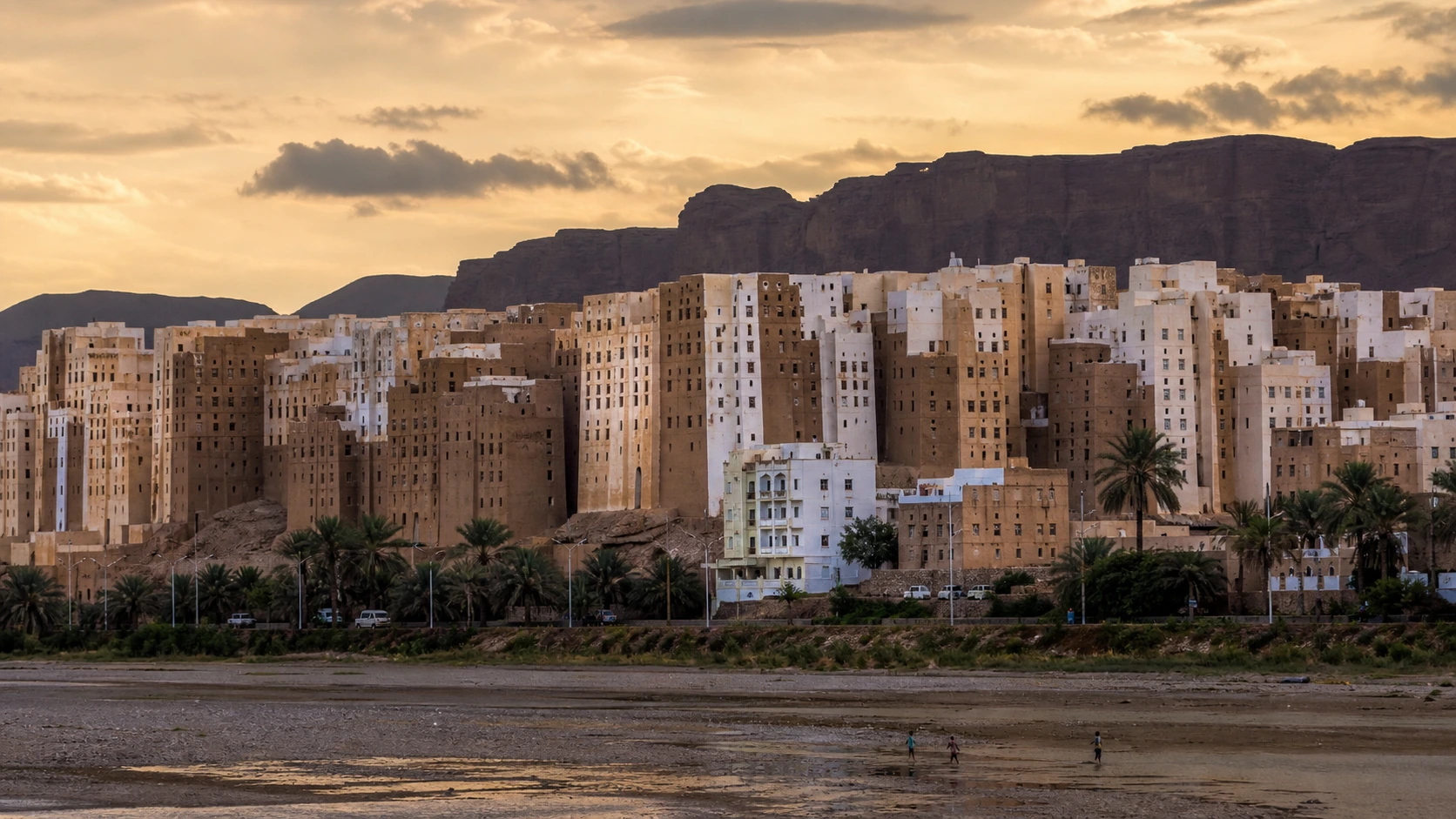
Long before steel, the Hadhramis built upward. In the middle of Wadi Hadhramaut — the great dry canyon that cuts across Yemen's eastern desert — the walled city of Shibam raises some five hundred tower houses out of the valley floor, sun-dried mudbrick stacked up to eleven storeys and whitewashed at the crown. Most have stood for five centuries. UNESCO lists it as one of the oldest and finest examples of vertical urban planning on Earth; the explorer Freya Stark, arriving in the 1930s, called it the Manhattan of the Desert.

The valley around it holds an entire civilisation. Tarim, its scholarly capital, kept the lamps of learning lit for eight centuries, its skyline needled by the mudbrick Al Muhdhar minaret; at Aynat the Seven Domes stand over the graves of saints, and beyond them lies the Tomb of Prophet Hud, southern Arabia's great pilgrimage site. A side canyon, Wadi Doan, is walled with villages that pour down the cliffs — Al-Hajarayn, and Haid al-Jazil on its freestanding rock — before the road climbs the plateau and drops to Mukalla, the old sultans' port on the Arabian Sea.

Getting there is simpler than it sounds: Yemenia's flight from Cairo lands at Seiyun, in the heart of the valley, and the expedition leaves from Mukalla six days later — all of it under government security clearance and escort, arranged in full. If you know our Socotra expedition, Yemen's island, this is its mainland sibling: the same country's other face. And none of it sits behind glass. The towers are lived in, the souqs sell goats and honey rather than souvenirs, and the history is still doing what it was built to do.

"Some skylines are built from steel. Others have stood for centuries, shaped only by earth, sun, and human ingenuity."
The village of Haid al-Jazil on its rock in Wadi Doan, Yemen
Haid al-Jazil — a village on its rock above the floor of Wadi Doan

Mudbrick Skyscrapers, Cliff Villages & the Arabian Sea

Shibam

The Manhattan of the Desert: some five hundred mudbrick high-rises, up to eleven storeys and five hundred years old, packed inside a single city wall on the valley floor. We walk its shaded lanes, climb through a tower house from the grain stores to the whitewashed crown, and watch the whole ancient skyline turn gold from the rooftops.

Wadi Doan

A side canyon of the Hadhramaut where whole villages pour down the cliff face in the same mudbrick as the rock behind them. The painted Buqshan Palace blazes against the stone, and Haid al-Jazil — perhaps the most photographed village in Arabia — balances on a freestanding rock above the palm groves.

Tarim & Seiyun

The valley's twin capitals of faith and rule. In Tarim, a city of scholars for eight centuries, the whitewashed Al Muhdhar minaret needles nearly fifty metres above the mosque roofs; in Seiyun, the Sultan Al Kathiri Palace — one of the largest mudbrick buildings ever raised — floats above the town like a white ship.

The Tomb of Prophet Hud

Southern Arabia's great pilgrimage site: the hillside shrine of the prophet Hud of the Qur'an at the far end of the valley, its empty shrine city waiting for the annual pilgrimage, and the Seven Domes of Aynat standing over their saints' graves nearby. Revered for centuries, and almost never seen by outsiders.

Mukalla

The old sultans' port, where the expedition meets the Arabian Sea: the Qu'aiti palace with its sea-facing balconies, a fish market loud with the morning's catch, the Al Ghwayzi fort on its crag above the coast road, and a sunset dhow cruise along the whitewashed corniche as the city lights come on.

Cliff-Top Nights

Two nights at the Hayd Al Jazeel Resort, perched on the canyon rim of Wadi Doan with the villages and palm groves laid out on the valley floor below. Simple, spectacular, and hard to forget — sunrise over the wadi arrives at your window, and the canyon walls hold the last light long after dinner.

The Expedition

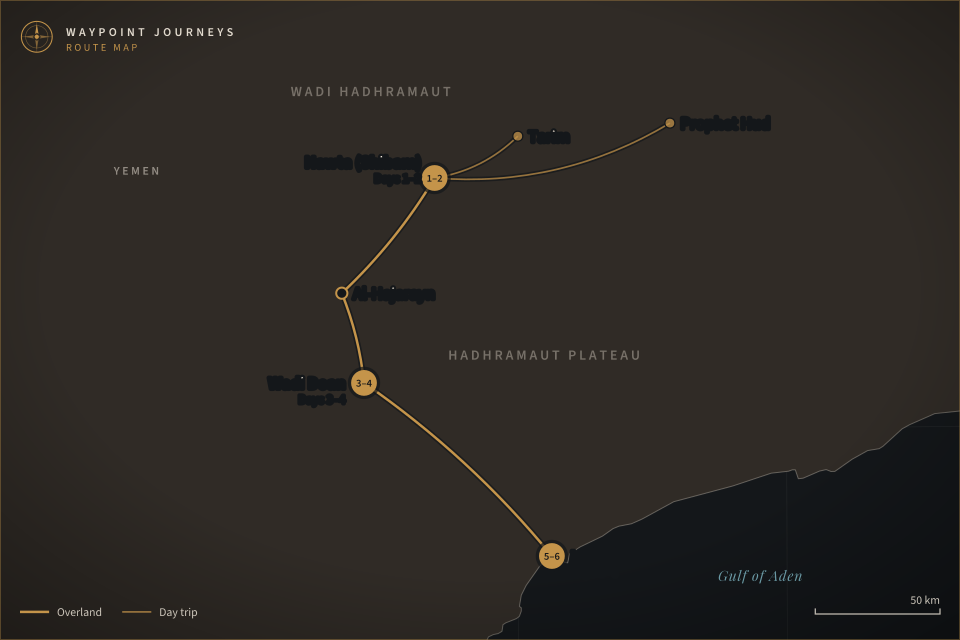
Six days through the Hadhramaut — the valley cities of Seiyun and Tarim, the towers of Shibam, the cliff villages of Wadi Doan, and the Arabian Sea at Mukalla — under full security clearance and escort.

Day 1
Cairo → Seiyun → Hawta
Day 1

The expedition begins in the air: Yemenia's morning flight out of Cairo tracks south-east over the Red Sea and the empty heart of the peninsula before dropping into Wadi Hadhramaut, the great canyon that shelters the valley's cities. Clear immigration at Seiyun with our team already waiting — clearance and escort in place — then transfer down the valley to the shrine town of Hawta. Before dusk, a first climb to a viewpoint over the palm groves, the towers of Shibam just visible in the haze downstream. Two nights at the Hawta Palace Hotel, itself a whitewashed mudbrick palace.

Day 2
Seiyun · Tarim · Aynat · Prophet Hud
Day 2

A full day among the valley's holy and princely cities. In Seiyun, the vast Sultan Al Kathiri Palace — one of the largest mudbrick buildings ever raised — and the morning souq beneath its walls. In Tarim, the centre of Hadhrami scholarship for eight centuries, the whitewashed minaret of the Al Muhdhar Mosque needles nearly fifty metres above the rooftops. East again to Aynat, where the Seven Domes stand over the graves of saints, and on to the end of the pilgrim road: the hillside Tomb of Prophet Hud, its empty shrine city waiting for the annual pilgrimage. Return to Hawta at dusk.

Day 3
Shibam · Al-Hajarayn · Wadi Doan
Day 3

Shibam in the morning light. We enter the walled city on foot and take its lanes slowly, the mudbrick towers pressing in eight and ten storeys overhead, then climb through a tower house from the ground-floor grain stores to the whitewashed rooftop, where the whole ancient skyline stands in ranks around you. After lunch the road leaves the main valley for Wadi Doan, pausing at cliffside Al-Hajarayn, one of the oldest villages in the canyon, stacked against its rock face beneath the fortress of the Al Amoudi. By evening we reach the canyon rim and check in to the Hayd Al Jazeel Resort, perched directly above the valley floor.

Day 4
The Wadi Doan valley
Day 4

A full day inside the canyon. A morning trek drops from the rim to the valley floor at Hawfah, through fields and palm groves, to stand beneath Haid al-Jazil — the village on its freestanding rock that has become the image of the Hadhramaut. The painted Buqshan Palace blazes against the cliff behind it; the viewpoints at Qarn Majed give the long view down the wadi; and the afternoon ends among the beekeepers and mudbrick lanes of Al-Rubat. Sunset and a second night on the canyon rim, the valley darkening below.

Day 5
Wadi Doan → Mukalla
Day 5

Out of the canyon and down to the sea. The road climbs onto the high plateau, then falls through switchbacks to the coast at Mukalla, the old port of the Qu'aiti sultans, its whitewashed old town strung along the water. In the afternoon: the Qu'aiti Sultan Palace with its sea-facing balconies, the fish market at the harbour, and the Al Ghwayzi Fortress on its crag above the coast road. At dusk a boat eases out along the corniche for the sunset cruise, the city lights coming on over the Arabian Sea. Night at the Ramada Al Mukalla.

Day 6
Mukalla → Cairo
Day 6

A last breakfast by the Arabian Sea, then the morning transfer along the coast to Mukalla's airport for the return flight to Cairo, escort alongside to the very end. Most travellers connect onward from Cairo the same day; those tempted to continue to Socotra — Yemen's island, and this expedition's natural sibling — should ask us about pairing the two into a single journey.

The mudbrick towers of Shibam at dusk, Wadi Hadhramaut, Yemen

Small Group Expedition

Every Detail Arranged.
Every Moment Yours.

What's Included

Duration6 days / 5 nights, Seiyun to Mukalla (via Cairo)
Group SizeSmall group expedition: maximum 5 guests
SecurityGovernment security clearance and mandatory escort throughout, arranged in full
VisaYemen tourist visa processing support — approved digital copy before departure (visa fee $200, not included)
AccommodationFive nights: Hawta Palace Hotel (x2), Hayd Al Jazeel Resort on the cliff (x2), Ramada Al Mukalla (x1)
Included ExperiencesShibam tower-house and rooftops (Day 3); the Wadi Doan valley day (Day 4); Mukalla sunset cruise (Day 5)
GuideEnglish-speaking local guide and full ground transport, Seiyun airport to Mukalla airport
MealsAll meals daily — breakfast, lunch, and dinner — plus drinking water
Not IncludedFlights Cairo–Seiyun / Mukalla–Cairo (approx. $700–900), the $200 visa, travel insurance, tips, personal expenses

FREQUENTLY ASKED QUESTIONS

Common Questions About This Expedition

The war is real, and most governments advise against all travel to Yemen — we say so plainly. But Yemen is not one place. The Hadhramaut valley, in the country's east, has sat apart from the front lines for years, and the route we travel — Seiyun, Shibam, Wadi Doan, Mukalla — runs entirely inside it, under a government security clearance and a mandatory escort arranged before you arrive. This is not a loophole; it is an honest frontier calculation, and it is only for travellers prepared to make it. We monitor conditions continuously and will reroute or postpone rather than run a risk we are not comfortable with.
Via Cairo. Yemenia Airways flies from Cairo to Seiyun, in the heart of the Hadhramaut, and the expedition ends with the return flight from Mukalla to Cairo — so you never cross the country by land. We support the Yemen tourist visa in full: our team processes the application, and you fly with the approved digital copy in hand (the $200 visa fee is not included). Detailed flight guidance goes to every confirmed traveller.
Socotra is Yemen's island, five hundred kilometres off this coast — a separate expedition with its own flights, its own permits, and an entirely different landscape. This journey is its mainland sibling: the mudbrick cities and canyons of the Hadhramaut rather than dragon's blood trees and empty beaches. The two pair unusually well back-to-back, since both are reached through Cairo — ask us about combining them into a single Arabian journey.
Physically, moderate: village walks, tower staircases, a short valley trek in Wadi Doan, and real desert heat in the middle of the day. Culturally, the Hadhramaut is deeply conservative — dress modestly throughout, and women should bring a headscarf. In return the hospitality is extraordinary, and photography is welcomed more often than you might expect; your guide will read each situation, and we always ask first.

Expedition Investment

$2,950

USD per person, twin share

Fully inclusive of government security clearance and mandatory escort, all accommodation, English-speaking local guide, full ground transport from Seiyun airport to Mukalla airport, all meals with drinking water, and every listed experience

Excludes Cairo–Seiyun/Mukalla–Cairo flights (approx. $700–900), the $200 Yemen visa, travel insurance, and tips. Single supplement $250

Reserve Your Spot
A Note on Safety & Logistics

Yemen is at war, and we will not pretend otherwise. Most Western governments advise against all travel to the country, insurance must be arranged specially, and the situation can change. What makes this expedition possible is geography and preparation together: the Hadhramaut valley has sat apart from the front lines for years, the route runs entirely within it, and every day is travelled under a government security clearance with a mandatory escort — both arranged in full before you arrive. We work with experienced Hadhrami partners, avoid travel after dark, monitor conditions continuously, and will reroute or postpone rather than take a risk we are not comfortable with. This is an honest frontier calculation for prepared travellers, not a loophole — and for those who make it, the reward is one of the most extraordinary places left on Earth.