Waypoint Journeys Presents

Pakistan

The Karakoram and Ancient Empires

13 Days

13 Days Across the Karakoram and Ancient Empires

View Expedition Details ↓

Where Ancient Civilizations Meet the Roof of the World

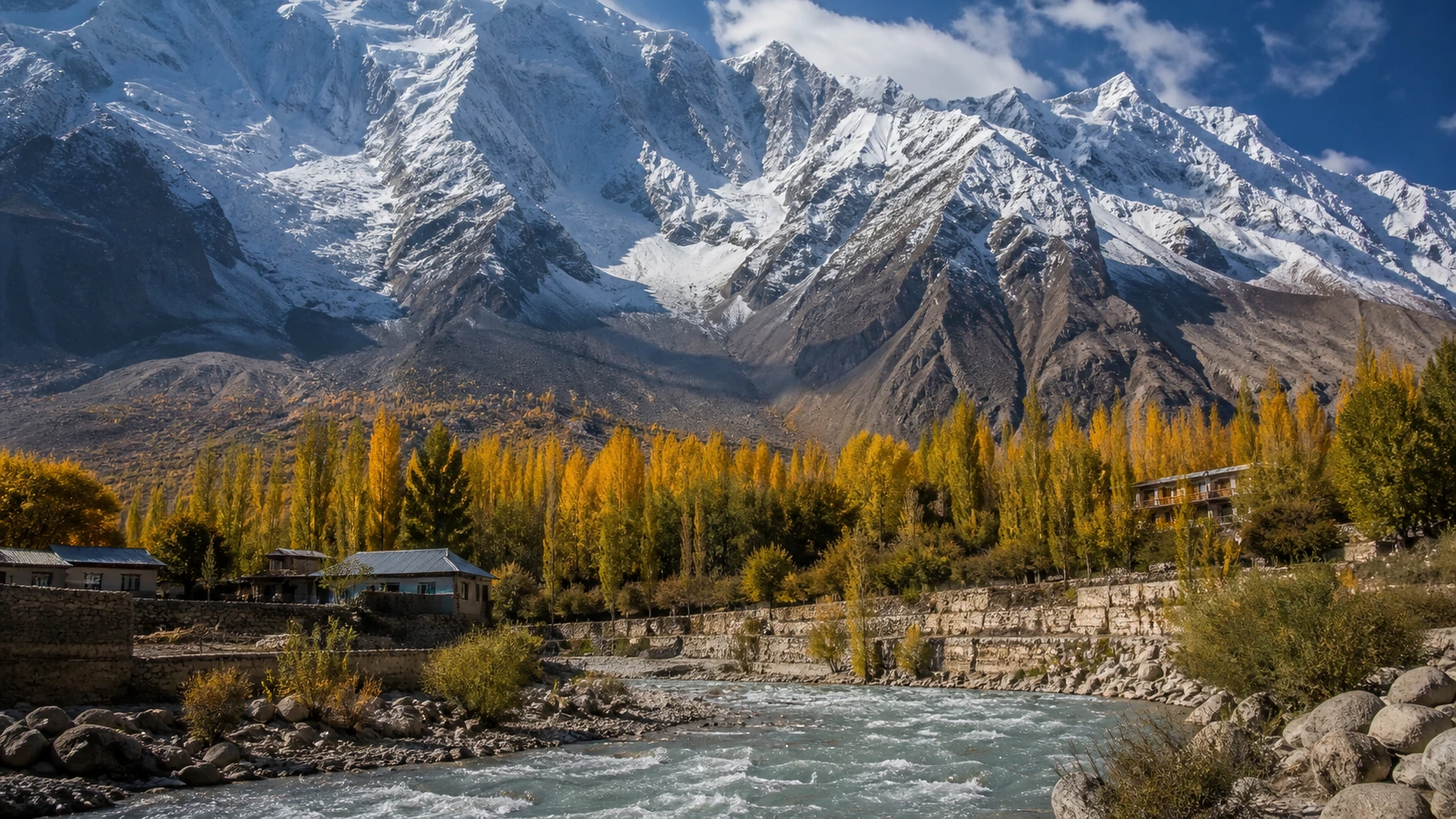
Pakistan is one of the great untold travel stories of our time. In the north, the Karakoram Highway unfurls for hundreds of miles through scenery of almost impossible grandeur: ice-capped giants pressing close on both sides, glaciers spilling down from the sky, and villages tucked into valleys so luminous they read like myth. October is the apex of the season, when Hunza and Skardu blaze with gold, copper, and amber as the poplar and apricot trees shed their summer green. It is, by any measure, among the most beautiful places on Earth.

In the south, Lahore holds the finest concentration of Mughal architecture outside India. Lahore Fort and the Badshahi Mosque anchor a walled city where you can lose an afternoon in covered bazaars unchanged since the seventeenth century. The Shalimar Gardens, laid out by Shah Jahan in 1641, still unfold in three cascading terraces of fountains and marble. The Tomb of Jahangir, serene beside the Ravi River, marks the resting place of the emperor who shaped an empire stretching from Kandahar to Bengal. The UNESCO World Heritage citations here are plural and well deserved.

What no guidebook fully captures is the quality of the welcome. Across thirteen days you will eat family meals in private homes, share tea with shepherds above 3,000 metres, and be invited into conversations that outlast the afternoon. Pakistan has eight of the world's fourteen peaks above 8,000 metres and a Silk Road history that reaches back four millennia. It also has a hospitality so consistent and so warm that it becomes, over time, the thing you remember most.

"To stand in Hunza in October is to understand why travellers have been calling this valley paradise for a thousand years."
Badshahi Mosque at sunset in Lahore, Pakistan
Badshahi Mosque, Lahore

A Country Unlike Any Other

Karakoram Highway

One of the world's most spectacular road journeys, climbing through gorges and high passes as eight of the planet's fourteen 8,000-metre peaks rise on either side.

Mughal Heritage

Lahore Fort, Badshahi Mosque, and the Shalimar Gardens represent centuries of imperial grandeur. Three UNESCO World Heritage Sites within a single city.

Fall Foliage

October transforms the valleys of Hunza and Skardu into a sea of gold and amber. The poplar-lined terraces and apricot orchards glow at their most vivid all season.

Mountain Grandeur

Views of 7,788m Rakaposhi and the world's most dramatic peaks from Naltar Valley, Eagle's Nest, and along the Karakoram Highway. No photograph prepares you for the scale.

Cultural Immersion

From the fire barbershops of Lahore's Walled City to mud wrestling at dawn and the electric theatre of the Wagah Border ceremony, Pakistan rewards the curious traveller richly.

Authentic Expedition

Boutique hotels, expert guides with deep local knowledge, and locally sourced meals celebrating regional cuisine from Lahori karahi to Hunza's dried apricot specialties.

The Expedition

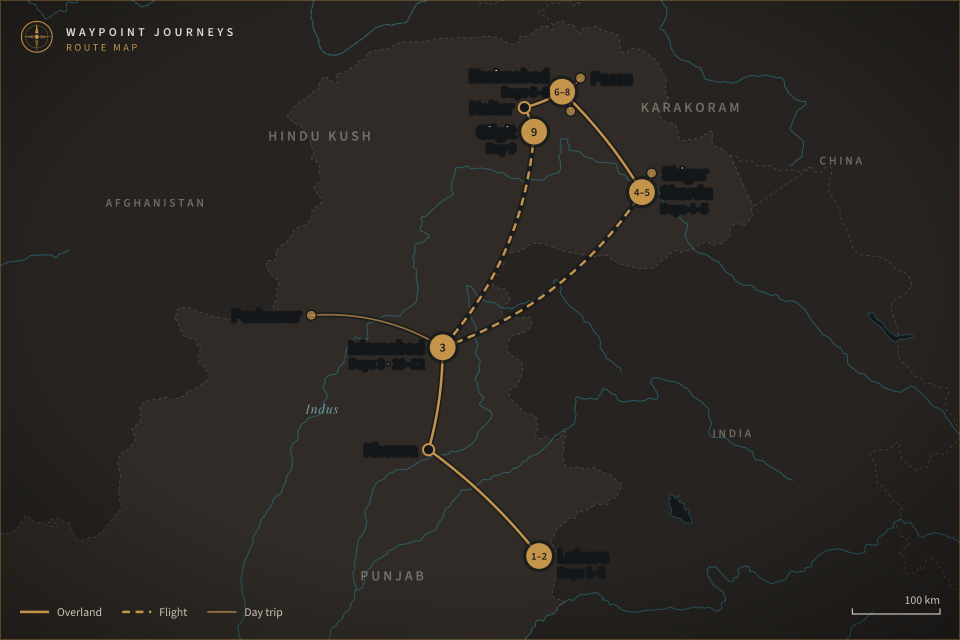
Thirteen days of discovery from the Mughal heartland to the roof of the world.

Day 1
Arrival in Lahore
Day 1

Arrive at Allama Iqbal International Airport and transfer to the Four Points by Sheraton Lahore. Today is a rest day to shake off the jet lag and settle into the rhythms of the city. Your guide will brief you on the days ahead over a welcome dinner.

Days 2 & 3
Lahore Exploration
Days 2–3

Two full days inside the walls of Lahore. Walk through Lahore Fort and the Sheesh Mahal, then stand in the vast marble courtyard of the Badshahi Mosque as the evening call to prayer rolls out across the city. Visit the Shalimar Gardens, the Tomb of Jahangir, and the intricate tilework of the Wazir Khan Mosque. Lose an afternoon in the Walled City's covered bazaars. On the second evening, make the drive to Wagah Border for the nightly flag-lowering ceremony, a spectacle of pageantry and nationalism shared by enormous crowds on both sides. Seek out the legendary fire barbershops of the old city and witness early-morning mud wrestling at one of Lahore's traditional wrestling grounds.

Day 4
Drive to Islamabad
Day 4

Depart Lahore by private vehicle heading north toward Islamabad. En route, stop at Hiran Minar, the 17th-century hunting retreat of Emperor Jahangir built around a lake in memory of a prized pet deer. Continue to the Khewra Salt Mines, the world's second-largest salt deposit, whose underground chambers glow pink and amber. Arrive in Islamabad by evening and check in to the 108 Hotel.

Day 5
Flight to Skardu
Day 5

Board the morning flight from Islamabad to Skardu, one of aviation's great scenic experiences as the aircraft threads between the Karakoram and Himalaya. In the afternoon, lace up your boots for a hike up Marsur Rock, which rises above the town to deliver sweeping views of the Indus River valley and the mountains that encircle it. Stay overnight at the Broq Resort in Hussainabad, a well-positioned base for exploring the wider Skardu region.

Day 6
Shigar Valley and Skardu
Day 6

Drive into the Shigar Valley to visit Shigar Fort, a 17th-century raja's palace that has been beautifully restored and now operates as a heritage hotel. Continue to the Sarfaranga Cold Desert, a high-altitude sand desert surrounded by mountains at over 2,500 metres. Explore Soq Valley, then skirt along the banks of the Upper Kachura Lake before visiting the famous Shangri-La Resort. On the return, stop at the Manthal Buddha Rock, a large carved image of the Buddha dating to around the 8th century. Stay overnight at Qayam Skardu.

Day 7
Drive to Hunza Valley
Day 7

Today's drive north along the Karakoram Highway beside the Indus River is itself the destination. The road cuts through gorges of naked rock and past villages clinging to the mountainside before opening into the wide, golden expanse of Hunza Valley. Arrive in Karimabad as the afternoon light falls across the terraced orchards, check in to the Hunza Serena Hotel, and watch the last colour drain from Rakaposhi's summit from your room.

Day 8
Attabad Lake and Passu
Day 8

Drive north from Karimabad along the KKH to reach Attabad Lake, its waters an extraordinary shade of turquoise created in 2010 when a massive landslide dammed the Hunza River. Cross the water by boat and continue through the Pak-China Friendship Tunnel to the village of Passu, where the Passu Cones rise in near-vertical pillars of black rock above the valley floor. Walk across the famous suspension bridge at Hussaini, one of the most dramatic bridge crossings in the world, and hike up to Baskochi Point for a panoramic view over the Batura Glacier.

Day 9
Hopar Glacier and the Forts of Hunza
Day 9

Morning drive to Hopar Valley to walk on the surface of the Hopar Glacier, a river of ice descending from the mountains above Nagar. Return to Karimabad in the afternoon to visit Altit Fort, one of the oldest surviving wooden buildings in the region, and the neighbouring Baltit Fort which served as the seat of the Mir of Hunza for centuries. Browse the bazaars of Karimabad in the late afternoon, then drive up to Eagle's Nest for what is, on a clear evening, an unrepeatable sunset over a skyline of 7,000-metre peaks.

Day 10
Naltar Valley and Gilgit
Day 10

Board 4x4 vehicles for the rough track up to Naltar Valley, a high alpine bowl that hosts some of Pakistan's most vivid autumn colour. The valley's three alpine lakes range from deep blue to jade green depending on the light, surrounded by pine forests turning gold at the edges. The views of Rakaposhi from the Rakaposhi Viewpoint on the descent back toward the Karakoram Highway are among the finest of any mountain on Earth. Continue down to Gilgit city and check in to the Gilgit Serena Hotel.

Day 11
Flight to Islamabad
Day 11

Fly from Gilgit back to Islamabad and spend the afternoon exploring the capital. Visit the Faisal Mosque, one of the largest mosques in the world, whose tent-like concrete shell rises against the Margalla Hills. Walk through the Pakistan Monument, whose petals represent the country's four provinces and three territories. In the evening, cross into the old quarter of Rawalpindi to explore the covered bazaars and evening street food scene. Two nights at the 108 Hotel.

Day 12
Peshawar Day Trip
Day 12

Drive west through the Margalla Pass to Peshawar, the ancient gateway city at the mouth of the Khyber Pass. Spend the day in the Qissa Khwani Bazaar, the thousand-year-old Storytellers' Bazaar where caravans once rested and travellers traded tales along the Silk Road. Visit Taj Mahal Soda (known locally as Taj Soda), one of the last authentic old-city refreshment houses. Explore the Sethi House, a private merchant mansion of extraordinary craftsmanship, and the Mohabbat Khan Mosque, whose blue-tiled interior is one of the finest examples of Mughal architecture in the northwest. Return to Islamabad in the evening.

Day 13
Fly Home from Islamabad
Day 13

A final morning in Islamabad before transfers to Islamabad International Airport for your onward flight home. Thirteen days, two UNESCO cities, one of the world's great mountain ranges, and a country that will pull you back.

Karakoram Highway winding through dramatic mountain scenery, Pakistan

Small Group Expedition

Every Detail Arranged.
Every Moment Yours.

What's Included

Duration 13 days / 12 nights
Group Size Small group expedition: intimate, unhurried, and personal
Flights Domestic flights included: Islamabad to Skardu and Gilgit to Islamabad
Accommodation Four Points Lahore (3 nights), 108 Hotel Islamabad (3 nights), Broq Resort Hussainabad (1 night), Qayam Skardu (1 night), Hunza Serena Hotel (3 nights), Gilgit Serena Hotel (1 night)
Meals All meals included outside of Lahore and Islamabad
Transport Private vehicle with driver throughout all ground transfers
Not Included International flights, visa fees, meals in Lahore and Islamabad, travel insurance

FREQUENTLY ASKED QUESTIONS

Common Questions About This Expedition

Pakistan has undergone a dramatic safety transformation in recent years. The northern areas — Hunza Valley, Skardu, and the Karakoram Highway — are extremely safe and welcoming. Pakistan consistently ranks among the most hospitable countries in the world. Our local team has operated in these regions for years and manages all security and logistics.
Our expedition runs in October to catch the spectacular autumn foliage in Hunza Valley — when the trees turn gold and orange against the backdrop of snow-capped Karakoram peaks. It's widely considered the most beautiful time of year in northern Pakistan.
You won't be driving — our experienced local drivers handle the road. The Karakoram Highway is one of the highest paved roads in the world and the scenery is extraordinary, but the route has been significantly improved in recent years. We travel in comfortable 4x4 vehicles with plenty of stops for photography and exploration.
Most nationalities can obtain a Pakistan e-visa online — the process has been streamlined significantly. We provide full visa guidance and a support letter once you book. The e-visa typically takes 5–7 business days to process.

Expedition Investment

$3,695

USD per person

Fully inclusive of accommodation, domestic flights, activities, and ground transportation

International airfare and visa fees not included

Reserve Your Spot
A Note on Safety

Pakistan carries a reputation that has never matched the reality of the country. The regions we visit, northern Pakistan and Lahore, have a strong and consistent safety record for international visitors. The Karakoram Highway corridor, Hunza Valley, and Gilgit-Baltistan are welcoming and peaceful destinations where tourism is celebrated and guests are treated with genuine warmth. Lahore, Pakistan's cultural capital, is a confident, cosmopolitan city. Our local guides have deep relationships throughout every community on this route, and we take the security of our group seriously at every step. We are happy to address any specific questions about safety directly.