Waypoint Journeys Presents
Somalia & Djibouti
The Horn of Africa
4 Days
Mogadishu, the Whale Sharks & Lac Assal
View Expedition Details ↓ Plan This Expedition →We reply within 24 hours
The Oldest Crossroads in Africa, and the Newest Ocean on Earth
For a thousand years and more, the ports of the Somali coast — Mogadishu, Merca, Barawa — linked Africa to Arabia, Persia and the trading world of the Indian Ocean. Gold, ivory, frankincense and cloth moved through their harbours; Ibn Battuta found Mogadishu one of the great cities of its age. The coral-stone lanes of Hamar Weyne, the old quarter, remember all of it.
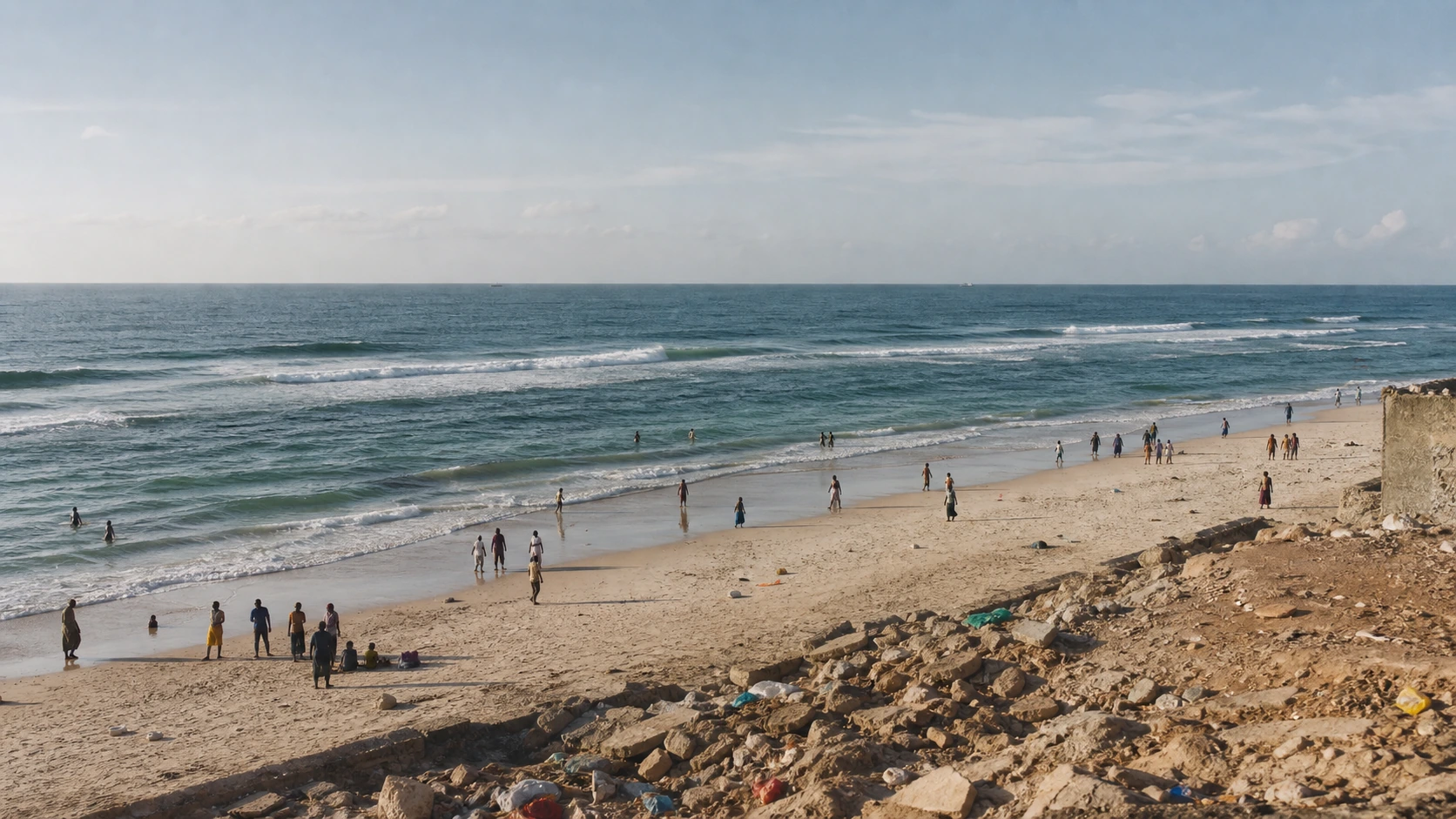
Today Mogadishu is in the middle of a cautious, remarkable revival, and to walk it with the right local partners is to see a city the world stopped looking at: the old lanes of Hamar Weyne, the roar and silver flash of the fish market, the rebuilt monuments, and Liido Beach on a Friday, when half the city seems to be in the water. This is not an easy place to visit — and that is precisely why almost no one has.
Then a short flight down the Gulf lands in Djibouti, where the Earth itself is coming apart. Three tectonic plates pull away from one another beneath the Afar desert, tearing the land open into black lava fields and salt lakes: whale sharks gather in the plankton-rich Gulf of Tadjoura, and Lac Assal — 155 metres below sea level — rings its blinding white shore around the saltiest open water on the continent. Four days, two capitals, one strait, and the youngest ocean on Earth being born beneath your feet.
"Ancient ports. Volcanic deserts. Warm hospitality. The Horn rewards those willing to venture beyond the familiar."

The Largest Fish in the Sea, and the Lowest Shore in Africa
The Horn's storied capital, explored the only way it can be — with experienced local partners and full security arrangements. The coral-stone lanes of Hamar Weyne, the oldest quarter of the city, the rebuilt national monuments, and the harbour that once anchored the Indian Ocean trade.
Mogadishu's fish market at full tilt — yellowfin tuna and swordfish hauled straight off the boats onto the quay — and then Liido Beach, where the city comes to swim, especially on a Friday, when the sand fills with families and the Indian Ocean does the rest.
From roughly November to February, juvenile whale sharks gather to feed in the plankton-rich Gulf of Tadjoura — one of the most reliable aggregations on Earth. A full day on the water brings the chance to snorkel alongside the largest fish in the sea, some of them longer than the boat.
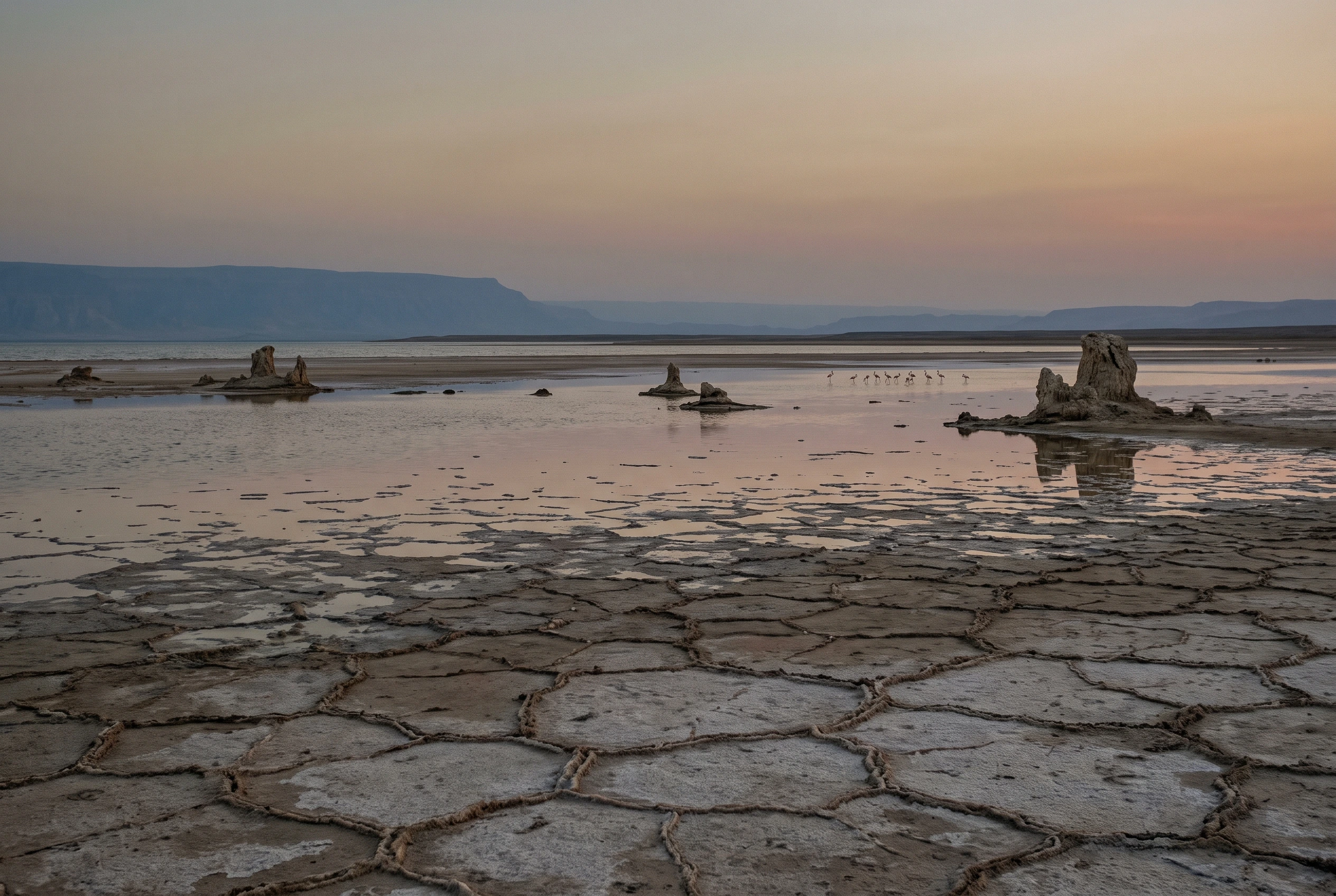
At 155 metres below sea level, the lowest point in Africa: a lake ten times saltier than the ocean, its blinding white salt banks ringed by black lava fields. You float without trying, and the crystal shore crunches underfoot like snow in the desert heat.
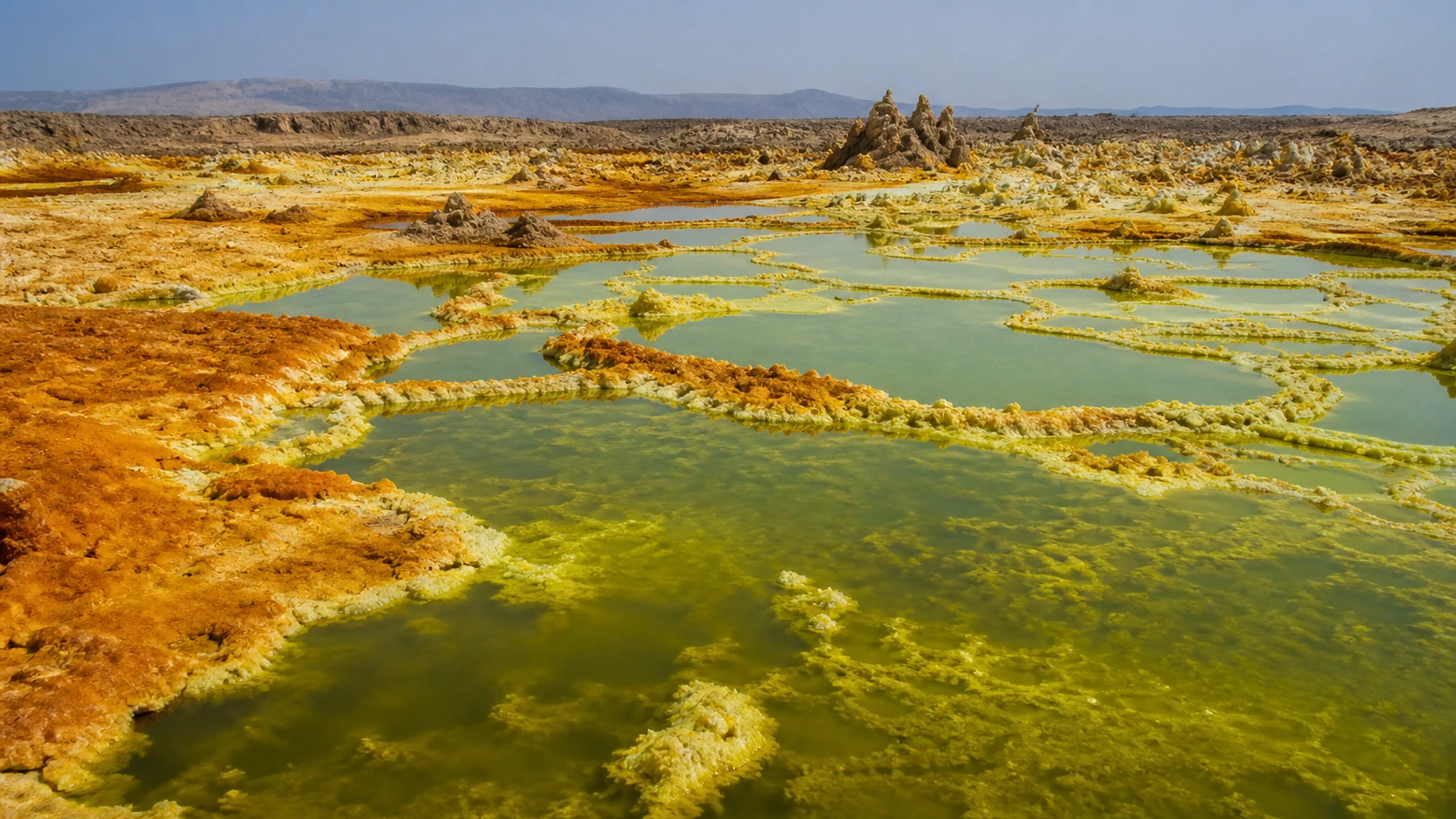
Djibouti sits on the Afar triple junction, where three tectonic plates pull apart and the land is literally splitting — a new ocean in the making. The drive to Lac Assal crosses lava fields, fault scarps and steaming ground: raw geology at the surface, and nowhere on Earth better to see it.
Somali and Djiboutian daily life, back to back: tea stalls and camel markets, mosques and French boulangeries, and the Bab-el-Mandeb — the strait where the Red Sea meets the Indian Ocean, one of the great crossroads of world trade — just over the horizon.
The Expedition
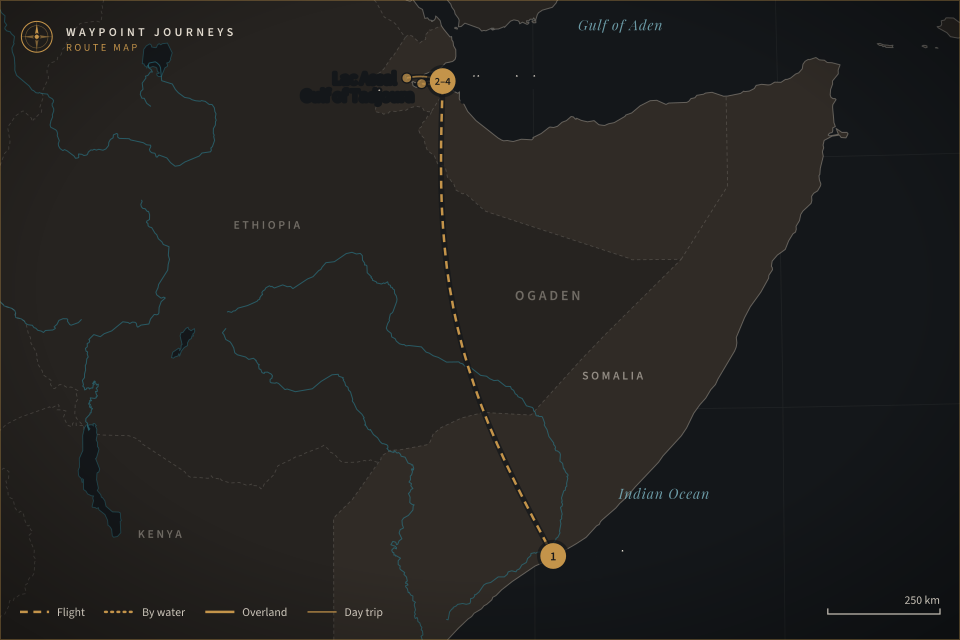
Four days across the Horn of Africa — Mogadishu with local partners, then Djibouti's whale sharks and the salt shores of Lac Assal — linked by a regional flight down the Gulf.
Arrive at Aden Adde International and meet the local team who will run every hour of the Mogadishu program. The day moves through the coral-stone lanes of Hamar Weyne, the oldest quarter of the city, past the rebuilt national monuments, and into the roar of the fish market on the harbour. Late afternoon belongs to Liido Beach, where the city swims. In the evening, a Somali dinner — camel, banana with rice, sweet spiced tea — behind the walls of the hotel.
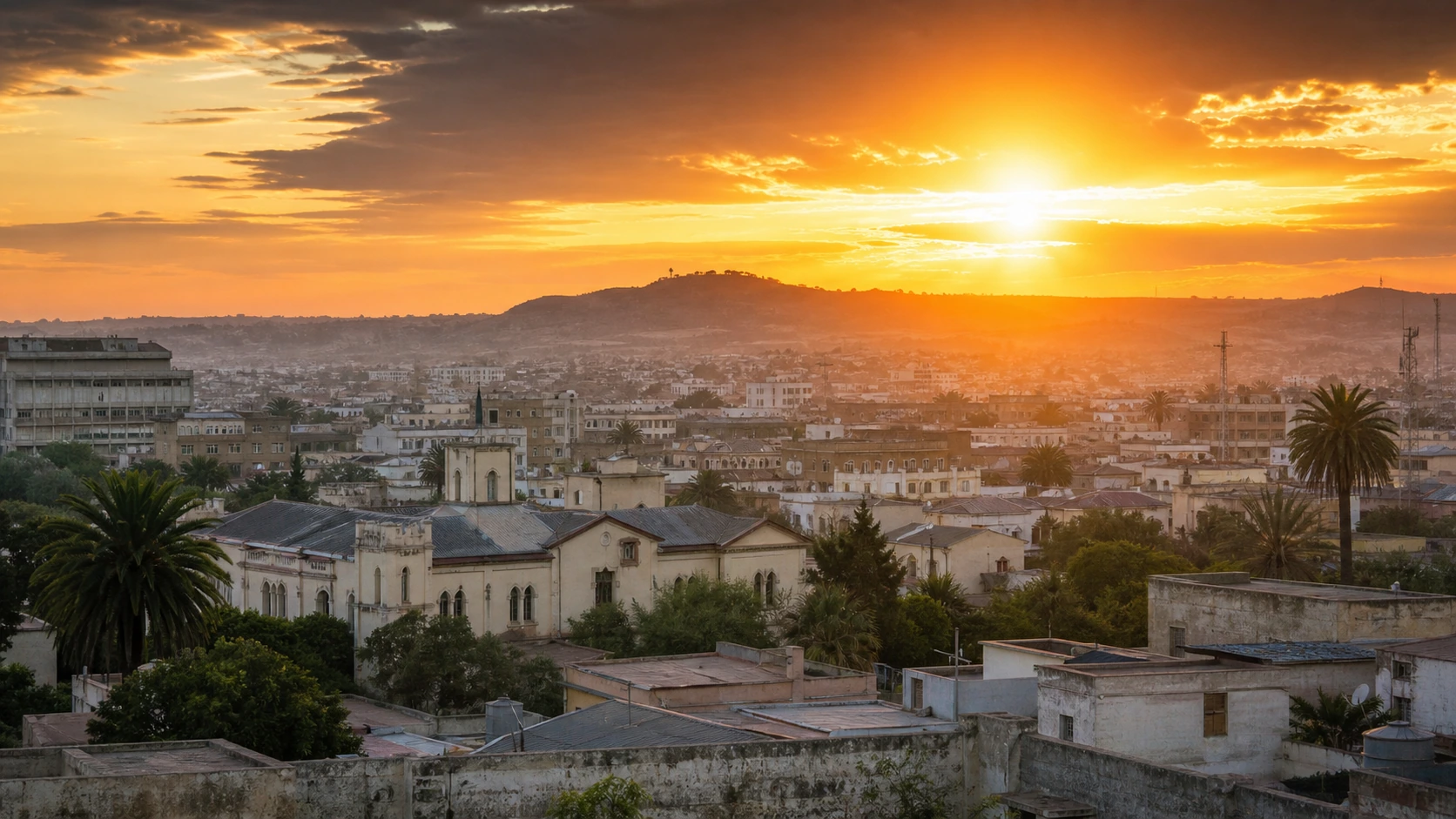
A final morning in the capital with the local team — the corners of the old town the first day could not reach, the Indian Ocean light on the harbour — before the airport and the regional flight down the Gulf to Djibouti City. The contrast lands with the aircraft: a calm, compact capital of French boulevards, Afar and Somali markets, and Red Sea heat. The evening is free for the old European quarter and dinner in town.
A full day on the water. The boat runs west out of Djibouti City into the Gulf of Tadjoura, where nutrient-rich upwellings draw juvenile whale sharks to feed close to the surface — in season, roughly November to February, one of the most reliable gatherings on Earth. When a shark is sighted, you slip in with mask and snorkel and swim alongside the largest fish in the sea. Between encounters: coffee on deck, the volcanic coastline, and lunch on board. Encounters are wild and never guaranteed; the day at sea is remarkable either way.
West out of the city and down through the Afar desert, across lava fields and fault scarps where the land is visibly tearing between three tectonic plates. The road bottoms out at Lac Assal, 155 metres below sea level — the lowest point in Africa — where blinding salt banks ring water ten times saltier than the sea. Float, walk the crystal shore, and photograph the black-and-white collision of lava and salt, before returning to Djibouti City in the afternoon for evening departures.
What's Included
FREQUENTLY ASKED QUESTIONS
Common Questions About This Expedition
Expedition Investment
USD per person, twin share
Fully inclusive of the security-managed Mogadishu program, the Mogadishu–Djibouti regional flight, the Gulf of Tadjoura whale-shark cruise, the Lac Assal excursion, accommodation, expert local guides, and all ground and boat transport with listed meals
Excludes international flights, visas, travel insurance, meals not listed, and tips. Single supplement $290. Whale-shark season runs roughly November–February; encounters are never guaranteed
Reserve Your SpotWe will not pretend Mogadishu is an ordinary destination. Most governments advise against all travel to Somalia, and although the city has come a long way from its worst years, the risks are real. Every hour there is planned and run with experienced local partners: protected transport with armed escort where required, vetted routes and tight timings, a secure hotel, and continuous assessment — with the willingness to cancel or reroute any element at short notice. There is no independent wandering; the city is visited on its own terms. Djibouti, by contrast, is straightforward — a stable, welcoming country where the challenges are sun and salt rather than security. We brief every confirmed traveller in detail before departure. This is a journey for prepared travellers who have weighed the realities honestly — and for those who have, the Horn is unforgettable.