Waypoint Journeys Presents
Land of the Cedars
Lebanon · Beirut, Baalbek & the Phoenician Coast
5 Days
Rome's Grandest Temples, Earth's Oldest Cities & Trees That Built Empires
View Itinerary ↓ Plan This Expedition →We reply within 24 hours
A Country the Size of a Day Trip, Deep as a Civilization
Lebanon is barely two hundred kilometres top to bottom, and into that sliver history has packed more than almost anywhere on Earth: the harbour towns where the alphabet was invented and shipped, Roman temples grander than anything in Rome, cedar groves that built the fleets of pharaohs and the temple of Solomon, and a capital that has been destroyed and reborn so many times its nickname — the Phoenix — is simple bookkeeping. You can ski its mountains and swim its sea on the same afternoon.
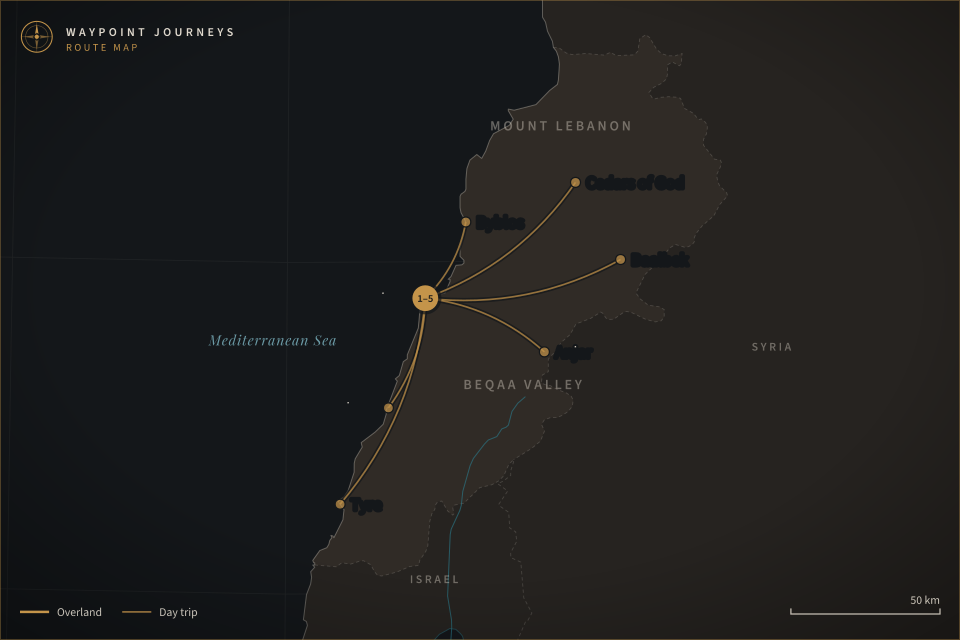
From one comfortable Beirut base, this expedition unfolds the whole country a valley at a time. North to the Jeita Grotto's cathedral of crystal and Byblos, seven thousand years old and still stringing fishing nets across its Phoenician harbour. East over the mountains to Baalbek, where the Temple of Bacchus stands nearly whole and six surviving columns of Jupiter's sanctuary are the largest the Roman world ever raised. Up to the Cedars of God and the cliff-hung monasteries of the Qadisha Valley. South along the sea to Sidon's Crusader castle and Tyre's vast hippodrome.
And threading it all: the food. Lebanon feeds its guests the way other countries decorate for them — long mezze tables, mountain villages that measure honour in hospitality, Beqaa wines poured beside Umayyad ruins. We run it with a group of five at most, a Lebanese guide who knows every farmer and fisherman on the route, and the unhurried pace this much history deserves.
"Byblos was already four thousand years old when Rome was founded — and its harbour café will still make you the best coffee of the trip."

Four UNESCO Sites, One Perfect Base
The sanctuary the Romans built to overawe the East: the six standing columns of the Temple of Jupiter — twenty-two metres, the largest of the classical world — beside the Temple of Bacchus, taller than the Parthenon and almost perfectly whole. In January light, with the Beqaa quiet, you may have the greatest Roman ruin on Earth nearly to yourself.
Seven thousand years of continuous habitation — a serious claimant to the oldest city on Earth. Phoenician ramparts under a Crusader keep, the harbour that shipped cedar to the pharaohs and gave the Greeks their word for book, and lanes of bougainvillea ending in fish restaurants that have earned their fame.
Nine kilometres of crystal beneath Mount Lebanon: an upper gallery of cathedral-sized chambers and one of the world's longest stalactites, then a silent boat glide across the lower river. A finalist for the New Seven Wonders of Nature, and the kind of place photographs were never going to capture anyway.
The last high groves of the cedars that built Phoenicia's fleets and Solomon's temple, some trees a thousand years old, standing at two thousand metres. Below them, the Qadisha Valley — the 'Holy Valley' — where monasteries hang from the cliff faces, and Bcharre, hometown of Khalil Gibran.
Sidon's Sea Castle rising from the water on its causeway and the soap-scented vaults of its old khans; then Tyre, whose Roman hippodrome — the largest ever excavated — sits beside a working fishing harbour three thousand years old. Purple-dye capitals of the ancient world, still smelling of salt and nets.
The National Museum's Phoenician gold and the anthropoid sarcophagi, Pigeon Rocks at sunset, the rebuilt downtown beside the scars it chose to keep, and Gemmayzeh's café lanes pouring arak until late. Beirut has burned and risen more times than any city its size — and its table is the best in the Levant.
The Expedition
Five days from a single Beirut base — the grotto and the first city, Rome's greatest sanctuary, the high cedars, and the Phoenician south.
Land at Beirut and meet your guide — the city is twenty minutes from the airport and the sea is immediate. Into the National Museum for the finest Phoenician collection in existence, from Byblos gold to the sarcophagus of King Ahiram, whose lid carries one of the earliest alphabetic inscriptions ever found. Sunset at Pigeon Rocks off Raouché, then a first long mezze in Gemmayzeh — consider it orientation.
North out of the city to the Jeita Grotto: cathedral chambers of crystal above, a silent boat on the underground river below. Up the cable car to Harissa for the great white Lady of Lebanon and the full sweep of the bay, then on to Byblos — seven thousand years old and wearing it lightly. Phoenician ramparts, the Crusader keep, the little harbour that exported both cedar and the alphabet, and lunch where the fishing boats tie up.
East over the Mount Lebanon range into the Beqaa Valley. First the Umayyad city of Anjar, a perfect grid of arcades from Islam's first dynasty. Then Baalbek: the hexagonal court, the great altar platform built on trilithon stones of eight hundred tonnes, Jupiter's six colossal columns and the near-perfect Temple of Bacchus — the Roman Empire at maximum ambition. A Beqaa vineyard tasting on the way home; the valley has made wine for five thousand years and it shows.
Up the coast and into the high north: the Cedars of God at two thousand metres, the last ancient grove of the tree on Lebanon's flag — walk beneath elders that were seedlings when Byblos traded with Egypt. Along the rim of the Qadisha Valley, its rock-cut monasteries clinging to the cliffs, to Bcharre and the Gibran Museum in its hillside hermitage. Mountain trout and arak for lunch; back to Beirut as the peaks go pink.
South down the Phoenician coast. Sidon's Sea Castle stands in the water on its stone causeway; behind it, the old souks and the soap museum's fragrant vaults. Then Tyre, once master of the Mediterranean: the colonnaded avenue running into the sea, the vast hippodrome where twenty thousand watched the chariots, and a last seafood lunch by a harbour that has worked for three millennia. Back north to Beirut for the airport, or stay on — many do.
What's Included
FREQUENTLY ASKED QUESTIONS
Common Questions About This Expedition
Expedition Investment
per person, twin share
Fully inclusive of four nights' boutique accommodation in Beirut, expert English-speaking Lebanese guide for all five days, private air-conditioned vehicle and driver, both airport transfers, every entrance fee across all four UNESCO sites and the full listed circuit, the Beqaa vineyard tasting, daily breakfast and several hosted meals
Excludes international flights, visa if applicable (free on arrival for most nationalities), travel insurance, dinners, and alcohol beyond the tasting. Single supplement available on request. Pairs beautifully with our Syria expedition — ask about the combined route
Reserve Your SpotLebanon rewards travellers who come with current information rather than old headlines, and that is exactly how we operate. Our Beirut partners monitor conditions daily; routes are chosen on the latest picture and adjusted without drama if anything changes; and the expedition keeps to the well-travelled arc — the capital, the Jounieh–Byblos coast, the Beqaa's great sites, the high north, and the coastal south — with a group small enough to move quietly. Lebanese hospitality toward guests is legendary and genuine. We brief every traveller on the situation as it stands before departure, stay reachable around the clock on the ground, and will always choose caution over completion. Come curious, travel sensibly, and the Land of the Cedars gives back tenfold.