Skip to content

Waypoint Journeys Presents

Iraq

Kurdistan to the Marshes

12 Days

Erbil · Lalish · Mosul · Baghdad · Babylon · Karbala · Ur · The Ahwar — The Whole Country, North to South, in One Line

12 DaysFrom $6,450 USDMax 5 guests

We reply within 24 hours

The Country the News Never Let You See

Iraq is where writing was invented, where cities were invented, where the wheel and the sexagesimal clock and the first written laws came from. Between the Tigris and the Euphrates lies the longest continuous record of urban human life on Earth, and for forty years almost nobody has been able to see it. That has changed. Federal Iraq reopened to independent visitors in 2021, and the country is now travelling in a way it has not since the 1970s.

The two halves of it read very differently, and doing both in one line is the point of this expedition. The Kurdistan Region in the north is mountainous, cool, autonomous and has been receiving visitors for two decades: Erbil's citadel mound claims one of the longest continuous habitations anywhere, Lalish is the holiest place on Earth for the Yazidis, and the road to Amedi runs through gorges into villages on top of their own cliffs.

The south is the deep past and the living faith. Babylon's processional way and the reconstructed Ishtar gate; the spiral minaret at Samarra; the vast arch at Ctesiphon, still the largest single-span brick vault ever built; the gold domes of Karbala and Najaf, where millions come each year and visitors are met with a hospitality that startles them; the ziggurat at Ur; and finally the Ahwar, the marshes where the Ma'dan still pole canoes between reed houses, drained by Saddam and now partly restored.

"Writing, cities, law and the wheel all begin inside this one country. For forty years nobody could go and look. That is over."
The arch of Ctesiphon, Taq Kasra, Iraq
Taq Kasra at Ctesiphon: the largest single-span brick vault ever built, and still standing after seventeen centuries

Babylon, Ur, Ctesiphon and the Marshes: the Deep Past and the Country Living On Top of It

Erbil and the Oldest Address on Earth

The citadel of Erbil is a mound thirty metres high, built up out of the debris of its own occupation, with a claim to being the longest continuously inhabited site anywhere in the world; the Ottoman houses on top are the most recent of many layers. Below it the Qaysari bazaar has been trading on the same footprint for centuries, and the tea houses on its edge are where you will spend your first evening.

Lalish: the Yazidi Holy Place

In a wooded valley north of Mosul, the conical fluted spires of Lalish mark the holiest site on Earth for the Yazidis and the tomb of Sheikh Adi. Every visitor enters barefoot, and pilgrims are expected to come once in a lifetime. After the genocide of 2014 the community's survival is not an abstraction here, and the guardians who show you the sanctuary will tell you about it in plain terms if you ask.

Babylon, Ur and Samarra

Three of the great sites of Mesopotamia in a single week: the processional way and reconstructed Ishtar gate at Babylon under Nebuchadnezzar's walls; the ziggurat at Ur, restored enough to climb, beside the excavated house Abraham is traditionally said to have come from; and the Malwiya at Samarra, a 52-metre spiral minaret you walk up the outside of, built in 852.

Karbala and Najaf

Two of the holiest cities in Shia Islam, and the most surprising part of the trip for most travellers. The shrines of Imam Hussein and Al-Abbas at Karbala, gold-domed and mirror-tiled, and Imam Ali at Najaf beside Wadi Al-Salam, the largest cemetery on Earth. Millions come here each year; foreign visitors are rare enough to be greeted with tea, questions and an insistence that you take something home.

The Ahwar: the Mesopotamian Marshes

UNESCO-listed in 2016, the marshes at the confluence of the Tigris and Euphrates are where the Ma'dan have lived for five thousand years in houses woven entirely from reed. Saddam drained them in the 1990s as a reprisal; since 2003 they have been partially reflooded. You go out at dusk in a mashoof, the long canoe, past water buffalo and reed islands, and take tea in a mudhif.

Baghdad on a Friday

The capital is more ordinary and more likeable than anyone expects. Mutanabbi Street, the booksellers' road rebuilt after the 2007 bombing, fills every Friday with readers and poets, and the Shabandar café at the end of it has been serving tea since 1917. Add the Abbasid madrasa on the river, the Iraq Museum's Sumerian and Assyrian galleries, and an evening on Abu Nuwas Street eating masgouf off the Tigris.

The Expedition

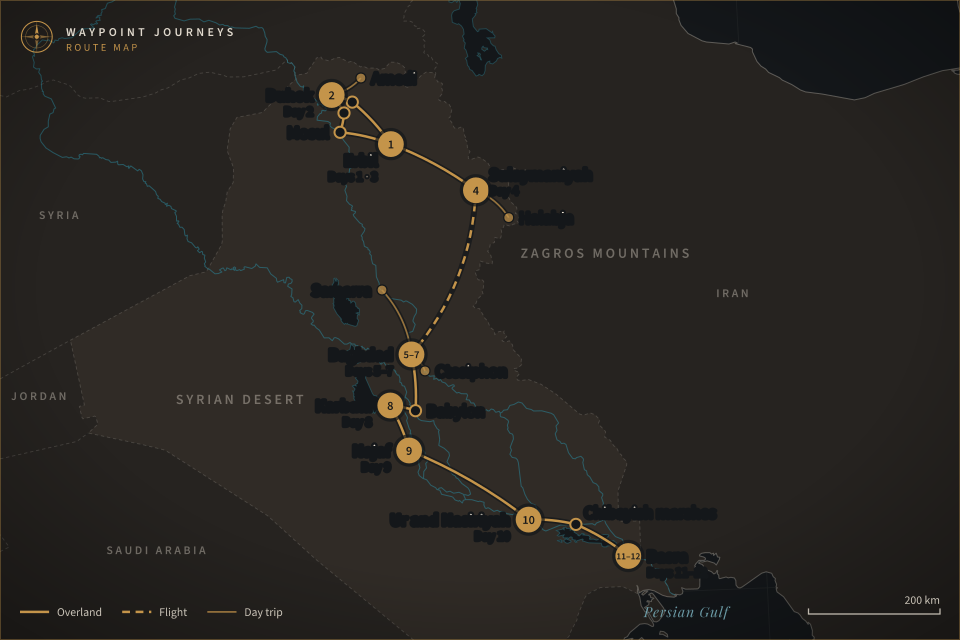
Twelve days the full length of the country: five in the Kurdish north, one internal flight, and six down the Tigris and Euphrates to the marshes and the Gulf.

Day 1
Erbil · arrival at the oldest address on Earth

Fly into Erbil, the easiest entry point to the country and a modern airport with direct services from across Europe and the Gulf. The afternoon starts at the top of the citadel, a thirty-metre mound raised by six thousand years of its own rubble and claimed as the longest continuously inhabited site on Earth, with the Ottoman quarter and the textile museum on the summit. Down into the Qaysari bazaar, past the Mudhafaria minaret, and out onto Shar Park at the hour the whole city comes for tea. A briefing over dinner on how the next twelve days actually work.

Day 2
Lalish, Duhok and Amedi

West and north into the Yazidi heartland. Lalish first, entered barefoot as everyone must: the fluted conical spires, the sacred spring, the tomb of Sheikh Adi and the guardians who will explain a faith that most visitors arrive knowing nothing about. Then on through Duhok and up the Sapna valley to Amedi, a town of two thousand people sitting on top of a flat-topped mesa with a single road up, occupied since Assyrian times and looking exactly as improbable as that sounds. Night in Duhok.

Day 3
Alqosh and Mosul · the Nineveh plain

The morning goes to Alqosh and the monastery of Rabban Hormizd, cut into the cliff above the plain in 640 AD and held by the Chaldean church ever since. Then down onto the Nineveh plain and into Mosul, which is the most affecting day of the expedition: the Old City on the west bank, still part rubble and part rebuilding; the Al-Nouri mosque and its leaning minaret under reconstruction; the churches being restored beside them; and, across the river, the walls and Mashki Gate of Nineveh, the greatest city of the Assyrian empire. Back to Erbil for the night.

Day 4
Sulaymaniyah · the Red Security and the museum

East across the plain and over the Zagros foothills to Sulaymaniyah, the Kurdish cultural capital and a noticeably different city: more books, more music, more argument. The afternoon is Amna Suraka, the Red Security, the Ba'athist intelligence headquarters left exactly as it was taken in 1991, bullet holes and all, now a museum to the Anfal campaign with a hall of 182,000 mirror shards. Then the Sulaymaniyah Museum, second only to Baghdad's, for the Sumerian and Assyrian collections. Night in Suli.

Day 5
Halabja and the mountains, then south to Baghdad

A morning in the mountains toward the Iranian border: the Halabja memorial, where five thousand people were killed by chemical weapons in a single day in March 1988, and which the town itself insists visitors should see. Then Ahmed Awa or the Dukan lake for the country the Kurds mean when they talk about home. In the afternoon we fly Sulaymaniyah to Baghdad, an hour that saves a long day on the road, and arrive in the capital in the evening for dinner on Abu Nuwas Street, masgouf carp split and grilled by the river.

Day 6
Baghdad · the museum, the river and Mutanabbi Street

A full day in the capital. The Iraq Museum in the morning, whose Sumerian, Akkadian and Assyrian galleries are among the most important collections anywhere and whose looting in 2003 is part of the story the curators now tell. Then the Abbasid Mustansiriya madrasa on the Tigris, founded in 1233; the Baghdadi Museum; and Al-Mutanabbi Street, the booksellers' road rebuilt after the 2007 bombing, which on a Friday fills with readers and poets and ends at the Shabandar café, serving tea since 1917. Evening in Karrada.

Day 7
Samarra and Ctesiphon · the spiral and the arch

North first to Samarra, where the Malwiya rises 52 metres as a spiral you climb on the outside, built in 852 for a mosque that was then the largest in the world, and the golden dome of Al-Askari, rebuilt after the 2006 bombing that nearly tipped the country into full civil war. Then south of Baghdad to Ctesiphon, capital of the Parthians and Sasanians, where Taq Kasra still stands: a brick arch thirty-seven metres high and twenty-six across, the largest single-span vault of unreinforced brick ever built, seventeen centuries old and unsupported.

Day 8
Babylon and Karbala

Down the Euphrates to Babylon, a name that carries more weight than any other in the ancient world: the processional way, the reconstructed Ishtar gate, the basalt Lion of Babylon, Nebuchadnezzar's walls, and Saddam's palace on the ridge above, which is its own comment on the place. In the late afternoon into Karbala, and to the shrines of Imam Hussein and Al-Abbas at the hour they are at their most extraordinary: gold domes lit, mirror-work blazing, and a crowd that will want to know where you are from and buy you tea.

Day 9
Najaf · Imam Ali and the largest cemetery on Earth

An hour south to Najaf, the seat of Shia scholarship and the site of the shrine of Imam Ali, whose golden dome is the centre of the old city and one of the most beautiful interiors in the Islamic world. Beside it lies Wadi Al-Salam, the Valley of Peace, the largest cemetery on the planet: over a thousand years of burials across six square kilometres, and still filling. In the afternoon, Kufa, where Ali was killed, and its great mosque. Night in Najaf or Karbala.

Day 10
Ur and Nasiriyah · the ziggurat

South-east to Ur, the Sumerian city that was already ancient when Babylon was founded. The ziggurat of Ur-Nammu, built around 2100 BC and restored enough to climb, stands over the excavated royal cemetery where Leonard Woolley found the death pits and the treasures now in London and Philadelphia, and beside the mud-brick house traditionally identified as Abraham's. It is flat, silent, enormous desert, and the scale of what was here takes a while to land. Night in Nasiriyah.

Day 11
The Ahwar · the Mesopotamian Marshes

Out to the marshes at the confluence of the Tigris and Euphrates, UNESCO-listed since 2016 and unlike anywhere else in the Middle East. You go out in a mashoof, the long shallow canoe, through channels cut in reed beds five metres high, past water buffalo standing chest-deep and villages built on floating reed islands. Tea in a mudhif, the arched reed guest-house whose design has not changed in five thousand years. Saddam drained all of this in the 1990s; the reflooding since 2003 is one of the great restoration stories nobody talks about. Drive on to Basra for the night.

Day 12
Basra · the Shatt al-Arab and departure

The last morning in Basra, where the Tigris and Euphrates join and run to the Gulf: the corniche on the Shatt al-Arab, the crumbling Ottoman shanasheel houses of the old Ashar quarter with their carved wooden balconies, the canals that once made this the Venice of the East, and the fish market. Then the transfer to Basra International for onward flights via Dubai, Doha or Istanbul. Those who would rather fly home from the north can be routed back to Baghdad or Erbil instead.

The ziggurat of Ur, Iraq

Small Group Expedition

Writing Began Here.
So Did Cities.

What's Included

Duration12 days / 11 nights, Erbil to Basra one way: five nights in the Kurdistan Region, six through federal Iraq
Group SizeSmall group expedition: maximum 5 guests
AccommodationThe best available in each city rather than a uniform standard: international-grade hotels in Erbil, Sulaymaniyah, Baghdad and Basra, and good local hotels in Duhok, Karbala, Najaf and Nasiriyah
Permits & FeesAll included: every site permit, checkpoint paperwork and antiquities entrance across both jurisdictions, arranged in advance by our Iraqi partner and carried by your guide
Included ExperiencesErbil Citadel and bazaar; Lalish and Amedi; Rabban Hormizd, Mosul Old City and Nineveh; Amna Suraka and the Sulaymaniyah Museum; the Halabja memorial; the Iraq Museum, Mutanabbi Street and Abbasid Baghdad; Samarra's Malwiya and Ctesiphon; Babylon; the Karbala and Najaf shrines with Wadi Al-Salam; the ziggurat of Ur; a mashoof trip and mudhif tea in the Ahwar marshes; Basra's Shatt al-Arab and shanasheel quarter
FlightsThe internal Sulaymaniyah–Baghdad flight is included, which removes a very long road day
TransportPrivate vehicle with an experienced Iraqi driver throughout, plus marsh canoes; all airport transfers
GuideAn English-speaking Iraqi expedition leader for the full twelve days, with local guides in Mosul, at the shrine cities and in the marshes
MealsAll breakfasts and all dinners, plus lunches on travel days. Iraqi hospitality means you will be fed more than this in practice
VisaMost Western nationalities now use the federal Iraq e-visa, which is valid nationwide including the Kurdistan Region; budget roughly $115–165 USD depending on passport. We send the current requirements and walk you through the application
Best SeasonOctober to April. Summer in the south is genuinely extreme, regularly above 50°C at Ur and Basra, and we do not run the trip between May and September
Not IncludedInternational flights, the e-visa fee, travel insurance, alcohol, tips and personal expenses

FREQUENTLY ASKED QUESTIONS

Common Questions About This Expedition

The honest answer is that it is safe in the areas this expedition visits, and we do not go to the ones where it is not. Federal Iraq reopened to independent visitors in 2021 and the route here, Kurdistan, Baghdad, the Euphrates cities, the shrine cities, the south, is now travelled regularly by small groups. We assess every region separately and continuously, use an Iraqi partner whose local knowledge is the core of the product, travel by day and re-route without hesitation when conditions call for it.
One: the federal Iraq e-visa, which is valid nationwide, Kurdistan included. This matters, because the Kurdistan Region issues its own separate visa that is not valid in Baghdad or the south, and travellers who arrive on it cannot continue. Visa on arrival in federal Iraq was suspended in March 2025. We tell you exactly what to apply for, when, and send the supporting documents; budget roughly $115–165 USD depending on your passport.
Yes, and it is one of the highlights of the trip. Non-Muslim visitors are admitted to the courtyards and, in practice, usually much further, accompanied by a local guide who handles the introductions. Modest dress is required and women need an abaya, which is provided at the gate. Foreign visitors are still uncommon enough that the usual experience is being welcomed, questioned warmly and handed tea. Cameras are restricted in places and your guide will tell you where.
Reasonably hard, and worth saying plainly. This is twelve days covering the length of a large country, with several four- to six-hour road days, checkpoints that take time, hotels that range from very good to merely adequate, and heat even in the cool season in the south. There is little walking beyond sites. What it asks for is patience and curiosity rather than fitness. The internal flight to Baghdad removes the worst single road day.

Expedition Investment

$6,450USD

per person, twin share

Fully inclusive of eleven nights' accommodation the length of the country; an English-speaking Iraqi expedition leader for all twelve days with local guides in Mosul, the shrine cities and the marshes; a private vehicle and driver throughout; the internal Sulaymaniyah–Baghdad flight; every site permit, checkpoint arrangement and antiquities entrance across both jurisdictions; the marsh mashoof trip and mudhif visit; and all breakfasts and dinners plus travel-day lunches

Excludes international flights (arrive Erbil, depart Basra), the federal Iraq e-visa (roughly $115–165 USD by nationality), travel insurance, alcohol, tips and personal expenses. Single supplement $1,250 USD. Departures October to April only

Reserve Your Spot
A Note on Safety & Logistics

This is the most operationally complex expedition in our catalogue and we treat it that way. Every region on the route is assessed separately and continuously rather than as a single headline: the Kurdistan Region has hosted visitors for two decades, Baghdad and the Euphrates and shrine cities are now routinely travelled by small groups, and the areas where that is not true are simply not on this itinerary. Our Iraqi partner is the core of the product; their reading of the road ahead is why the trip works. We travel by day only, carry every permit in advance, clear each governorate crossing before we reach it, and our expedition leader has the authority to re-route or drop a site at any point. The practical risks beyond that are ordinary: heat in the south, traffic, and hotels of variable standard. Medical facilities outside Erbil and Baghdad are limited, so comprehensive insurance with evacuation cover is a condition of travelling with us, and every confirmed traveller is briefed in detail before departure.