Skip to content

Waypoint Journeys Presents

Yunnan

South of the Clouds

5 Days

Kunming · Dali · Lijiang · Tiger Leaping Gorge · Shangri-La — China's Wild Southwest in One Unbroken Ascent

5 DaysFrom $2,500 USDMax 5 guests

We reply within 24 hours

Where China Climbs Into the Himalaya

Yunnan means "south of the clouds," and the name is a fair warning that this is not the China of megacities and bullet-train plains. Tucked against Tibet, Myanmar, Laos and Vietnam, one province holds more ethnic peoples, more plant species and more birds than anywhere else in the country — a place where the land rises from banana groves to 5,000-metre glaciers, and where the old kingdoms that Beijing never quite absorbed still keep their own scripts, gods and cooking.

This expedition is built as a single, five-day ascent. It opens in Kunming, the City of Eternal Spring, among the grey karst blades of the Stone Forest. It rises through Dali, where the Bai people farmed the shores of Erhai Lake beneath a wall of 4,000-metre peaks, and Lijiang, whose canal-laced Naxi old town has been trading tea and horses for eight centuries. Then it enters Tiger Leaping Gorge — one of the deepest river canyons on Earth — and climbs out the far side onto the Tibetan plateau, to the golden roofs of Shangri-La.

China's new infrastructure does the heavy lifting: high-speed rail runs the valley floors, so the week moves quickly without ever feeling rushed. What it delivers is astonishing range — four altitudes, four peoples, four cuisines — stitched along the old Tea-Horse Road that once carried pu'er to Lhasa on the backs of mules.

"You begin the week in eternal spring and end it at the gates of Tibet — without ever leaving one province."
Evening light on a willow-lined canal in Lijiang old town, Yunnan
Evening in Lijiang — canals the Naxi engineered six centuries ago

One Province, Half a Continent

Tiger Leaping Gorge

Between Jade Dragon and Haba Snow Mountains, the Jinsha — the young Yangtze — forces itself through a canyon nearly 3,900 metres from rim to river, one of the deepest on Earth. The mid-gorge path walks you to the rock where a hunted tiger is said to have leapt the narrows, close enough to the rapids to feel the mountain shake.

Lijiang Old Town

A UNESCO-listed maze of Naxi timber houses threaded by canals that have run clean off the glacier for 800 years — no walls, no grid, just lanes that follow the water. By day it hums; in the early morning and after the tour groups leave, it belongs to the Naxi grandmothers, the willow bridges and the lanterns doubling in the current.

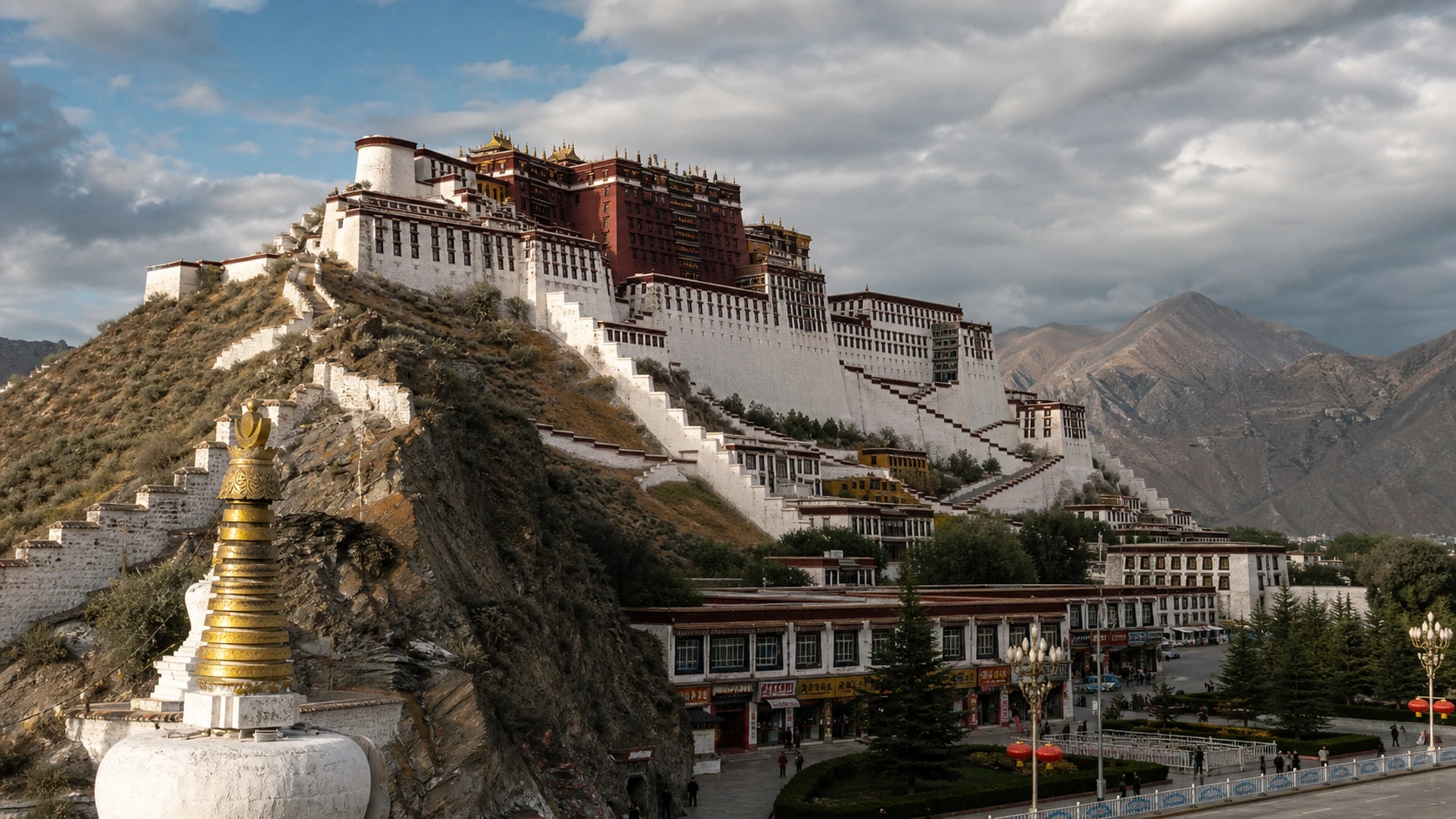
Songzanlin, the Little Potala

Yunnan's greatest Tibetan monastery rises in tiers of whitewash and gold above the Shangri-La wetland, home to several hundred monks of the Yellow Hat order since 1679. Arrive as the morning horns sound, climb with the pilgrims past the butter-lamp halls, and look back on a scene that explains its nickname at once.

Jade Dragon Snow Mountain

Lijiang's 5,596-metre guardian has never been summited — the Naxi consider it a god, and the mountain has so far agreed. Its glacier feeds Blue Moon Valley, where meltwater terraces glow an implausible mineral blue, and its reflection in Black Dragon Pool is among the most painted views in all of China.

Dali & the Bai Kingdom

For five centuries Dali was capital of kingdoms that treated with Tang China as equals, and the Three Pagodas — the tallest standing since the 800s — still rise against the Cangshan wall to prove it. Around Erhai Lake, Bai villages carry on: courtyard mansions in Xizhou, indigo tie-dye in Zhoucheng, and a morning market loud with the mountains' produce.

The Tea-Horse Road

For a thousand years, mule caravans hauled pressed pu'er tea from Yunnan's hills to Lhasa along the world's highest trade route — and this expedition follows its spine. You taste properly aged pu'er where it was born, walk caravan lanes in Lijiang and Shaxi-style courtyards in Dali, and end among the Tibetans the tea was carried to.

The Expedition

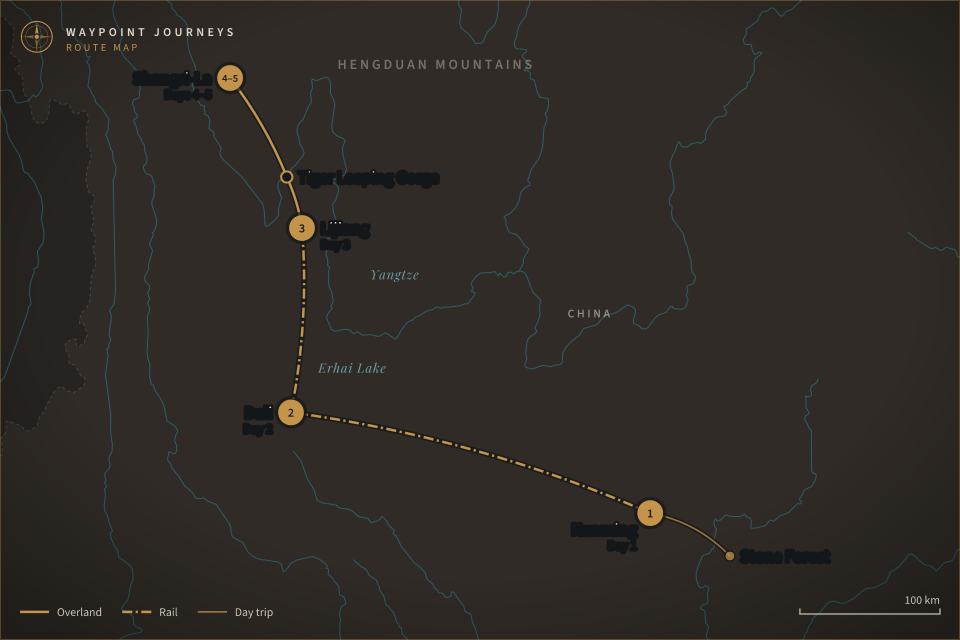
Five days rising from the Stone Forest to the Tibetan plateau — rail through the valleys, a night in each old kingdom, and the great gorge in between.

Day 1
Kunming · arrival & the Stone Forest

Land in Kunming — 1,900 metres up and springlike in every month, which is why the city is planted with camellias and the locals never hurry. After lunch we drive out to Shilin, the Stone Forest: a UNESCO sea of grey limestone blades up to thirty metres tall, raised from an ancient seabed and carved by 270 million years of rain into corridors, arches and needle gardens. Back in the city by evening for a first Yunnanese dinner — crossing-the-bridge rice noodles, done properly — and a stroll around Green Lake as the lamps come on.

Day 2
Kunming → Dali · the Bai kingdom on Erhai Lake

The morning bullet train runs two hours west into the mountains and eight centuries back in time. Dali was capital of the Nanzhao and Dali kingdoms, and the Three Pagodas of Chongsheng — the central one standing since the ninth century — still front the 4,000-metre Cangshan wall. The afternoon belongs to Erhai Lake and the Bai: the morning-market lanes and painted courtyard mansions of Xizhou, indigo tie-dye drying in Zhoucheng, and the lake road as the light goes long. Night in a courtyard inn inside Dali's old town.

Day 3
Dali → Lijiang · the Naxi old town

Another short rail hop north lands us in Lijiang before lunch. At Black Dragon Pool, Jade Dragon Snow Mountain stands doubled in the water — the classic view of the Chinese southwest — and in Baisha village the Ming-era frescoes and the Naxi's Dongba script, the last living pictographic writing on Earth, tell you whose country this is. The evening is for the old town itself: canal lanes, willow bridges, a Naxi orchestra playing Tang-dynasty music, and dinner in a courtyard where the Tea-Horse caravans once unloaded. Night in a restored Naxi courtyard house.

Day 4
Tiger Leaping Gorge → Shangri-La

North by private vehicle up the young Yangtze to the day the week is named for. In Tiger Leaping Gorge the river narrows to twenty-five metres beneath walls that rise the height of ten Eiffel Towers; we walk the maintained mid-gorge path to the leaping stone, where the full force of the Jinsha detonates past at arm's length. Then the road climbs — pine forest, prayer flags, yaks — onto the Tibetan plateau, arriving in Shangri-La (3,160 m) in time for the giant prayer wheel of Dukezong old town at dusk and a warming Tibetan dinner. Night in a heritage lodge.

Day 5
Shangri-La · Songzanlin Monastery & departure

At Songzanlin, morning is the hour that matters: horns from the roofline, butter lamps in the halls, and several hundred monks at prayer in Yunnan's largest Tibetan monastery, tiered up its hillside like a small Potala. We climb with the pilgrims, circle the wetland kora below for the postcard view, and take a last look across the plateau before the afternoon flight out of Shangri-La's Diqing airport — or the easy run back to Lijiang's rail line, if your route home runs through Kunming.

The snow ridge of Jade Dragon Snow Mountain above Lijiang, Yunnan

Small Group Expedition

South of the Clouds.
At the Gates of Tibet.

What's Included

Duration5 days / 4 nights — Kunming (1), Dali (1), Lijiang (1), Shangri-La (1)
Group SizeSmall group expedition: maximum 5 guests
AccommodationFour nights in boutique courtyard inns and heritage lodges — including a restored Naxi courtyard house inside Lijiang old town
Included ExperiencesThe Stone Forest (Day 1); Three Pagodas, Xizhou and Erhai Lake (Day 2); Black Dragon Pool and Baisha (Day 3); the Tiger Leaping Gorge mid-trail walk (Day 4); Songzanlin Monastery and Dukezong (Days 4–5) — all entrance fees included
TransportFirst-class high-speed rail Kunming–Dali–Lijiang, private vehicle and driver from Lijiang through the gorge to Shangri-La, and all airport, station and hotel transfers
GuideEnglish-speaking Yunnan specialist throughout, joined by local Naxi and Tibetan guides in Lijiang and Shangri-La
MealsDaily breakfast, lunches on all touring days, a welcome noodle dinner in Kunming and a farewell Tibetan dinner in Shangri-La
Not IncludedFlights to Kunming and from Shangri-La (Diqing), Chinese visa where required, travel insurance, remaining meals, and personal expenses

FREQUENTLY ASKED QUESTIONS

Common Questions About This Expedition

Many of our guests no longer do. Australians and New Zealanders currently enter visa-free for up to 30 days, as do most European passport holders. Americans and Canadians still need a tourist visa — routinely granted, and for US citizens usually valid ten years — and we send a step-by-step application guide with your booking. Either way, the paperwork is far lighter than Yunnan's reputation for remoteness suggests.
The route is built as a staircase, which is the kindest way to gain height: Kunming sits at 1,900 m, Dali at 2,000 m, Lijiang at 2,400 m, and only on the final night do you sleep at Shangri-La's 3,160 m. Most guests feel nothing more than a light head the first evening up top. We keep the last day's pace gentle, the vehicle carries oxygen on the plateau leg, and your guide watches everyone quietly.
Adjustable. The standard version is a two-to-three-hour walk on a maintained mid-gorge path, finishing with a steep stone staircase down to the rapids and back up — honest exercise, no technical ground. Anyone preferring to stay high can take the rim boardwalk viewpoints instead and meet the walkers at the vehicle; the gorge is staggering from either level.
October and November are the glory months — washed skies, snow on Jade Dragon, golden larch on the plateau. March to May brings flowers and warm valley days. June to September is green and dramatic with short afternoon rains, and winter is cold in Shangri-La but crystalline, with the fewest visitors of the year. Kunming, true to its name, is spring in every month.

Expedition Investment

$2,500USD

per person, twin share

Fully inclusive of four nights' boutique courtyard and heritage accommodation; first-class high-speed rail and private overland transport with driver; every signature experience with entrance fees — the Stone Forest, the Three Pagodas and Erhai, Black Dragon Pool, Tiger Leaping Gorge and Songzanlin; English-speaking specialist guide throughout; daily breakfast, touring lunches and two signature dinners

Excludes flights to Kunming and from Shangri-La (we are glad to route you via Kunming, Chengdu or Chongqing), Chinese visa where required, travel insurance, remaining meals, and alcohol. Single supplement $395 USD

Reserve Your Spot
A Note on Safety & Logistics

Yunnan is among the safest and easiest destinations we run — modern infrastructure, negligible crime, and a tourism economy that has hosted travellers on this exact route for decades. What deserves planning here is geography, and we have done it: the high-speed trains replace the old mountain switchbacks on every leg where rail exists, the gorge walk uses the maintained mid-level path rather than the exposed high trail, and the ascent to Shangri-La is sequenced so your body gains altitude in steps rather than in one jump. The vehicle carries oxygen on the plateau leg, your guide is trained to spot altitude symptoms early, and mobile coverage — this being China — is total, even at the bottom of the gorge. Bring sun protection for the thin air and a warm layer for Shangri-La's evenings; the province handles the rest.