Waypoint Journeys Presents
Kingdom in the Sky
Tibet · Lhasa, Yamdrok & Shigatse
7 Days
Palaces, Pilgrims & a Turquoise Lake at 4,800 Metres
View Expedition Details ↓ Plan This Expedition →We reply within 24 hours
The Last Place That Still Feels Like a Pilgrimage
There is a moment, stepping off the plane at 3,650 metres, when the air tells you before your eyes do: you are somewhere else now. Tibet is the highest inhabited plateau on Earth, a landscape of barley valleys and turquoise lakes strung between 7,000-metre ranges — and running through all of it, unbroken by centuries or politics, the deepest current of devotion you will ever stand beside.
In Lhasa, pilgrims who have prostrated for weeks across the plateau arrive at the Jokhang's golden roof and keep prostrating. The Potala rises a thousand rooms high over the city it once governed. Monks hurl philosophical questions at each other in the debating courtyard of Sera, punctuating each point with a handclap like a whip-crack. And out beyond the passes, the scorpion-shaped waters of Yamdrok Tso hold a blue that has no business existing at this altitude.
This is our soul-deep circuit of central Tibet: Lhasa unhurried, a thangka masterclass with a working master, the high road over the Kamba La to Gyantse's hundred-and-eight-chapel Kumbum and Shigatse's Tashilhunpo, and the new high-speed train back across the plateau. Private guide, private driver, every permit handled. Seven days on the roof of the world; a lifetime of looking back up at it.
"Half the sky is below you, the holiest building has a thousand rooms, and the lake on the far side of the pass is the colour of belief."

A Thousand-Room Palace, Debating Monks, and the Bluest Lake on the Plateau
Thirteen storeys, a thousand rooms, ten thousand shrines — the winter palace of the Dalai Lamas rides its rock over Lhasa like a white-and-crimson ship. You climb it slowly (everything here is done slowly, the altitude insists) through chapels of gold and butter-lamp smoke to the roofs, where the whole plateau seems to kneel.
Join the clockwise river of pilgrims circling the Jokhang — Khampa cowboys with braided hair, grandmothers spinning prayer wheels, nomads fresh off month-long prostration journeys. Inside, the temple's 1,300-year-old Jowo Buddha sits in a haze of yak-butter candlelight. This is the beating heart of the Buddhist world.
Every afternoon in a shaded courtyard, Sera's monks split into pairs and go to philosophical war — questions lunged, answers parried, every point sealed with a theatrical handclap that cracks like a whip. It is scholarship as full-contact sport, six hundred years old and utterly alive.
In a working studio, a master painter opens the geometry of the sacred: why every Buddha's eye sits on a prescribed line, how mineral pigments are ground, why an apprenticeship runs ten years. Then a brush goes into your hand. You leave with your own small piece — and a permanently changed eye for every temple wall after.
The road out of Lhasa switchbacks to a 4,790-metre pass strung with prayer flags — and below, without warning, the scorpion arms of Yamdrok Tso: seventy kilometres of water in a turquoise that photographs refuse to reproduce. Lunch is a picnic on the holy lake's shore, yaks and snow peaks included.
Gyantse's Kumbum stacks 108 chapels of luminous murals into one ascending mandala — the greatest of its kind left standing — while at Shigatse's Tashilhunpo, seat of the Panchen Lamas, a 26-metre gilded Maitreya waits at the end of an alley of chanting halls. Two monasteries; two of Asia's supreme art treasuries.
The Expedition
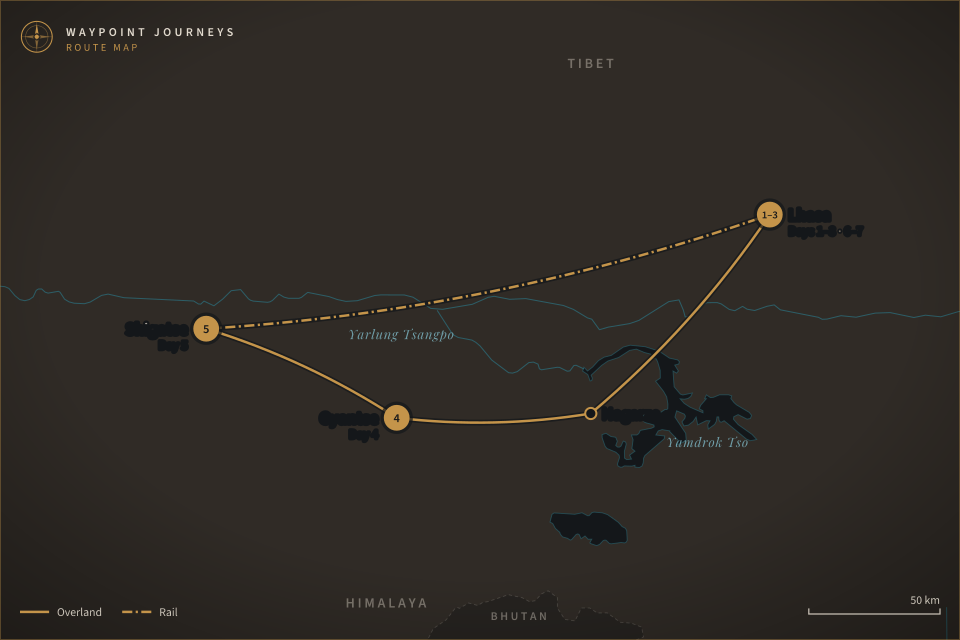
Seven days across central Tibet — Lhasa unhurried, the Kamba La to Yamdrok, Gyantse and Shigatse, and the plateau train home.
Your guide meets you at Gonggar airport with a white khata scarf — the traditional welcome — for the drive up the Kyichu valley to Lhasa. The first day belongs to the altitude: settle into the hotel, drink sweet tea, and take the gentlest of evening strolls to watch the Potala catch the last light. Nothing is scheduled, deliberately. Up here, arriving slowly is the whole art.
Morning at the holiest site in Tibet: the Jokhang, where pilgrims prostrate at the doors and the 1,300-year-old Jowo Buddha glows through butter-lamp haze. Join the clockwise current of the Barkhor kora — prayer wheels, juniper smoke, Khampa braids, market stalls of coral and turquoise. After lunch in a teahouse, north to Sera Monastery for the afternoon debates: monks lunging questions and cracking handclaps in the courtyard shade. A first full, unforgettable Lhasa day.
The thousand rooms. With timed tickets secured, you climb the Potala's great ramps past murals and mandalas to the private apartments of the Dalai Lamas and the gold-and-jewel funerary stupas of their predecessors — then out onto the roofs, with Lhasa spread below like an offering. The afternoon changes register entirely: a working thangka studio, where a master demonstrates the sacred geometry and sets a brush in your hand. Your own small painting comes home with you.
The road trip begins. Out of the Kyichu valley and up the switchbacks to the Kamba La at 4,790 metres, where prayer flags roar in the wind and Yamdrok Tso appears below — seventy kilometres of impossible turquoise wrapped around brown mountains. Picnic lunch on the holy lakeshore, then west past the Karo La's hanging glacier and into Gyantse, the most Tibetan of Tibet's towns, its dzong fortress standing guard over whitewashed lanes. Evening free beneath the old walls.
Morning at Palcho Monastery, where three schools of Tibetan Buddhism share one compound — and at its centre the Kumbum, a nine-tier mandala in architecture, 108 chapels spiralling upward, each painted with murals that scholars cross the world to see. Climb tier by tier to the golden dome's eyes. After lunch, the short drive to Shigatse, Tibet's second city and seat of the Panchen Lamas; the evening is for the old town and its market of amber, felt and yak cheese.
Tashilhunpo in the morning light: golden roofs, alleys of chanting halls, and the 26-metre Maitreya — the largest gilded bronze Buddha on Earth — filling its chapel from lotus to crown. Walk the hilltop kora with the pilgrims for the full panorama, then board the high-speed train for the three-hour glide back across the plateau to Lhasa: barley fields, sand dunes, the Yarlung Tsangpo braiding beside the tracks. Farewell dinner of momos and butter tea in the old town.
One last breakfast above 3,600 metres — by now your lungs barely notice — and perhaps a final turn around the Barkhor with the morning pilgrims before the drive down the valley to Gonggar for your onward flight. You descend with a thangka you painted yourself, a camera full of turquoise, and the particular calm of a place that has been praying, without pause, for thirteen centuries.
What's Included
FREQUENTLY ASKED QUESTIONS
Common Questions About This Expedition
Expedition Investment
per person, twin share
Fully inclusive of six nights' twin-share accommodation, all Tibet Travel Permits and internal permits, private Tibetan guide and driver with oxygen aboard, every listed entrance (Potala, Jokhang, Sera, Palcho Kumbum, Tashilhunpo), the thangka masterclass, the Yamdrok lakeshore picnic, first-class seats on the Shigatse–Lhasa high-speed train, all transfers, daily breakfast and the farewell dinner
Excludes flights to/from Lhasa, Chinese visa, travel insurance, most lunches and dinners, and tips. Single supplement available. Allow 4 weeks for permits; Tibet closes to foreign visitors around Feb–Mar annually
Reserve Your SpotTibet is a very safe place to travel; the two things to respect are the altitude and the rules. Altitude first: the itinerary ascends sensibly, oxygen rides in the vehicle, and your guide watches everyone like a hawk on days one and two — most travellers acclimatise without drama. Rules second: foreign visitors must travel with a registered guide, permits are checked at every town, drone use is prohibited, and photography inside certain chapels or of security infrastructure is restricted — your guide will keep you effortlessly on the right side of all of it. Politics is a subject best left at home. Pack serious sun protection (the UV at 3,700 metres is fierce), layers for four-season days, and lip balm — the plateau air is desert-dry. The reward for these small disciplines is the most extraordinary cultural landscape on Earth.