Waypoint Journeys Presents

Costa Rica

The Green Republic

8 Days

Volcanoes, Cloud Forest & Two Coasts of Wildlife — Pura Vida, Properly Done

View Expedition Details ↓ Plan This Expedition →

We reply within 24 hours

The Country That Bet Everything on Green — and Won

Costa Rica occupies three hundredths of one percent of the planet's surface and holds roughly five percent of its species. That absurd arithmetic is the product of geography — a mountainous land bridge between two continents, washed by two oceans — and of a national decision made decades ago: the army was abolished, the forests were protected, and a quarter of the country became parkland. The result is the rarest thing in travel — a genuinely wild destination that is also easy, safe, and joyful.

The variety per road-hour beggars belief. In a single day you can stand on the rim of a steaming crater above the cloud forest, cruise a jungle river past caimans and howler monkeys, and soak in hot water heated by a live volcano. Sloths hang over hotel car parks. Scarlet macaws commute along the coast road. The national greeting — pura vida, "pure life" — is less a phrase than an operating philosophy, and it is contagious within about a day and a half.

This expedition draws the classic arc across the country's greatest hits, privately and at our pace: the Poás crater and the coffee highlands, Arenal's volcano country with its river safari and hanging bridges, the golden Pacific beaches of Guanacaste, and the wildlife-stuffed rainforest shore of Manuel Antonio — with naturalist guides throughout, every park entrance handled, and the hot springs waiting at the end of the right days.

"Half a percent of the world's land, five percent of its life. Costa Rica is what a country looks like when it chooses the forest."
A sloth resting in the canopy, Costa Rica
The unofficial national mascot, doing what it does best

Two Volcanoes, Two Coasts, and More Life Per Acre Than Anywhere Else on Earth

Arenal Volcano Country

The most perfect cone in Central America presides over a green kingdom of waterfalls, lake and rainforest around La Fortuna. Its volcanic heart still warms dozens of spring-fed pools — the day ends neck-deep in naturally hot water with the volcano silhouetted above the palms, which is as close to a national ritual as bathing gets.

The Poás Crater

A mile across and impossibly turquoise, the acid lake of Poás sits inside one of the largest active craters on Earth, high above the Central Valley's coffee farms. The rim trail through dwarf cloud forest is an easy walk into a genuinely otherworldly view — arrive early, before the clouds climb out of the valley, and the whole cauldron is yours.

Caño Negro River Safari

On the slow, coffee-dark Río Frío near the Nicaraguan frontier, one of Central America's richest wetlands unrolls from the seat of a covered boat: caimans on the banks, howler monkeys in the trees, basilisk lizards sprinting across the water, and a bird list — kingfishers, roseate spoonbills, wood storks — that fills pages of a notebook in a single unhurried morning.

Bridges in the Canopy

The rainforest's real city is thirty metres up, and the hanging bridges of Arenal put you in the middle of it — a chain of suspension walkways strung across ravines at treetop height, where toucans pass at eye level, orchids colonise every branch, and the volcano appears and disappears between the crowns.

The Guanacaste Gold Coast

Costa Rica's sunniest province is a different country — dry tropical forest, cattle country and pottery villages rolling down to a Pacific of long gold beaches and reliable sunsets. Two nights at a beach resort put a deliberate pause in the middle of the expedition: surf, swim, ride, or do heroically little.

Manuel Antonio

The country's smallest national park is its most generous: rainforest running straight into white-sand coves, with sloths, capuchins, coatis and toucans so habituated to the trails that the wildlife-watching feels almost impolite. Offshore, the Pacific; overhead, the scarlet macaws that have returned to the central coast in their hundreds.

The Expedition

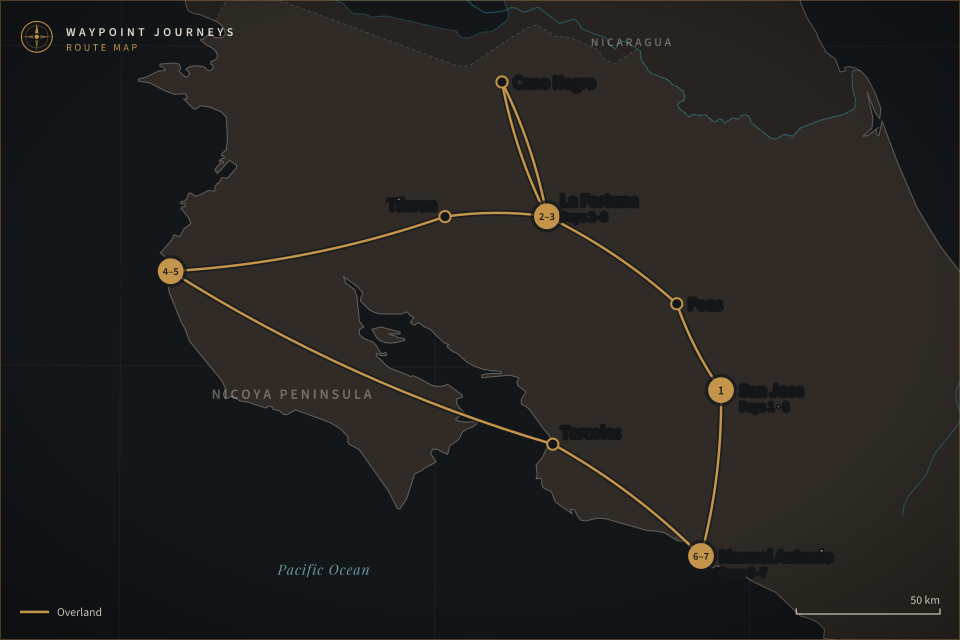
Eight days in a clockwise arc — the volcanic highlands, the northern wetlands, the Pacific gold coast, and the rainforest shore — private vehicle, naturalist guides, every park entrance handled.

Day 1
San José · arrival in the Central Valley
Day 1

Fly into San José, where our team meets you for the short transfer to a boutique hotel in the leafy highlands of the Central Valley. Depending on your landing time, the afternoon offers a gentle first taste — the gold pre-Columbian treasures downtown or simply coffee on a verandah at altitude, where the air is spring-cool year-round. A welcome dinner of Costa Rican classics opens the expedition; the volcanoes start tomorrow.

Day 2
Poás crater & the coffee highlands → La Fortuna
Day 2

Up early to beat the clouds to Poás, where a short trail through elfin cloud forest ends at the rim of a vast active crater and its impossibly turquoise acid lake. Back below the mist line, the morning continues on a working highland coffee farm — from cherry to cup with the people who grow it, ending in the best espresso of the trip. The afternoon descends north through rainforest to La Fortuna, where Arenal's perfect cone owns the horizon. The evening sets the pattern for volcano country: a long soak in spring-fed hot pools under the palms.

Day 3
Caño Negro · river safari on the Río Frío
Day 3

North across the plains to the Nicaraguan frontier, where the Río Frío slides slow and dark through the Caño Negro wetlands — one of the richest wildlife refuges in Central America. From a covered boat, the morning fills fast: caimans hauled out on the mud, howler monkeys roaring in the gallery forest, sloths curled in the crowns, basilisk lizards sprinting across the water on their hind legs, and kingfishers, spoonbills and storks working the shallows. Lunch at a country restaurant on the way back, then a Fortuna afternoon at your pace — the waterfall plunge pool, the chocolate makers, or the hot springs again (no one has ever regretted the hot springs again).

Day 4
The hanging bridges → around Lake Arenal → Guanacaste
Day 4

The morning walks the famous hanging bridges — suspension walkways strung through the rainforest canopy, toucans and howlers at eye level, the volcano filling the gaps between the trees. Then the road curls around Lake Arenal, wind farms on the ridgelines and the cloud forest of the Tilarán mountains giving way, kilometre by kilometre, to the golden dry forest of Guanacaste — cattle country, roadside fruit stands, and a stop at a village workshop where Chorotega-style pottery is still turned and fired the pre-Columbian way. By late afternoon you are at the Pacific: two nights at a beach resort on the gold coast, sunset included nightly.

Day 5
Guanacaste · a day on the gold coast
Day 5

A deliberate pause at the midpoint. The whole day belongs to the Pacific — swim the warm bay, take a morning surf lesson, ride into the dry forest, snorkel from a catamaran, or claim a palm and defend it until sunset. Guanacaste is Costa Rica's sunniest, driest province, and its beach culture — sabanero cattle country meeting the sea — moves at exactly the speed of a hammock. Your guide has the full menu of options; none of them are obligatory. Pura vida is a practice, and this is the practice day.

Day 6
South along the coast · crocodiles & macaws → Manuel Antonio
Day 6

The expedition turns south down the coast road, the dry gold of Guanacaste greening by the hour into central-Pacific rainforest. At the Tárcoles River, a boat eases out among some of the largest American crocodiles in the world — five-metre animals basking on the banks with the insolence of creatures that have outlasted everything. Nearby, a macaw sanctuary tells the comeback story of the scarlet macaw on this coast, pairs of which now flash red and blue along the shore road as commonly as pigeons. By evening: Manuel Antonio, where the hotels sit in the forest and the capuchins inspect the balconies.

Day 7
Manuel Antonio National Park
Day 7

The country's smallest park delivers its biggest morning. With a naturalist and a spotting scope, the trail through the coastal rainforest becomes a treasure hunt — two-toed and three-toed sloths, capuchin troops, coatis, agoutis, toucans, and with luck the shy squirrel monkeys found only on this coast. The trail ends where the forest does: on Playa Manuel Antonio, a white crescent inside the park where you swim beneath the trees you have just walked through. The afternoon is free for the beach, the farewell dinner is high over the Pacific, and the sunset does the closing speech.

Day 8
Return to San José · departure
Day 8

A last forest breakfast — listen for the macaws — then the scenic run back up to San José through the coastal hills and the Central Valley, arriving in good time for afternoon and evening departures. Connections are easy if you want more: we are glad to extend with Tortuguero's canals, the Osa Peninsula's deep wilderness, or a lazy landing week on either coast.

The forested point and beaches of Manuel Antonio National Park, Costa Rica

Small Group Expedition

Where the Rainforest
Walks Down to the Sea.

What's Included

Duration8 days / 7 nights — Central Valley, La Fortuna (2), Guanacaste coast (2), Manuel Antonio (2)
Group SizeSmall group expedition: maximum 5 guests — fully private, never a motorcoach
AccommodationSeven nights in well-located lodges, a beach resort, and rainforest-edge hotels
Included ExperiencesPoás crater and a highland coffee farm (Day 2); Caño Negro river safari (Day 3); Arenal hanging bridges and the Guaitil pottery stop (Day 4); Tárcoles crocodile cruise and the macaw sanctuary (Day 6); guided Manuel Antonio National Park morning (Day 7); hot-springs evening in volcano country
Park FeesEvery national-park, refuge and reserve entrance included
GuideEnglish-speaking naturalist guides with spotting scopes throughout; private air-conditioned vehicle and driver for the full circuit
MealsDaily breakfast and most lunches and dinners, including the welcome and farewell dinners; a few beach-town evenings left free by design
TransfersAirport arrival and departure transfers in San José included
Not IncludedInternational flights, travel insurance, alcoholic beverages, tips, the free-evening meals, and personal expenses

FREQUENTLY ASKED QUESTIONS

Common Questions About This Expedition

December to April is the dry season — reliable sun on the Pacific side, dusty-gold Guanacaste, and the best volcano visibility. May to November is the green season: afternoon rains, half-empty parks, waterfalls at full power, and the forest at its most alive. Arenal makes its own weather year-round, so we build volcano-viewing chances into several days rather than betting on one. There is no bad month for wildlife — the sloths, monkeys and macaws do not migrate.
Gentle. The walks — the Poás crater rim, the hanging bridges, Manuel Antonio's trails — are on maintained paths at an unhurried naturalist's pace, rarely more than a few kilometres, and the river safari is done from a seat. The steepest thing on the itinerary is the ladder into the hot springs. Anyone comfortable walking a couple of hours with stops will find every day easy; where a trail has a shortcut, your guide knows it.
Almost certainly — we stack the odds deliberately. Caño Negro and Manuel Antonio are two of the most wildlife-dense accessible reserves in the country, your naturalists carry spotting scopes, and we hit both at the right hours. Monkeys, sloths, toucans, coatis and basilisks are near-daily sightings; scarlet macaws are all but guaranteed at the sanctuary. Nature keeps the final word, but in eight days across four ecosystems it has many chances to say yes.
Seven nights in well-located lodges and beach hotels, a private naturalist-guided vehicle throughout, every national-park and reserve entrance (Poás, Caño Negro, the hanging bridges, Manuel Antonio), the river safari, the hot-springs evening, daily breakfast and most lunches and dinners. The usual exclusions apply: international flights, travel insurance, alcoholic drinks, tips, and a few meals left free in the beach towns where choosing your own table is half the fun.

Expedition Investment

$2,950USD

per person, twin share

Fully inclusive of seven nights' accommodation across four regions, private naturalist-guided vehicle for the whole circuit, every national-park and reserve entrance, the Caño Negro river safari, Tárcoles crocodile cruise, hanging bridges and hot-springs evening, daily breakfast and most lunches and dinners, and both San José airport transfers

Excludes international flights, travel insurance, alcoholic beverages, tips, and the free-evening meals. Single supplement $520 USD

Reserve Your Spot
A Note on Safety & Logistics

Costa Rica is the easiest destination in our collection — a stable, army-free democracy with superb tourism infrastructure, drinkable tap water in most of the country, and half a century of practice welcoming travellers. What earns respect here is nature's small print: the sun is equatorial-strong even under cloud, the ocean has riptides on some beaches (your guide knows which), trails are humid and occasionally muddy, and the wildlife is wild — which is precisely the point, and why we keep the two-metre rule the parks ask for. Our guides carry first-aid kits and the country has excellent clinics within reach of every stop. Bring reef-safe sunscreen, a rain shell in any season, and shoes you don't mind the rainforest improving.