Waypoint Journeys Presents
The Freedom Coast
Sierra Leone & Liberia
7 Days
Perfect Beaches, Rainforest Islands & Two Capitals History Forgot to Spoil
View Expedition Details ↓ Plan This Expedition →We reply within 24 hours
Two Nations Founded on Freedom, Visited by Almost No One
No two countries on Earth share a stranger, prouder origin: Sierra Leone, founded at Freetown in 1787 as a home for freed slaves from Britain and the Americas; Liberia, settled from 1822 by free Black Americans and declared Africa's first republic in 1847. Their capitals are named for freedom and a U.S. president; their languages are English and Krio; their histories run through the hardest chapters of the Atlantic world — and out the other side.
What the news cycle never mentions is what the map gave them: arguably the finest beach coast in West Africa. The Freetown Peninsula drops rainforested mountains straight into water the colour of bottle glass — River No. 2 and Tokeh would be famous anywhere else on Earth. Upcountry, the Moa River wraps around Tiwai Island, a community-run reserve with one of the highest primate densities on the planet and the phantom pygmy hippo in its creeks. Across the border, Robertsport stacks West Africa's best surf against Lake Piso, and Monrovia keeps Providence Island — where the returning settlers first stepped ashore — in the middle of its harbour.
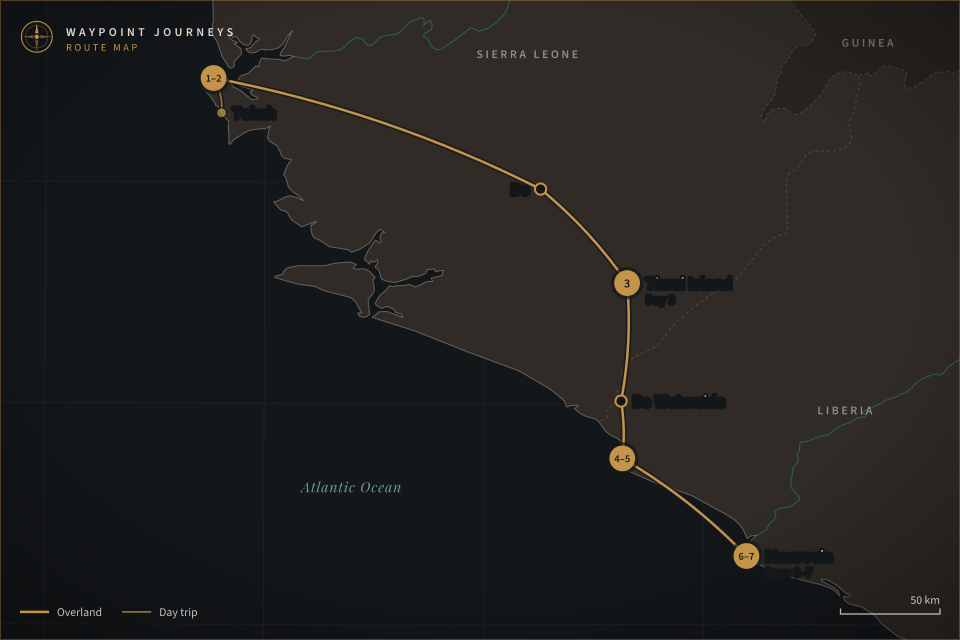
This is a 7-day traverse of both countries — Freetown and its beaches, the Tiwai rainforest night, the Mano River crossing, Robertsport and Monrovia — condensed from our longer West Africa surveys to the undiluted highlights. All six nights are included, from boutique coast hotels to one honest research-camp night in the forest. You will not meet a tour bus. You may not meet another tourist.
"Freedom built these two countries; the Atlantic built their coast. Both deserve to be far more famous."

West Africa's Finest Beaches, a Rainforest Full of Primates, and History That Changed the Atlantic World
River No. 2, Tokeh, Bureh — the Freetown Peninsula's beaches drop rainforest mountains straight into clear Atlantic water, with sand so pale it once starred in tropical-paradise advertising. They remain gloriously empty: fishermen, a beach-shack barracuda lunch, and you.
A capital founded by freed slaves, told through its own streets: the site of the great Cotton Tree under which the settlers gathered in 1792, the King's Yard Gate where the recaptured were freed, the clamorous markets downhill, and the hilltop Krio houses with their Nova Scotia bones. History here is personal, recent and proudly told.
A community-run island reserve in the Moa River with one of the highest primate densities on Earth — chimpanzees, Diana monkeys and nine more species in six square kilometres of old-growth rainforest — plus the secretive pygmy hippo in its creeks. Reached by canoe, slept in a forest camp, walked at dawn: the real thing.
Liberia's surf capital sits where Lake Piso meets the Atlantic — long left-hand point breaks peeling past a town of faded 19th-century settler houses under giant cotton trees. Surf or watch, the evening ritual is the same: the fishing fleet surfing home at sunset, hauled up the beach to drums.
In the middle of Monrovia's harbour, the islet where free Black American settlers first landed in 1822 — the seed of Africa's first republic. With the capital's masks and settler-era archives nearby, it tells the Atlantic story's astonishing return chapter, on the spot where it happened.
Sierra Leone and Liberia sit where Ghana was twenty years ago: warm, ready, and all but tourist-free. The infrastructure asks patience; the payback is beaches to yourself, guides who remember your name in every village, and the traveller's rarest luxury — being early.
The Expedition
Seven days, two republics — Freetown and its beaches, a rainforest night on Tiwai, the Mano River crossing, and Liberia's surf coast and capital. All six nights included.
Arrive at Lungi, cross the great harbour by water taxi with Freetown stacked green and rust on its mountains ahead — one of Africa's finest arrivals — and settle into a comfortable hotel above the bay. The evening is a gentle first walk: the site of the Cotton Tree, the King's Yard Gate through which freed captives entered the city, and dinner of groundnut stew and fresh snapper as the harbour lights come on.
The morning finishes the capital — the National Museum's Krio and Mende treasures, the markets' full-volume commerce, the hilltop board houses built by Nova Scotian settlers — then the peninsula road unrolls its argument: rainforest mountains falling into a sequence of beaches that would be world-famous anywhere else. Swim at River No. 2, where a jade river crosses white sand into the Atlantic; lunch on grilled barracuda at a community beach shack; end at Tokeh with the fishing fleet coming home. Cold Star beer, warm sand, zero crowds.
A proper expedition day: east across the country on improving-then-honest roads, through diamond country around Bo, to the banks of the Moa River. A dugout canoe crosses to Tiwai Island — six square kilometres of old-growth rainforest run by the eight communities around it, holding one of the densest primate populations on Earth. The afternoon walk meets Diana monkeys and hornbills; the night walk listens for the pygmy hippo. Sleep in the simple research camp, forest orchestra included at no extra charge.
Dawn on Tiwai is the best hour in Sierra Leone — mist on the Moa, chimpanzees calling territory, the forest switching shifts. A last guided walk, then the canoe back and the border run south: the Mano River bridge crossing into Liberia, handled stamp by stamp by our teams on both banks. The afternoon road curls down Liberia's green coast to Robertsport, arriving as the town's famous sunset performance begins over Lake Piso. Guesthouse under the cotton trees, ocean audible all night.
A full day in West Africa's best-kept coastal secret. Surfers get the long left points that made Robertsport quietly famous (boards and local coaching arranged); everyone else gets the town — faded settler houses, the fish market's theatre, a pirogue onto Lake Piso's mirror-calm lagoon for manatee luck and birdlife. The evening ritual is non-negotiable: the fishing fleet surfing home in formation at golden hour, hauled up the beach by singing crews. Fresh lobster for dinner costs less than the drink beside it.
The coast road runs down to Monrovia, Africa's first republic's capital, named for a U.S. president and unlike anywhere else on the continent. Providence Island first — the harbour islet where the settlers of 1822 stepped ashore — then the city it grew: the Ducor heights for the view over the breakers, the National Museum's masks and settler archives, Waterside Market in full cry, and the beach bars of Sinkor for a farewell dinner of pepper soup and palm wine as the Atlantic performs its last sunset of the week.
Breakfast on the ocean, a last swim or a Waterside bargaining rematch depending on your flight, then the transfer to Roberts International. Onward connections run to Accra, Abidjan, Casablanca and Brussels; our Ghana–Benin–Togo and Senegal & Gambia expeditions pair naturally on either side for a fuller West African arc — the coast has more chapters, and you now read the language.
What's Included
FREQUENTLY ASKED QUESTIONS
Common Questions About This Expedition
Expedition Investment
per person, twin share
Fully inclusive of all six nights' accommodation across both countries, private 4x4s and experienced drivers, the harbour water taxi, all canoes and pirogues, the guided Tiwai rainforest programme, the full Mano River border operation, expedition leader and community guides, daily breakfast, all up-country meals, and the welcome and farewell dinners
Excludes international flights, both visas, travel insurance, remaining meals, alcohol, surfboard hire, and tips. Single supplement $380 USD. Pairs naturally with our Senegal & Gambia and West Africa expeditions
Reserve Your SpotBoth countries have been stable and peaceful for over two decades, and the welcome for visitors is among the warmest we know — but this is frontier-grade tourism infrastructure, and we run it accordingly: private 4x4s with seasoned drivers, our own teams on both sides of the Mano River border, satellite communication up-country, and honest daily briefings. Health is the real checklist item: yellow fever vaccination is required, malaria prophylaxis essential, and we send complete medical guidance before you commit. The Tiwai night is simple camping done safely; the ocean has real currents (swim where the locals do); and the schedule keeps slack because West Africa's clock deserves respect. Come with patience and curiosity — the coast repays both extravagantly.