Waypoint Journeys Presents
4 Stans of Central Asia
Kazakhstan · Kyrgyzstan · Tajikistan · Uzbekistan
18 Days
Steppe, Summit, and the Silk Road
View Expedition Details ↓Four Countries, One Unbroken Thread
Central Asia rewards those willing to move through it properly. Four countries, each with its own language, its own landscape, and its own relationship to the Silk Road that once ran through all of them. Kazakhstan opens the journey with red canyon walls and drowned forests frozen in turquoise water. Kyrgyzstan is nomad culture at altitude — eagle hunters, felt weavers, and mountain passes above 3,000 metres.
Tajikistan is ancient Sogdiana: a city that predates Rome, a valley of seven lakes in colours that shift with the sun, and streets where craftsmen still work by the same methods their ancestors used a thousand years ago. Uzbekistan is the payoff — Samarkand, Bukhara, Khiva: three cities that were once among the most powerful on Earth, their mosques and madrasas still standing beneath skies that have barely changed since Tamerlane rode through.
This is eighteen days done at the right pace, with the right people, across four of the most undervisited countries in the world — four border crossings, two domestic flights, and a high-speed train, all handled. An optional Turkmenistan extension continues seamlessly from Khiva for those who want all five Stans.
"Skies that have barely changed since Tamerlane rode through — four of the most undervisited countries in the world, on one unbroken thread."

Steppe, Summit, and the Silk Road
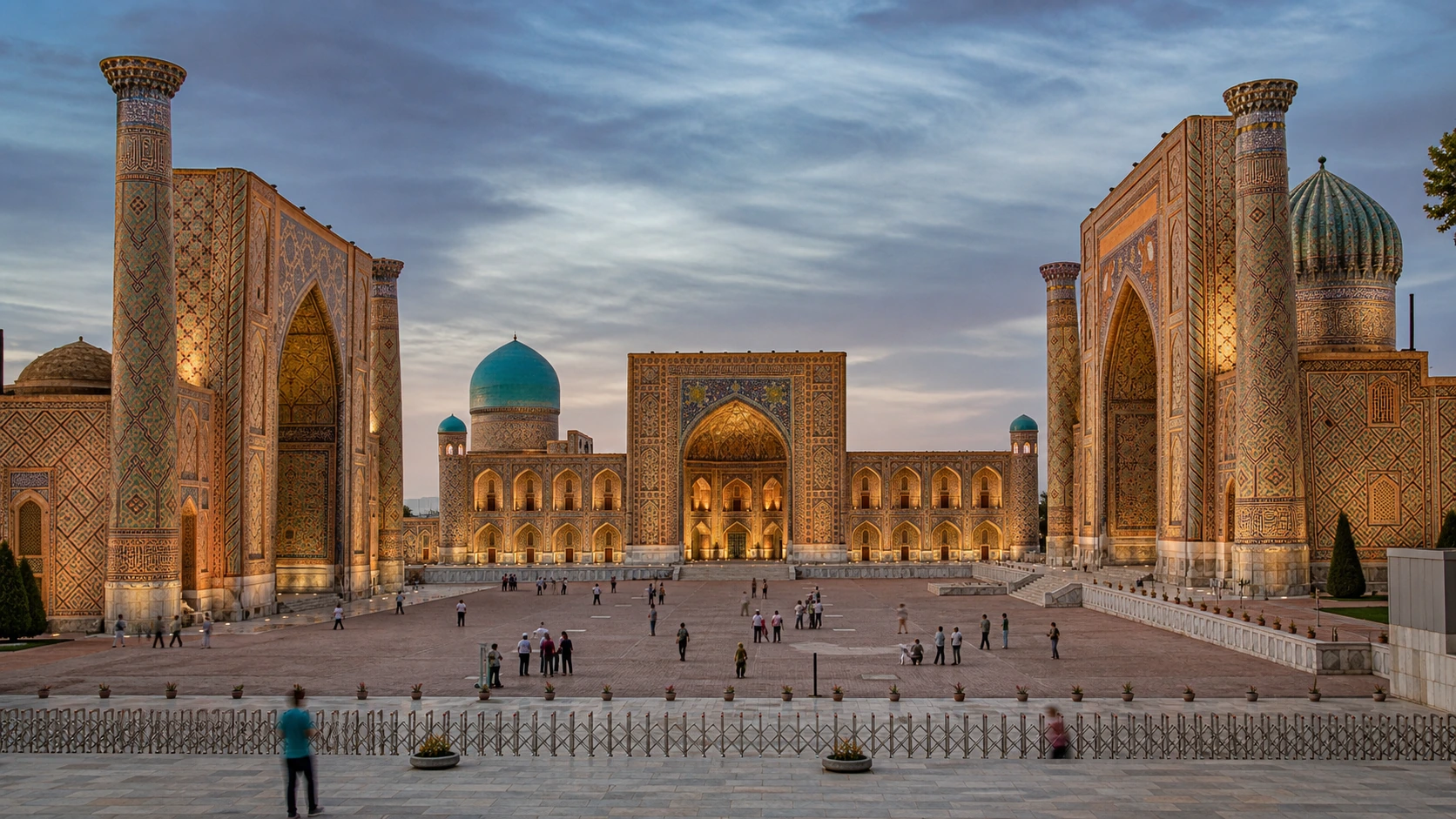
The most architecturally imposing public square in Central Asia, framed on three sides by the Ulugbek, Sher-Dor, and Tilla-Qori madrasas, their façades covered in tilework so precise it looks typeset. Tamerlane's turquoise-domed tomb stands nearby.
Bukhara's old town is the most intact medieval Islamic city in Central Asia; the tenth-century Ismail Samani Mausoleum is arguably the finest building in the region. Khiva's walled Ichan-Kala is the most completely preserved medieval city on the route.
At Bokonbaevo on the shore of Lake Issyk-Kul, local hunters demonstrate the ancient art of hunting with golden eagles — practised across these mountains for centuries. At close range the birds are extraordinary.
Kaindy Lake, formed when a 1911 earthquake flooded a spruce forest — the bleached trunks still standing above water the colour of pale jade. Nearby, Charyn Canyon's 150-kilometre Valley of Castles turns deep red in the morning light.
The Seven Lakes of Marguzor in the Fan Mountains — a series of tarns linked by a rough track, each a different shade of blue or green depending on depth, minerals, and hour. Plus Penjikent, the Sogdian city often compared to Pompeii.
Felt-making in Kochkor, the coppersmiths and embroiderers of Istaravshan's caravanserai bazaar, a Samarkand paper mill still working mulberry bark by Silk Road methods, and a plov cooking class with a Bukharan family.
The Expedition
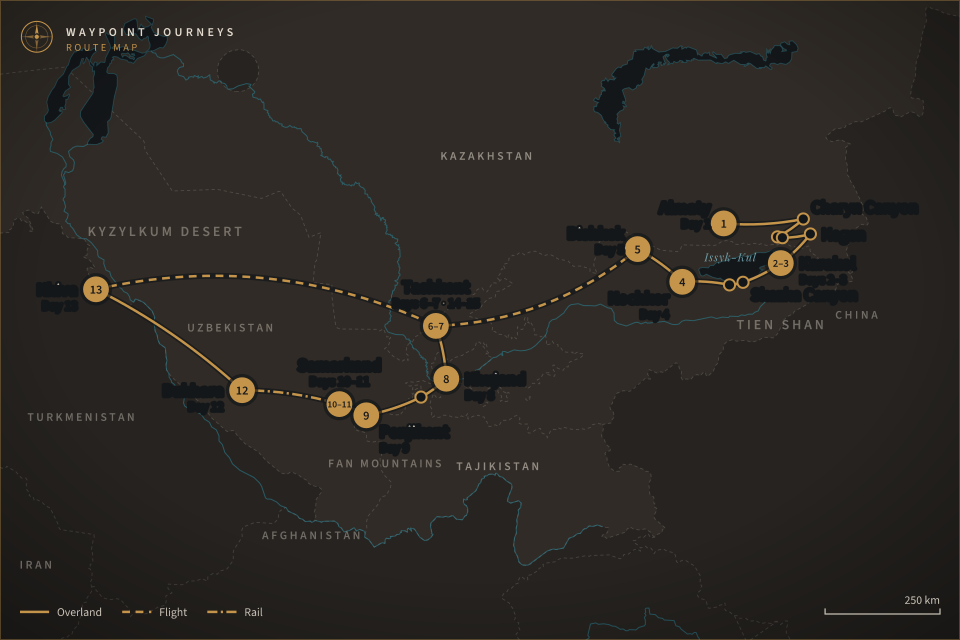
Eighteen days across four countries — Almaty to Tashkent, by road, rail, and air. Optional Turkmenistan extension from Khiva.
The expedition begins in Almaty, Kazakhstan's largest city, pressed against the white flanks of the Tien Shan. The afternoon opens with the city itself: the vivid chaos of the Green Bazaar, a walk through Panfilov Park past the ornate wooden Orthodox cathedral, and a cable car up to Kok-Tobe hill, where the view over the city and the mountains behind it earns its reputation.
East into the steppe to Charyn Canyon — a 150-kilometre gorge of wind-carved sandstone whose Valley of Castles turns deep red in the morning light. Then into the northern Tien Shan to the Kolsay Lakes, and on Day 3 to Kaindy Lake, where a 1911 earthquake flooded a spruce forest whose trunks still stand above water the colour of pale jade. South over the Kegen border into Kyrgyzstan and on to Karakol at the foot of the Tien Shan.
Karakol has two buildings worth the morning: the Dungan Mosque, built entirely from timber without a single nail, and the Russian Orthodox cathedral a few streets away. Then into the mountains to the Jety-Oguz Gorge, where red sandstone cliffs — the Seven Bulls and the Broken Heart — loom above dark spruce forest, best seen on foot.
Along the southern shore of Lake Issyk-Kul — the second-largest alpine lake in the world — to Skazka (Fairytale) Canyon, where wind and water have worked the red clay into towers and fins that shift colour through the day. At Bokonbaevo, local eagle hunters demonstrate the ancient art practised across these mountains for centuries. Then north over the steppe to the felt-making village of Kochkor.
The morning belongs to the felt weavers of Kochkor: a hands-on session showing how shyrdak — the traditional Kyrgyz felt carpet — is made, from raw wool through rolling and pressing to the cutting of bold geometric patterns, a process older than the Silk Road. Then the drive to Bishkek and the Osh Bazaar — dried fruit, hand-forged knives, and more varieties of walnut than seem plausible.
A morning city tour of Bishkek — Ala-Too Square and the ceremonial changing of the guard, the Manas monument, the State Historical Museum, and the oak-shaded park where Soviet-era sculptures stand in an unresolved conversation with newer ones. Then the evening flight to Tashkent.
Tashkent is the pivot between the Soviet-era capital and the old Islamic city beneath it. We move between both: the Khast-Imam ensemble with its ancient madrasas and Quranic manuscripts, the sensory density of Chorsu Bazaar, the wide Soviet plazas, and the Tashkent Metro — a network of stations designed as underground civic monuments, tiled and carved and lit with a seriousness most cities reserve for their grandest buildings.
Drive north to the Uzbek-Tajik border at Oybek, cross on foot, and continue to Khujand — one of the oldest continuously inhabited cities in Central Asia, founded according to tradition by Alexander the Great. The Panjshanbe Bazaar is the living centre of the city, trading on the same site for centuries; the afternoon brings the fortress walls and local history museum.
The road to Penjikent passes through Istaravshan — a city of more than 2,500 years with a bazaar whose craftsmen still work in the old caravanserai tradition: coppersmiths, embroiderers, potters, each trade concentrated in its own section. Then south through dramatic mountain scenery to Penjikent, the Sogdian city often compared to Pompeii for the quality of its ruins and the vivid wall paintings excavated from them.
The morning begins at the Sarazm ruins — a UNESCO site more than 5,500 years old — before heading into the Fan Mountains for the Seven Lakes of Marguzor: a series of tarns linked by a rough track, each a different shade of blue or green depending on depth, minerals, and hour, with lunch at a family home beside the fourth lake. In the afternoon, back through Penjikent to the Jartepa border crossing and on to Samarkand for dinner.
Two days in Samarkand. The Registan — three madrasas covered in tilework so precise it looks typeset — then the Gur-e-Amir, Tamerlane's tomb beneath an enormous ribbed turquoise dome; the Bibi-Khanym Mosque, the Shah-i-Zinda necropolis with some of the finest surviving tilework anywhere, and the Ulugbek Observatory with its sixty-metre sextant. The deeper day brings the Afrosiab site (three millennia of occupation, with excavated Sogdian murals), a working carpet factory, and a paper mill still making mulberry-bark paper by Silk Road methods.
The morning train crosses two hours of golden steppe to Bukhara — the most intact medieval Islamic city in Central Asia. The Lyabi-Hauz quarter with its central pool and old trading domes; the tenth-century Ismail Samani Mausoleum, arguably the finest building in all of Central Asia; the Ark Citadel, seat of Bukharan power for over a thousand years; and the Po-i-Kalyan complex with the Kalon Minaret that even Genghis Khan, by tradition, spared. The evening brings a hands-on plov cooking lesson with a Bukharan family.
The morning takes us outside the city walls to three sites most visitors miss: the eclectic Sitorai Mokhi-Khosa Palace, the Chor Bakr Necropolis set in silence at the desert's edge, and the Naqshbandi complex, a working Sufi pilgrimage site. Then the long drive northwest across the Kyzylkum Desert — vast, quiet, and surprisingly beautiful — to Khiva, arriving late.
Khiva's Ichan-Kala — the inner walled city — is the most completely preserved medieval city in Central Asia. The morning moves through it at a considered pace: the Pakhlavan Mahmud Mausoleum, the Kunya-Ark fortress, the Juma Mosque's forest of two hundred carved wooden columns, the Tash-Khauli Palace, and the unfinished Islam-Khodja Minaret. After lunch, a short drive to Urgench for the evening flight back to Tashkent. (Extension guests instead cross overland to Konye-Urgench in Turkmenistan.)
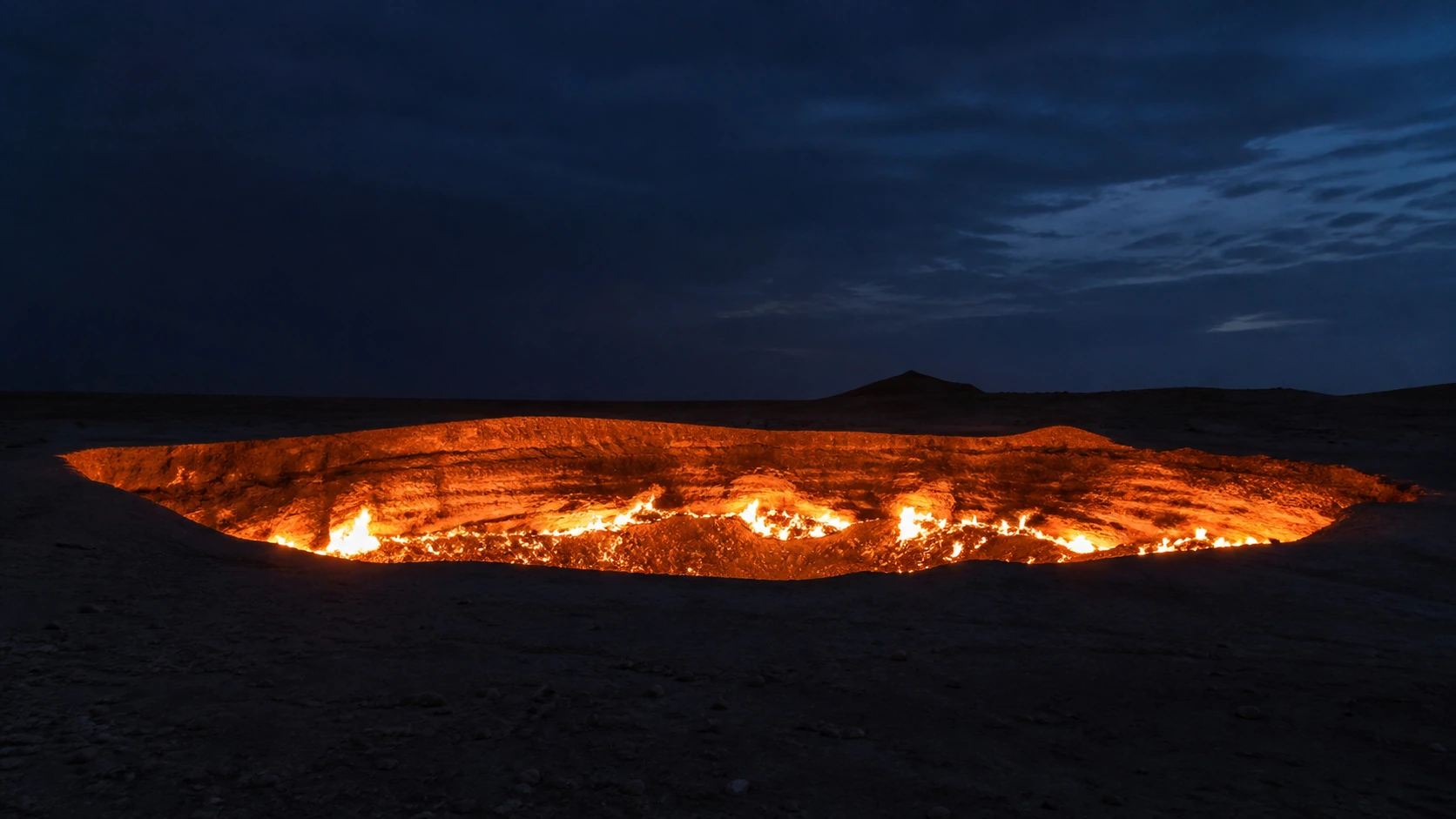
Breakfast and a late-morning check-out. Transfer to Tashkent International Airport for onward connections — eighteen days that have covered more civilisations, more landscapes, and more altitude than most journeys three times as long. Guests continuing into Turkmenistan join our separate Turkmenistan Expedition from Konye-Urgench for the Darvaza Gas Crater, Ancient Merv, and white-marble Ashgabat.
What's Included
FREQUENTLY ASKED QUESTIONS
Common Questions About This Expedition
Expedition Investment
USD per person, twin share
Fully inclusive of accommodation, expert guides, all ground transport, domestic flights, the high-speed train, listed experiences, entrances, and listed meals
Excludes international flights, travel insurance, visa fees, and meals not listed. Single supplement $650. Small group supplement $450 for groups of 3 or fewer. Turkmenistan extension priced separately — combined, the two journeys cover six countries and twenty-four days
Reserve Your SpotKazakhstan, Kyrgyzstan, Tajikistan, and Uzbekistan are stable, welcoming, and increasingly well set up for travellers — the practical challenge is logistical, not security: four border crossings, two domestic flights, a high-speed train, and a great deal of distance, all of which we handle end to end with expert local guides in each country. Uzbek high-speed rail seats are subject to availability and confirmed closer to departure; we always arrange alternative transport if needed. We send detailed visa and packing guidance to all confirmed travellers and are glad to discuss fitness and pacing directly.