Skip to content

Waypoint Journeys Presents

Comoros

The Perfume Islands

9 Days

Grande Comore · Mohéli · Anjouan — A Live Volcano, a Whale Nursery and the Islands That Scent the World

9 DaysFrom $4,650 USDMax 5 guests

We reply within 24 hours

The Islands at the Mouth of the Channel

The Comoros sit in the northern Mozambique Channel between Africa and Madagascar, and almost nobody goes. Fewer visitors arrive here in a year than reach Zanzibar in a fortnight, which is remarkable given what is on the islands: one of the largest active volcanic calderas on the planet, a marine park where humpback whales calve within sight of the beach, and an Arab-Swahili urban culture of carved doors and coral-stone mosques that has been trading across this ocean for a thousand years.

They are also, quietly, the reason a great deal of the world smells the way it does. The Comoros grow more ylang-ylang than anywhere else, and the essential oil distilled from those yellow flowers in copper alembics on Anjouan and Grande Comore has been going into French perfume for a century. Add the vanilla and the cloves and the name the French gave the archipelago, the Perfume Islands, is not marketing.

Then there is the coelacanth. In 1938 a fish thought extinct for sixty-five million years turned up in a South African trawler's catch, and the population it came from was eventually found here, in the deep volcanic drop-offs off Grande Comore. The islands are still the type locality for the most famous living fossil in the world, and the specimens in Moroni are worth an hour of anyone's time.

"Fewer people visit the Comoros in a year than reach Zanzibar in a fortnight, and there is an active caldera, a whale nursery and a thousand years of Swahili trade here."
Ylang-ylang flowers and a copper distillery, Comoros
Ylang-ylang: distilled in copper alembics here, and in French perfume for a century

One of the World's Largest Active Calderas, a Whale Nursery, and a Thousand Years of Carved Doors

Mount Karthala

Grande Comore is essentially one volcano, and Karthala's summit caldera is among the largest active craters on Earth, three by four kilometres of ash and steam at 2,361 metres. It has erupted repeatedly in living memory, most recently in 2007. The climb is a long day through montane forest and heath onto a lunar plateau, and those who camp on the rim get a sunrise over a crater that reaches the horizon.

The Mohéli Marine Park

The Comoros' only national park, and one of the great under-visited marine sites in the Indian Ocean. Between July and October humpback whales come into the shallow water off Nioumachoua to calve, close enough to watch from the beach and closer still from a boat, alongside resident spinner dolphins and dugongs. The islets offshore hold nesting seabirds and reef that has never been fished hard.

Itsamia: Turtles Every Night of the Year

The beaches at Itsamia on Mohéli are one of the most important green turtle rookeries in the western Indian Ocean, and unusually, nesting happens every night of the year rather than in a season; the peak runs from March to July. The village runs the conservation programme itself, and you walk the sand after dark with the guardians who patrol it, watching females dig, lay and return to the sea.

Moroni's Medina and the Carved Doors

The old town of Moroni is a Swahili-Arab warren of coral-stone alleys running down to the Old Friday Mosque, which has stood on the waterfront since 1427 and where the tide comes right up to the wall. The doors are the thing to look for: heavy carved teak and mangrove, studded and framed, the same tradition you find in Lamu and Zanzibar, and here still on ordinary houses rather than in museums.

Ylang-Ylang and the Distilleries

The Comoros produce more ylang-ylang than anywhere on Earth, and the process has barely changed: flowers picked before dawn while the scent is strongest, then steam-distilled in copper alembics over wood fires in small village stills. You visit working distilleries on both Grande Comore and Anjouan, and go into the vanilla and clove gardens that share the same slopes.

Anjouan: the Citadel and the Green Interior

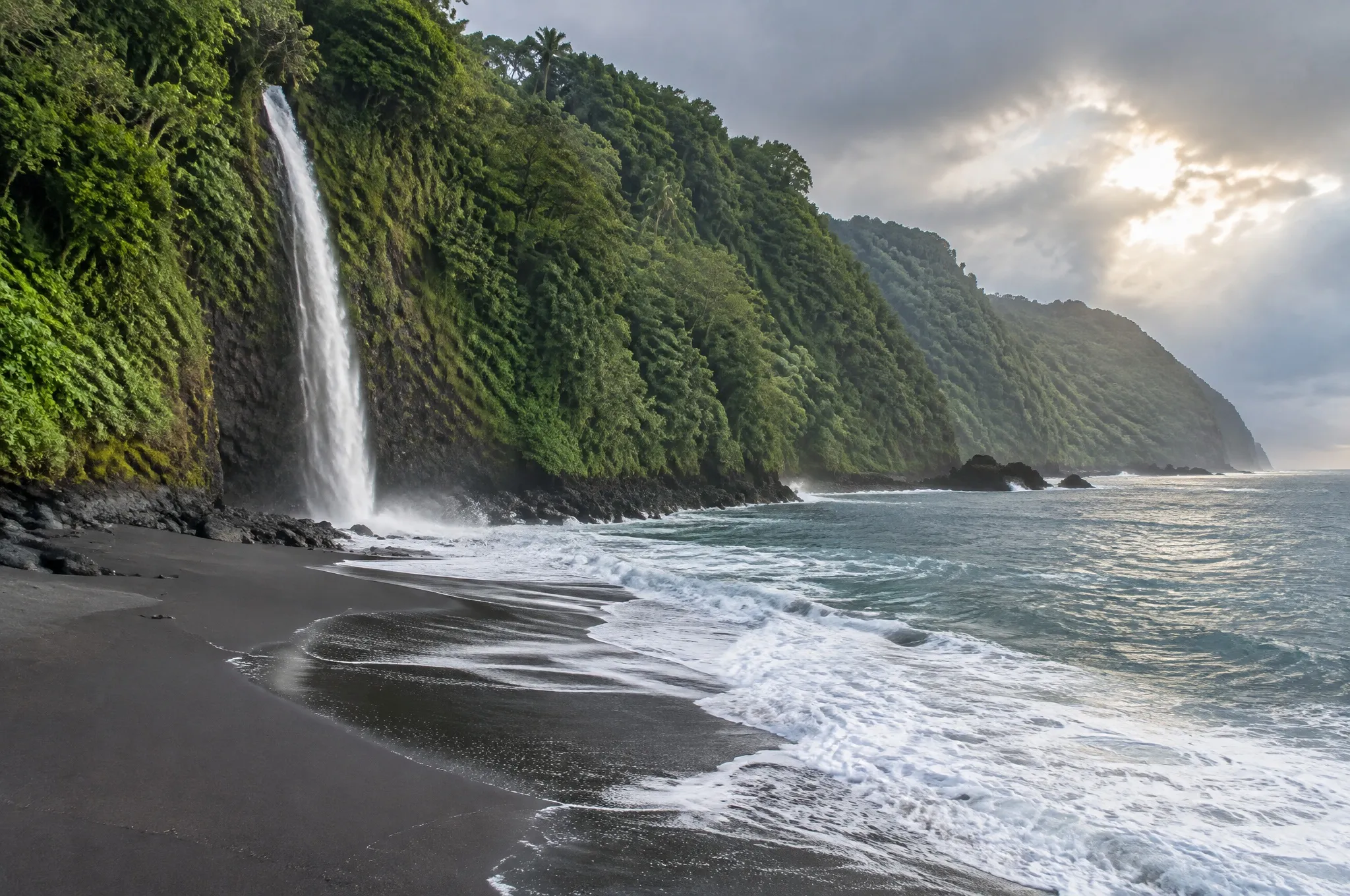
Anjouan is the mountainous, fertile one, and Mutsamudu is its old capital: a dense Shirazi medina under a hilltop citadel built in 1860 against Malagasy raiders, with a view over the whole harbour. Behind the town the island rises steeply into ylang-ylang and clove plantations, waterfalls and forest, and the road around the coast is one of the most beautiful in the archipelago.

The Expedition

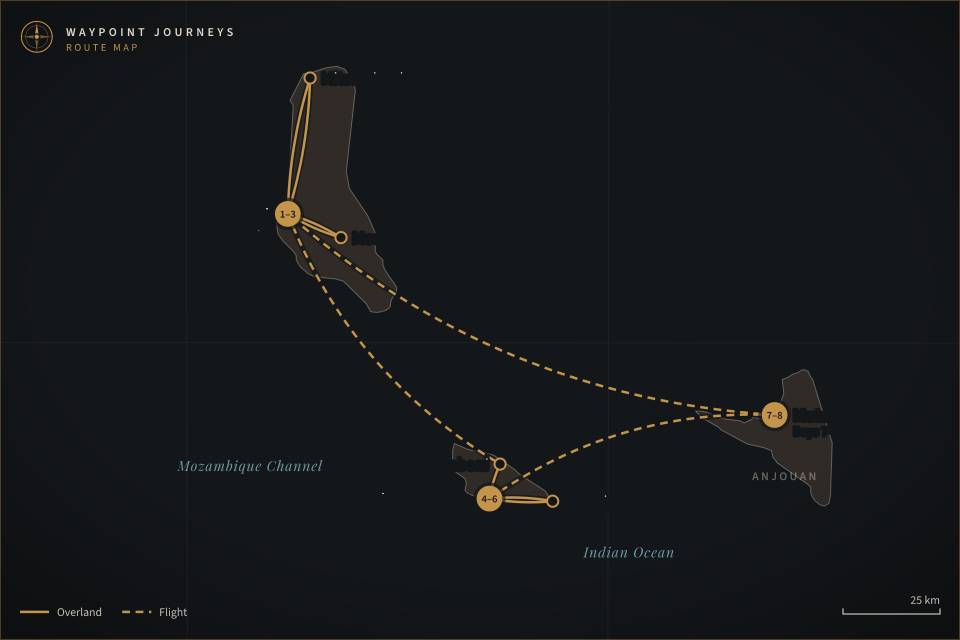
Nine days across all three islands, with two internal flights, deliberate slack around them, and the marine park at the heart of it.

Day 1
Moroni · arrival on Grande Comore

Arrive at Prince Said Ibrahim International outside Moroni, most likely on the overnight from Nairobi, Addis or Dar. The afternoon is the capital, which is small, sun-bleached and immediately likeable: the medina's coral-stone alleys and carved teak doors, the Old Friday Mosque of 1427 standing where the tide reaches the wall, and the Volo Volo market for the vanilla, cloves and dried fish. Sunset from the corniche, and dinner looking at the volcano you will be on in two days.

Day 2
Grande Comore · the north coast and the distilleries

North around the island. Lac Salé, a brackish crater lake in a perfect cone above the sea; the Trou du Prophète, a sheltered bay where tradition says the Prophet's followers landed; the beaches at Mitsamiouli and Chomoni where the black lava runs into white sand. Between them, an ylang-ylang distillery at work, flowers picked before dawn and steaming in a copper alembic over a wood fire, and the vanilla and clove gardens on the same slopes. Back to Moroni for the CNDRS coelacanth collection in the late afternoon.

Day 3
Mount Karthala · into the caldera

The big day on Grande Comore. From the trailhead above Boboni the route climbs through plantation into montane forest, then out onto open heath and finally a black ash plateau, five to six hours of steady walking to the rim at 2,361 metres. The caldera is three kilometres by four, one of the largest active craters anywhere, still steaming from the 2007 eruption. Those who want the sunrise camp on the rim with the porters and the guide; those who would rather not can take the shorter forest walk and the crater lakes below.

Day 4
Grande Comore → Mohéli · Nioumachoua

The short flight to Mohéli, the smallest, wildest and least developed of the three islands, then across it by road to Nioumachoua on the south coast, where the marine park begins at the beach. The afternoon is deliberately unstructured: an eco-lodge on the sand, the first swim, and the islets sitting offshore in a line. In whale season the blows are visible from the veranda, which tends to end conversation for a while.

Day 5
Mohéli Marine Park · whales, dolphins and the islets

A full day on the water in the park with its own guides. From July to October the humpbacks are here to calve and the boat works slowly and at distance, on the park's rules rather than anyone's expectations; mothers and calves regularly surface within metres anyway. Outside that window the day belongs to resident spinner dolphins, the reef around the Nioumachoua islets, and, with luck, the dugongs that still graze the seagrass here. Snorkelling over coral that has never been fished hard, and a beach lunch on an islet.

Day 6
Mohéli · the forest, and turtles after dark at Itsamia

Inland in the morning to Dziani Boundouni, a sulphurous crater lake in the middle of the island, and a walk in the last stands of Mohéli's forest where Livingstone's fruit bats, among the largest bats in the world with a metre-and-a-half wingspan, roost in the tall trees. In the evening, east to Itsamia, one of the western Indian Ocean's great green turtle rookeries, where the village runs the patrols itself. You walk the sand after dark with the guardians and watch a female haul out, dig and lay.

Day 7
Mohéli → Anjouan · Mutsamudu

The flight east to Anjouan, the mountainous and most fertile of the islands. Mutsamudu is the old Shirazi capital and its medina is the densest in the archipelago: narrow lanes of coral rag, carved doors, and the Friday mosque of 1427 at its heart. Above it the citadel of 1860, built against Malagasy raiding, looks over the harbour and out to Mayotte on a clear day. The afternoon walks the old town with a local guide, and the evening is at the waterfront.

Day 8
Anjouan · the green interior

A day in the island's interior, which is the greenest country in the Comoros. The road climbs through ylang-ylang and clove plantations into forest below Mount Ntingui, with the Dzialandzé plateau and the waterfall at Tatinga on the way; Bambao has one of the oldest and largest ylang-ylang distilleries in the country, and a colonial-era sugar mill beside it. The afternoon runs the coast road through Sima and Moya, where the beach sits below a cliff and the water is turquoise, and back to Mutsamudu.

Day 9
Anjouan → Moroni · departure

The morning flight back to Grande Comore, deliberately scheduled with most of a day in hand because the domestic network here is honest about very little and we would rather hold the margin than lose your connection. Depending on timing there is a last hour in Moroni for the medina and the market, and a final lunch on the corniche, before the transfer to the airport for the evening departures. The Comoros pair naturally with our Madagascar, Seychelles and Mauritius expeditions.

The islets off Nioumachoua, Mohéli, Comoros

Small Group Expedition

Three Islands. One Live Caldera.
Almost No One Else.

What's Included

Duration9 days / 8 nights: three nights Grande Comore, three Mohéli, two Anjouan
Group SizeSmall group expedition: maximum 5 guests
AccommodationThe best available on each island, which is modest by design: a good hotel in Moroni, a beachfront eco-lodge at Nioumachoua on Mohéli, and a small hotel in Mutsamudu. Optional rim camping on Karthala with tents and porters provided
Internal FlightsBoth domestic flights are included (Grande Comore–Mohéli, Mohéli–Anjouan, Anjouan–Grande Comore as routed), booked in advance, with a full day of slack held before your international departure
Included ExperiencesMoroni medina and the Old Friday Mosque; Lac Salé, the Trou du Prophète and the north coast; a working ylang-ylang distillery on each of two islands; the CNDRS coelacanth collection; the guided ascent of Mount Karthala with optional rim camp; a full day in the Mohéli Marine Park with park guides; Dziani Boundouni and the Livingstone's fruit bat forest; the Itsamia turtle patrol after dark; Mutsamudu medina and citadel; the Anjouan interior and coast road
TransportPrivate 4WD with driver on all three islands, all park and marine-park boats, and every airport transfer
GuideAn English-speaking Comorian expedition leader for the full nine days, plus a licensed mountain guide and porters on Karthala, marine park guides on Mohéli, and the Itsamia village guardians on the turtle beach
MealsAll breakfasts and all dinners, plus lunch on the Karthala, marine park and Anjouan interior days. Restaurant choice is limited outside Moroni, so we include more meals here than on most of our trips
Best SeasonMay to November. July to October is the humpback whale window at Mohéli and the pick of the year; December to April is the wet, humid cyclone season and we do not run the trip then
VisaVisa on arrival at Moroni for all nationalities, around €30–50, payable in cash. We send the current amount and procedure once you book
PaymentsThe Comoros is a cash economy. There is effectively no card acceptance outside a couple of hotels in Moroni and ATMs are unreliable, so you bring euros and change them; we tell you how much to budget before you fly
Not IncludedInternational flights to Moroni (usually via Nairobi, Addis Ababa or Dar es Salaam), the visa fee, travel insurance, alcohol (limited availability), tips and personal expenses

FREQUENTLY ASKED QUESTIONS

Common Questions About This Expedition

Not very, and we build the trip around that rather than around the timetable. The domestic carriers cancel, consolidate and re-time flights at short notice, so we book early, hold a full spare day on Grande Comore before your international departure, and keep an alternative in hand for each hop. It is the single most common reason a Comoros itinerary goes wrong, and the reason we would rather sell nine days with slack than seven without.
No. It is a genuinely demanding day, five to six hours of ascent with an optional night camping on the crater rim at 2,361 metres, and it suits people who walk regularly. If it is not for you, the alternative is a half day in the forest and at the crater lakes on the lower slopes, and an afternoon on the north coast; nobody is left behind at the hotel. Those who do go up are with a licensed mountain guide and porters carrying the camp.
Between July and October, very likely. Mohéli's shallow southern waters are a humpback calving ground, and in season the blows are often visible from the beach at Nioumachoua before you even get in the boat. We work to the marine park's approach rules, which means distance and patience rather than pursuit, and mothers with calves regularly close that distance themselves. Outside July–October the whales are not there and we do not pretend otherwise; the dolphins, turtles and reef are year-round.
Modest, and worth being straight about. The Comoros receive very few visitors and the accommodation stock reflects that: a comfortable business-standard hotel in Moroni, a simple beachfront eco-lodge on Mohéli where the setting is the luxury, and a small hotel in Mutsamudu. Everything is clean, en-suite and locally run, and none of it is a resort. If you want an Indian Ocean trip with five-star rooms, this pairs beautifully with our Mauritius or Seychelles expeditions on the end.

Expedition Investment

$4,650USD

per person, twin share

Fully inclusive of eight nights' accommodation across all three islands; all domestic flights with a full day of built-in slack before your international departure; an English-speaking Comorian expedition leader throughout with a licensed mountain guide and porters on Karthala; private 4WD and driver on each island; a full day in the Mohéli Marine Park with park guides and boats; the Itsamia turtle patrol; every distillery, museum and site visit; and all breakfasts and dinners plus lunch on the three long days

Excludes international flights to Moroni (usually via Nairobi, Addis Ababa or Dar es Salaam), the €30–50 visa on arrival, travel insurance, alcohol, tips and personal expenses. Single supplement $850 USD. Departures May to November; July–October for whales

Reserve Your Spot
A Note on Safety & Logistics

The Comoros are calm and welcoming, with very little crime against visitors and a conservative Muslim society in which modest dress and a greeting go a long way; we brief on both. The honest risks here are logistical and medical rather than criminal. Malaria is present on all three islands year-round, so prophylaxis, repellent and a travel-clinic visit before you fly are conditions of the trip, not suggestions. Medical facilities are basic and anything serious is evacuated to Réunion or Nairobi, which is why comprehensive insurance with evacuation cover is required. The domestic flight network is unreliable and we hold a full spare day against it. Karthala is an active volcano, monitored by the observatory in Moroni, and our mountain guide's decision on whether the summit goes ahead is final. Sea conditions in the marine park are read daily, and the roads, narrow, potholed and shared with pedestrians, are driven only in daylight by local drivers who know them.