Waypoint Journeys Presents
Equatorial Guinea
Bioko and the Río Muni
7 Days
Malabo · Pico Basilé · Moka · Ureca · Bata · Monte Alén — Spanish Africa, and One of the Least-Visited Countries on Earth
We reply within 24 hours
The Only Spanish-Speaking Country in Africa
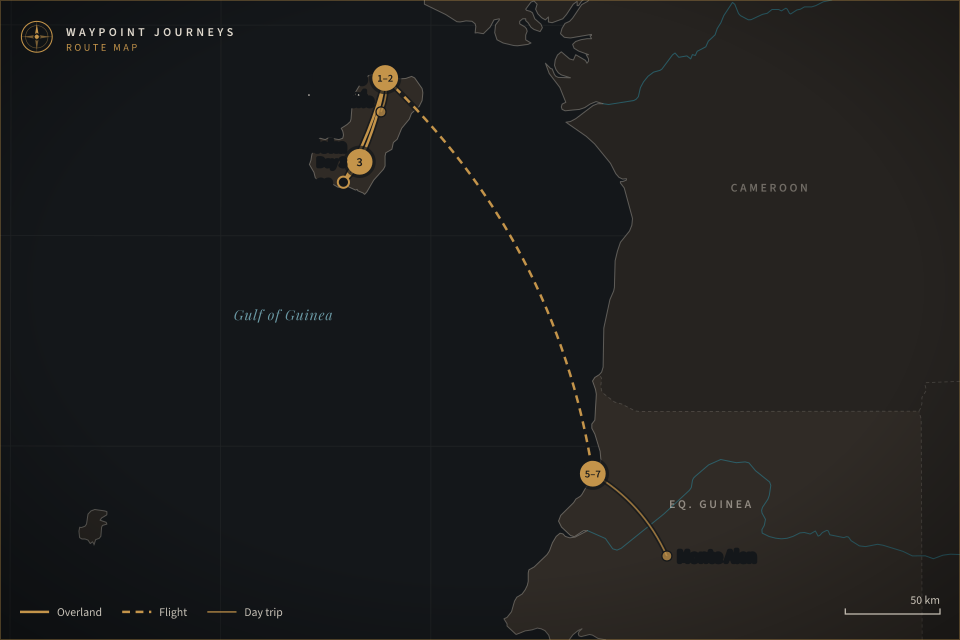
Equatorial Guinea is two countries stapled together: Bioko, a volcanic island thirty kilometres off Cameroon, and Río Muni, a rectangle of rainforest on the mainland two hundred kilometres to the south. It is the only sovereign state in Africa where Spanish is the official language, a legacy of Spanish Guinea, and Malabo's old quarter, with its cathedral, its plaza and its wrought-iron balconies, looks like nowhere else on the continent.
It is also one of the least visited countries on Earth. Offshore oil made it, for a period, the highest GDP per capita in Africa, and tourism was never something anyone needed to develop; visitor numbers remain in the low thousands a year. That has consequences good and bad. The good is that nothing here is packaged and no site has a queue. The bad is that the country is bureaucratic, photography is restricted, and travelling independently is difficult in ways that a fixer solves and a guidebook does not.
What you come for is the natural side. Bioko rises to 3,011 metres at Pico Basilé, and its southern slopes, cut off by cloud forest and a road that stops, hold seven primate species including drills and black colobus, plus the wettest place in Africa at Ureca, where green and leatherback turtles nest on black-sand beaches between November and February. On the mainland, Monte Alén protects two thousand square kilometres of Congo Basin rainforest almost nobody walks in.
"Visitor numbers here are in the low thousands a year. No queue at any site, no packaged anything, and seven primate species on one island."

Seven Primates on One Island, the Wettest Coast in Africa, and a Colonial Quarter That Looks Like Andalusia
The old town of Malabo, founded by the British as Port Clarence and rebuilt by Spain as Santa Isabel, is unlike any other colonial quarter in Africa: the neo-Gothic twin towers of Santa Isabel Cathedral over a plaza of wrought-iron balconies, the Casa Verde, the old Spanish governor's buildings, and street signs in Spanish above a market trading in Bubi, Fang and pidgin.
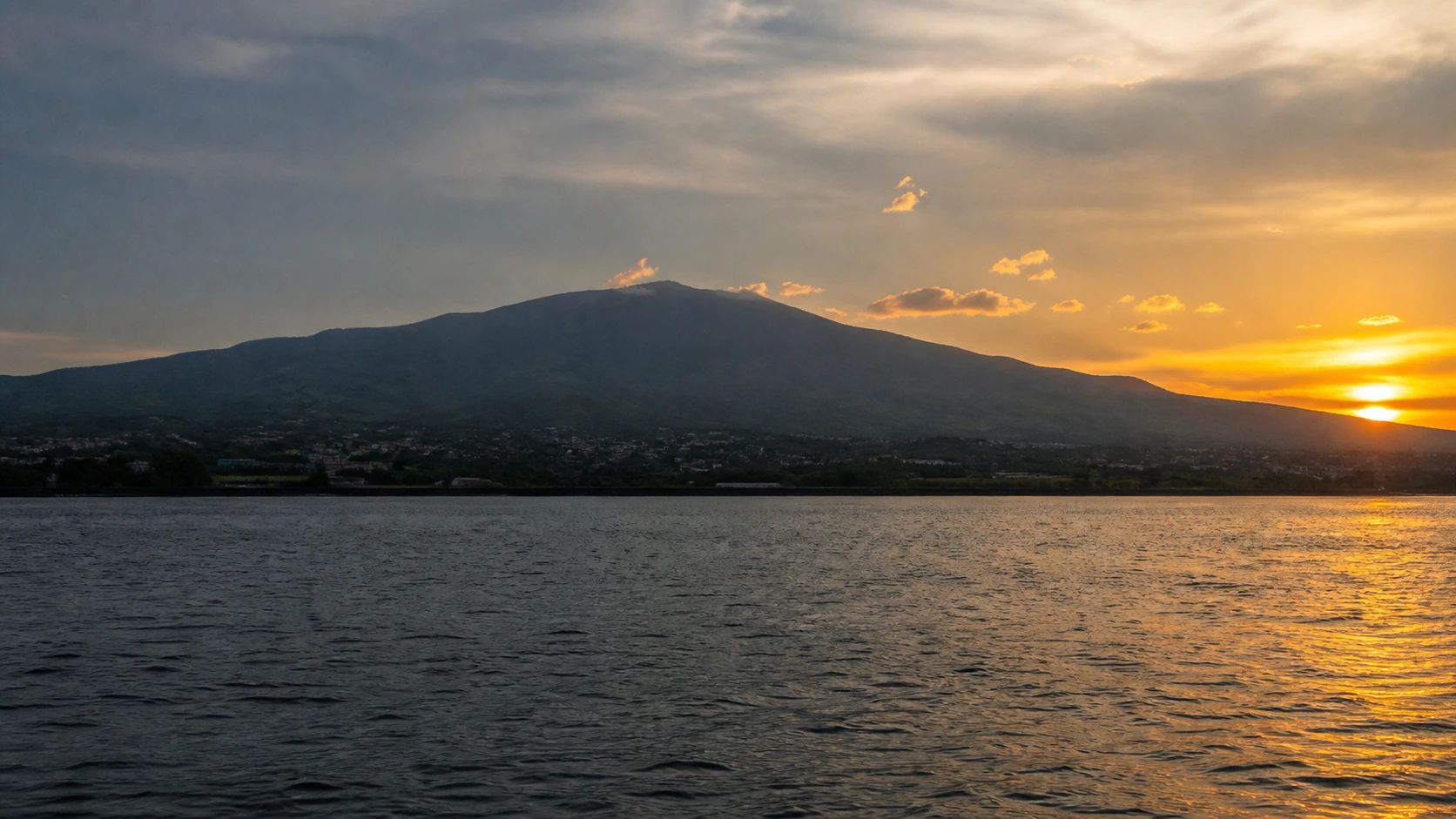
The volcano that made Bioko rises to 3,011 metres, and a road built for a telecommunications station climbs most of it. You go up through banana smallholdings into montane forest and then into cloud, past the Virgen de Bisila shrine, with endemic birds along the way and, on the rare clear morning, a view across the strait to Mount Cameroon rising out of the sea on the horizon.
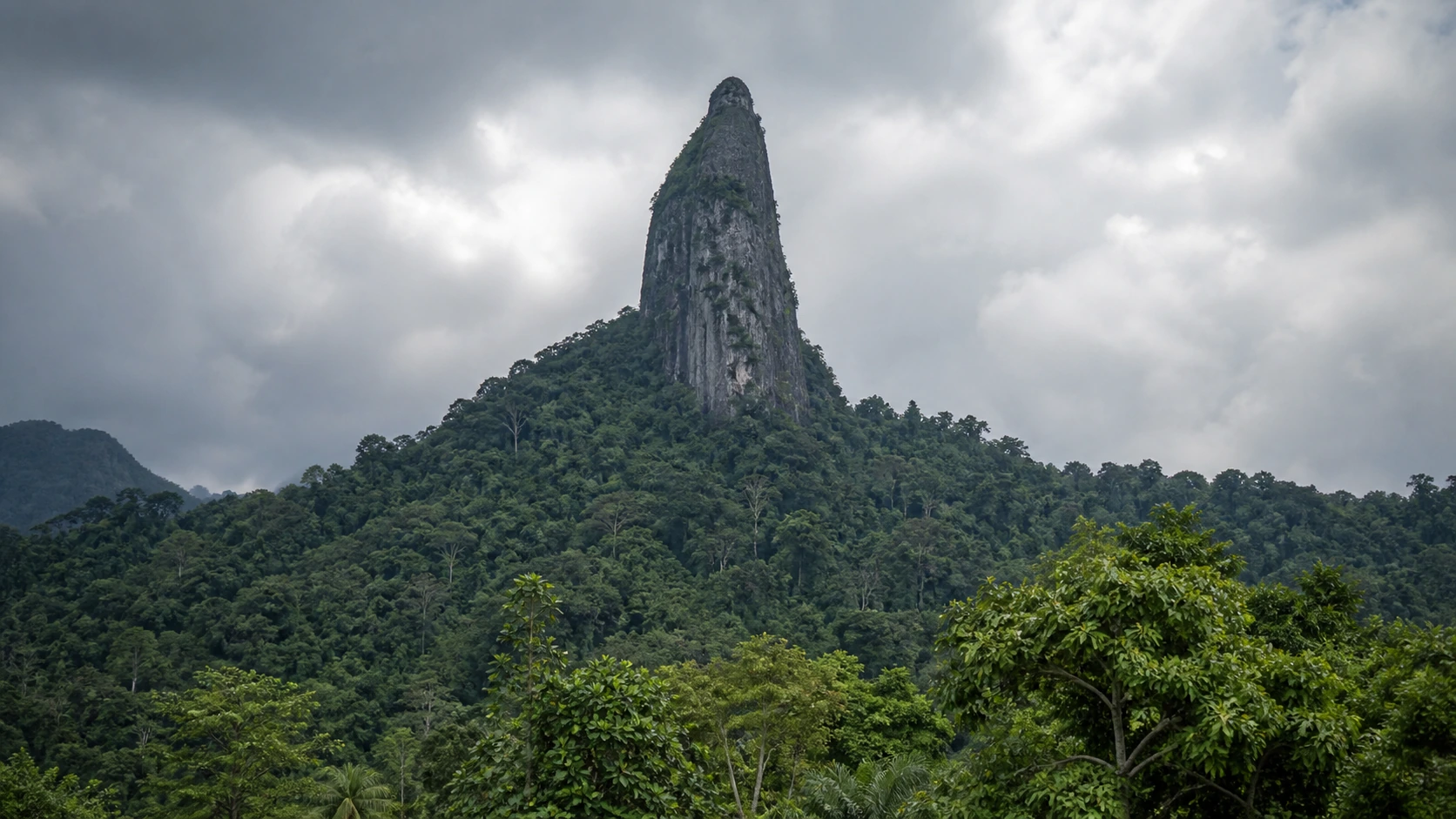
At 1,400 metres on Bioko's southern spine, Moka is cool, green grassland and cloud forest, and the base for the island's conservation work. From there a hard forest walk drops into the Biao caldera, a crater lake ringed by primary forest where the drills, black colobus and Preuss's monkeys that make Bioko a primate stronghold are genuinely present rather than theoretically so.
The southern tip of Bioko takes ten metres of rain a year, making Ureca the wettest inhabited place in Africa, and the black-sand beaches below it are among the most important nesting sites in the Gulf of Guinea. Between November and February, green, olive ridley, hawksbill and leatherback turtles all haul out here, and the leatherbacks are the size of a small car.
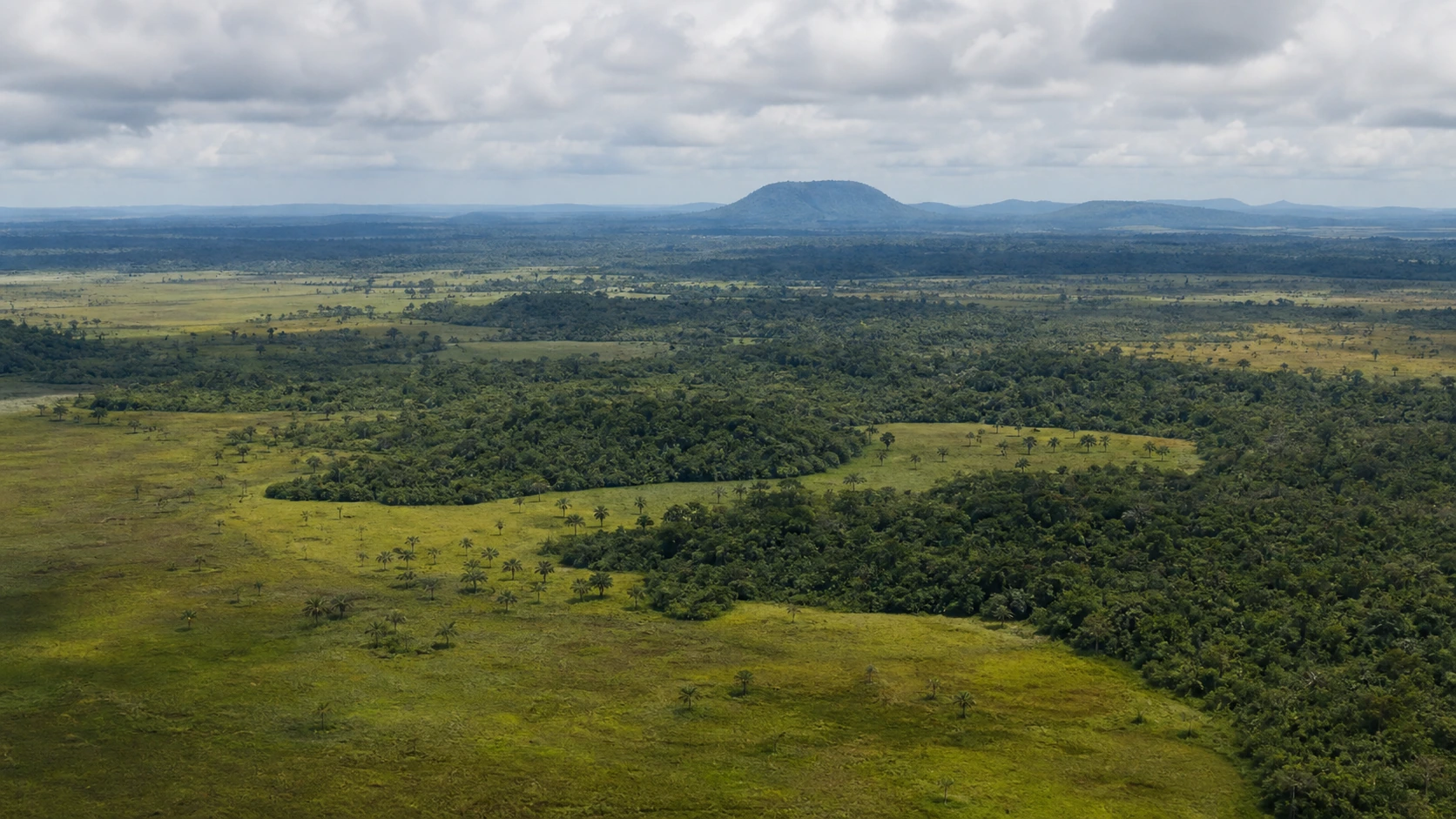
Two hundred kilometres south across the Gulf of Guinea, the mainland third of the country is a different place: Bata on its long seafront promenade, the Fang villages inland, and behind them Monte Alén, two thousand square kilometres of Congo Basin rainforest with forest elephant, gorilla and chimpanzee in it, and a trail network almost nobody has walked.
Fewer than a few thousand leisure visitors arrive here in a year. There is no tourist infrastructure to speak of, no queue anywhere, and no site that has been arranged for your benefit. It also means the country runs on introductions and paperwork, which is exactly what our in-country fixer exists to handle: permits, photography clearances, checkpoints and the domestic flight, all solved before you land.
The Expedition
Seven days across both halves of the country: four on Bioko for the volcano, the highlands and the turtle coast, then the flight south to the mainland and the rainforest.
Arrive at Malabo International on Bioko, and meet the fixer who will make the rest of the week possible. The afternoon walks the old Spanish town, which is small and startling: Santa Isabel Cathedral with its neo-Gothic twin towers over the Plaza de la Independencia, the wrought-iron balconies of the colonial streets, the Casa Verde, and the Paseo Marítimo along the harbour the British built. A first briefing over dinner on what may and may not be photographed here, which matters more than it does in most places.
Up the mountain that is the island. The road climbs from sea level through banana and cocoa smallholdings into montane forest and then into permanent cloud, with a permit checked at the military post partway up. Along the way there are endemic birds the guides will stop for, the Virgen de Bisila shrine on the shoulder, and, if the morning is one of the clear ones, the view north across the strait to Mount Cameroon standing out of the sea. Back down for the afternoon in Malabo and the market at Semu.
South across the island to Moka at 1,400 metres, where the climate changes completely: cool grassland, cloud forest and the Bubi villages that have farmed this plateau for centuries. The day walks into the Biao caldera, a crater lake ringed with primary forest, on a rough trail with local guides; this is where Bioko's primates actually are, and drills, black colobus and Preuss's monkeys are all realistic sightings. Night in the highlands, which is cold enough for a jacket and a fire.
The long push to the southern tip of the island, on a track that gives out and becomes a walk through forest to the coast. Ureca takes something like ten metres of rain a year, the greenest and most saturated place on the continent, and the black-sand beaches below it are a major nesting ground for four species of sea turtle. From November to February the nesting is nightly and the leatherbacks are extraordinary; outside that window it is the walk, the waterfalls straight into the sea, and a coastline nobody photographs. Back to Malabo in the evening.
The morning flight south across the Gulf of Guinea to Bata, the country's largest city and the capital of its mainland third. It is a wholly different place from Malabo: hotter, flatter, Fang-speaking, and strung along a seafront promenade that is genuinely one of the pleasant surprises of West Africa. The afternoon covers the cathedral, the Torre de la Libertad, the Mondoasi market and the fishing beach, and the evening is on the paseo, where the whole city walks at sunset.
Inland to Monte Alén, two thousand square kilometres of primary Congo Basin rainforest that holds forest elephant, western lowland gorilla, chimpanzee and mandrill, and that sees a handful of visitors a year. You walk the forest with park guides: the Río Laña, the canopy and the sheer density of it, the tracks and the sounds rather than guaranteed sightings, because this is unhabituated forest and nobody should promise you a gorilla. On the way back, the surreal new jungle capital at Ciudad de la Paz. Night in Bata.
The last morning is shaped around your onward flight. Bata has direct international services and there is also the option of returning to Malabo, which has the wider network; we route whichever suits your ticket, with margin. If there is time, the morning goes to the artisan market and a last hour on the paseo. Equatorial Guinea connects easily to our Gabon, São Tomé & Príncipe and Cameroon expeditions, and we are glad to sequence any of them.
What's Included
FREQUENTLY ASKED QUESTIONS
Common Questions About This Expedition
Expedition Investment
per person, twin share
Fully inclusive of six nights' accommodation on Bioko and the mainland; the Malabo–Bata internal flight; an English-speaking expedition leader and our in-country fixer throughout; every permit, military-post clearance, park fee and photography authorisation; private 4WD and driver on both islands and mainland; local guides at Moka, Ureca and in Monte Alén; and all breakfasts and dinners plus lunch on the three long days
Excludes international flights (arrive Malabo, depart Bata or Malabo), visa fees where applicable (US citizens are visa-free for 90 days), travel insurance, the mandatory yellow fever vaccination, alcohol, tips and personal expenses. Single supplement $950 USD
Reserve Your SpotEquatorial Guinea is a stable country with low levels of crime against visitors, and the practical difficulties here are bureaucratic and medical rather than criminal. Photography restrictions are the first thing to understand: government buildings, military and police, ports, airports and infrastructure are all off limits and enforcement is genuine, which is why our fixer carries a photography clearance and why your leader's instruction on when to put the camera away is not a suggestion. Checkpoints are frequent on both Bioko and the mainland and are handled by our team with the paperwork already in order. Yellow fever vaccination is mandatory for entry, malaria is present year-round and prophylaxis is a condition of travelling with us. Medical facilities are limited and anything serious is evacuated to Europe, so comprehensive insurance with evacuation cover is required. Roads outside the main towns are rough and the track to Ureca becomes a walk; we travel in daylight, in 4WDs, with local drivers.