Skip to content

Waypoint Journeys Presents

Cameroon

Africa in Miniature

12 Days

The Atlantic Coast · The Dja Rainforest · The Grassfields Kingdoms — One Country Standing In for a Continent

12 DaysFrom $5,450 USDMax 5 guests

We reply within 24 hours

One Country Doing the Work of a Continent

Cameroon has been called Africa in miniature for so long that the phrase has gone soft, but stand anywhere in it for a week and the arithmetic holds up. In twelve days you can go from Atlantic surf breaking on black volcanic sand, past an active four-thousand-metre volcano, through equatorial rainforest that has never been logged, and up onto high green grassfields where kingdoms that predate the colonial map are still ruled by their own kings. Two hundred and fifty or so languages are spoken between those places.

It is also a country with a real history of its own, not just a colonial one. The Bamoun sultanate at Foumban has kept an unbroken line since the fourteenth century, and one of its kings, Njoya, sat down at the turn of the twentieth and invented a writing system for his language from scratch. The Bamileke chefferies of the western highlands still stand as compounds of carved posts and conical thatch, functioning courts rather than museums. On the coast, Bimbia's ruins mark one of the busiest slave-trade departure points in this part of Africa, and almost nobody visits them.

This is not an easy country to travel casually: parts of it are off limits, the roads are long, and almost nothing is signposted for visitors. What we run is the Cameroon that rewards the effort and can be done properly: the Littoral, the South and its coast, the eastern rainforest at Dja with Baka trackers who grew up in it, and the Grassfields kingdoms of the West. Twelve days, a maximum of five guests, and a route built around what is actually safe and actually worth the drive.

"Everyone quotes the line about Africa in miniature. What nobody mentions is how few people have come to check."
Cameroon Foumban Bamoun Royal Palace
Foumban: the Bamoun sultanate has held this court since the fourteenth century

A Waterfall Into the Ocean, a Rainforest With Its Own People, and Kingdoms Older Than the Border

The Dja Reserve & the Baka

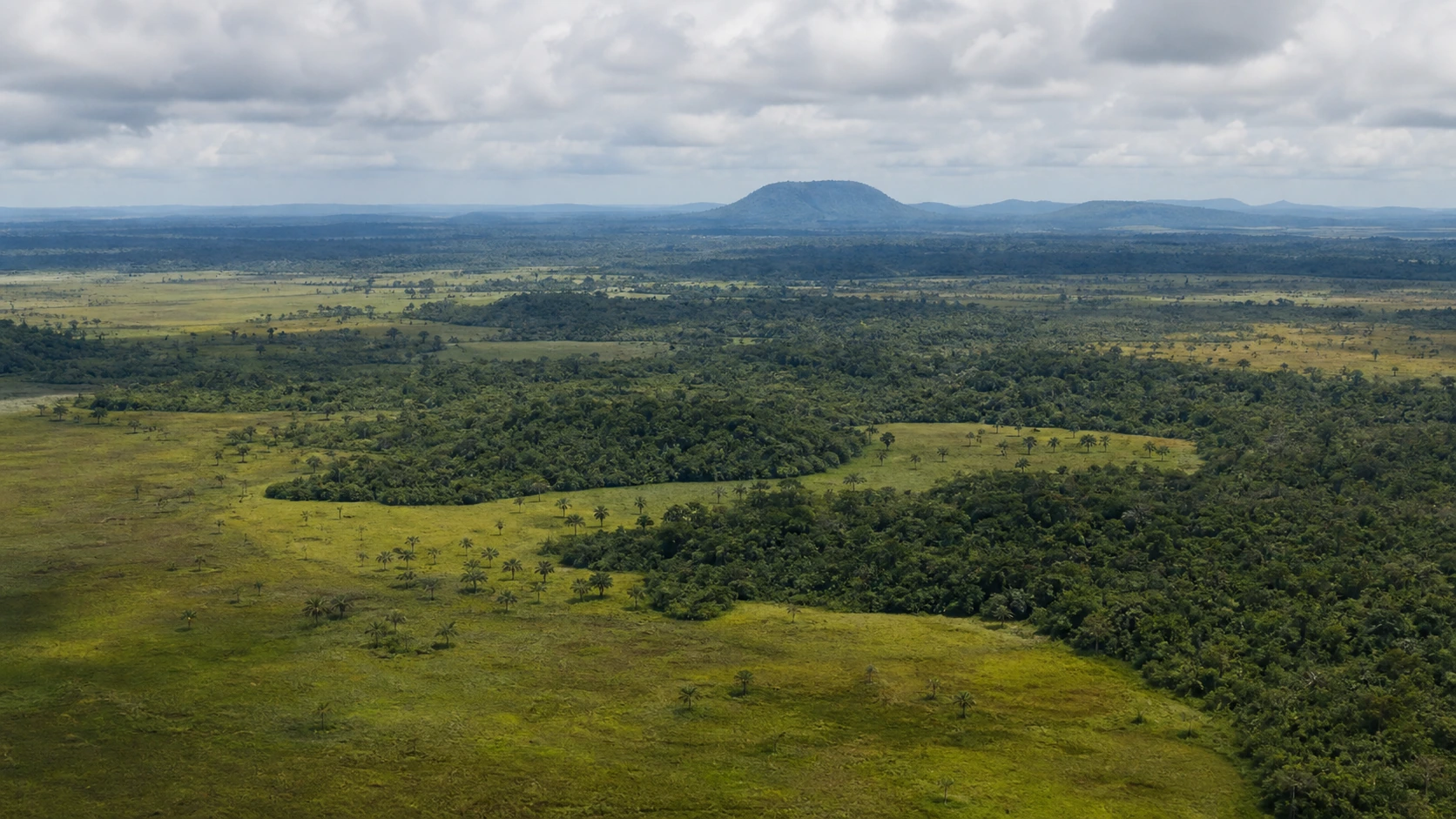
The Dja Faunal Reserve is one of Africa's largest and least disturbed rainforests, roughly five thousand square kilometres, almost entirely encircled by a loop of the Dja River, UNESCO-listed since 1987. You go into it by pirogue and on foot with Baka guides, for whom this forest is not scenery but a working pharmacy, larder and map. Very few outsiders make it here in any given year.

Lobé Falls, Straight Into the Sea

A few kilometres south of Kribi the Lobé River gives up and falls directly into the Atlantic across a broad rock shelf, one of a bare handful of waterfalls on Earth that empties into an ocean rather than a river. You can watch it from the sand, walk to the lip of it, or take a pirogue up the river above the falls into forest where Bagyeli families still live.

Mount Cameroon & the Fako Coast

The highest mountain in West and Central Africa is an active volcano that rises straight out of the ocean to just over four thousand metres, and it dominates every view along this coast. Beneath it sit Limbe's black volcanic beaches, a botanic garden the Germans laid out in 1892, and a wildlife centre that houses drills and gorillas taken out of the bushmeat trade.

The Bamileke Chefferies

In the western highlands, the Bamileke kingdoms keep their courts as living institutions: a compound of carved wooden pillars, conical thatch and beaten-earth courtyards where a fon still holds authority his subjects recognise. Bandjoun's chefferie is the most complete of them, and the museum beside it explains what you are looking at rather than leaving you to guess.

Foumban and King Njoya's Alphabet

The Bamoun dynasty has run without a break since 1394. Its most extraordinary king, Ibrahim Njoya, invented a script for the Bamoun language around 1896 because he wanted his kingdom's history written down in its own hand, then built the palace that still stands on the hill. The royal museum holds the thrones, the beadwork and the manuscripts; the artisans' quarter below still casts bronze and carves.

Primates You Can Actually Help

Cameroon is the last stronghold of the drill (a short-tailed forest monkey rarer than the mountain gorilla) and the Limbe Wildlife Centre is where confiscated drills, chimpanzees and gorillas end up. It is a rescue centre rather than a zoo, run with Cameroonian staff, and the entrance fees go straight back into the work. It is the most honest wildlife hour on the coast.

The Expedition

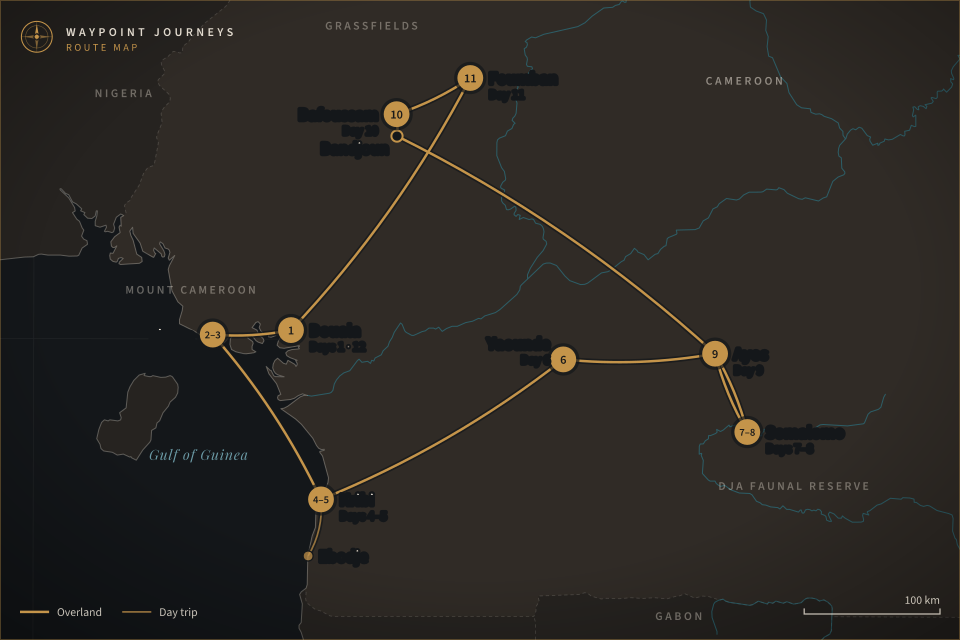
Twelve days from the Atlantic to the Dja rainforest and up into the Grassfields, in private 4WD with an English-speaking Cameroonian guide throughout.

Day 1
Douala · arrival on the Wouri

Fly into Douala, Cameroon's port and its loudest city, and meet the team at the airport. The rest of the day is intentionally soft after a long flight: a first drive through a city of markets and traffic and rain-blackened concrete, and if the light is right, the estuary at sunset, where Mount Cameroon rises out of the sea on the far horizon; the view that tells you what kind of country you have landed in.

Day 2
Douala → Limbe · black sand under the volcano

West along the coast to Limbe, an hour and a half away at the foot of Mount Cameroon. The Limbe Botanic Garden has been running since 1892 and is a good, shaded introduction to what grows here; the Limbe Wildlife Centre next door holds drills, chimpanzees and gorillas recovered from the bushmeat trade and is the best-run conservation project on this coast. The afternoon goes to the black volcanic beaches at Down Beach and Seme, and grilled fish where the boats land.

Day 3
Limbe · Bimbia and the foot of the mountain

A short drive and a walk through forest brings you to Bimbia, where the ruins of one of the busiest slave-trade departure points in this part of Africa sit almost unvisited, the barracoon foundations, the chained-together stones, the path down to the water. It is a quiet, difficult, necessary morning. The afternoon climbs into the lower slopes of Mount Cameroon through the old lava flows and tea estates for the view back down over the coast.

Day 4
Limbe → Kribi · the Lobé Falls at dusk

A long coastal transfer south, skirting Douala, to Kribi: a small Atlantic town with the best beaches in the country and a great deal less noise than anywhere you have been so far. You arrive with the afternoon still in hand and go straight to the Lobé Falls, five kilometres down the coast, where the river drops across the rock shelf into the surf. Dinner is fish on the beach, which is what Kribi is for.

Day 5
Kribi · the Lobé by pirogue, and Ebodjé

A morning pirogue up the Lobé River above the falls, into forest where Bagyeli families live and fish, with time to walk and talk rather than photograph and leave. The afternoon runs south to Ebodjé, a fishing village on a turtle-nesting coast where a community conservation project monitors the beaches; between November and February you may see nests, and out of season you will at least understand the work. Back to Kribi in the evening.

Day 6
Kribi → Yaoundé · into the interior

North-east away from the coast, through rubber and palm plantations and small roadside towns, to Cameroon's capital. Yaoundé is spread over seven hills, greener and calmer than Douala, and the afternoon takes in the National Museum in the old presidential palace (the best single explanation of the country's hundreds of cultures) and the view over the city from Mont Fébé before dinner.

Day 7
Yaoundé → Somalomo · the edge of the Dja

A hard, interesting day east and then south on deteriorating road, past Ayos and the Nyong, into the forest belt and the village of Somalomo on the northern edge of the Dja Faunal Reserve. The last stretch is slow going. You arrive in the afternoon, meet the reserve staff and the Baka guides who will take you in, and settle into simple guesthouse accommodation; this is the least comfortable night of the trip and the most interesting place you will sleep.

Day 8
Dja Faunal Reserve · the river and the forest

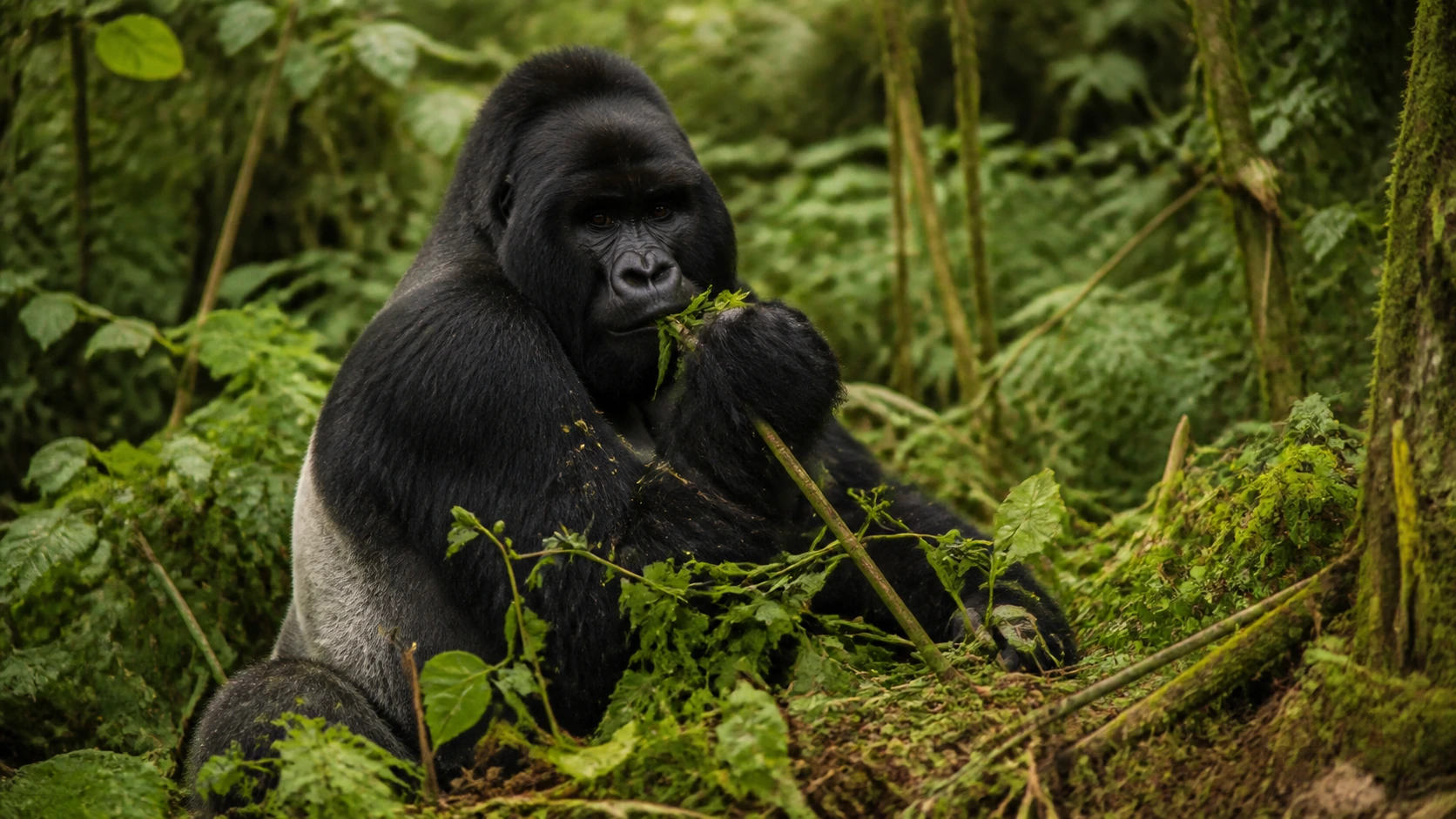
The whole day inside the reserve. Pirogue on the Dja itself, then hours on foot with Baka trackers on trails that were not made for visitors: buttress roots the size of walls, hornbill calls overhead, elephant sign in the mud, monkey troops moving through the canopy. The Dja holds forest elephants, western lowland gorillas and chimpanzees, but this is dense forest and it does not hand you sightings, what it gives you instead is the closest thing left to an intact Congo Basin rainforest, and people who read it like text.

Day 9
Dja · a day with the Baka, then west

The morning belongs to the Baka community: the forest pharmacy walk, the traps and the net hunt, and if the mood is right, the polyphonic singing that anthropologists have been trying to notate for fifty years. This is arranged directly with the community and paid to it. In the afternoon we start back west, breaking the drive at Ayos or Abóng-Mbang so the following day is not brutal.

Day 10
→ Bafoussam · up into the Grassfields

North-west out of the forest and up onto the western highlands, a change of climate, from wet heat to cool green hills terraced with maize and coffee. In the afternoon, the Bandjoun chefferie: the great conical roof of the case, the carved ancestral posts, the queens' houses ranged along the courtyard, and a museum that lays out how a Bamileke kingdom actually works. Overnight in Bafoussam.

Day 11
Foumban · the sultanate

East across the Noun to Foumban and the Bamoun court, unbroken since 1394. The royal palace of 1917 and the museum inside it hold the thrones, the beaded masks and the manuscripts written in King Njoya's invented script; the newer Museum of the Bamoun Kings tells the dynasty's story in full. The afternoon is for the artisans' quarter (bronze casters, carvers, embroiderers, the best craft street in Central Africa) and the Sultan's Friday court if the day falls right.

Day 12
Foumban → Douala · departure

The long descent back to the coast, out of the highlands and down through the plantations to Douala, timed for an evening international departure. It is a full driving day and we break it properly; if your flight is late enough there is time for a last lunch and a shower before the airport. We are glad to add Gabon or São Tomé to either end of this route.

Cameroon Lobe Falls

Small Group Expedition

A River That Ends in the Ocean.
A Forest That Never Ended At All.

What's Included

Duration12 days / 11 nights: coast, rainforest and Grassfields
Group SizeSmall group expedition: maximum 5 guests
Regions CoveredLittoral, Southwest coast (Fako), South, Centre, East and West; the Far North and the interior of the Northwest are deliberately not on this route
AccommodationEleven nights: comfortable hotels in Douala, Limbe, Kribi, Yaoundé, Bafoussam and Foumban, and two nights in simple guesthouse accommodation at the edge of the Dja
Included ExperiencesLimbe Botanic Garden and Wildlife Centre (Day 2); Bimbia (Day 3); Lobé Falls and the river pirogue (Days 4–5); Ebodjé and the turtle project (Day 5); the National Museum (Day 6); two full days in the Dja Reserve with Baka guides (Days 8–9); the Bandjoun chefferie (Day 10); the Foumban palace, museums and artisans' quarter (Day 11)
TransportPrivate 4WD with a professional driver for the full route, all airport transfers, and every pirogue
GuideAn English-speaking Cameroonian guide throughout, plus reserve rangers and Baka guides in the Dja and local guides at Bimbia, Bandjoun and Foumban
Permits & FeesDja Reserve entry and guiding fees, all site and museum entries, and the community payments to the Baka and Bagyeli communities are included
MealsDaily breakfast, and all meals on the two Dja days where there is nowhere else to eat. Other lunches and dinners are free: Cameroonian roadside cooking is one of the pleasures of the trip and your guide knows where to stop
Not IncludedInternational flights to Douala, the Cameroon e-visa, travel insurance, remaining meals, alcohol, personal expenses, tips

FREQUENTLY ASKED QUESTIONS

Common Questions About This Expedition

Parts of it are not, and we do not go to them. The Far North has a Boko Haram problem and the interior of the Northwest and Southwest regions has been in armed conflict since 2017; neither is on this route. Limbe and Bimbia sit in the coastal Fako corner of the Southwest, which is the calm end of it; we enter from Douala, keep the days short, take local advice each morning, and swap to the Francophone Littoral and West if anything changes. Everywhere else we travel is ordinary.
A fair amount, and we would rather say so. Cameroon is a big country with slow roads, and four of the twelve days are substantial transfers; the Limbe–Kribi run, both Dja legs, and the return from Foumban. We break the long ones, start early to travel in daylight, and use a proper 4WD rather than a minibus. The compensation is that nothing on this route is reached by anyone in a hurry.
Rainforest, first and foremost: five thousand square kilometres of it, effectively unlogged, inside a loop of river. Forest elephants, gorillas and chimpanzees live there, but the canopy is dense and honest odds on a large-mammal sighting in two days are modest. What is guaranteed is the forest itself, primates and hornbills overhead, elephant and buffalo sign underfoot, and two days with Baka guides who read the place fluently.
The main dry season, roughly November to February, is the easiest for the roads and the best for the coast, and it overlaps with turtle nesting at Ebodjé. A shorter dry spell in July and August also works well, particularly in the south. We avoid the heaviest rains of September and October, when the eastern road to the Dja becomes a serious undertaking rather than merely a long one.

Expedition Investment

$5,450USD

per person, twin share

Fully inclusive of eleven nights' accommodation; private 4WD and driver for the entire route; an English-speaking Cameroonian guide throughout; all Dja Reserve entry, ranger and Baka guiding fees; every site and museum entry; community payments to the Baka and Bagyeli; all pirogues and transfers; daily breakfast plus full board on the two Dja days

Excludes international flights to Douala, the Cameroon e-visa (applied for online before travel; we send the instructions), travel insurance, remaining meals, alcohol and personal expenses. Single supplement $780 USD

Reserve Your Spot
A Note on Safety & Logistics

We will be direct about this one. Cameroon has two active security problems (Boko Haram in the Far North, and an armed separatist conflict in the Northwest and Southwest regions since 2017) and this itinerary is built around avoiding both. The Far North, Waza, Rhumsiki and the whole Mandara range are not on the route at any price, and neither is the interior of the anglophone highlands. Limbe and Bimbia lie in the coastal Fako division at the quiet end of the Southwest; we approach from Douala, keep those two days short and daylight-only, take a reading from local partners each morning, and hold a Francophone alternative in reserve that we will use without hesitation if the picture changes. Everywhere else (the Littoral, the South, the Centre, the East and the West) is ordinary travel with ordinary precautions. The real day-to-day risks here are road accidents and malaria, not crime: we drive in daylight with experienced drivers, and prophylaxis plus a yellow fever certificate are non-negotiable. Comprehensive insurance with medical evacuation is a condition of travelling with us.