Waypoint Journeys Presents
Utah
Mars on Earth
5 Days
Moonscape Overlook · Bentonite Hills · Goblin Valley · Capitol Reef · Arches · Canyonlands — the American Desert at Its Strangest
We reply within 24 hours
The Desert That Doubles for Other Planets
Between Capitol Reef and Canyonlands lies the corner of southern Utah that the crowds drive straight through — and that scientists drive straight to. Around the tiny crossroads of Hanksville, the Earth stops pretending: grey badlands ripple to the horizon like a lunar sea, hills banded in violet, rust and bone rise from the clay, and NASA-affiliated researchers in simulated spacesuits walk the same washes you will, because nowhere on this planet looks more like Mars.
This expedition gives the strange country equal billing with the icons. You will stand on the rim at Moonscape Overlook at dawn, watch first light ignite the Bentonite Hills, and drive open desert to the silver spire photographers call Long Dong Silver. And you will still collect the classics — the hoodoo army of Goblin Valley, Capitol Reef's cathedral monoliths, Delicate Arch burning at sunset, Mesa Arch glowing from beneath at dawn, and the great gooseneck of the Colorado at Dead Horse Point.
It runs as a private 4x4 expedition from Salt Lake City: five days on a photographer's clock, boutique desert hotels each night, picnic lunches in country with no restaurants for fifty miles, and a guide who knows which clay roads carry a vehicle and which ones swallow them.
"Everyone photographs the arches. Almost nobody drives twenty minutes past Hanksville to stand on another planet."

Three National Parks, and the Stranger Country Between Them
On the rim of Skyline Ridge above the Blue Gate, the ground falls away into a thousand square kilometres of grey, furrowed nothing — a lunar sea frozen mid-swell. We arrive for dawn, when low light rakes every ridge into relief and the only sound is wind. It is the single most otherworldly viewpoint in the American West, and there is no sign, no fee booth, and usually no one else.
Volcanic ash laid down in Jurassic lakes weathered into rounded hills striped violet, rust, grey and bone — colours that intensify as the sun drops. NASA's Mars Desert Research Station sits in this same clay for a reason. We photograph them in the golden hour, when the bands glow like nowhere else on Earth, from angles only a 4x4 can reach.
Deep in the Blue Valley badlands stands a solitary silver-grey spire the photography world knows by its irreverent nickname — a fluted needle of Entrada sandstone rising from a striped clay amphitheatre. Reached by open desert driving and a short walk, it is the trophy shot of the Hanksville outback: a formation most Utah visitors will never see, or believe.
Thousands of squat sandstone goblins crowd a hidden valley on the edge of the San Rafael Swell — a hoodoo army you wander through at will, no boardwalks, no ropes. Next door, the Swell's slot canyons narrow to shoulder width; the Little Wild Horse loop is the gentlest world-class slot in Utah, and it is on our way.
Capitol Reef's remote northern district is a 4x4-only loop through a valley of freestanding monoliths — the Temples of the Sun and Moon rising sheer from the desert floor like sunken cathedrals, with the black boulders of Glass Mountain glittering beside them. Most park visitors never leave the scenic drive; we give the valley the best light of the day.
The route closes with the icons done properly: Delicate Arch climbed for the last hour of sunset, when the sandstone burns orange against the La Sal Mountains; Mesa Arch at dawn, glowing from beneath as the canyon ignites below it; and the Colorado's 500-metre gooseneck at Dead Horse Point — three of the great images of the American West in twenty-four hours.
The Expedition
Five days on a photographer's clock — the badlands at dawn, the arches at dusk, and a good hotel and a better dinner at the end of every day.
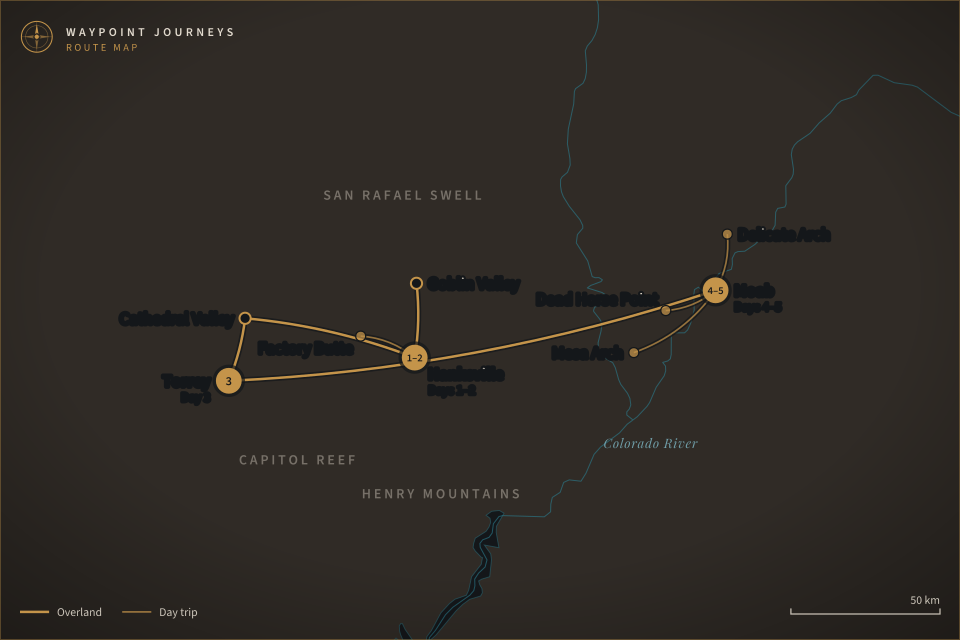
We collect you in Salt Lake City in the morning and drive south past the San Rafael Swell, where the interstate cuts through a fin of uplifted rock the pioneers called impassable. By early afternoon you are wandering the hoodoo army of Goblin Valley — thousands of squat, wind-carved goblins in a natural amphitheatre you explore freely. Those with the appetite add the Little Wild Horse slot canyon, shoulder-width and sculpted like poured caramel. Evening lands us in Hanksville, the last town before the badlands, for the first desert sunset and a proper steak. Night at a design-led desert hotel.
The day the expedition is named for, run entirely on backcountry clay. Before first light we stand on the rim at Moonscape Overlook as the sun rakes across a grey lunar sea; breakfast is coffee and a camp table on the edge of the void. The morning explores Factory Butte's moon-plain and the washes of the Blue Valley, where the silver spire the photographers named Long Dong Silver rises from its striped amphitheatre. After a siesta through the harsh light, the golden hour belongs to the Bentonite Hills — violet, rust and bone bands glowing under the low sun, with NASA's Mars research station over the ridge. Dark skies and the Milky Way close the night.
West into Capitol Reef, the least-visited of Utah's great parks, for its wildest corner: the Cathedral Valley loop, a 4x4 circuit that fords the Fremont River and runs beneath freestanding monoliths — the Temple of the Sun and Temple of the Moon sheer-walled and alone on the desert floor, the glittering black dome of Glass Mountain at their feet. The afternoon drops into Fruita, the Mormon oasis inside the park, for pie from the historic orchards, thousand-year-old Fremont petroglyphs, and the great white domes of the Waterpocket Fold in evening light. Night in Torrey, at the reef's doorstep.
A scenic morning run east — back past the badlands for any shot the light denied us, then along the Colorado River gorge into Moab, the red-rock capital of the West. The afternoon enters Arches National Park with timed entry already handled: the sandstone fins of Park Avenue, the improbable poise of Balanced Rock, and the Windows. Then the walk the whole day is built around — three miles up the slickrock as the heat breaks, arriving at Delicate Arch for the final hour, when the arch burns orange above its stone bowl and the La Sal Mountains go blue behind it. Dinner in Moab; night at a boutique hotel.
One last alarm worth setting. At Mesa Arch, on the rim of Canyonlands' Island in the Sky, the rising sun ignites the underside of the arch while two thousand feet of canyon country glows through the opening — the most famous dawn in the Southwest, and we are there before the light. Grand View Point and the White Rim follow, then the Colorado's giant gooseneck from Dead Horse Point. By early afternoon the expedition turns for Salt Lake City, dropping you at the airport or your hotel by evening — or, if you prefer, at Moab's Canyonlands Field for the short hop to Denver or Salt Lake.
What's Included
FREQUENTLY ASKED QUESTIONS
Common Questions About This Expedition
Expedition Investment
per person, twin share
Fully inclusive of four nights' boutique and design-led desert hotels; private high-clearance 4x4 with expert driver-guide from Salt Lake City and all backcountry driving; every national- and state-park fee with Arches timed entry handled; all signature experiences from the Moonscape dawn to the Mesa Arch sunrise; daily breakfast, field picnic lunches, and welcome and farewell dinners
Excludes flights to/from Salt Lake City (or from Moab's Canyonlands Field), travel insurance, remaining dinners, and alcohol. Single supplement $950 USD. Private departures for two available on request
Reserve Your SpotThis is the United States at its most benign — and its most empty, which is the part that deserves respect. The Hanksville badlands have no services, patchy phone coverage and no shade; our vehicle carries far more water than five people can drink, satellite communication, recovery boards and a fridge, and your guide files the day's route before leaving signal. The clay roads are the one genuine hazard: harmless dry, impassable wet, so the itinerary is deliberately built to flex around weather rather than fight it — badland days and park days can swap at a morning's notice. Summer heat is managed the desert way, with dawn starts and long shaded middles. Bring serious sun protection and broken-in shoes; everything else is our problem.