Skip to content

Waypoint Journeys Presents

Goroka Show

The Original Highlands Festival

8 Days · September 14–21, 2027

Independence Day with the Asaro Mudmen, Both Show Days and the Skeleton Men of Simbu

8 DaysFrom $3,950 USD

We reply within 24 hours

Where the Highlands First Agreed to Meet

Goroka sits at about 1,550 metres in the Asaro valley of the Eastern Highlands, a coffee town with an airstrip through its middle and mountains on every side. In the 1950s the Australian patrol officers who administered the Highlands had an idea: bring clans who had spent generations fighting each other onto one field for a weekend, and let them compete on decoration and dance instead. The first Goroka Show was staged in that decade, before Mount Hagen’s, and it has grown every year since. It is now held on the weekend of Independence Day, which makes this the country’s best week to be in the Highlands.

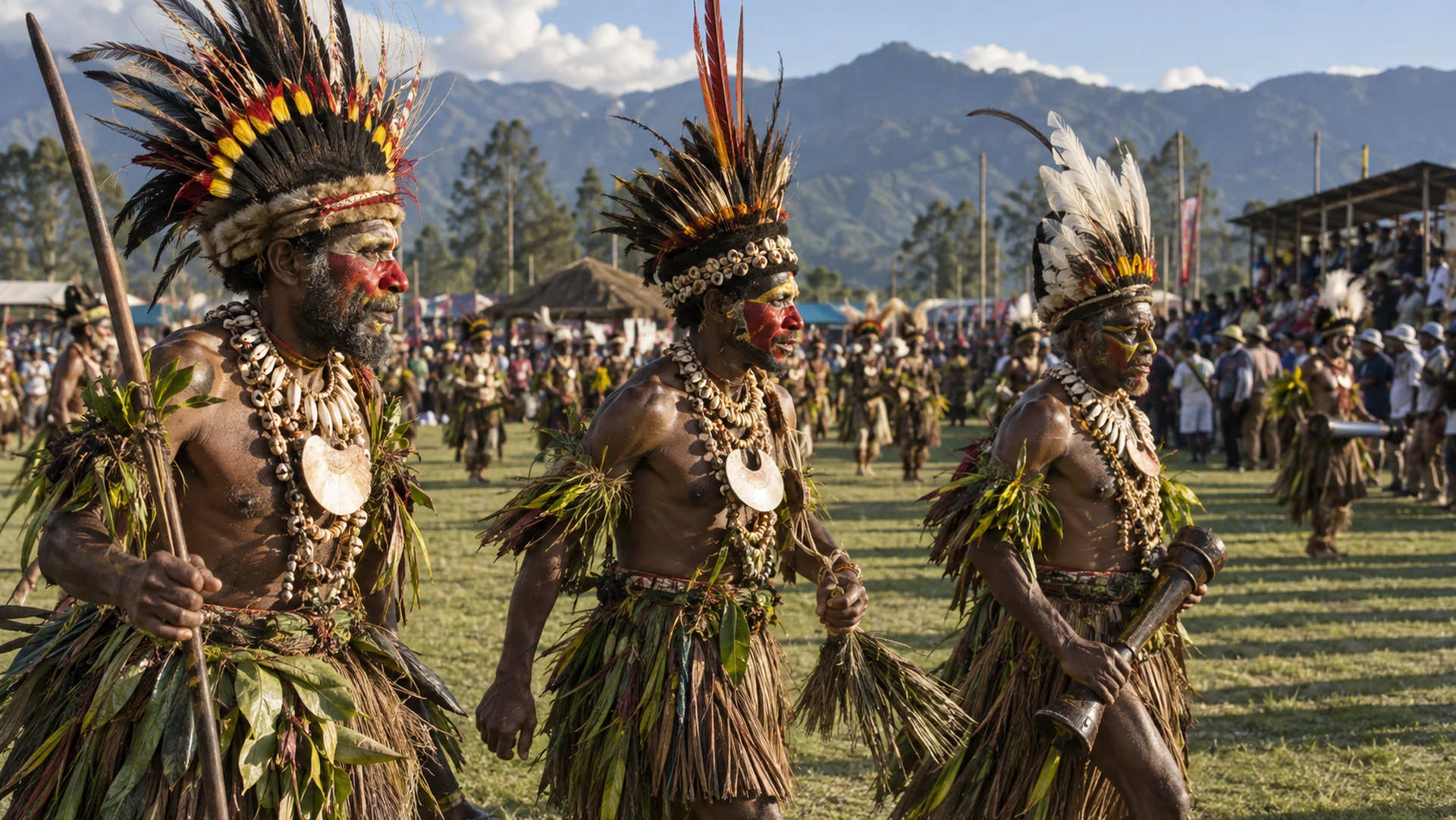
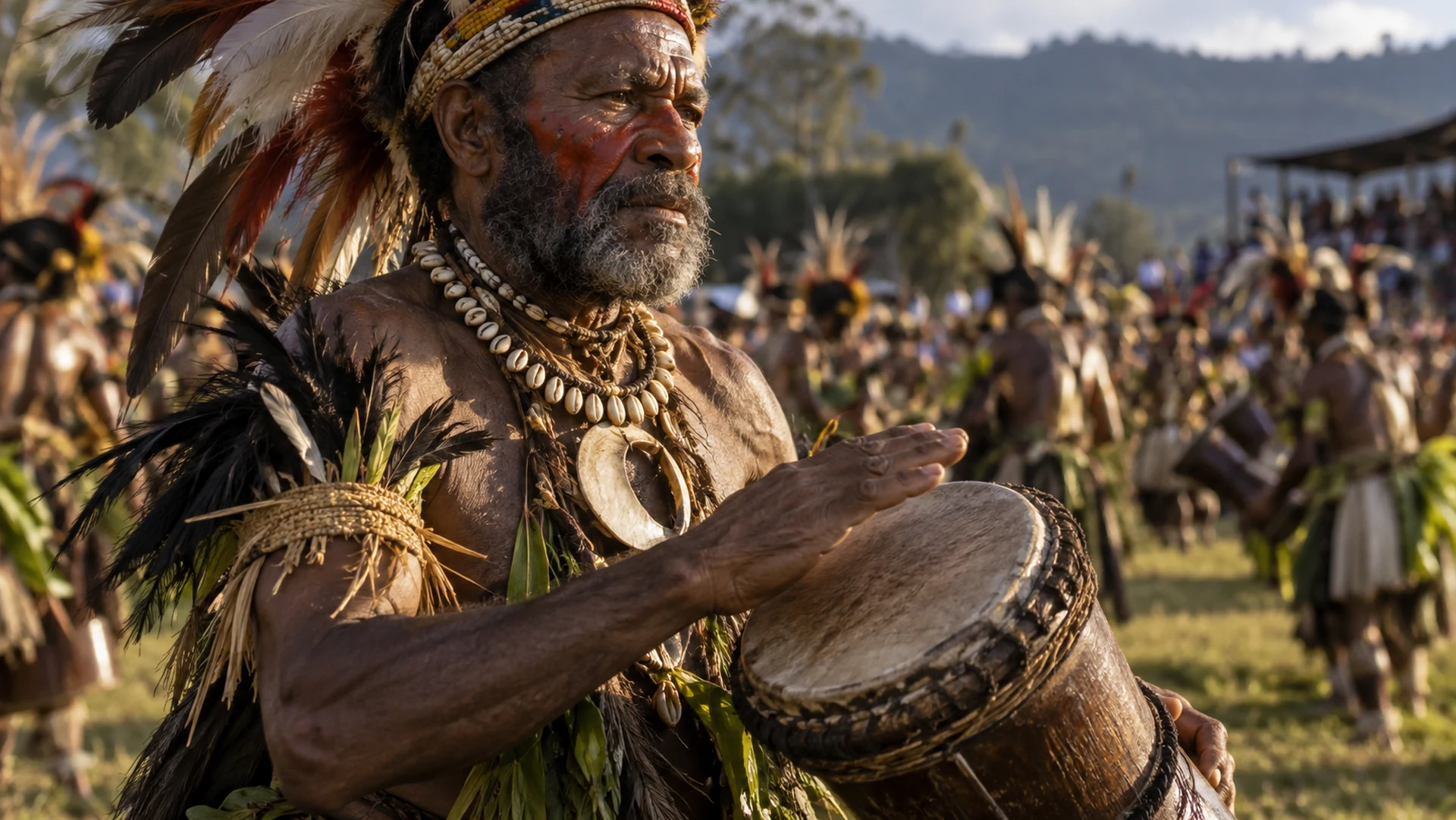
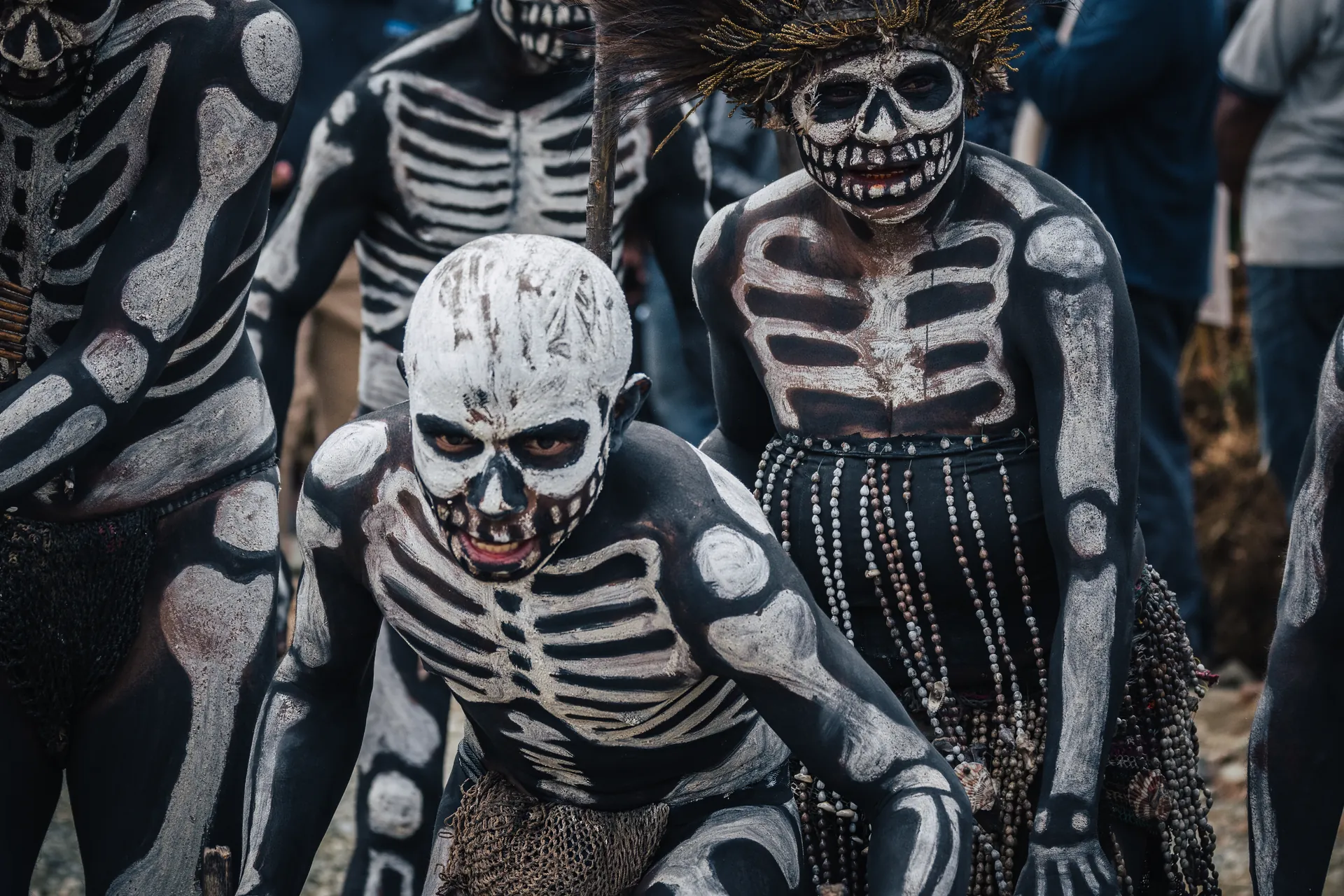
What arrives is not a stage production. More than a hundred groups come from across the country, some of them travelling for days by truck, and they bring the best their clans own: bird of paradise plumes kept wrapped in leaves for a generation, kina shell on the chest, ochre, charcoal and pig grease worked into faces over hours. The Asaro Mudmen walk in under their clay heads, the Huli come in their human-hair wigs, the Simbu men come painted as skeletons, and somewhere in the middle of it all a hundred kundu drums find the same beat.

This week is built to see all of that properly rather than quickly. We base ourselves in Goroka for six nights and unpack once. Independence Day starts in the Asaro valley with the mudmen at dawn, Friday is spent with a village group getting ready on their own ground and then at the children’s festival, and both show days begin early at the preparation ground while the paint is still going on. Then we drive over the Daulo Pass into Simbu for the skeleton men at Mindima, performing on the hillside where their story comes from.

"Goroka is where the Highlands first agreed to meet. Every September they still do."
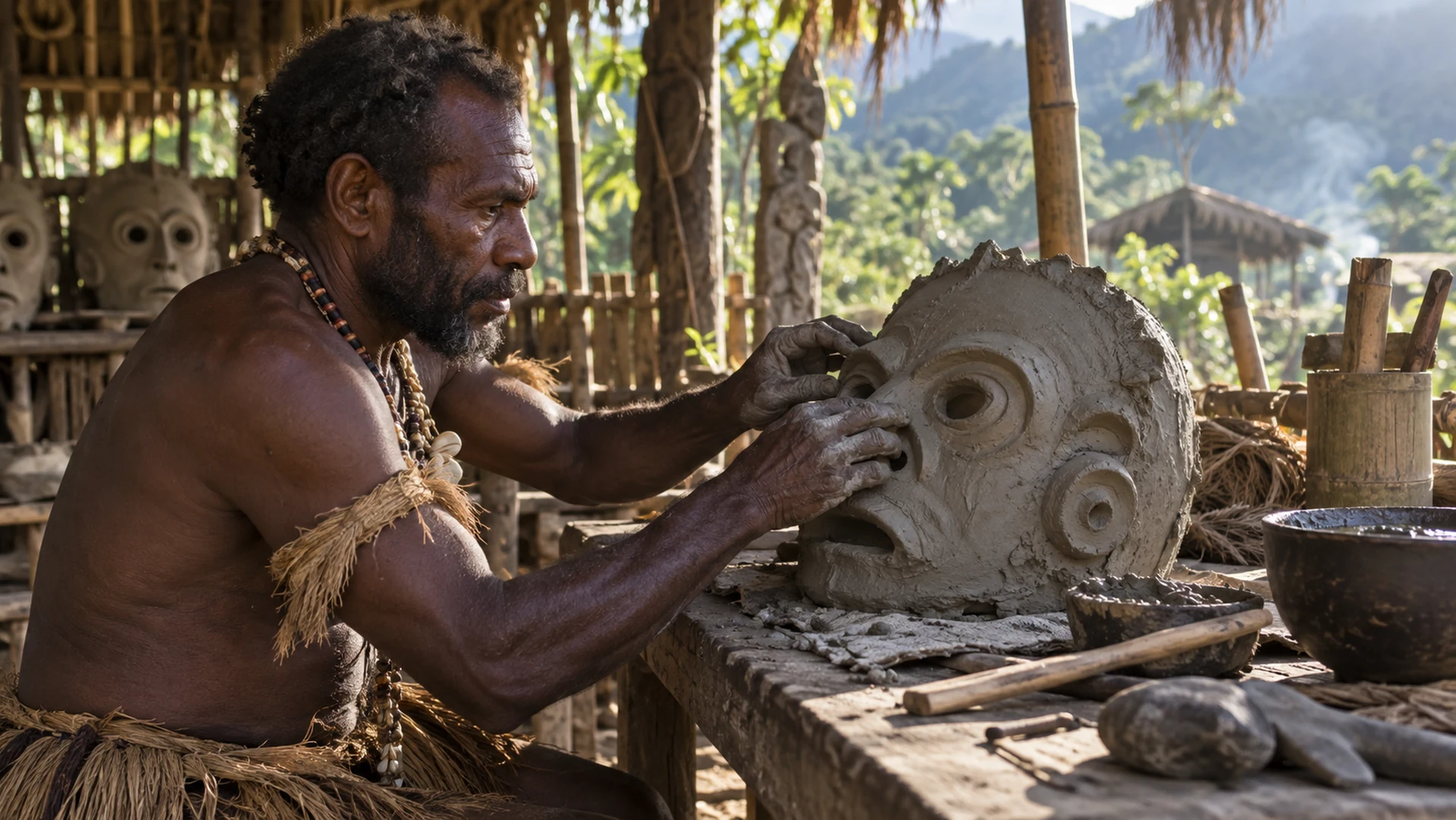
Illustrative Asaro artisan shaping a clay mask by hand
Clay masks taking shape in the Asaro valley

Independence Week in the Eastern Highlands

The Oldest Highlands Show

Goroka was first staged in the 1950s, before Mount Hagen, by patrol officers who wanted rival clans on one field for a weekend. It has grown into more than a hundred groups from across the country, and 2027 is its seventy-first year. It still feels like a gathering of the Highlands rather than a performance put on for visitors.

Both Days of the Show

Two days, not one. The groups rotate, the light changes, and what you missed on Saturday because you were watching something else comes past again on Sunday. It takes the pressure off: nobody spends day one worrying about getting the shot. We keep a fixed meeting point on the ground so you can wander freely and still find the group.

The Preparation Ground

The dancing is the last part of the day. Behind the arena, from soon after dawn, families work ochre and charcoal into each other’s faces, tie plumes into headdresses and argue about whether the shell sits straight. We go in early on the first morning, before the arena fills, because that hour is quieter, closer and more revealing than anything that happens later.

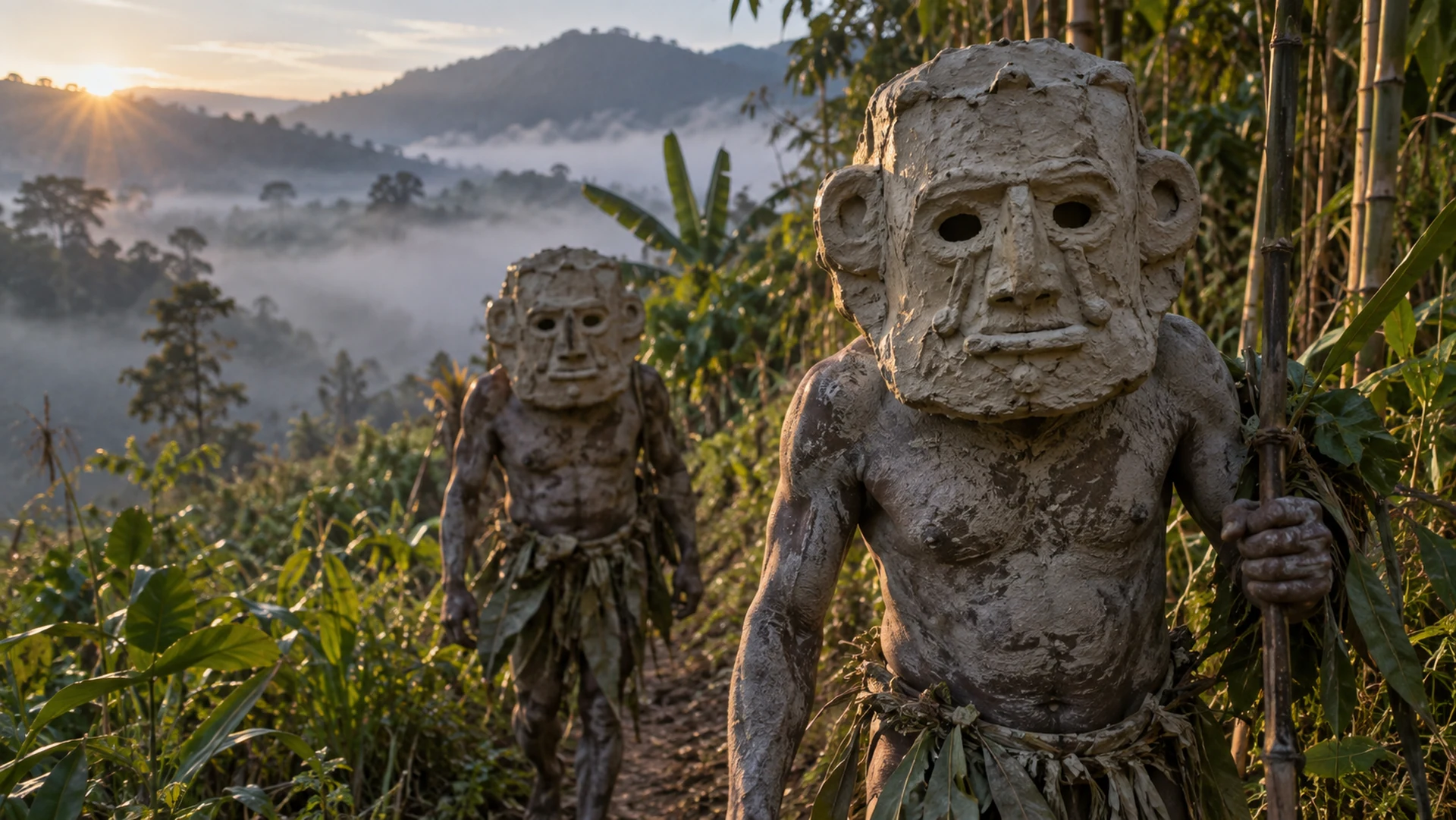
The Asaro Mudmen at Dawn

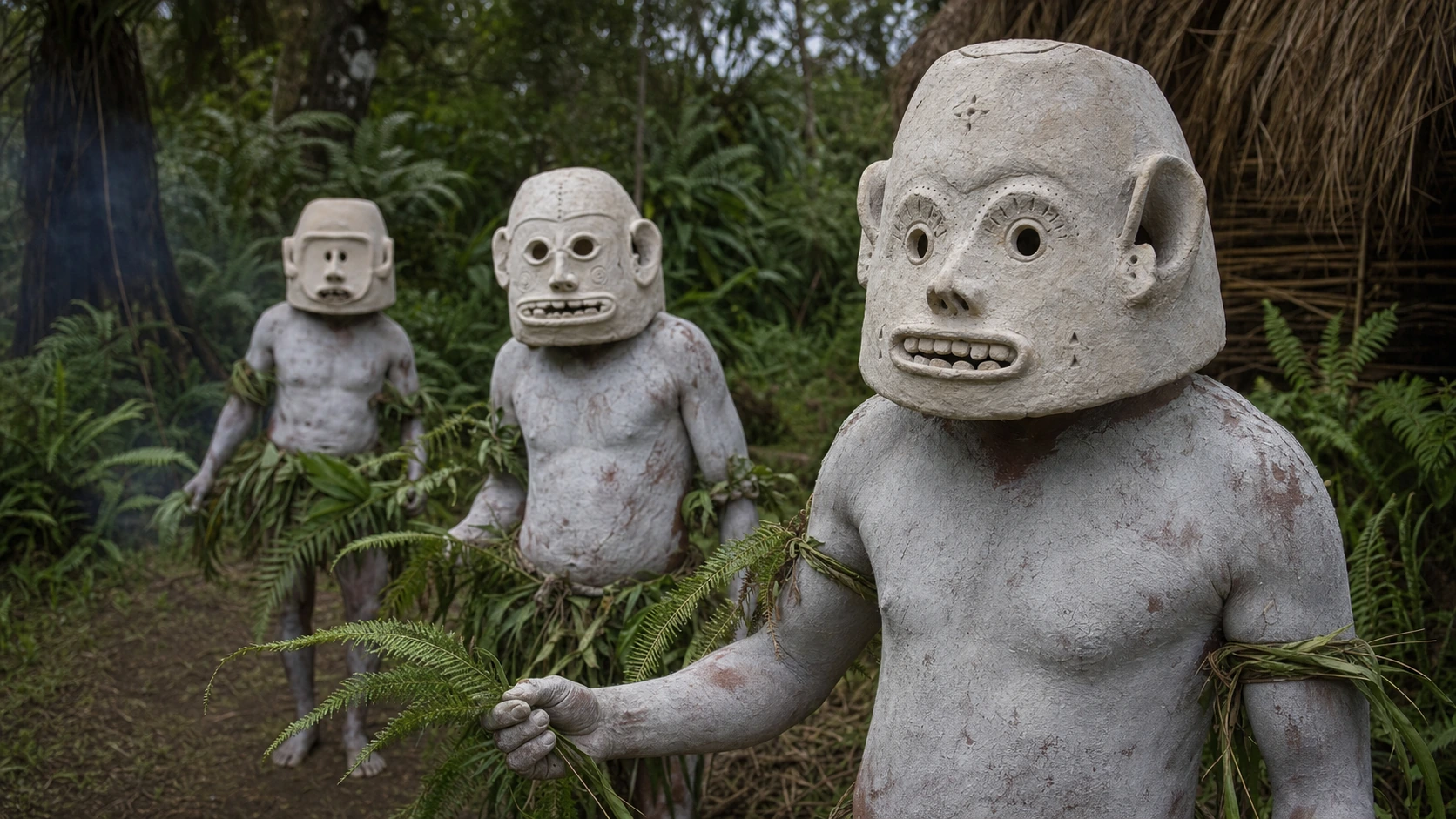
The mudmen are Goroka’s own, from a valley about an hour from town. We go at first light, when mist lies along the valley floor and the clay heads come out of the trees through it, then stay for breakfast (paid separately), the story behind the masks and the potters who still fire them from river clay.

Independence Week

The show falls on the weekend of Independence Day, 16 September, and in 2027 the day itself is a Thursday. We are in Goroka for it: flag raisings and school bands in the afternoon, and a whole town in the red, black and gold of the national flag. The Friday brings the Pikinini Festival, where the children perform before the main weekend.

The Skeleton Men of Simbu

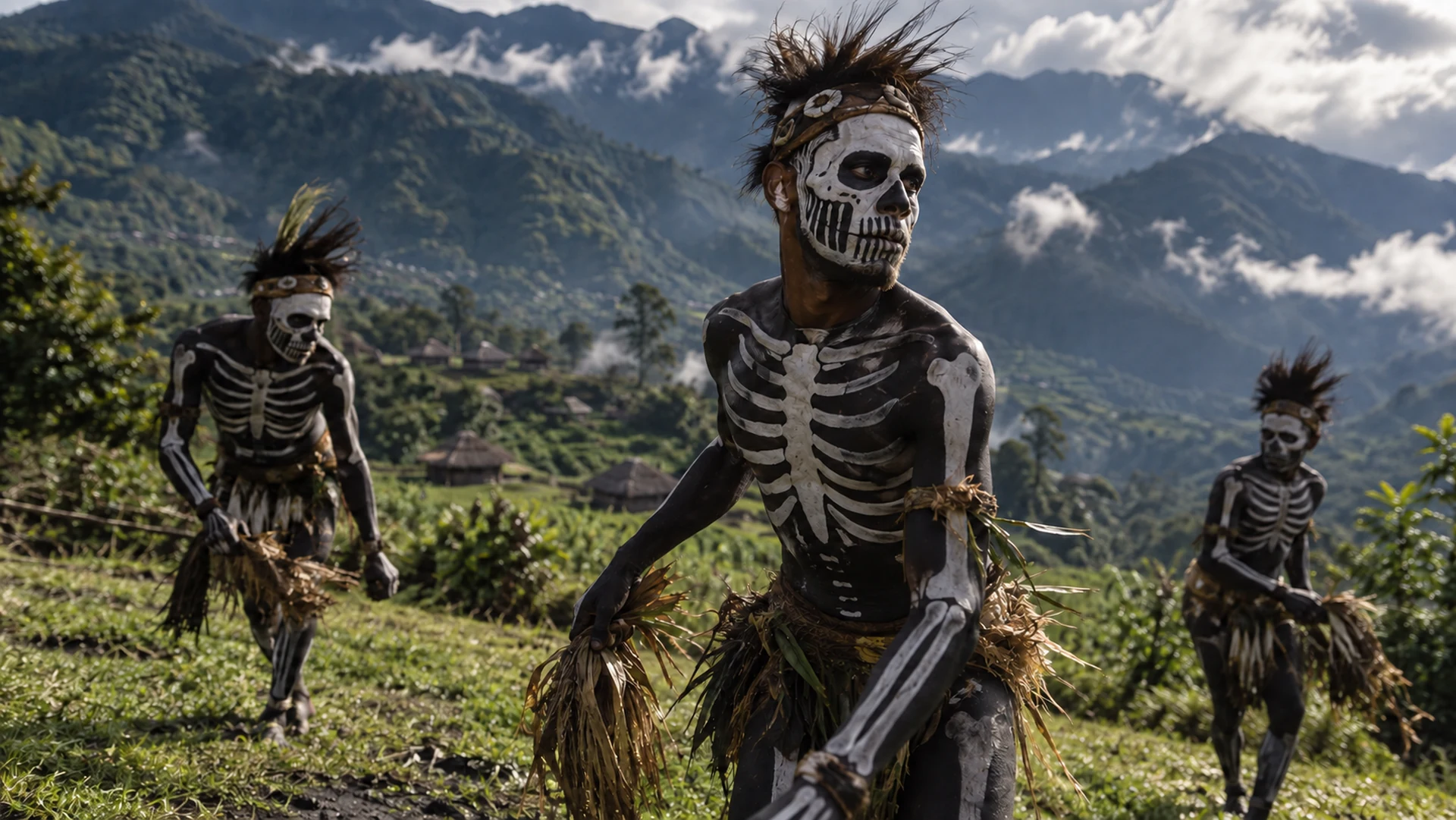
Over the Daulo Pass at about 2,450 metres and into Simbu, where the skeleton men of Mindima paint on the hillside above their village and perform the Omo Masalai at close range on their own ground. It is the story of ancestors who dressed as the dead to drive a spirit from a cave, and it is told nowhere better than here.

The Expedition

Eight days, seven nights: one in Port Moresby and six in Goroka. Independence Day and the Friday build to the show weekend, with a day in Simbu after it. All meals mentioned below, including breakfast, are at your own expense.

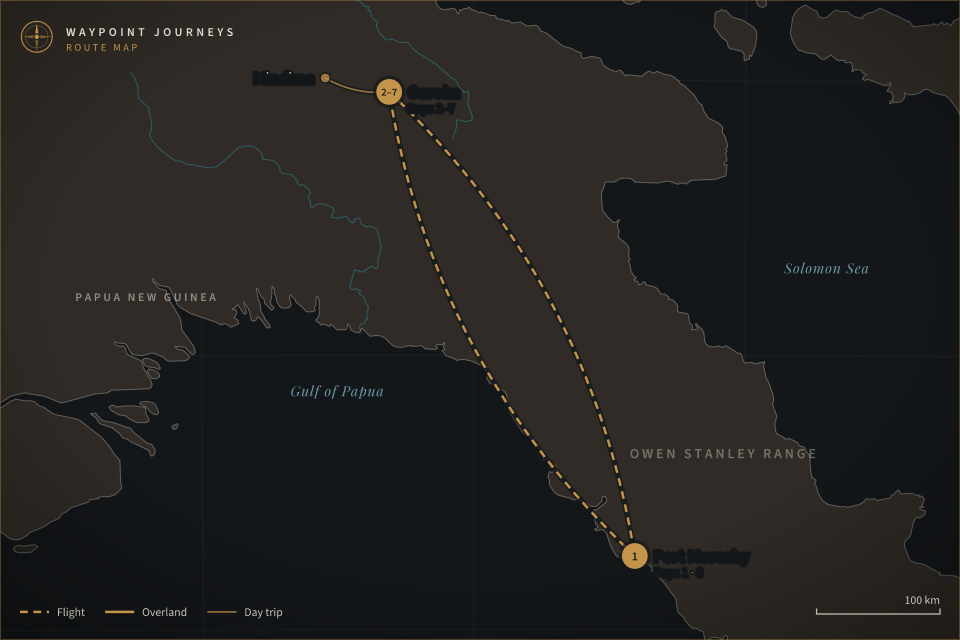
Route map of the Port Moresby to the Eastern Highlands: Port Moresby and Goroka.
The Route

Port Moresby to the Eastern Highlands

Eight days: fly from Port Moresby into the Asaro valley for six nights at Goroka and the show, with a day west over the Daulo Pass to the skeleton men at Mindima in Simbu.

  1. Days 1 · 8Port Moresby
  2. Days 2–7Goroka
Explore the route
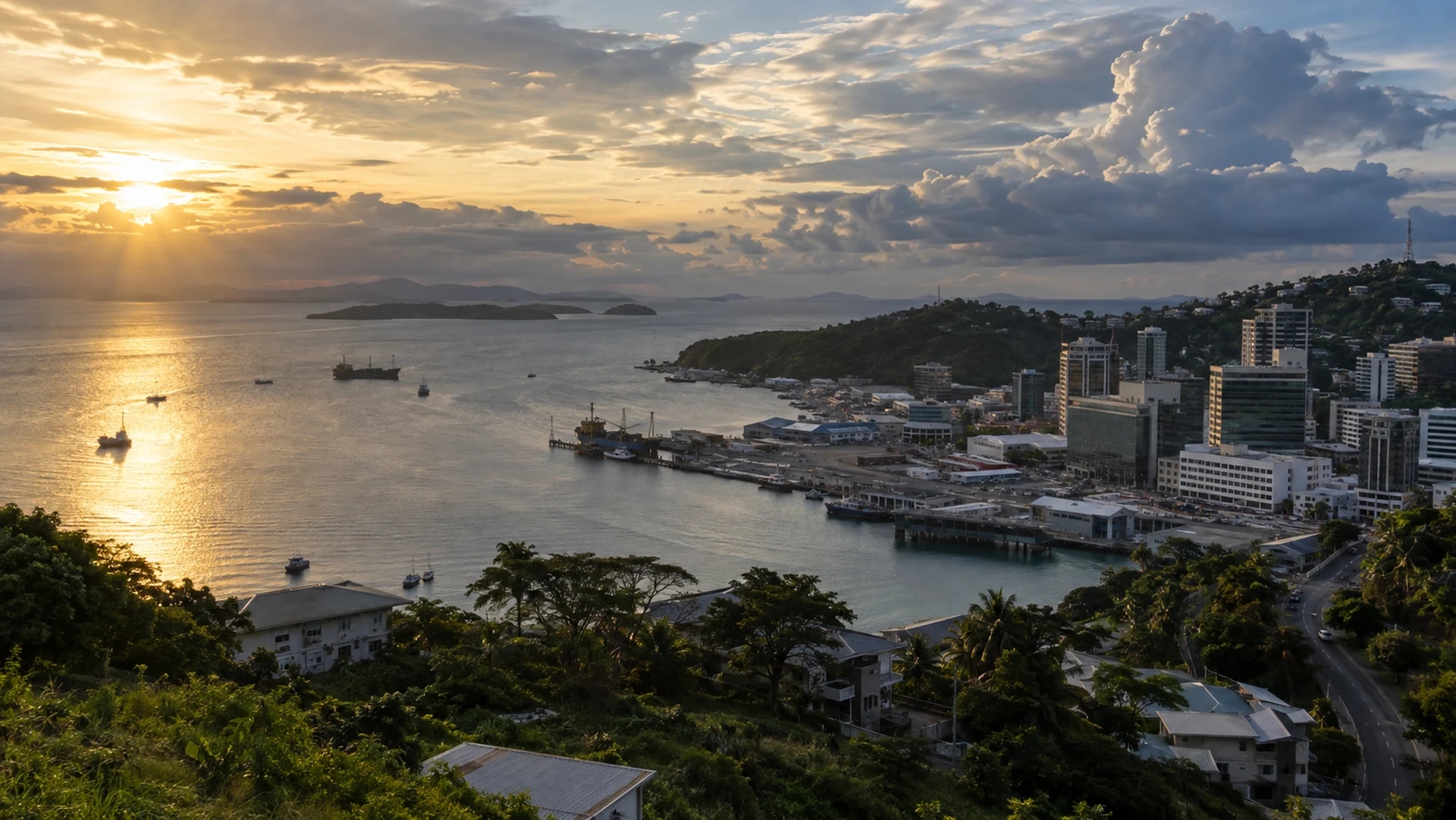
Illustrative late afternoon view across Port Moresby harbour
Day 1
Port Moresby · arrival
Tuesday 14 September

Fly into Port Moresby from Brisbane, Cairns, Singapore or Manila, arriving at whatever hour your connection allows. We meet you inside the terminal and drive you to the hotel, and the rest of the day is yours to sleep off the flight. If you land early there is time for the National Museum and Art Gallery, where the carvings, masks and shell valuables are the best introduction to what you will see worn at the show. It is Independence week, so expect flags on every car and the red, black and gold of the bird of paradise on every wall. We gather in the evening for dinner (paid separately) and the briefing.

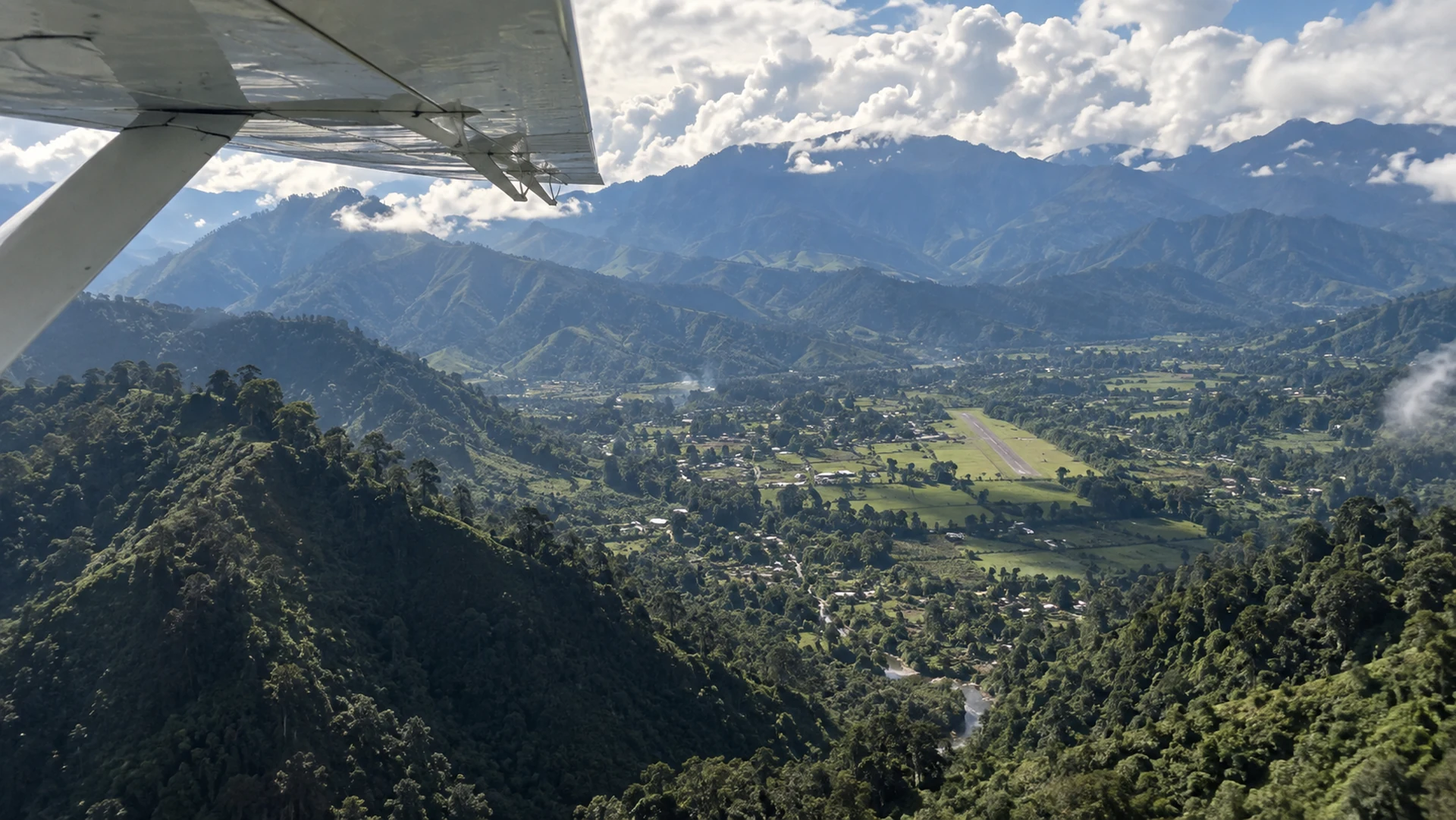
Illustrative aerial approach to Goroka through the Eastern Highlands
Day 2
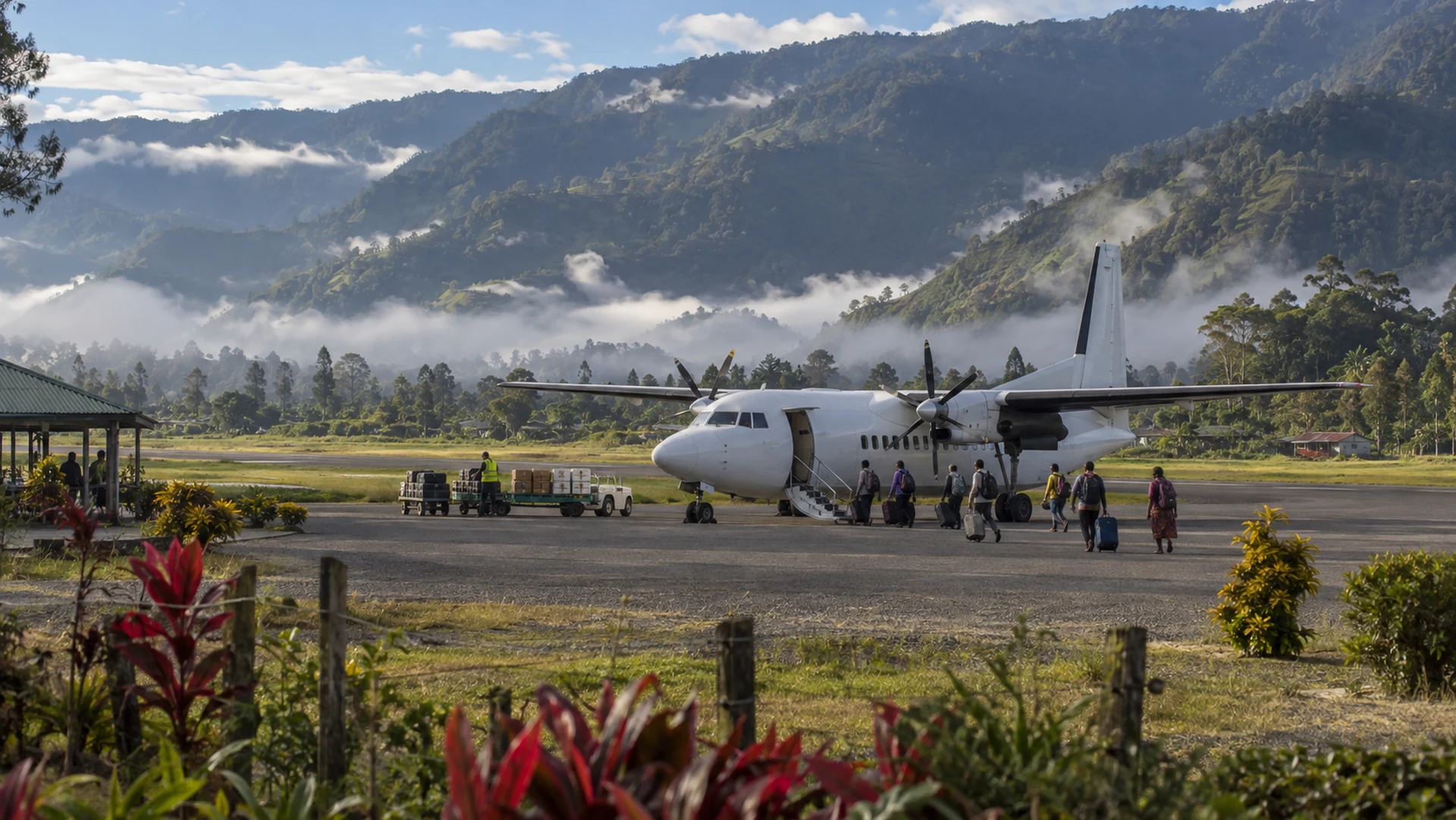
Fly to Goroka · the Eastern Highlands
Wednesday 15 September · morning flight POM–GKA, about an hour

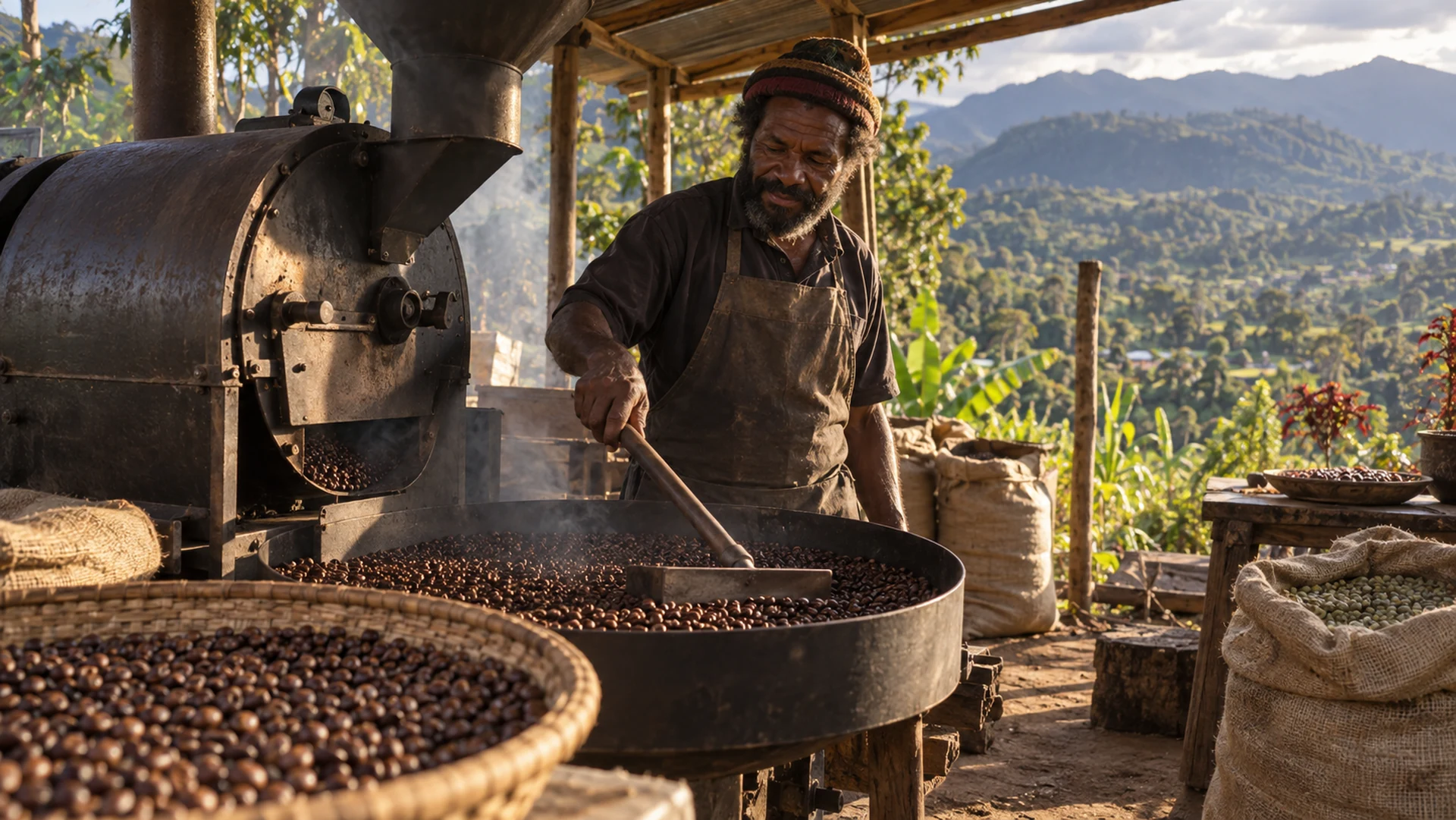
A morning flight over the Owen Stanley Range and down into the Asaro valley. Goroka sits at about 1,550 metres, so the air is cool and the light is clean after the coast. Our Highlands guides meet you on the airstrip, which runs almost through the middle of town. After lunch (paid separately) we visit the J.K. McCarthy Museum, whose photographs from the 1930s patrols record the moment Highlanders and Australians first saw each other, then walk the market, where half the valley comes to sell sweet potato, pitpit and betel nut. Goroka is the centre of the country’s coffee trade, and we finish the afternoon at a roastery before checking in for six nights.

Illustrative Asaro Mudmen emerging through dawn mist
Day 3
The Asaro Mudmen at dawn
Thursday 16 September · Independence Day, pre-dawn start

Out of Goroka in the dark with coffee in a flask. The Asaro Mudmen come from a valley about an hour away, and the reason to go early is the mist: at sunrise it lies along the valley floor and the clay heads come out of the treeline through it. The masks are fired from river clay and weigh several kilos, and the men wearing them move slowly because they can barely see. Afterwards we eat breakfast in the village (paid separately), hear the story of the raid the disguise was invented for, and spend time with the potters who still make the heads. We are back in town for the afternoon of Independence Day, the country’s 52nd: flag raisings, school bands, and a whole town dressed in red, black and gold.

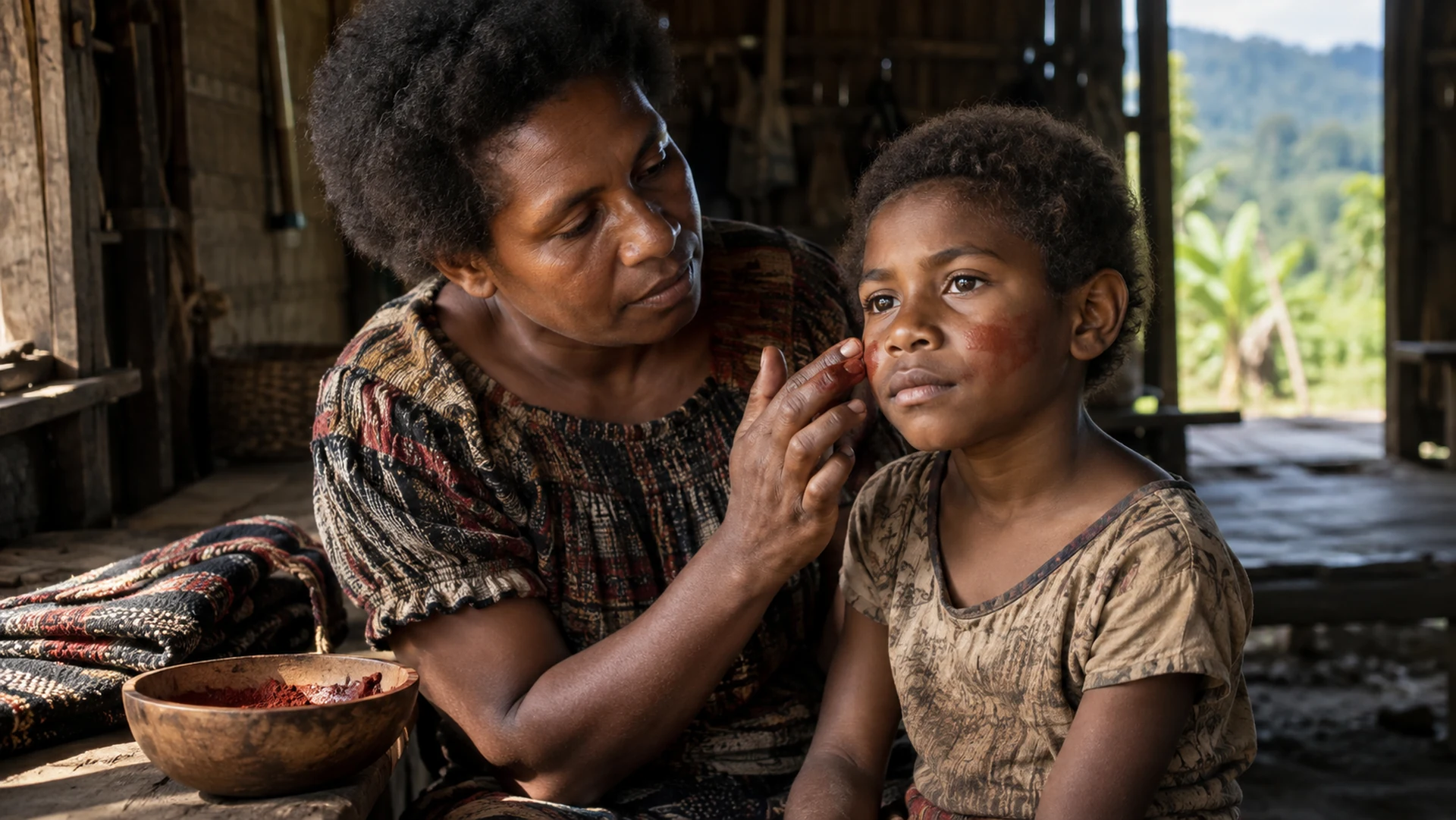
Illustrative mother applying ochre to her child before the Goroka Show
Day 4
A village getting ready · the Pikinini Festival
Friday 17 September · the day before the arena

The best day of the week for photographs, and the reason to be in Goroka before the weekend. In the morning we drive out to a village in the valleys around town whose group is dancing at the show, and spend a few unhurried hours with them while they rehearse, paint and fit headdresses on their own ground, with bush behind them instead of fencing and grandstands. In the afternoon we go to the showground for the Pikinini Festival, the children’s performances that open the show weekend, where the next generation dances in the same plumes and paint as their parents. In recent years the Friday has ended with fireworks over the ground.

Illustrative performers crossing the Goroka Show arena
Day 5
Goroka Show · day one
Saturday 18 September

We are at the National Sports Institute ground soon after dawn, while the arena is still empty and the real work is happening behind it. Groups arrive by truck and on foot and set up wherever they can find space: wigs unwrapped from leaves, ochre mixed in a tin, kina shell polished and hung. This is the hour most visitors miss because they come when the dancing starts. From late morning more than a hundred groups begin to enter the arena, and they keep coming for hours: Asaro Mudmen, Huli wigmen, the skeleton men of Simbu, Melpa from the Western Highlands and Sepik groups with carved masks and drums. Your packed lunch is paid separately and eaten where you stand, because leaving means losing your place.

Illustrative Goroka Show performer playing a kundu drum
Day 6
Goroka Show · day two
Sunday 19 September

Day two is calmer and better for it. You know the ground, you know which groups you want to find again, and the pressure of seeing everything at once has gone. The groups rotate through the arena again, the light is different, and what you missed on Saturday comes past a second time. We stay through the main performances, then leave before the crowd does. In the evening we are hosted in a village outside Goroka for a mumu meal (paid separately), pork and sweet potato cooked on hot stones under banana leaves, with a fire in the round house and the long unhurried conversation that never happens in an arena.

Illustrative Simbu skeleton performers on a highlands hillside
Day 7
The Daulo Pass · Simbu skeleton men
Monday 20 September · about two hours each way

West out of the Asaro valley on the Highlands Highway, climbing to the Daulo Pass at about 2,450 metres, where cloud sits in the gaps and gardens run up slopes too steep to look farmable. Two hours brings us into Simbu, and at Mindima the skeleton men are waiting: they paint on a hillside above the village and then perform the Omo Masalai, the story of ancestors who disguised themselves as the dead to drive a spirit out of a cave, at close range and on their own ground rather than in an arena. We eat lunch in the village (paid separately) and drive back over the pass in the afternoon light for a farewell dinner in Goroka (also paid separately).

Illustrative regional aircraft departing from Goroka
Day 8
Goroka to Port Moresby · departure
Tuesday 21 September

A morning flight from Goroka down to Port Moresby, where the expedition ends. Most international departures leave in the afternoon or evening, so there is usually time for a last coffee with a view of the harbour. Build a comfortable connection: Highlands flights depend on the weather and do run late, and we would rather you had hours in hand than minutes. If you want to keep going, this pairs naturally with the Sepik, with a week of private birding in the Highlands, or with a few days of diving at Tufi or Kimbe Bay, and we are glad to arrange any of it.

Itinerary imagery is illustrative and does not depict a specific departure.

Illustrative Asaro Mudmen emerging through dawn mist

Festival Expedition

One Weekend in September.
A Country Dressed in Its Best.

What's Included

Duration8 days / 7 nights: one night in Port Moresby and six in Goroka
DatesSeptember 14–21, 2027, a fixed departure built around the Goroka Show weekend (expected 17–19 September, with the arena days on the 18th and 19th; the organisers confirm the dates during the year and we move the trip if they move the show)
Festival AccessBoth days of the Goroka Show with early access to the preparation ground on the first morning, plus the Pikinini Festival on the Friday. All show and site fees paid.
AccommodationSeven nights in secure, en-suite hotels: one in Port Moresby and six in Goroka. Breakfast and all other meals are paid separately. Goroka rooms are held a year ahead; show week sells out.
Included ExperiencesThe J.K. McCarthy Museum, the market and a coffee roastery (Day 2); the Asaro Mudmen at dawn with the mask potters, and Independence Day in town (Day 3); a morning with a village group preparing for the show and the Pikinini Festival (Day 4); both show days (Days 5–6); a hosted village evening with a mumu (Day 6, meal paid separately); the Daulo Pass and the Simbu skeleton men at Mindima (Day 7)
TransportBoth domestic flights (Port Moresby–Goroka and back), private 4WD vehicles with driver throughout the Highlands including the Daulo Pass day, and every airport transfer
GuidesA Waypoint expedition leader plus Highlands guides from the Goroka area who arrange village access, introductions and posing fees on your behalf
Not IncludedAll meals, including breakfast, lunch and dinner, are excluded from the price and paid separately. This includes packed lunches and hosted village meals. Also excluded: international flights to and from Port Moresby, the Papua New Guinea visa (e-Visa for most nationalities, applied for online before travel), travel insurance, alcoholic drinks, tips and personal expenses

FREQUENTLY ASKED QUESTIONS

Common Questions About This Expedition

Not yet. The show is held on the weekend around Independence Day, 16 September, and the organisers confirm the dates during the year. In 2027 Independence Day falls on a Thursday, so the show is expected from Friday 17 to Sunday 19 September, with the main arena days on the Saturday and Sunday. We have built this departure, 14 to 21 September, around that weekend. If the dates move, we move the trip with them and tell you before you book flights.
Because the days before it are some of the best of the week. Thursday is Independence Day, which we begin in the Asaro valley with the mudmen at dawn and finish in a town celebrating. On Friday we spend the morning with a village group preparing for the show on their own ground, which is where the close, quiet portraits come from, and the afternoon at the Pikinini Festival. By Saturday you know the valley, the guides and the rhythm of the show.
Comfortable, secure and genuinely scarce in show week: the town has only a handful of good hotels and they sell out a year ahead. We hold rooms early and stay six nights in the same place, so you unpack once. Expect an en-suite room with hot water, a restaurant on site, a secure compound and generator backup. It is not international five-star, but it is clean, quiet and well run, and a short drive from the showground.
Talk to your doctor or a travel clinic, but plan on both. The CDC recommends routine vaccines plus hepatitis A and typhoid for most travellers, and has a polio notice in place for the country, so check your polio vaccination is current. Malaria is present below 2,000 metres, which includes Goroka. A yellow fever certificate is needed only if you arrive from a country with yellow fever risk. Source: CDC, checked 23 September 2026.

Expedition Investment

$3,950USD

per person, shared room (double or twin)

Includes both domestic flights (Port Moresby–Goroka and back); seven nights’ accommodation (room only); both days of the Goroka Show with early preparation-ground access and the Pikinini Festival; the Asaro Mudmen at dawn with the mask potters; a morning with a village group preparing for the show; a hosted village evening with a mumu (meal paid separately); the Daulo Pass and the Simbu skeleton men at Mindima; private 4WD transport throughout the Highlands; and a Waypoint expedition leader with local Highlands guides

All meals, including breakfast, lunch and dinner, are excluded from the price and paid separately. This includes packed lunches and hosted village meals. Also excludes international flights to and from Port Moresby, the Papua New Guinea e-Visa, travel insurance, alcohol, tips and personal expenses. Single supplement $1,050 USD. Fixed departure: Goroka rooms are held a year in advance and this date cannot move once the show is confirmed

Reserve Your Spot
A Note on Safety & Logistics

Papua New Guinea rewards travelling it properly, and we run every day of this week that way. You are met inside the terminal at Port Moresby and driven everywhere, our Highlands guides are from the Goroka valleys and know each morning which roads are running well, and we use vehicles and drivers we have worked with for years. On show days the group keeps a fixed meeting point and someone is always carrying a satellite communicator. Field rescue and medical evacuation cover is available through our Global Rescue partner page. The one thing to plan around is flying: domestic schedules slip for weather, so we build in slack and ask you to leave a comfortable gap before your flight home.