Waypoint Journeys Presents
São Tomé
The Chocolate Islands
8 Days
São Tomé · Príncipe — Two Volcanic Islands on the Equator, and the Cocoa Empire That Was Left Behind
We reply within 24 hours
The Cocoa Islands That the World Forgot
Two hundred and fifty kilometres off the coast of Gabon, in the deepest corner of the Gulf of Guinea, two volcanoes break the surface of the Atlantic and carry rainforest all the way to the waterline. Nobody lived here before the Portuguese came ashore in the 1470s, which makes São Tomé and Príncipe one of the very few places on Earth with no indigenous past, a country invented from scratch on the back of first sugar and then cocoa, worked by people carried here against their will, and independent only since July 1975.
What that history left behind is unlike anywhere else in Africa. Vast plantation estates, the roças, stand half-swallowed by forest, their hospitals and chapels and colonnaded drying yards still lived in by the descendants of the workers. For a few years in the early twentieth century these islands were the largest cocoa producer on the planet. The trees are still here, the beans are still famous, and a handful of small producers now make some of the finest chocolate in the world a few kilometres from where the pods are cut.
And around all of it: one of the most concentrated bursts of endemic life in the Atlantic. Roughly a third of São Tomé lies inside the Obô Natural Park, where birds found nowhere else on Earth move through forest that has never been cleared. Eight days takes you the length of both islands: the needle of Pico Cão Grande, the baobab savanna at Lagoa Azul, the equator marker on Iléu das Rolas, and then the short flight to Príncipe, where a plantation house called Sundy hosted the 1919 eclipse expedition that proved Einstein right.
"These islands were the end of the world twice over: first for the Portuguese who planted them, then for the world that stopped buying their cocoa. What is left is a rainforest with a ruined empire inside it."

A Volcanic Needle, a Ruined Cocoa Empire, and the Eclipse That Rewrote Physics
The Great Dog Peak is the throat of a dead volcano stripped of everything softer around it, a phonolite needle standing 663 metres above sea level and some 370 metres clear of the forest floor, so improbably vertical that first-time visitors assume the photographs are faked. The southern road runs beneath it; on a clear morning the spire and its smaller twin cut straight out of the canopy.
On 29 May 1919 an expedition sent by Arthur Eddington set up on the lawn of a cocoa plantation on Príncipe and photographed stars beside a totally eclipsed sun. The measured deflection of their light matched Einstein and not Newton, and general relativity stopped being a theory nobody could test. The plantation house still stands, and so does the spot where the telescope was bolted down.
The southern end of Príncipe has no road. You reach the Bay of Needles by boat, rounding a coast where the same volcanic plumbing that built Cão Grande has left a whole skyline of green-furred phonolite towers dropping into the sea. It is the single most improbable view in the Gulf of Guinea, and on most days the only other traffic is a fisherman working the reef.
These islands were briefly the world's largest cocoa producer, and the crop never entirely left. You walk a working plantation while the pods are being cut, watch beans ferment and turn on the drying yards, and then sit down with a small-batch producer who grows, ferments, roasts and conches within a few kilometres of the trees, a chain that exists in almost no other cocoa country on Earth.
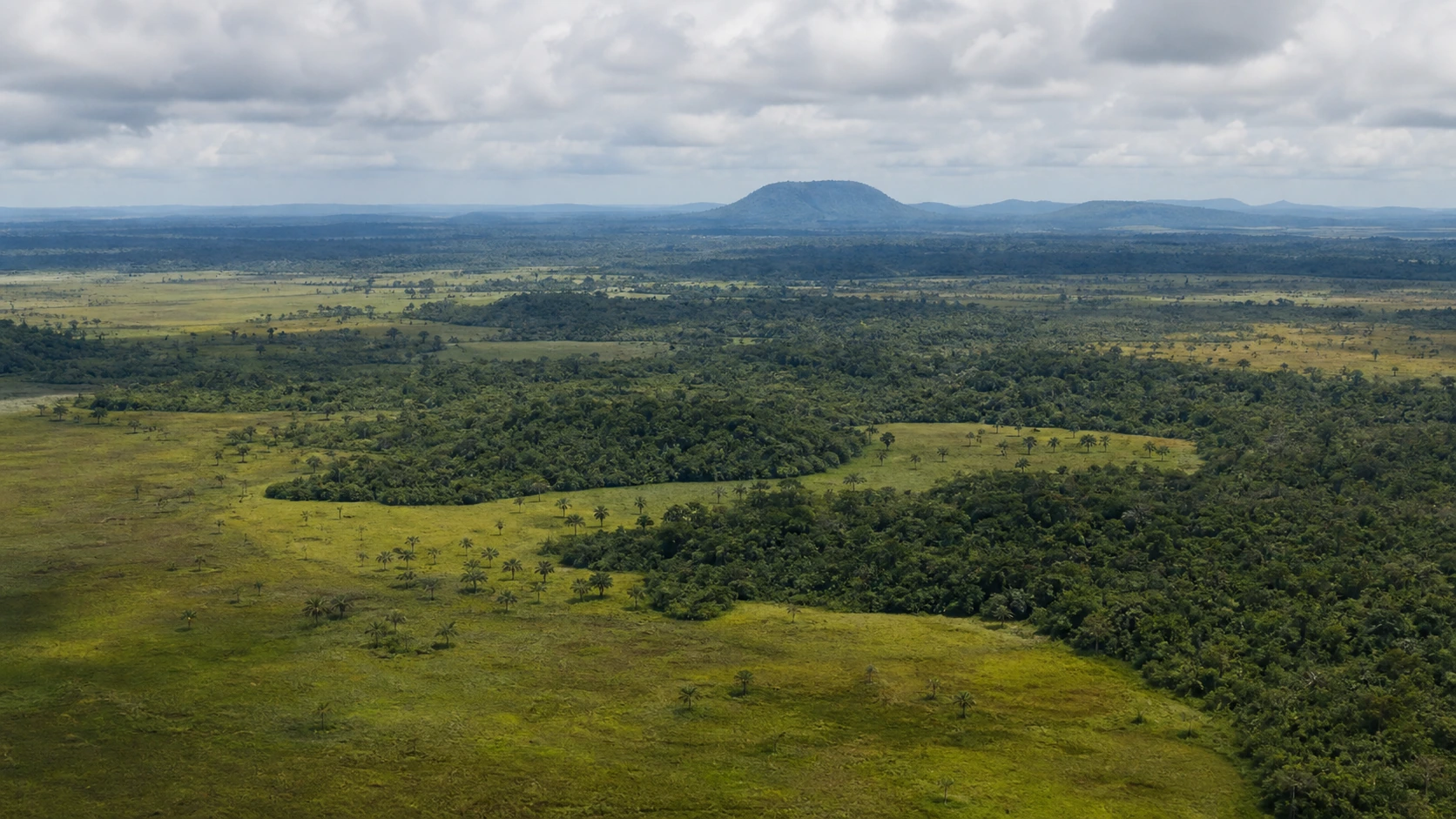
About a third of São Tomé is protected inside the Obô Natural Park, and the forest that climbs from the plantations to the crater rim holds one of the densest concentrations of endemic birds anywhere in the Atlantic; the giant sunbird, the São Tomé fiscal, the São Tomé grosbeak that science had written off until it turned up again in 1991. Even without a bird list, the forest itself is the point.
Praia Banana on Príncipe was famous enough to sell rum in a 1980s advertising campaign and is still, most days, completely empty. So are the black-sand coves of the south, the turtle beaches at Jalé, and the shallow water off Iléu das Rolas, where a stone marker puts you standing on the equator with a foot in each hemisphere.
The Expedition
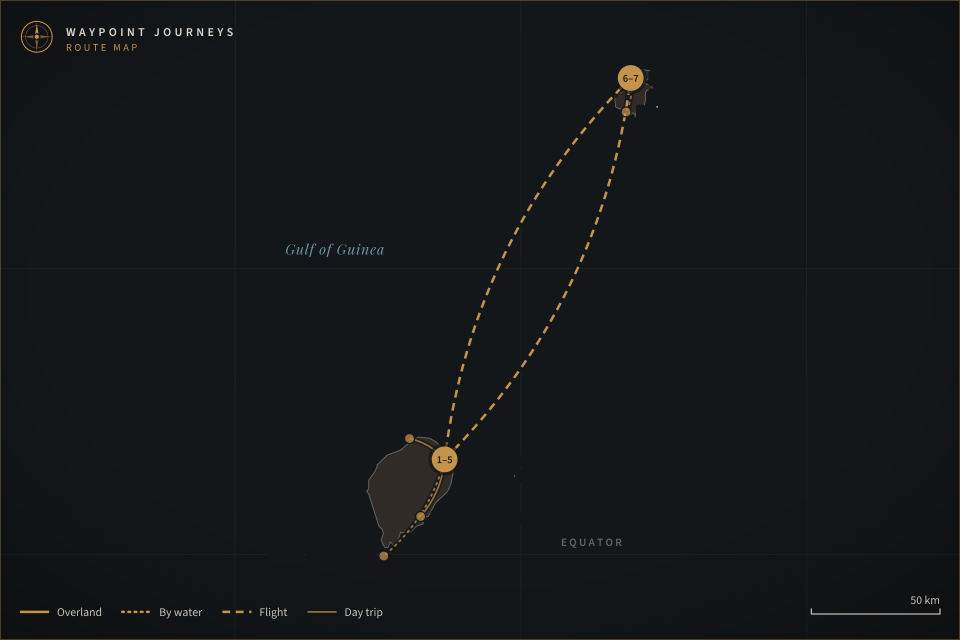
Five nights on São Tomé and three on Príncipe, with the inter-island flight, every transfer and both national-park entries already handled.
Fly in over the reef and land ten minutes from the middle of town. Our team meets you and the afternoon stays deliberately loose, because São Tomé city introduces itself better than any schedule can: a grid of pastel Portuguese colonial buildings running down to the water, the sixteenth-century Fort of São Sebastião on its spit, the cathedral, and a market that smells of breadfruit and dried fish. Dinner is your first encounter with the islands' cooking: grilled fish, breadfruit, palm oil, the fierce local chilli they call óssame.
The north of São Tomé is the dry half of the island and looks nothing like the rest of it: thorn scrub, open savanna and baobabs standing over a coast of black lava. At Lagoa Azul the water turns an implausible blue against the rock, and the snorkelling straight off the shore is the easiest on the island. Afterwards, the enormous ruin of Roça Agostinho Neto (once the grandest cocoa estate here, with its own hospital and railway) where families still live in the workers' quarters and hang washing in the drying yards.
South along the coast road: the blowhole at Boca do Inferno, then the long climb into the interior where the forest closes over the road and Pico Cão Grande finally shows itself, a stone needle standing clear of the canopy. Lunch at São João dos Angolares, in a plantation house turned kitchen where the cooking is the reason people drive two hours. In the late afternoon, the black-sand beaches of the far south and, in season, the turtle nesting beach at Jalé.
A short boat crossing to Iléu das Rolas, the islet off the southern tip where a stone marker sits exactly on the equator, the only place in Africa where the line crosses an island small enough to walk across. The day is spent between the marker, the lighthouse walk and the reef: this is the best snorkelling water on the São Tomé side, warm and clear over coral heads that see almost no traffic. Back on the main island before dark.
Into the interior early, before the cloud sets in. A guided walk climbs through the old plantation edge into true Obô forest (tree ferns, begonias the size of dinner plates, the endemic birds calling from a canopy you rarely see through) on a route matched to your pace rather than a fixed summit. The afternoon belongs to cocoa: a working roça mid-harvest, the fermentation boxes and drying yards, and then a tasting with a small-batch maker who takes the beans all the way to the bar.
The thirty-five-minute hop north to Príncipe is the best short flight in the Gulf of Guinea, the whole island arrives at once, green towers and a green sea. Príncipe has been a UNESCO Biosphere Reserve since 2012 and has roughly eight thousand residents on it. The afternoon goes to Roça Sundy, the plantation whose lawn hosted Eddington's 1919 eclipse expedition, and then to Praia Banana, the crescent of sand below it, for the first swim.
The whole day at sea, down the roadless southern coast to the Bay of Needles, where a skyline of forested volcanic spires falls straight into the water. The boat noses into coves that can only be reached this way, stops for snorkelling over reef that sees a handful of visitors a year, and lands on a beach for lunch. Between July and October humpbacks pass through this water on migration and the crossing turns into a whale watch. Back to the north coast in the late light.
A last morning on Príncipe (the forest track behind Sundy, the old town at Santo António, the smallest city in Africa, or simply the beach) before the flight back to São Tomé and your onward connection. Most international departures leave in the evening, so there is usually time for a final lunch and a shower before the airport. We are glad to add Gabon, Angola or a longer stay on Príncipe to either end.
What's Included
FREQUENTLY ASKED QUESTIONS
Common Questions About This Expedition
Expedition Investment
per person, twin share
Fully inclusive of the return São Tomé–Príncipe flight; seven nights' accommodation across both islands; private vehicles, boats and every transfer; all six signature excursion days with an English-speaking Santomean guide; Obô park entry and the chocolate tasting; daily breakfast plus lunch on the three full excursion days
Excludes international flights to São Tomé (Lisbon is the usual gateway; we are glad to book them), travel insurance, remaining meals, alcohol and personal expenses. Single supplement $850 USD
Reserve Your SpotSão Tomé and Príncipe is one of the calmest countries we operate anywhere. It has no insurgency, no meaningful street crime against visitors and a population smaller than a mid-sized town; the honest risks here are logistical and medical rather than criminal. The inter-island schedule is thin and weather can move it, which is why we book it early and build slack around it rather than pretending it is a bus. Malaria is present on both islands year-round, so prophylaxis and repellent matter, talk to a travel clinic well before you fly, and note that a yellow fever certificate is required. Medical facilities are basic and the nearest serious hospital is in Lisbon or Libreville, so comprehensive insurance with evacuation cover is a condition of travelling with us. The roads are narrow, wet and shared with pedestrians; we drive them slowly, in daylight, with local drivers who know them.