Waypoint Journeys Presents
Congo River Cruise
Brazzaville · the Congo · the Alima · the Sangha
9 or 16 Days
800 Kilometres of River Aboard a 14-Cabin Expedition Ship
We reply within 24 hours
Eight Hundred Kilometres of River, and Almost Nobody on It
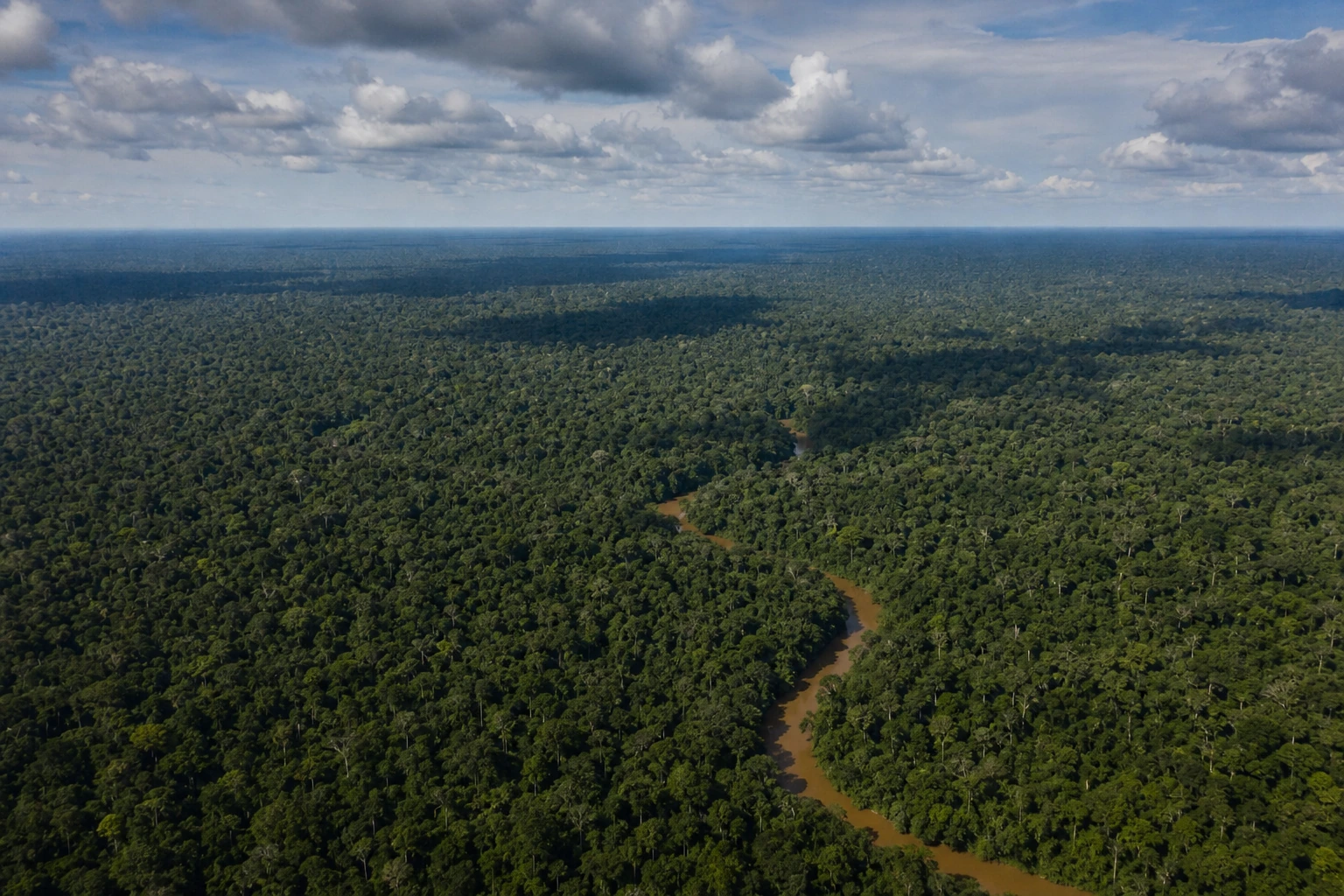
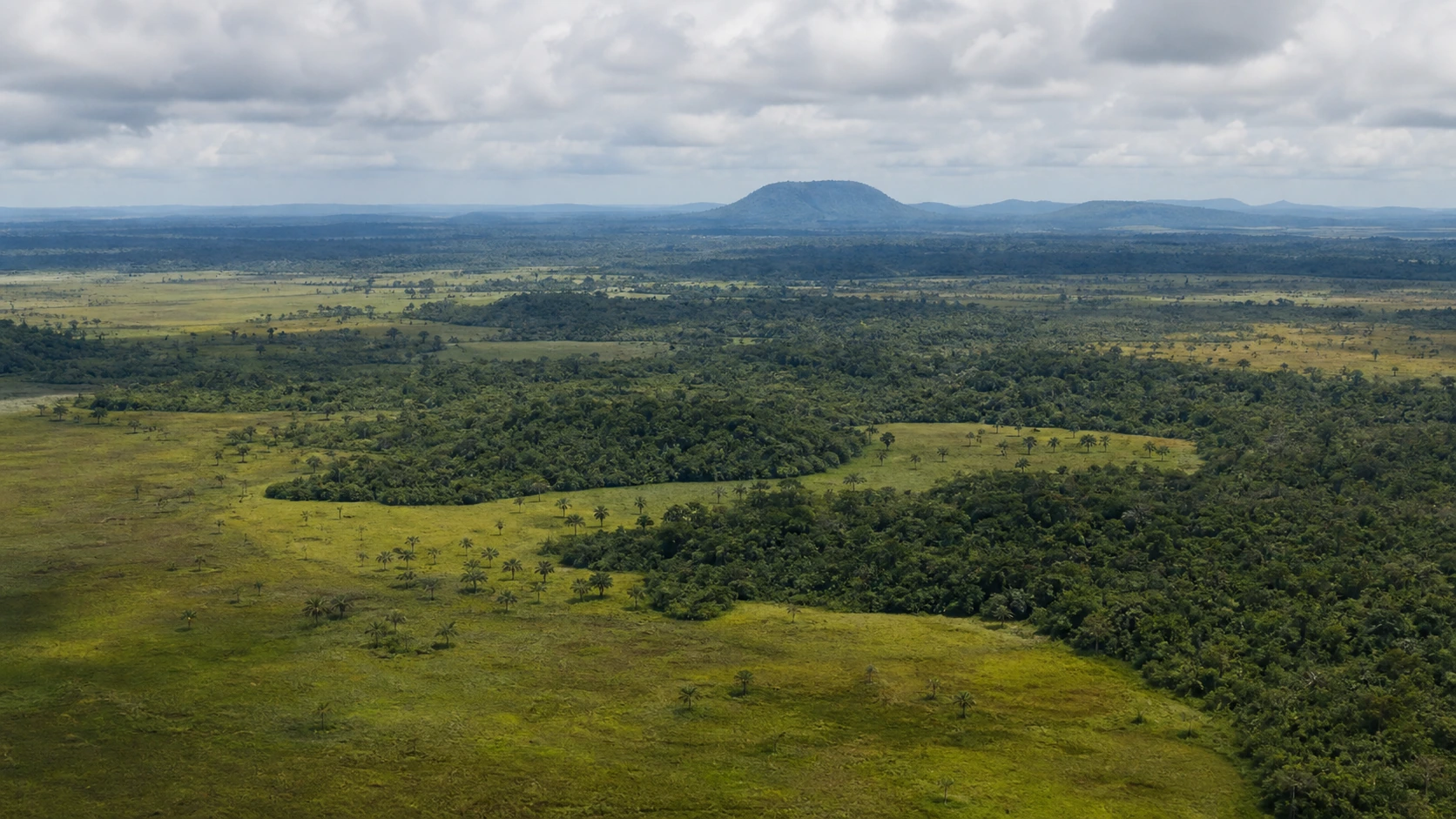
The Congo Basin is the second largest rainforest on Earth and the least visited of the great wildernesses: 3.7 million square kilometres of forest and water, and a river that is the deepest in the world and, for most of its length, a working highway of pirogues and pushed barges rather than anything a tourist has seen. Brazzaville, the quiet capital on the north bank, is where it begins.
This cruise runs 800 kilometres of it aboard Princesse Ngalessa, a 52-metre, 14-cabin expedition ship built in the shape of the classic Congo passenger boats. Up the Congo from Brazzaville through green hills to Ngabe, where the queen of the Teke kingdom still names each new king, then into the labyrinth of islands and on to the swamp forests of the Alima. Every day the launches go out: hippos and fish eagles at the Lefini estuary, the salted-fish alleys of Mossaka, cast nets at Likendze, the Moye villages of raffia and forest medicine, and a night, weather permitting, on a sandbank in the middle of the river.
Choose the 8-night river cruise, which ends with the rescued gorillas of Lesio Louna and a day in Brazzaville with the Sapeurs. Or take the 15-night expedition that keeps every one of those river days and adds three countries: a night in the DRC to track the world's only semi-habituated bonobos, then Ouesso and five nights in Dzanga-Sangha for lowland gorillas, up to 150 forest elephants at Dzanga Bai, and a day in the forest with the BaAka.
"A river wide enough to lose an island in, and a ship small enough to stop for a fisherman."

A Ship, a River, and the Last Great Forest of Central Africa
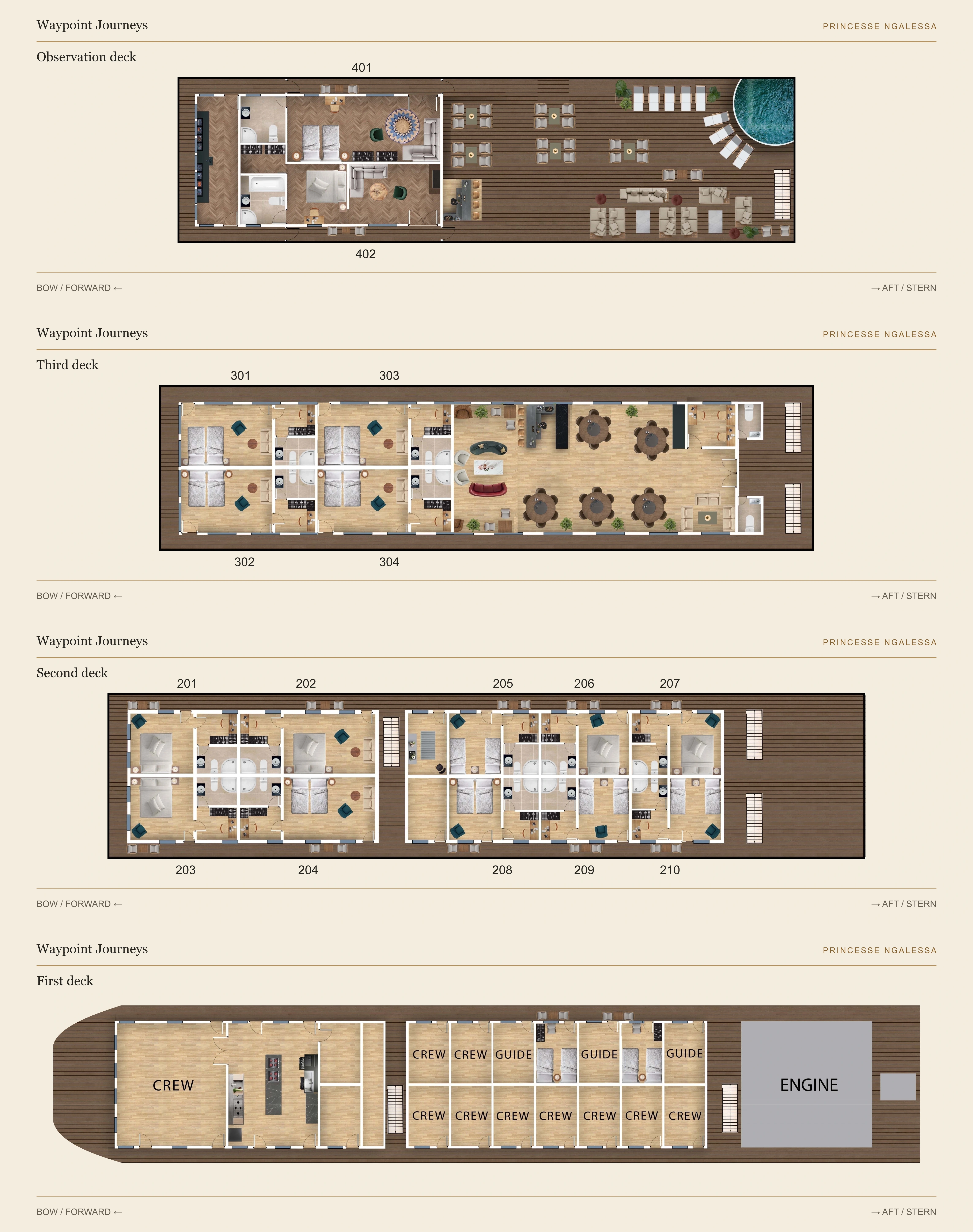
A 52-metre river expedition ship refitted in 2023 and 2024: 14 air-conditioned cabins on three decks, 600 square metres of open deck with a dining room, lounge, jacuzzi and observation deck, and three aluminium launches that leave the ship every single day. A crew of 23, a cruise director, three naturalist guides, and wine with dinner.
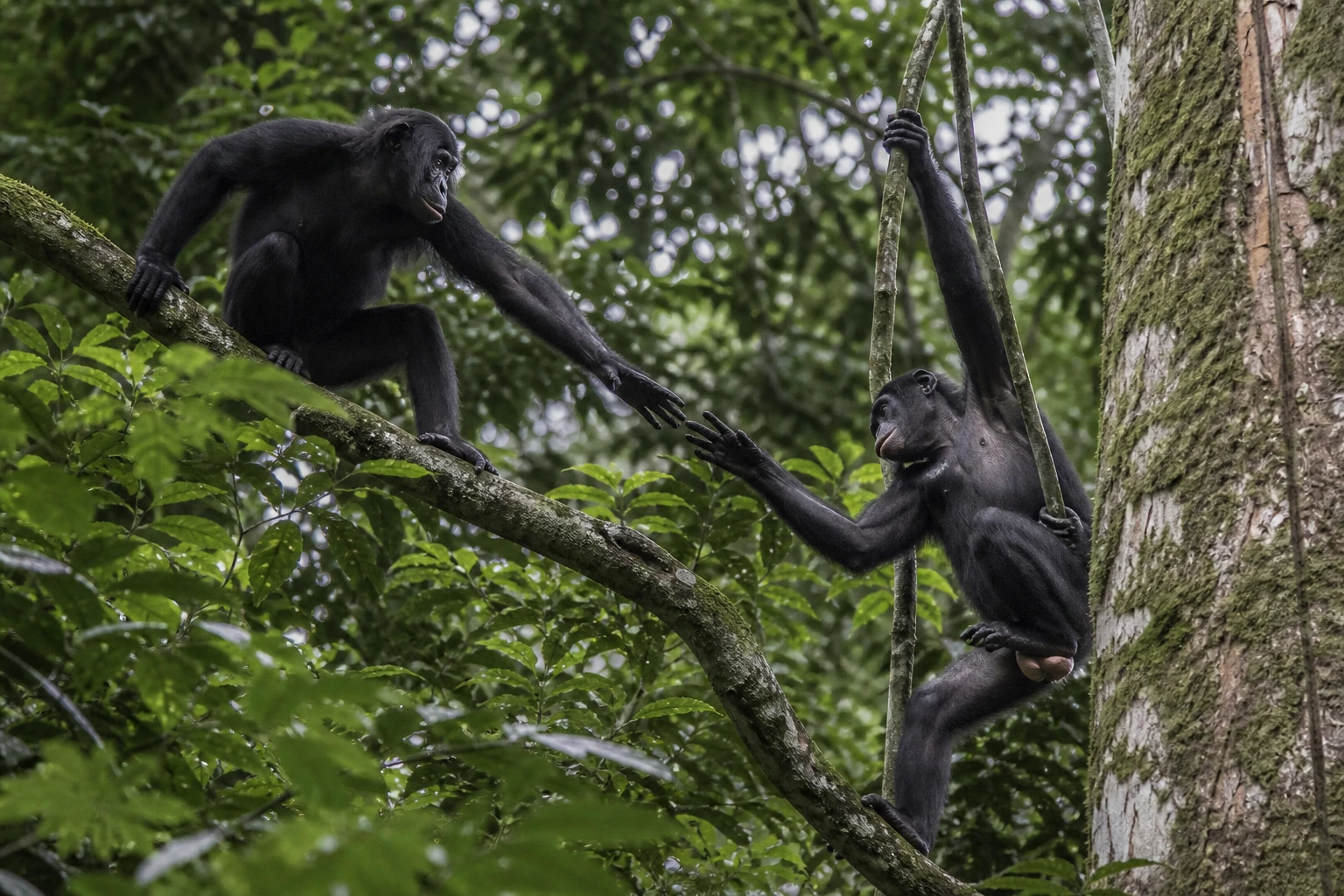
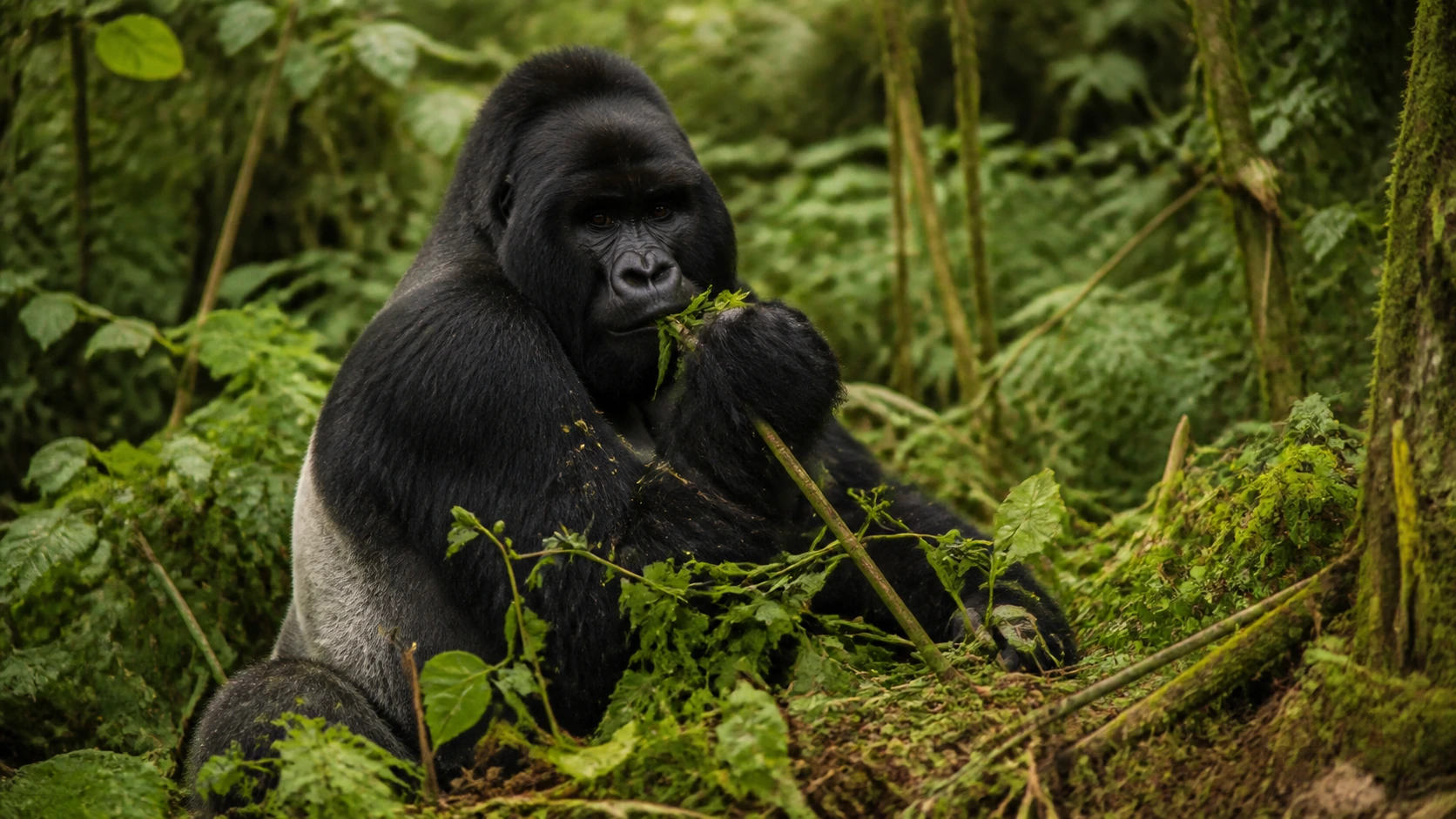
Western lowland gorillas on the islands of Lesio Louna, where rescued animals relearn the forest before release. On the 15-night expedition, a dawn under the nests of semi-habituated bonobos near Nkala in the DRC, the only place on Earth to watch them wake, and gorilla tracking with BaAka trackers in the Sangha.
At Ngabe, one of the old capitals, you climb through the village to meet the queen who guards Nkwembali, the Teke deity, and who alone can hand power to each new Makoko. After lunch the Kebe-Kebe dancers whirl in raffia and feathers, each carrying a painted wooden head on a pole. An initiation society, not a show for the ship.
Mossaka and the alleys of salted-fish dryers that made it famous, palm wine and a potter at work; cast nets, traps and hand lines with the fishermen of Likendze on the Sangha; and the Moye of the Alima, who take you into the flooded forest by canoe and explain which plants of the swamp heal what. Guides who grew up on these rivers, throughout.
On the 15-night expedition, five nights in the Sangha tri-national, a UNESCO site of 750,000 hectares where three countries meet. From a platform above the clearing the forest elephants come in by the dozen, up to 150 in a day, with bongo, sitatunga and forest buffalo, and at Bai Hokou the trackers find the agile mangabeys and the gorillas.
The calmer of the two capitals that stare at each other across the river: the Congo Basin Museum, the Poto-Poto painting school that shaped a century of Congolese art, the basilica of Sainte-Anne, and an afternoon with the Sapeurs, the Society of Ambiance-Makers and Elegant People, who dress better than anyone you have ever met.
The Expedition
Two ways to sail the same river. Both board in Brazzaville; the 15-night expedition keeps every river day and adds the DRC, Ouesso and the Sangha.
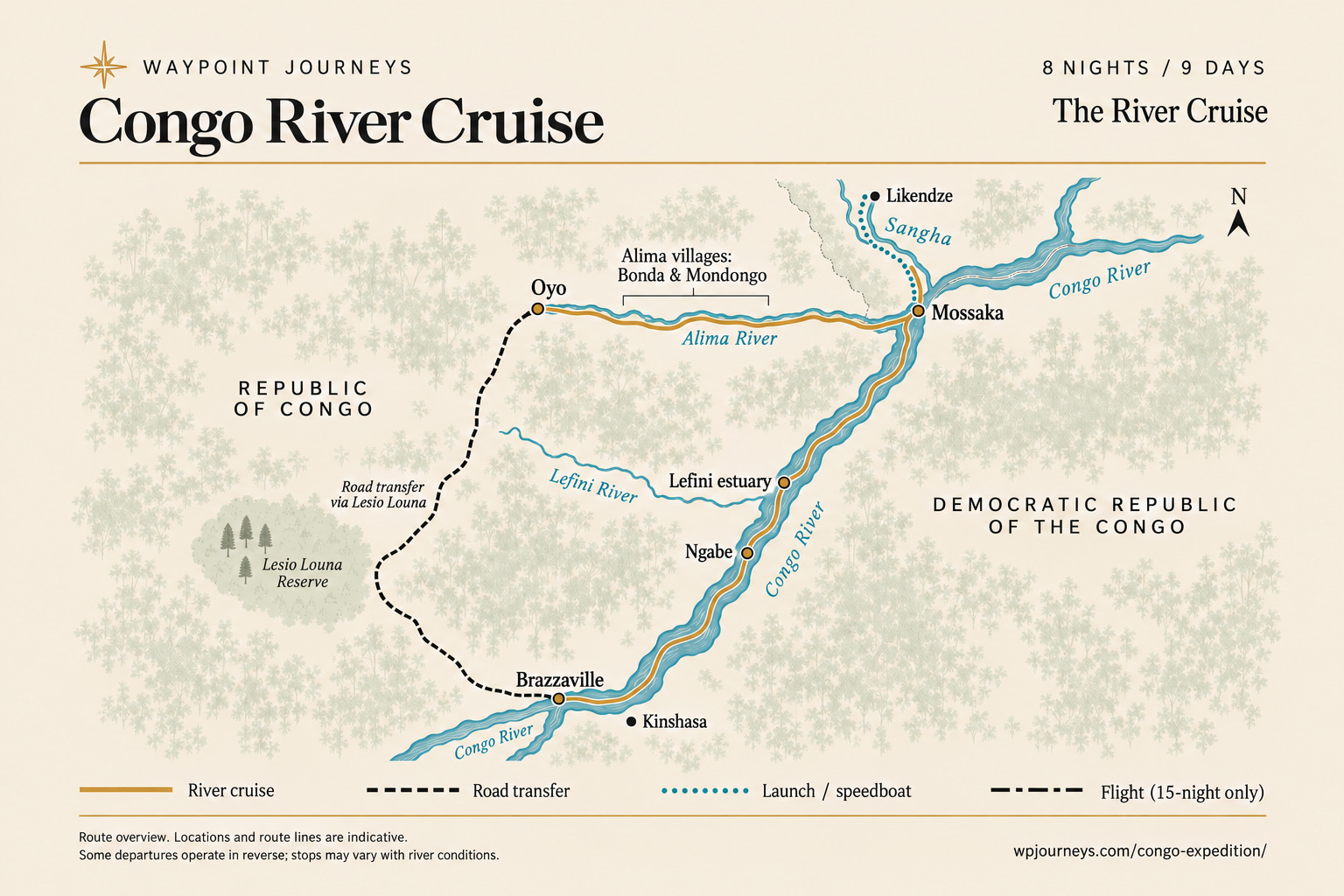
9 days, 8 nights. Brazzaville to Oyo up the Congo and the Alima: seven nights on board and one in a five-star hotel in Brazzaville. Some departures sail the same route in reverse, from Oyo down to Brazzaville, with the Lesio Louna gorillas on day two.

Our guide meets you at Maya-Maya airport. Boarding on Princesse Ngalessa opens at 5 pm; if you land in the morning on Ethiopian Airlines, the lobby of the Radisson Blu on the riverfront is yours until then. Settle into your cabin, then the first dinner on board with the lights of Kinshasa coming on across four kilometres of water. Night on board.

After breakfast the ship turns upstream through a landscape of green hills. The morning is for learning the decks, the program and your guides, and for the first lecture on the observation deck. In the afternoon the launches go out for the first time, onto the clear green water of the Maipili River. Night on board.

In the morning we land at Ngabe, one of the old capitals of the Teke kingdom, and climb through the village to call on the queen: guardian of Nkwembali, the spiritual deity of the Bateke, and the one person who can pass power to a new king, the Makoko. Lunch on board, then back ashore for the Kebe-Kebe: dancers in raffia robes set with feathers, whirling like dervishes and carrying painted heads on poles. In the afternoon the launches work the Lefini estuary for hippos and birds. Night on board.

Here the Congo widens past ten kilometres and breaks into a maze of islands where fishing camps appear in the dry season. Morning birding in the N'keni estuary: bee-eaters, weavers, egrets and kites. From the observation deck you watch the traffic of the river: the whaleboats and the pushed barges up to 200 metres long that carry goods, livestock and whole families between towns for weeks at a time. If the weather allows, we bivouac on a sandbank in the middle of it all. Night on board.

Mossaka in the morning with our local guide Jean de Dieu: the remains of the colonial era, the market, and the alleys of salted-fish dryers that made the town's name across the region, then palm wine and a potter at work. Lunch on board while we sail to Likendze on the Sangha, where the villagers show cast-net, trap and net fishing, and anyone who wants to can try a hand line. Night on board.

Launches at first light for the hippos a few kilometres north of the village, then birding for the region's signature species: ospreys, palm-nut vultures, African fish eagles, hamerkops, hornbills, kingfishers and the elusive turaco. Back on board we turn into the Alima, a narrow winding river walled with swamp forest, and finish the day at Bonda, where the Moye people take us into the flooded forest by canoe or on foot depending on the water. A dance on the riverbank at dusk, and after dark a slow 900-metre loop with the engines low to listen to the forest and look for the eyes of crocodiles. Night on board.

A day on the Alima, bend after bend of it, with raffia villages on the banks. At Mondongo, another Moye village built almost entirely of raffia, a local healer walks us through the traditional pharmacopoeia: which plants of the swamp forest treat which illness, and how the remedies are made. In the afternoon a small black-water tributary where the villagers call crocodiles. Night on board.

We leave the ship at Oyo and drive south to the Lesio Louna reserve, part of the Congolese gorilla protection programme founded with the Aspinall Foundation in 1999. Rescued from trafficking and from zoos that could not keep them, the gorillas live on forested islands in the Louna River until they can feed themselves and be released into the park. We go out by motorboat with the keepers to see them at close range, then continue by road to Brazzaville. Dinner and night at the five-star Radisson Blu on the river.

A morning in the capital: the Congo Basin Museum, the Poto-Poto painting school, the cathedral, and to finish, a meeting with La Sape, the Society of Ambiance-Makers and Elegant People, in their Sunday best on a Tuesday. Lunch, then the transfer to the airport for the Air France departure. Guests flying Ethiopian Airlines the next morning need one extra hotel night, which we can add. Or stay on: the extensions below all start from here.
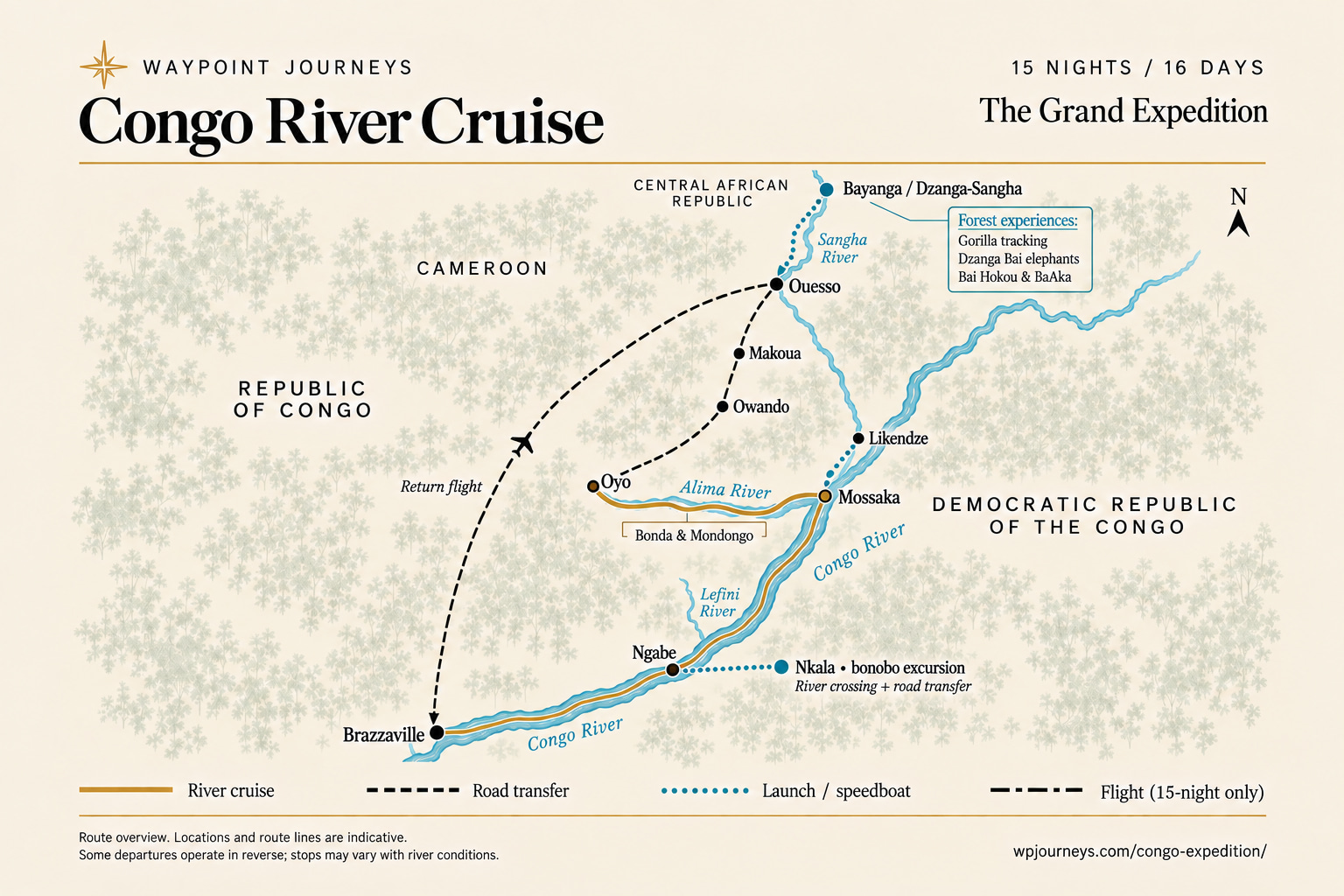
16 days, 15 nights, three countries. Seven nights on board, one in a tented camp at the bonobo site, two in hotels in Ouesso and five at a lodge on the Sangha in the Central African Republic. Some departures run the whole route in reverse, flying to Ouesso first and ending on the river in Brazzaville. On sailings with more than 24 guests, four guests track gorillas in Nouabale-Ndoki for two nights before rejoining the group.

Our guide meets you at Maya-Maya airport. Boarding on Princesse Ngalessa opens at 5 pm; morning arrivals on Ethiopian Airlines can wait in comfort in the lobby of the Radisson Blu on the riverfront. First dinner on board with Kinshasa lit up across the water. Night on board.

The ship turns upstream after breakfast through green hills. A morning to learn the decks, the program and the guides; an afternoon excursion by launch onto the green water of the Maipili River. Night on board.

Ngabe, old capital of the Teke kingdom: up through the village to the queen who guards Nkwembali and alone can hand power to the new Makoko, then the Kebe-Kebe, an initiation society whose dancers whirl in raffia and feathers with painted heads on poles. Night on board.

Bonobos live only in the DRC and share 98.7 percent of our genes. Around the village of Nkala three groups have been semi-habituated by the local community, the only place in the world where this is possible. We leave the ship in the morning, cross the river on the passes we have arranged and drive two hours through hill country to the camp, where the community explains the project. Night in a tented camp.

Into the forest before light to be under the nests when the bonobos wake, stretch and start moving; we follow them through the trees for as long as the trackers allow. Back to Princesse Ngalessa by late morning and on up the river. Night on board.

Mossaka in the morning: colonial remains, the market and the salted-fish alleys, palm wine and a potter. Lunch on board while we sail to Likendze on the Sangha, where the villagers demonstrate cast nets, traps and hand lines. Late afternoon birding for ospreys, palm-nut vultures, fish eagles, hamerkops, hornbills, kingfishers and, with luck, the turaco. Night on board.

Launches at first light for the hippos north of the village, then into the Alima, narrow and winding between walls of swamp forest. At Bonda the Moye people take us into the flooded forest by canoe or on foot, dance on the bank at dusk, and after dark the ship runs a slow 900-metre loop with the engines low to listen to the forest and look for crocodile eyes. Night on board.

Bend after bend of the Alima and its raffia villages to Mondongo, where a Moye healer explains the swamp-forest pharmacopoeia and how the remedies are prepared. In the afternoon a guided walk under the canopy: the emblematic trees, the insects, and how the pieces of this forest fit together. Night on board.

After lunch we leave the ship at Oyo and drive north for six hours through bush and then tall forest along the eastern edge of Odzala-Kokoua National Park to Ouesso, the frontier town on the Sangha. Night in a local hotel.

Seven and a half hours by launch up the upper Sangha into the Central African Republic, with unbroken forest on both banks, villages and river camps, birds by the hundred and, with luck, monkeys in the trees. We reach the lodge above the river in the afternoon in time for a sundowner over the Sangha. Night at a lodge on the river.

A 45-minute drive to the gorilla base camp, then into the forest with the BaAka trackers, reading the signs of the group until we are standing ten metres from them and they are looking back. The young squabble, the females feed, the silverback watches; the largest stand 1.7 metres. After an hour we withdraw so as not to wear out the welcome. Night at the lodge.

Early to the most famous clearing in the Congo Basin. From the platform high in the trees the forest elephants walk in to dig for minerals, up to 150 of them in a day, with forest buffalo, bongo, sitatunga and duikers among them. We stay as long as the light and the animals hold, and talk to the researchers who count them, before returning to the lodge. Night at the lodge.

A morning walk through the seven clearings of Bai Hokou, where elephants, gorillas, duikers, giant forest hogs and much of the park's birdlife pass through. The BaAka trackers find the group of agile mangabeys followed by the scientists here: silver-grey monkeys in troops that can top a hundred, chasing, leaping and squabbling through the canopy, talking to each other in chirps and grunts the whole time. Night at the lodge.

A morning in the forest with the BaAka, the oldest people of these woods: depending on the season a net hunt, honey gathering, basket fishing or the plants they use as medicine, all of it done with a great deal of laughter. Lunch at the lodge, then the water drumming: palms struck on the river surface until it sounds like a drum from another age. A stroll through Bayanga to end the day. Night at the lodge.

Seven hours back down the Sangha by launch, one last long look at an unbroken forest from water level before you see it from the air tomorrow. Night in a local hotel in Ouesso.

The morning flight from Ouesso to Brazzaville crosses one of the largest unbroken forests on the planet; take the window seat. After lunch, La Sape, the Society of Ambiance-Makers and Elegant People, then the Congo Basin Museum, the Poto-Poto painting school and the basilica of Sainte-Anne. Evening departure on Air France; guests on Ethiopian Airlines leave the next morning and need one extra hotel night, which we can add.
Princesse Ngalessa
She left a Belgian shipyard in Kinshasa in 2017 in the shape of the passenger boats that have carried people between the river capitals of Central Africa for a century, and came out of a full refit in 2024 as a river expedition vessel: 52 metres long, 11 wide, a steel hull drawing only 1.4 metres so she can push up the shallow tributaries, two new-generation Caterpillar engines that keep her quiet, and her own 10,000-litre water plant so no plastic bottles come aboard.
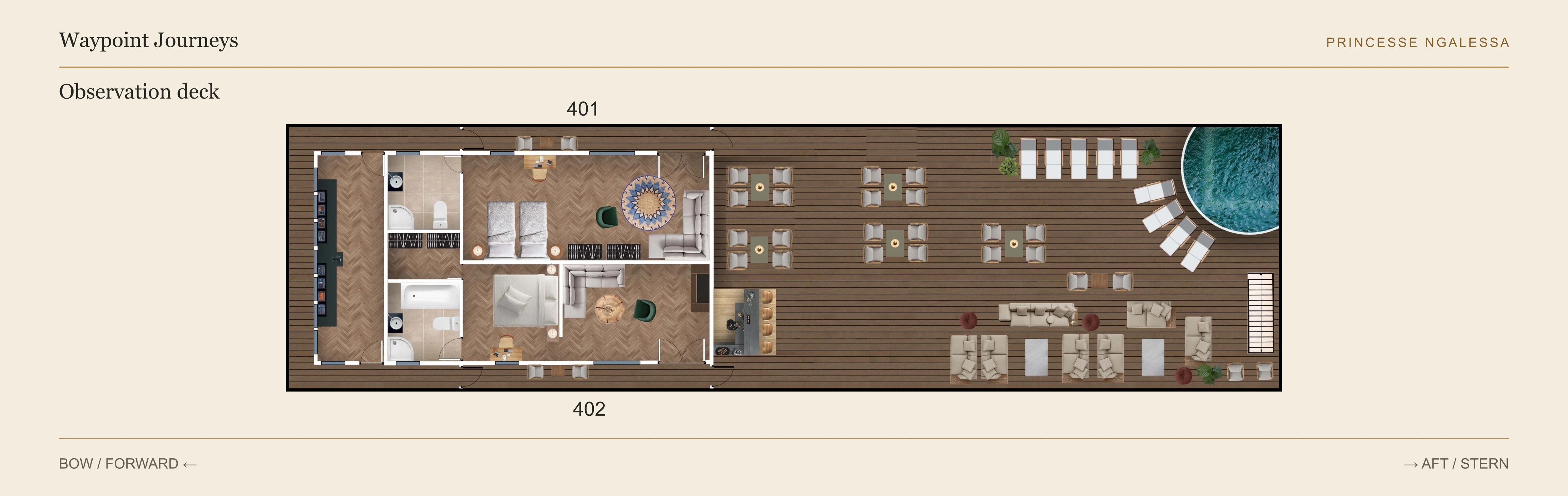
Fourteen cabins on three decks, from the 18 square metre Deluxe Suites on the second deck to the two 35 square metre Owner's Suites on the observation deck with their own nine-metre balconies. Every cabin is air-conditioned with a private bathroom, windows on the river, mosquito nets and 220-volt European sockets. Six hundred square metres of shared space: the dining room, an open lounge under raffia lanterns, a jacuzzi and the observation deck where the lectures happen and the barges go by.
A crew of 23, including a cruise director and three naturalist guides. Meals are Congolese and European on menus developed with a Michelin-starred French chef, cooked on board from local produce, with wine and beer at lunch and dinner. Three 12-seat aluminium launches with low-emission four-stroke engines and two-person kayaks take everyone ashore every day; radio, satellite phone, smoke detectors in every cabin, life jackets and a first-aid pharmacy stay on board.


Moored on the Sangha; the open lounge; a Master Suite; the sundeck at the end of the day
Six cabin categories, one price per person for each length of voyage
| Cabin | Deck, size and beds | 8 nights | 15 nights |
|---|---|---|---|
| Owner's Suite | Observation deck, private 9 m² balcony, 35 m². One cabin with twin beds convertible to a king, one with a queen (401, 402) | $7,550 | $16,125 |
| Forward Superior Suite | Third deck forward, shared balcony, 30 m². Twin beds convertible to a king (301, 302) | $7,050 | $15,100 |
| Superior Suite | Third deck, shared balcony, 30 m². Twin beds convertible to a king (303, 304) | $6,600 | $14,525 |
| Forward Master Suite | Second deck forward, shared balcony, 23 m². Queen bed, armchair and writing desk (201, 203) | $6,425 | $13,425 |
| Master Suite | Second deck, shared balcony, 27 m². One cabin with twin beds convertible to a queen, one with a queen; sofa and desk (202, 204) | $6,425 | $13,425 |
| Deluxe Suite | Second deck, shared balcony, 18 m². Three cabins with fixed twin beds, three with a queen (205 to 210) | $5,975 | $12,125 |
Prices in US dollars per person, two sharing, for the fixed 2027 season departures listed below. Single occupancy adds 30 percent. A 30 percent deposit confirms your cabin and the balance is due 90 days before sailing.
Extensions

Three hours north of the capital by tarmac and then a hill track through savanna. Lunch at the reserve, then an aluminium boat up the Lefini and Louna rivers to the forested islands where rescued western lowland gorillas are prepared for release, with the keepers who know each one by name. Hippos on the way back. Home by early evening. Already part of the 8-night cruise; the natural add-on for the 15-night expedition.

By 4x4 from Oyo or Brazzaville to Mpouya, a big pirogue across the Congo to Tshumbiri on the DRC side, and two more hours to the camp. Day two starts walking at 5 am to be under the nests when the semi-habituated bonobos wake, with a second tracking after lunch. Back across the river on day three. Nights in a tented camp or simple rooms; bonobos move fast, so a reasonable level of fitness is needed.

One of Africa's oldest national parks, 13,500 square kilometres with some of the densest gorilla populations anywhere. Camp Imbalanga sits 500 metres from a platform over a clearing the gorillas favour for its sedges; a morning on the habituation trails with the research team, an afternoon at Moba Pool where the forest elephants come to cool off, and a walk through the rainforest to the Mambili River and Lokoue camp by boat. Four hours by road from Oyo, or two from Ouesso.

For 8-night guests who want the park without the full expedition: the flight over the canopy to Ouesso, the Sangha by launch to a lodge on the river at Bayanga, Bai Hokou and its mangabeys, the elephants of Dzanga Bai, gorilla tracking with the BaAka and an afternoon of their forest crafts. Out by launch to Ouesso or by air to Bangui. Good walking condition needed; some days are long and the ground is roots and mud.

The wildest park in the country, at its northern tip on the Sangha. Fly to Ouesso, cross the river and drive three hours of forest track to Bomassa, then a night on camp beds on the platform above Wali Bai with the elephants trumpeting below. Two hours on foot to Mondika, the researchers' camp in the Djeke triangle, and two dawn trackings with the BaAka to a habituated gorilla group. Bucket showers, a clear river to swim in, and three hours of flat forest walking a day. Rain can delay a tracking; any not carried out is refunded.

Habituating a wild gorilla group to human observers takes years of daily, patient contact. This extension puts you inside that process: four nights in the forest with the habituation team, following a group that is still learning to tolerate people, recording what the trackers record, and seeing how a park builds the wildlife tourism that pays for its rangers. For guests with time, patience and good legs.

Fly to Pointe-Noire, the port city on the Atlantic. An early drive to the Kouilou River and an hour by motorised pirogue through forest to the Tchimpounga sanctuary, the largest chimpanzee rehabilitation centre in Africa, run by the Jane Goodall Institute since 1992 for orphans of the bushmeat and pet trades. Around ten chimpanzees come to the island for feeding time. Then the beach: a day or two at Bamboo Beach on Indian Point before flying home.

Between July and September the humpbacks come up from Antarctica to calve in the warm water of the Gulf of Guinea, a few kilometres off the city. Three to four hours in a motorboat with at most six passengers: breaching, blows three metres high, mothers with calves, and if the engine is off at the right moment, the singing. Morning or afternoon departures; pairs well with the Tchimpounga day.

Gorillas, chimpanzees and bonobos in one 12-day circuit across the Congo, the DRC and the Central African Republic, for anyone who wants all three of our closest relatives in the wild. We also build trips to order in the same country: Bouvier's red colobus and the golden-bellied mangabey, the Congo peacock, pangolins, goliath tigerfish on the Congo, and scientific expeditions of several weeks into the least reached corners of the basin.
Extensions are priced per departure and party size. Tell us which cruise date you have in mind and what you would like to add, and we will quote it with the cabin.
What's Included
FREQUENTLY ASKED QUESTIONS
Common Questions About This Expedition
Expedition Investment
per person, two sharing · 8 nights in a Deluxe Suite · 15 nights from $12,125
Fully inclusive of full board aboard Princesse Ngalessa with wine and beer at lunch and dinner, every launch excursion and park fee, the hotel and lodge nights in the program, the cruise director and naturalist guides throughout, transfers on program days, and on the 15-night expedition the Ouesso to Brazzaville flight and the passes for the DRC and the Central African Republic. Six cabin categories; the full rate card is above
Excludes international flights, visa fees and the $85 invitation letter, mandatory evacuation insurance, drinks at the bar, laundry and gratuities. Single occupancy plus 30 percent. Fixed 2027 departures only; 30 percent deposit to confirm
Reserve Your CabinThe Republic of Congo, Congo-Brazzaville, is not the Democratic Republic of Congo across the river, and its river country is quiet, sparsely populated and calm; the border zones some foreign ministries colour red because of the Central African Republic are exactly the ones this route does not enter, and the Sangha tri-national is reached on official passes with the park authorities. The practical risks are tropical: yellow fever vaccination is mandatory, malaria prophylaxis and DEET repellent are strongly advised, and the forest is humid, so quick-dry long sleeves and closed shoes are the uniform. The ship carries radio, a satellite phone, smoke detectors and life jackets, a first-aid pharmacy and guides trained in first aid, with a referral doctor in Brazzaville and an evacuation plan by boat, road or helicopter, which is why evacuation insurance is a condition of travel. River levels, weather and park rules can reorder a day; the captain and cruise director decide, and every alternative keeps you on the water. Do not photograph bridges, ports, airports or officials, and keep cash to a minimum: cards work in Brazzaville and the bar takes dollars.