Waypoint Journeys Presents
Nepal
The Valley and the Birthplace
8 Days
Kathmandu · Patan · Bhaktapur · Nagarkot · Lumbini — Seven UNESCO Monument Zones and the Garden Where the Buddha Was Born
We reply within 24 hours
Three Cities, Seven Monument Zones, One Garden
The Kathmandu Valley is one of the densest concentrations of living architecture anywhere on Earth. UNESCO does not list it as one site but as seven separate monument zones inside twenty kilometres: three royal squares at Kathmandu, Patan and Bhaktapur, two Buddhist stupas at Swayambhunath and Boudhanath, and two Hindu complexes at Pashupatinath and Changu Narayan. For six centuries three rival Newar kingdoms competed here by building, and what they built is still in daily use.
That last part is what separates the valley from a museum. Pashupatinath is a working cremation ghat, not an exhibit. The kora at Boudhanath fills every evening with Tibetan pilgrims walking the stupa clockwise past butter lamps. The living goddess still looks out of a window in Kathmandu Durbar Square. The 2015 earthquake took a terrible toll on all of it, and the restoration since, much of it done by hand with the original timber and brick, is itself worth the trip.
Then the country drops away. A short flight south lands you in the Terai, the flat, hot plain on the Indian border, where in around 563 BC a queen stopped in a garden at Lumbini and gave birth to the child who became the Buddha. Ashoka came here in 249 BC and left a pillar saying so; the pillar is still standing, which makes this one of the very few sites in early Buddhism whose location is not in doubt.
"Seven UNESCO monument zones inside twenty kilometres, and not one of them is a museum. The valley is still using all of it."

Every UNESCO Zone in the Valley, a Himalayan Dawn, and the One Buddhist Site Nobody Disputes
One of the largest stupas in the world and the centre of Tibetan life in exile in Nepal. Come at dusk, when the kora fills with pilgrims walking clockwise, the butter lamps go on in the alcoves, monks from the surrounding gompas file past and the whole white dome turns gold. Rebuilt after the 2015 earthquake by public subscription, it is the single most atmospheric hour in the valley and it happens every day.
Kathmandu, Patan and Bhaktapur were three separate Newar kingdoms who spent the seventeenth century trying to out-build one another, and their durbar squares are the result: pagoda temples, carved struts, sunken royal baths and the palace of a living goddess, all within a short drive of each other. Bhaktapur is the best preserved of the three and the only one where you can still hear the potters at work behind the square.
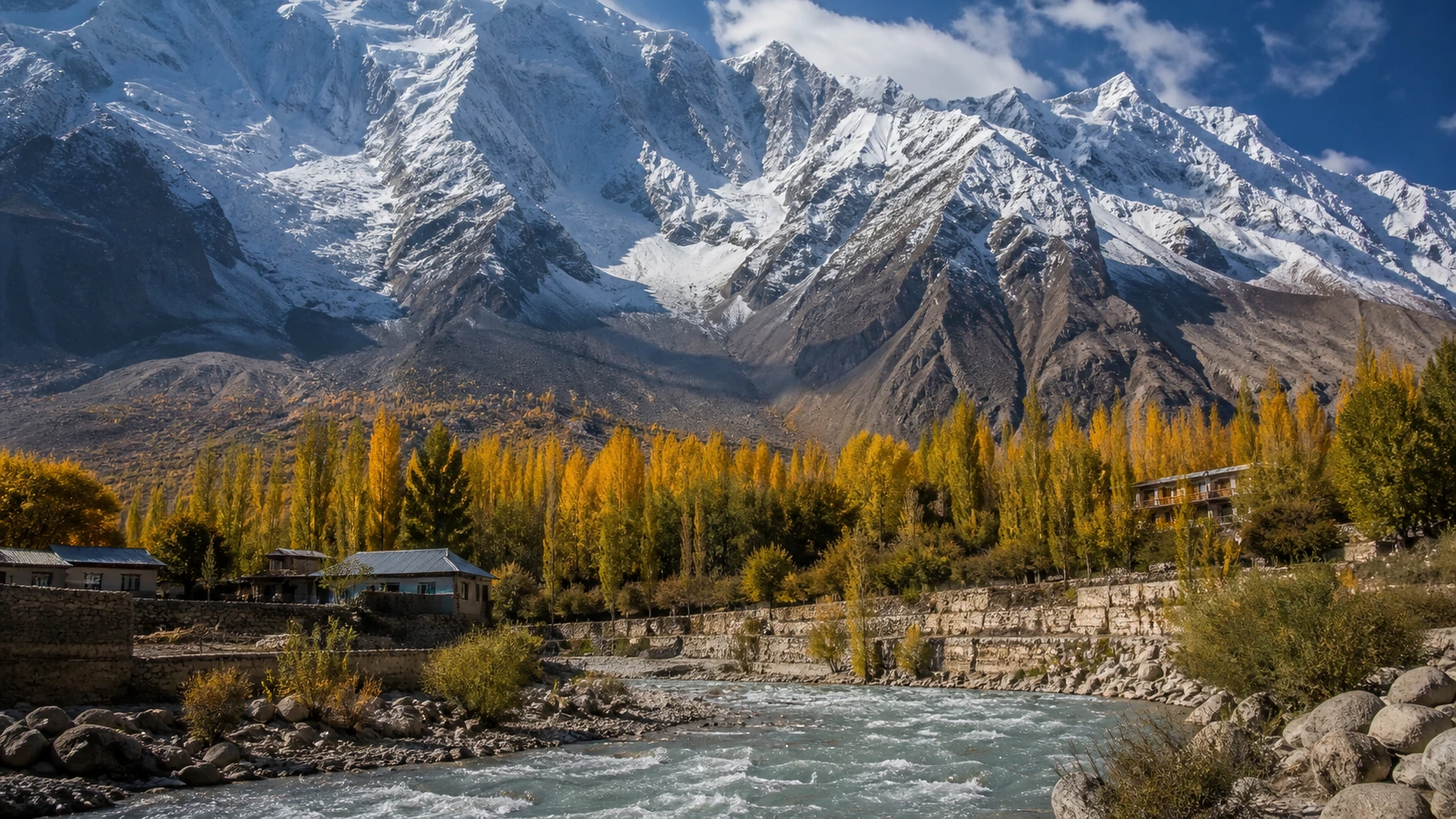
Half an hour beyond Bhaktapur the valley rim rises to 2,100 metres, and on a clear winter morning the view north from Nagarkot runs the length of the Himalaya: Langtang, Ganesh, Manaslu, the Annapurnas on the far left, and in the right conditions the tip of Everest itself. You stay on the ridge rather than driving up for it, which is the difference between catching the light and missing it.
Nepal's holiest Hindu complex sits on both banks of the Bagmati, and it does not soften anything: cremations run on the ghats through the day, sadhus hold court on the terraces, and at dusk the priests perform the fire aarti to drums on the western bank while families watch from the steps opposite. It is confronting and completely ordinary at once, and a good guide makes the difference between watching and understanding.
Beyond the three cities, the valley rim holds Newar towns that never became famous. Panauti is a small medieval trading town at a river confluence with a thirteenth-century temple and almost no visitors, and above it Namobuddha is one of the three holiest Buddhist sites in Nepal, a hilltop monastery marking where a prince is said to have given his body to a starving tigress.
Very few places in early Buddhism can be located with certainty. Lumbini can: the Emperor Ashoka came here in 249 BC, recorded that this was where the Buddha was born, and left a stone pillar saying so that is still standing. Inside the Maya Devi Temple, a marker stone and the excavated brick foundations mark the spot, and the surrounding monastic zone holds temples built by nearly every Buddhist nation on Earth.
The Expedition
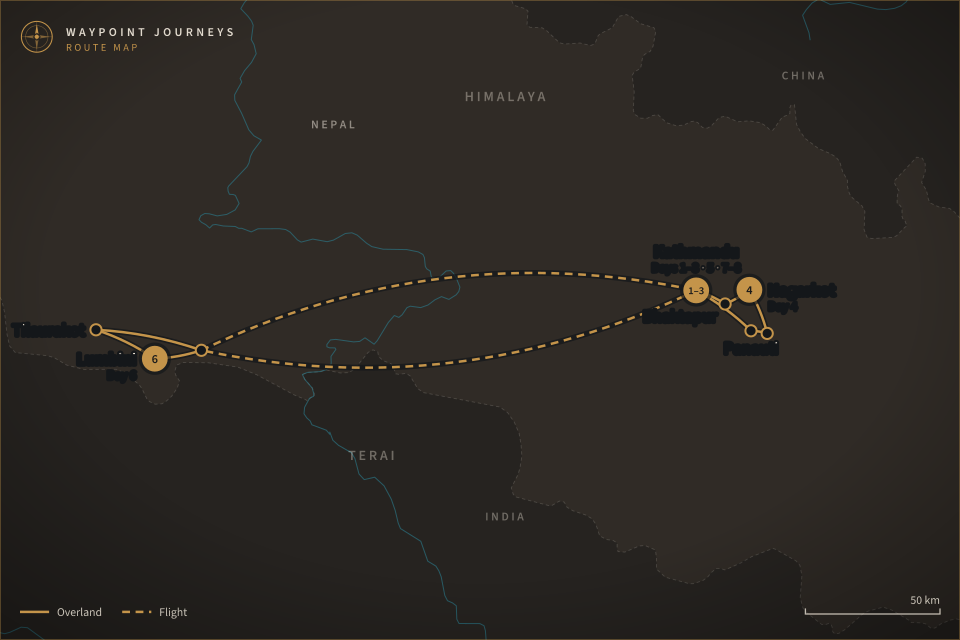
Eight days: five in the valley across all seven monument zones and the rim towns, then a short flight south to the Terai for the birthplace and Kapilavastu.
Arrive at Tribhuvan International and transfer into the city, most likely through the traffic that is every visitor's first impression of Kathmandu. The afternoon does not fight it: you go straight to Boudhanath, ten minutes from the airport and a world away from it, to walk the kora at the hour it is meant to be walked. Pilgrims circling clockwise, prayer wheels turning, butter lamps going on around the base of one of the largest stupas on Earth. Dinner on a rooftop overlooking the dome, and an early night against the flight.
The old city on foot. Kathmandu Durbar Square first, before the crowds: the Hanuman Dhoka palace, the Taleju temple, the earthquake restoration still visibly in progress, and the Kumari Ghar, where Nepal's living goddess appears at her window. Then up the three hundred and sixty-five steps to Swayambhunath on its hill, the oldest stupa in the valley, with the whole city laid out below and the monkeys running the handrails. The afternoon crosses to Pashupatinath, the holiest Hindu site in the country, ending with the fire aarti on the Bagmati at dusk.
Across the river to Patan, the valley's third kingdom and its finest craftsmen. Its durbar square is the most concentrated of the three, and the Patan Museum inside the old palace is genuinely one of the best small museums in Asia; an hour there re-reads everything you saw yesterday. Then the Golden Temple, the Kumbeshwar, and the back lanes where the lost-wax casters and repoussé workers still supply monasteries across the Himalaya. The afternoon runs south to the Newar villages of Khokana and Bungamati, where the mustard-oil presses and woodcarvers work as they always have.
Bhaktapur is the one that stops people talking. Vehicle-free at its core, it is a whole medieval Newar city rather than a square: the Nyatapola towering five storeys over Taumadhi, the fifty-five-window palace, the Golden Gate, and Pottery Square where the wheels are turning and the pots are drying in the sun exactly as they are supposed to be. In the afternoon you climb to Changu Narayan, the oldest temple in the valley and the seventh monument zone, then continue up to the rim and check in at Nagarkot for the night, at 2,100 metres.
Up before light for the view the ridge exists for: the Himalaya coming up out of the dark from Annapurna in the west across Manaslu, Ganesh and Langtang, and, on the clearest mornings, Everest itself on the far eastern horizon. After breakfast the road drops south through terraced hills to Namobuddha, a hilltop monastery marking one of the three great Buddhist sites in Nepal, where you can sit in on the afternoon chanting. Then Panauti, a small medieval town at a river confluence with a thirteenth-century temple complex and almost nobody in it. Back into Kathmandu by evening.
The morning flight to Bhairahawa takes thirty-five minutes and, on the right side of the aircraft, runs the whole Himalayan wall from Dhaulagiri to Langtang; we book the seats accordingly. On the ground the world changes completely: the Terai is flat, hot and agricultural, the Indian border half an hour away. Lumbini in the afternoon, when the light softens: the Maya Devi Temple over the marker stone and the excavated foundations, the Ashokan pillar of 249 BC that fixes the site beyond dispute, the sacred pond and the old bodhi tree hung with flags.
The monastic zone in the morning by bicycle rickshaw along the central canal, where nearly every Buddhist nation on Earth has built its own temple: the Burmese golden stupa, the Thai marble wat, the vast Chinese and Korean complexes, the German Lotus Stupa, ending at the World Peace Pagoda. In the afternoon, out to Tilaurakot, the excavated ruin most archaeologists identify as Kapilavastu, the palace city where the future Buddha grew up and from whose eastern gate he is said to have left. Quiet, unrestored, under mango trees, and usually empty. Evening flight back to Kathmandu and a farewell dinner in Thamel.
The last morning is shaped around your flight. If there is time we use it well: the Garden of Dreams behind Thamel for a quiet hour, the thangka studios where painters will show you the grid a mandala is built on, or the Asan and Indra Chowk bazaars for the spice and bead markets that have run on the same corner for centuries. Then the transfer to Tribhuvan. We are glad to add Pokhara and the Annapurna foothills, a Chitwan extension, or our Tibet and Bhutan expeditions onto either end.
What's Included
FREQUENTLY ASKED QUESTIONS
Common Questions About This Expedition
Expedition Investment
per person, twin share
Fully inclusive of seven nights' accommodation across Kathmandu, Nagarkot and Lumbini; the return Kathmandu–Bhairahawa flight with Himalaya-side seats; a licensed English-speaking cultural guide for the whole expedition; a private vehicle and driver throughout with all transfers; entrance fees to all seven UNESCO monument zones and every listed site; and daily breakfast with a welcome and a farewell dinner
Excludes international flights to Kathmandu, the Nepal visa on arrival ($30 USD for 15 days), travel insurance, free-time meals, alcohol and personal expenses. Single supplement $550 USD. Departures October to April
Reserve Your SpotNepal is a straightforward and welcoming country to travel in, and the Kathmandu Valley is about as low-risk as South Asia gets: violent crime against visitors is rare, and the practical concerns are ordinary ones. Traffic is the first: Kathmandu's roads are chaotic and pavements intermittent, which is why you are in a private vehicle with an experienced driver and why we walk the old cities rather than drive through them. Air quality in the valley is poor in the dry winter months and anyone with a respiratory condition should tell us in advance. Stomach upsets are the usual complaint and are largely preventable; we brief on water and where to eat, and our guides pick the restaurants. The itinerary stays below 2,100 metres, so altitude does not arise. Nepal sits on an active fault and the 2015 earthquake is recent memory; hotels on this trip are post-2015 construction or certified retrofits, and your guide carries the current protocol.