Waypoint Journeys Presents
Seychelles
Granite Islands, Ancient Forest
8 Days
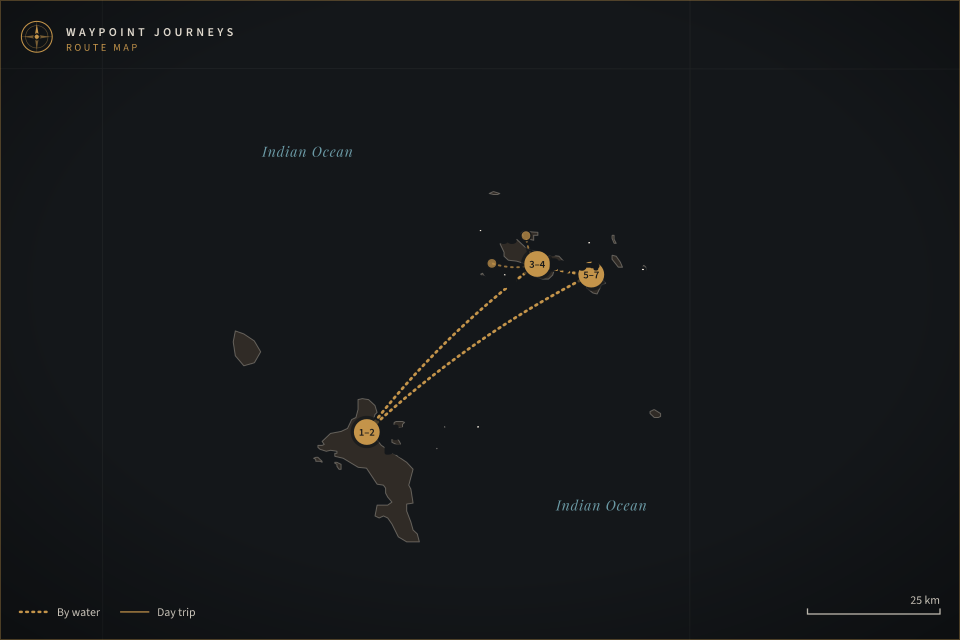
Mahé · Praslin · Curieuse · La Digue — The Only Granite Islands in the Middle of an Ocean
We reply within 24 hours
The Islands That Were Never Volcanic
Almost every island in the middle of an ocean is the top of a volcano or the rim of a coral atoll. The inner Seychelles are neither. They are granite, the exposed peaks of a continental fragment that broke away when Gondwana split and has been drifting alone in the Indian Ocean for something like seventy-five million years. That single geological fact explains everything else about them: the vast weathered boulders on the beaches, the forest on the peaks, and a flora and fauna that had a very long time to become entirely their own.
The most famous product of that isolation is a palm. The coco de mer produces the largest seed in the plant kingdom, up to twenty-five kilos, and grows wild in exactly one forest on Earth: the Vallée de Mai on Praslin, a valley General Gordon of Khartoum decided was the original Garden of Eden. It is UNESCO-listed, it takes about two hours to walk, and the endemic black parrots calling overhead are found nowhere else either.
The beaches deserve their reputation and then some, but the trip that only does beaches misses the country. Mahé has a national park across its spine with trails up into mist forest; Curieuse has free-ranging Aldabra giant tortoises and a mangrove boardwalk; Cousin is a seabird island restored from a coconut plantation; and La Digue is best seen on a bicycle, because that is broadly how the island moves.
"Seventy-five million years alone in an ocean produces things you find nowhere else. The largest seed on Earth grows wild in one valley, and you can walk through it in an afternoon."

A UNESCO Forest, Free-Ranging Giant Tortoises, and the Most Photographed Granite on Earth
A valley on Praslin holding the last wild forest of coco de mer, the palm that produces the largest seed in the plant kingdom and grows naturally in this one place. It is UNESCO-listed, blessedly cool under the canopy, and loud with the endemic Seychelles black parrot, of which perhaps nine hundred exist. Two unhurried hours on gravel paths, ideally first thing in the morning before the tour boats reach the island.
A short boat from Praslin, Curieuse is a former leper colony turned marine park where several hundred Aldabra giant tortoises range free, not in enclosures. You land at Baie Laraie, walk the mangrove boardwalk, cross the island to Anse José past the old doctor's house, and eat a barbecue lunch on the sand with tortoises wandering through it, which takes some getting used to.
The most photographed beach in the world, and the rare case where the picture undersells it. Enormous pink-grey granite boulders, weathered into shapes that look deliberate, stand in shallow water so calm and so clear it barely registers as water at all. Timing is everything: it needs a low tide and an early start, and we plan the day around the tide table rather than the schedule.
Most visitors never leave Mahé's coast, which leaves twenty percent of the island empty. The national park across its spine rises to nearly nine hundred metres, and the Copolia trail climbs through boulder forest to a glacis dome with pitcher plants growing on it and the whole east coast laid out below. Two hours up and down, best in the morning, and you will likely have it to yourselves.
Cousin was a coconut plantation until 1968, when it was bought outright to save the last twenty-six Seychelles warblers on Earth. Replanted and rewilded, it now holds hundreds of thousands of nesting seabirds, hawksbill turtles on its beaches and warblers everywhere. Landing is by wardened boat only, on a strict schedule, and it is one of the great conservation stories in the Indian Ocean.
There are almost no cars on La Digue and there is no need for one. You take a bicycle from the jetty and the island opens up: L'Union Estate with its copra mill and vanilla plantation, the granite beaches down the west coast, the walk over the hill to Grand Anse and along the shore to Petite Anse and Anse Cocos, and the Veuve Reserve, where the last Seychelles paradise flycatchers live in the takamaka woods.
The Expedition
Eight days across three islands by fast catamaran: the mist forest of Mahé, the UNESCO valley and the tortoise island, and La Digue on two wheels.
Arrive at Seychelles International on Mahé, where the runway ends at the water and the mountains start immediately behind. After settling in, the afternoon takes in Victoria, the smallest capital in Africa and easily walked in an hour: the little silver clock tower modelled on the one at Vauxhall, the Sir Selwyn Selwyn-Clarke market with its tuna, fruit bats and vanilla stalls, the Hindu temple, and the botanical gardens above town with their coco de mer stand and the first giant tortoises you will meet. Dinner on the coast.
Into the Morne Seychellois National Park early for the Copolia trail, a steady climb of about an hour through boulder forest to a bare granite dome at 500 metres, with carnivorous pitcher plants growing in the cracks and the whole east coast and the reef laid out beneath you. Back down for a late breakfast, then over the mountain road to the west side: Port Launay and Baie Ternay in the marine park for snorkelling, Anse Major on foot for those who want it, and Beau Vallon at sunset.
The Cat Cocos catamaran crosses to Praslin in an hour, and the second island announces itself immediately: lower, greener, quieter. You go straight to the Vallée de Mai while the morning is still cool, walking the UNESCO forest that is the last wild stand of coco de mer on Earth, under a canopy General Gordon took for the Garden of Eden, with black parrots calling overhead. The afternoon is Anse Lazio, routinely called the finest beach in the Indian Ocean, in the light it deserves rather than at midday.
A boat day. First the short crossing to Curieuse, a national marine park where several hundred Aldabra giant tortoises range free across the island: the mangrove boardwalk, the old leper-colony doctor's house, the walk over to Anse José and a barbecue lunch on the beach with tortoises for company. On the way back, snorkelling at St Pierre, a cluster of granite boulders standing out of clear water and ringed with reef fish, and often turtles. Evening back on Praslin.
An early wardened landing on Cousin Island Special Reserve, which is bought-back land: a coconut plantation until 1968, replanted to save the last twenty-six Seychelles warblers alive, and now a seabird colony of several hundred thousand birds with hawksbill turtles nesting on its beaches. Visits are strictly timed and the wardens run them. Back to Praslin, then the fifteen-minute ferry across to La Digue, where you collect bicycles at the jetty and there is essentially nothing else to collect.
The day is built around the tide table. L'Union Estate first, with its copra mill, vanilla plantation and colonial plantation house, and then out onto Anse Source d'Argent at low water, when the sand bars open up between granite boulders the size of houses and the shallow water goes completely still. It is the most photographed beach on Earth and it earns it. The afternoon is free for the island: the Veuve Reserve for the paradise flycatchers, or simply the bicycle and the coast road.
The other side of the island, and the one most day-trippers never reach. A cycle to the end of the road, then the walk over the hill to Grand Anse, big and wild with real surf, and on along the shore path to Petite Anse and finally Anse Cocos, where a natural rock pool at the north end is safe to swim when the sea outside is not. It is about two hours of walking in total with a swim at the end, and you may well have the last beach to yourselves. Farewell dinner on La Digue.
The ferries run back to Mahé through Praslin in the morning, and we time the crossing to your flight with plenty of margin; long-haul departures from Seychelles are mostly evening, which usually leaves a free afternoon. If it does, we use it: Anse Intendance and Petite Anse on Mahé's wild south coast, or the takamaka distillery, before the transfer to the airport. We are glad to pair this expedition with our Madagascar, Comoros or Mauritius trips, all a short flight away.
What's Included
FREQUENTLY ASKED QUESTIONS
Common Questions About This Expedition
Expedition Investment
per person, twin share
Fully inclusive of seven nights' boutique accommodation across three islands; all inter-island catamaran and ferry crossings in business class; every park and reserve fee including the Vallée de Mai, Curieuse and the wardened Cousin Island landing; a Seychellois guide throughout; private vehicles on Mahé and Praslin and bicycles on La Digue; the full Curieuse boat day with a beach barbecue and the St Pierre snorkel; all transfers; and daily breakfast plus a farewell dinner
Excludes international flights to Mahé, travel insurance, free-time meals, alcohol, diving and personal expenses. No visa is required for any nationality. Single supplement $1,450 USD
Reserve Your SpotThe Seychelles is a stable, well-run country with a high standard of healthcare on Mahé and very little crime against visitors, though opportunistic theft from beaches and parked cars does happen and we brief on it. The genuine hazards here are marine and they are worth taking seriously. Some of the most beautiful beaches, Grand Anse on La Digue among them, have strong currents and no lifeguards, so we swim where our guides say and not where the photograph looks best; the sheltered rock pool at Anse Cocos exists precisely for this reason. The sun is equatorial and reef-safe sunscreen is both required and supplied. Boat crossings are in licensed, well-maintained vessels and can be lively in the trade-wind months. Mosquito-borne dengue occurs, so repellent matters. There is no malaria and no vaccination requirement unless you are arriving from a yellow fever country.