Waypoint Journeys Presents
Palau
The Rock Island Nation
5 Days
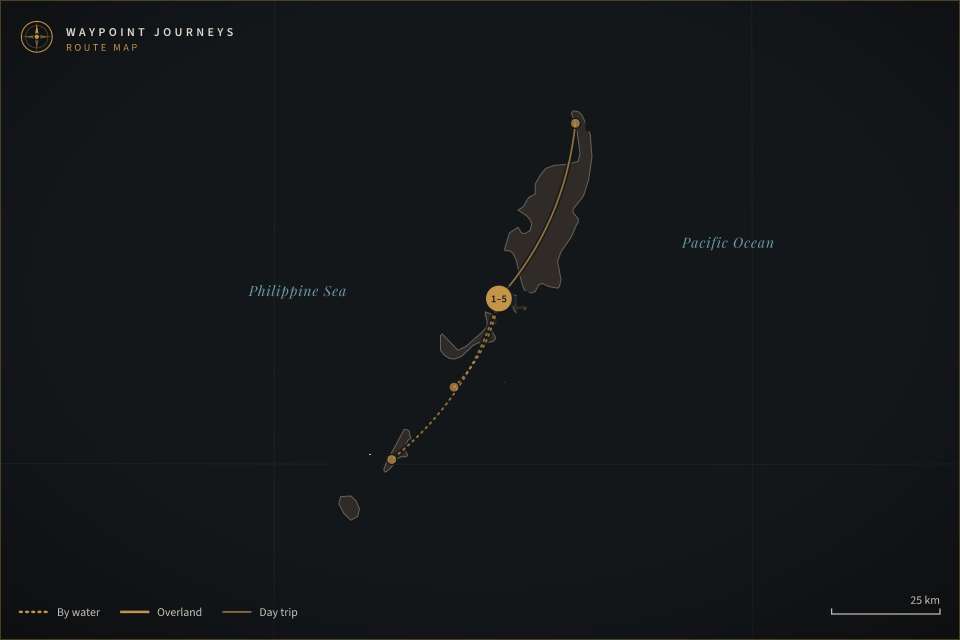
Koror · The Southern Lagoon · Peleliu · Babeldaob — Four Hundred Limestone Islands and the Reef That Made Them Famous
We reply within 24 hours
Four Hundred Islands, Fifty Marine Lakes, One Lagoon
Palau is a scatter of five hundred islands at the western end of Micronesia, and the part everyone comes for is a single stretch of water: the Rock Islands Southern Lagoon, UNESCO-listed since 2012 for both its nature and its culture. Four hundred-odd limestone mushrooms, undercut at the waterline by a million years of tide and shellfish, sit in water so clear the boat appears to be hovering. Between them are fifty-odd landlocked marine lakes, several of which evolved their own species in isolation.
The country has made a policy of this. Palau declared eighty percent of its waters a no-take marine sanctuary, requires every visitor to sign the Palau Pledge stamped into their passport, and charges a $100 environmental fee built into the airfare. The result is a reef that behaves the way reefs used to: grey reef sharks stacked in the current at Blue Corner, mantas queuing at the cleaning stations in German Channel, and bumphead parrotfish in schools rather than singly.
And then there is what happened here in 1944. Peleliu, an hour south, was supposed to take four days; it took seventy-three, and it cost more American casualties per acre than any other amphibious landing of the Pacific war. The island has never been cleared up in the way Iwo Jima or Guadalcanal were, so the tanks, the bunkers and the command post are still where they stopped, held in the jungle on the ridge the Marines called Bloody Nose.
"Eighty percent of the sea here is closed to fishing and the passport says so. Palau does not market its conservation. It legislates it."

A UNESCO Lagoon, a Lake Full of Stingless Jellyfish, and the Battlefield the Jungle Kept
Listed by UNESCO in 2012 on both natural and cultural criteria, which is rare. Four hundred forested limestone islets stand undercut on their own reflections across a lagoon of impossible colour, with arches, hidden beaches and the chalk-white shallows of the Milky Way, where the boats stop so you can coat yourself in the fine calcium mud the locals have used as a skin treatment for generations.
Palau closed eighty percent of its exclusive economic zone to fishing, and the reef shows it. At German Channel, a cut blasted through the barrier reef by German phosphate traders a century ago, manta rays queue at cleaning stations while grey reef sharks patrol the drop-off. Even from a mask and snorkel at the surface the density of fish here is unlike almost anywhere else in the Pacific.
Ongeim'l Tketau is a marine lake cut off from the sea thousands of years ago, where millions of golden jellyfish migrate across the water each day following the sun. Isolated from predators, they lost most of their sting, and you can swim among them. Access is by permit and licensed guide only, and the lake has closed before to let the population recover; we book the permit with the trip and check the status before you fly.
In September 1944 the 1st Marine Division landed on Peleliu expecting a short fight. Seventy-three days later the island had produced the highest casualty rate of any amphibious assault in American history. Because nothing was ever cleared, the Japanese command post, the coral bunkers, the tanks on Orange Beach and the caves of the Umurbrogol ridge are still in the jungle, walked with a Peleliuan guide whose family lived through it.
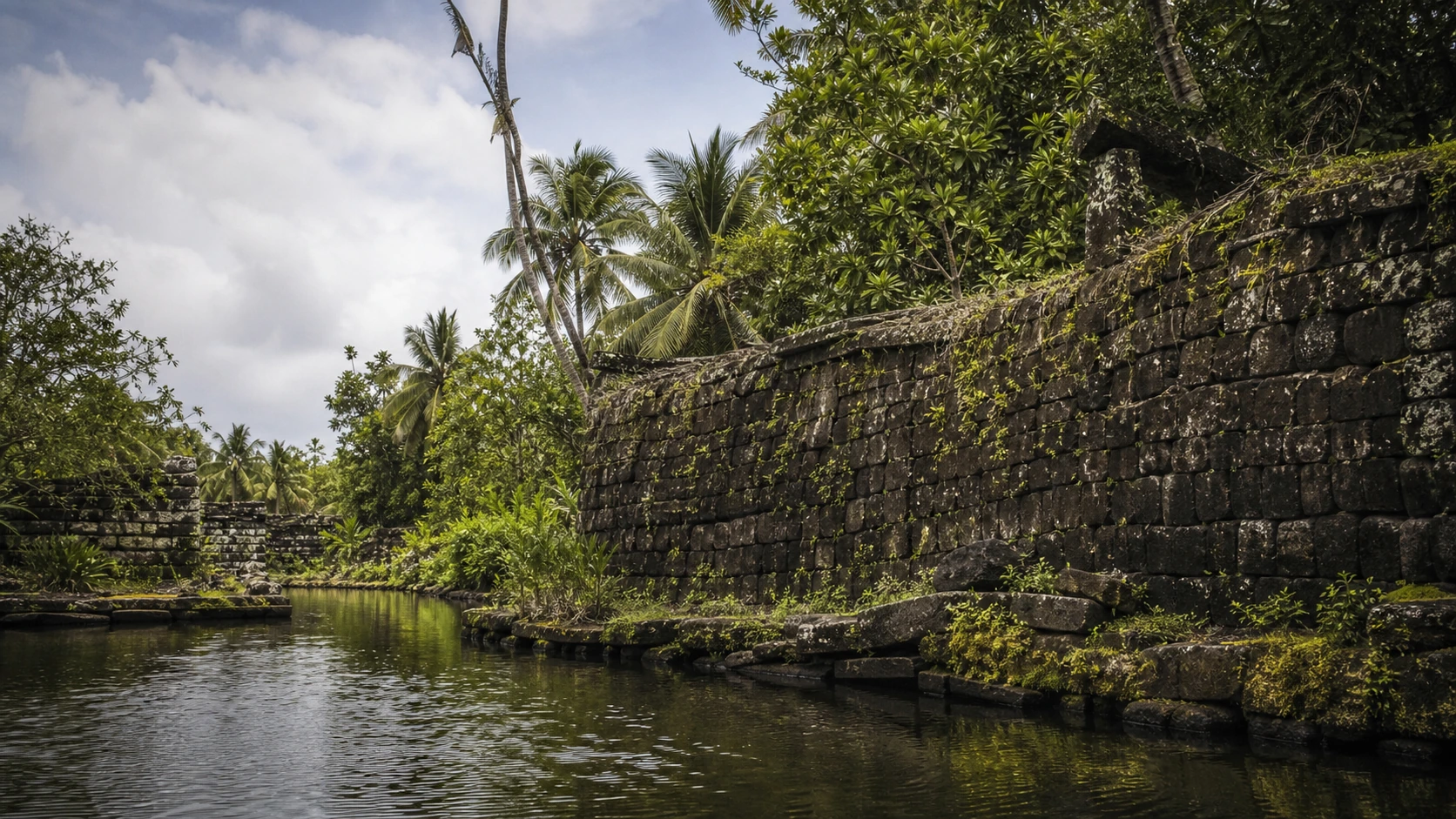
On the northern tip of Babeldaob, thirty-seven carved basalt monoliths stand in rows on a grass headland above the sea, dated to around 150 AD and unexplained: Palauan tradition says they were the foundation posts of a bai, an immense meeting house the gods never finished. It is the largest megalithic site in Micronesia, and most days you will have the hill to yourself.
Almost every visitor stays on the water, which leaves Babeldaob, the second-largest island in Micronesia, nearly empty. A day inland takes the jungle trail down to Ngardmau, the country's tallest waterfall, past the rusting remains of the Japanese-era mining railway, and on to the traditional bai at Airai, the oldest surviving meeting house in Palau, its gables painted with the clan stories they record.
The Expedition
Five days from a base in Koror: one day in the UNESCO lagoon, one on the Peleliu battlefield, one across the big island, and no repacking.
Flights into Palau arrive from Manila, Taipei, Seoul or Guam, most of them late in the evening or very early. Immigration stamps the Palau Pledge into your passport, a promise to the children of Palau to tread lightly that you are asked to sign on arrival, and our team meets you for the short transfer to Koror. The rest of the day is deliberately light: the Etpison Museum, which is the best single introduction to Palauan money, canoes, storyboards and the first-birth ceremony, and the Belau National Museum next to it, then sunset over the lagoon from the hill above town.
The full day everyone comes for, on a private boat with a Palauan guide. The lagoon opens south of Koror into the Rock Islands, and the route is set on the morning by wind and tide: the chalk-white shallows of the Milky Way for the calcium mud, the arch at Ngermeaus, snorkelling the drop-off at German Channel where mantas come in to be cleaned, a beach lunch on an islet with no name you will remember, and, permits allowing, the walk over the ridge to Jellyfish Lake to swim among millions of stingless golden jellyfish. Back into Koror in the late afternoon, sunburnt and quiet.
A morning boat runs an hour south through the lagoon to Peleliu, and the day is spent with a Peleliuan guide on an island that has never been tidied. Orange Beach, where the Marines landed on 15 September 1944 into the worst reception of the Pacific campaign; the Japanese command post, its concrete still shell-torn; the tanks and amtracs where they stopped; the Thousand Man Cave; and the climb up Bloody Nose Ridge on the Umurbrogol, where the fighting ground on for over two months and the view finally explains why. Snorkelling on the way back over a wartime wreck, and back into Koror by evening.
A day on the big island, over the bridge and up the Compact Road. First the traditional bai at Airai, the oldest meeting house still standing in Palau, its painted gables carrying the clan histories they were built to record. Then north to Ngardmau for the jungle walk down to the country's tallest waterfall, past the ruins of the Japanese-era mining line, and a swim in the plunge pool. The far north brings Badrulchau, where thirty-seven basalt monoliths stand in rows on a headland above the sea, carved around 150 AD and still unexplained. Farewell dinner back in Koror.
Palau's departures are mostly in the small hours, so the last day is shaped around your flight. If there is time, the morning goes to the Koror fish market and the storyboard carvers at the jail workshop, where the country's best-known carving tradition is still practised, before the transfer to Roman Tmetuchl airport. We are glad to build the trip together with Guam, the Philippines or our Central Pacific expedition, all of which connect through the same hubs.
What's Included
FREQUENTLY ASKED QUESTIONS
Common Questions About This Expedition
Expedition Investment
per person, twin share
Fully inclusive of the Rock Islands Southern Lagoon permit, the Jellyfish Lake permit and the Peleliu state fee; four nights' hotel accommodation in Koror; two full private boat days with captain, Palauan guide and snorkelling equipment; the Babeldaob day by private vehicle; all museum and site entrances; every airport transfer; and daily breakfast plus lunch on both boat days and a farewell dinner
Excludes international flights to Koror (Manila, Taipei, Seoul or Guam; the $100 USD Palau environmental fee is already inside your airfare), travel insurance, scuba diving, free-time meals, alcohol and personal expenses. Single supplement $895 USD
Reserve Your SpotPalau is one of the safest countries we operate anywhere: crime against visitors is close to non-existent, the health system is adequate for anything ordinary, and English is an official language. What deserves respect is the water and the heat. The lagoon is sheltered but the channels run hard on the tide, so the boat crews read the day and choose the sites accordingly, and our guides are in the water with you at every stop. Sun here is equatorial and stronger than it feels in the breeze; reef-safe sunscreen is required by law and we supply it. On Peleliu, unexploded ordnance from 1944 is still present in the interior, which is the reason the battlefield is walked only on established paths with a licensed Peleliuan guide, and never wandered. Serious medical cases are evacuated to Guam or Manila, so comprehensive insurance with evacuation cover is a condition of travelling with us.