Skip to content

Waypoint Journeys Presents

Cabo Verde

Ten Islands, Four Worlds

10 Days

Santiago · Fogo · São Vicente · Santo Antão — A Caldera You Sleep Inside, and the Valleys Behind Mindelo

10 DaysFrom $4,250 USDMax 5 guests

We reply within 24 hours

Ten Islands That Had to Invent Themselves

Cabo Verde was empty when the Portuguese found it in 1456: no people, no mammals, almost no soil. Everything on these ten islands arrived by ship, which makes the country one of the few places on Earth whose culture can be dated precisely to its beginning. Cidade Velha on Santiago was the first European town in the tropics and the hinge of the Atlantic slave trade; what grew out of that, over five hundred years and repeated famines, is a Creole nation with its own language, its own music and a diaspora larger than its population.

The islands are wildly unalike, which is the argument for island-hopping rather than settling. Santiago is African, agricultural and the historical heart. Fogo is a single active volcano whose crater floor is farmed by families who keep rebuilding after each eruption. São Vicente is arid and barely fertile and produced the country's music anyway. And Santo Antão, an hour's ferry from Mindelo, is a vertical world of terraced ravines that looks nothing like any of the others.

The music is not a side note here. Morna, the country's slow, aching song form, was inscribed by UNESCO in 2019, and Cesária Évora carried it out of Mindelo's bars to the rest of the world barefoot. On any given night in that town the live music in the small places off the Praça Nova is genuinely good, and it is not put on for anyone.

"Nobody was here in 1456. Everything on these islands, the people, the language, the music, arrived by ship and became something new."
The cliffside village of Fontainhas, Santo Antão, Cabo Verde
Fontainhas on Santo Antão: a village on a spur, reached on foot along the cliff from Ponta do Sol

A Volcano You Sleep Inside, the Steepest Walking in the Atlantic, and the Town Morna Came From

Chã das Caldeiras and Pico do Fogo

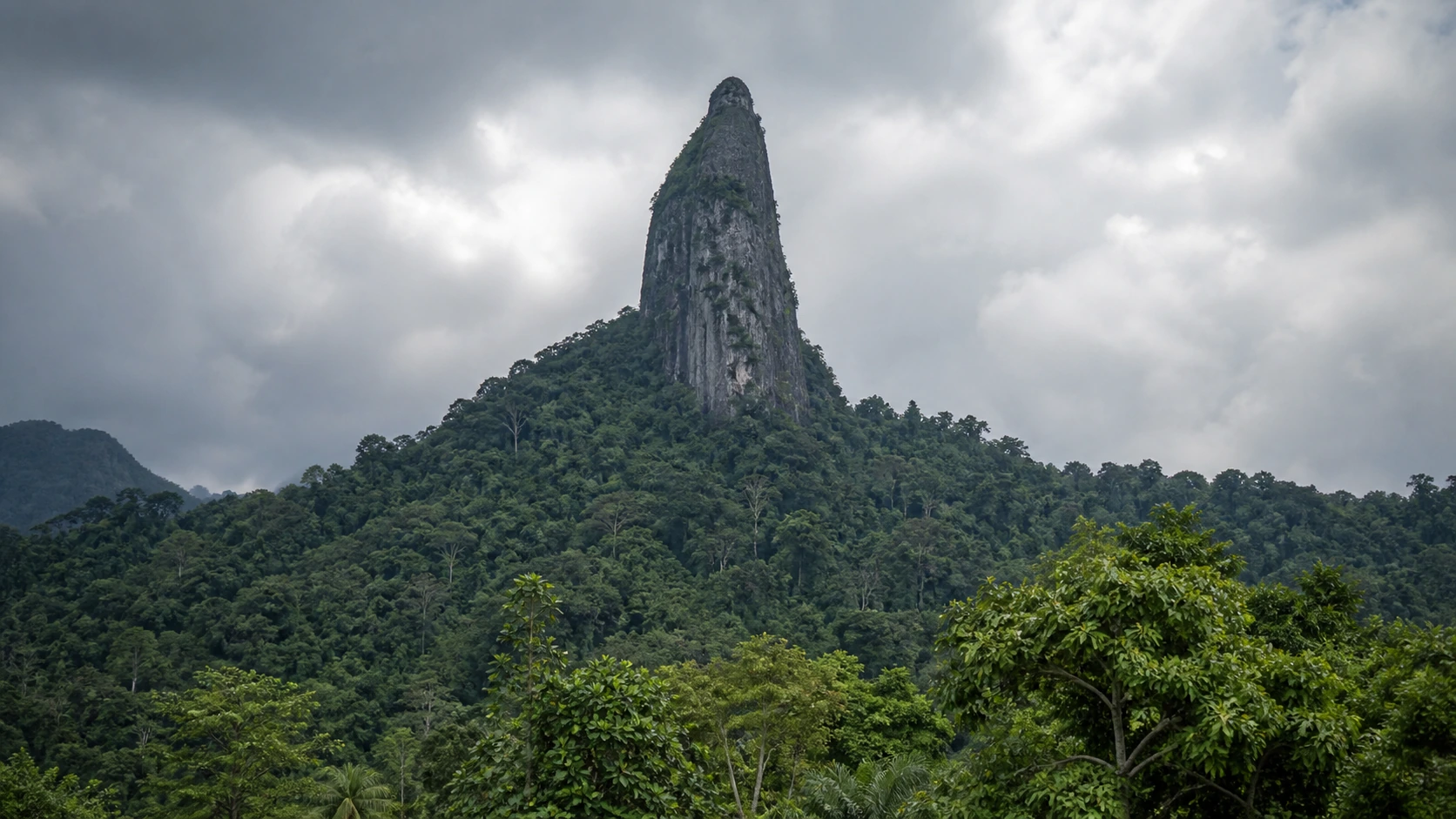
Fogo is one volcano rising 2,829 metres straight out of the ocean, and on its crater floor at 1,700 metres a thousand people farm inside the caldera, growing vines and coffee in volcanic ash. The 2014 eruption buried two villages; they rebuilt on top of the lava. You sleep down there among the black fields and climb the cone at dawn, which is three hours up and about forty minutes of scree-running back down.

The Paul Valley

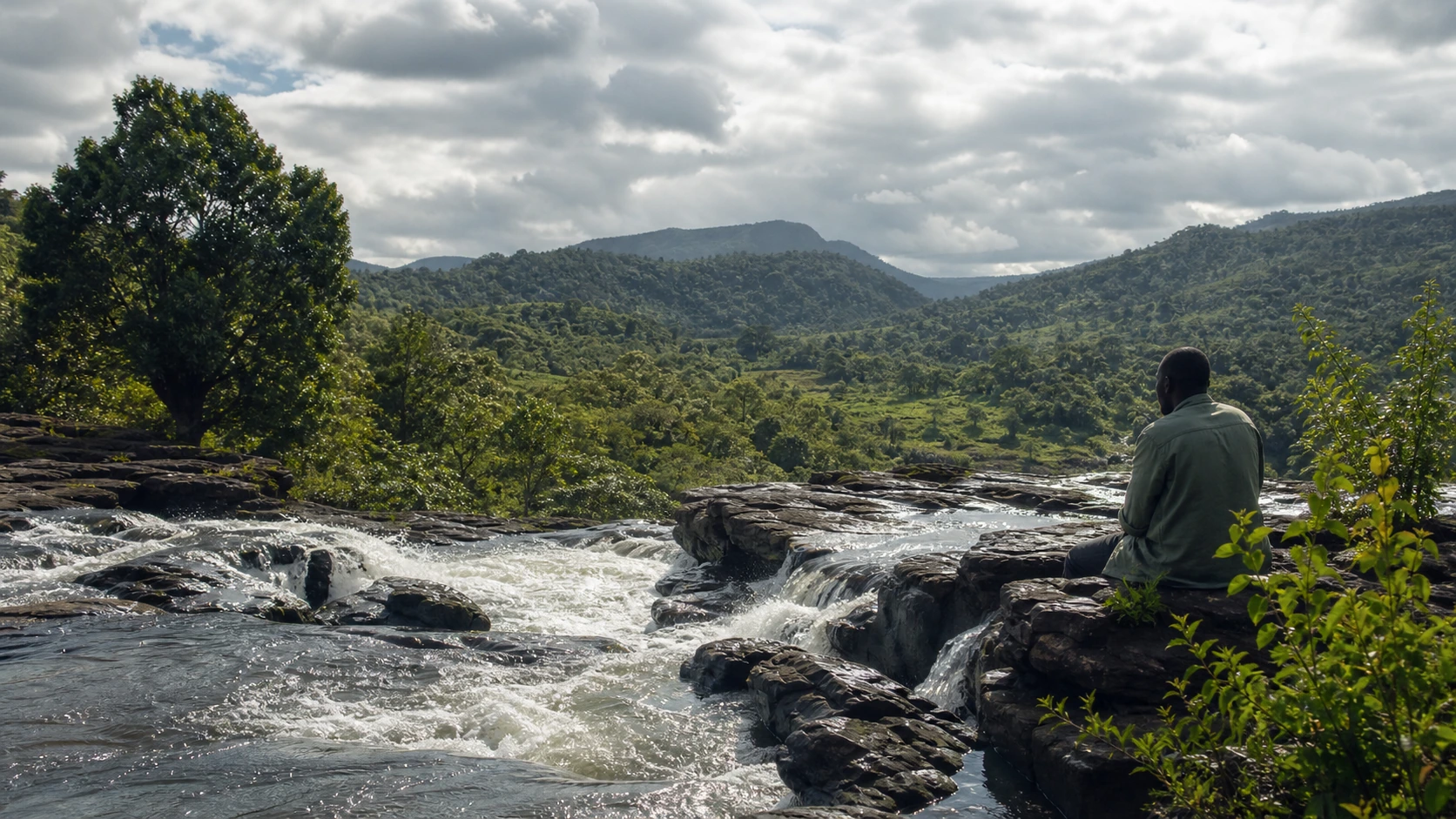
Santo Antão's great ravine climbs from the sea to the Cova crater at 1,600 metres, and the walk down it is the best day's hiking in the archipelago: terraced smallholdings of sugarcane, banana, coffee and yam stacked on both walls, aqueducts, grogue distilleries still running on ox-driven presses, and hamlets connected by cobbled paths rather than roads. About five hours, all downhill, in continuous shade and noise from the water.

The Cliff Path to Fontainhas

From Ponta do Sol on Santo Antão's north coast, an old cobbled path traverses the cliff face above the Atlantic to Fontainhas, a village built impossibly on a green spur with the sea a few hundred metres below, and on to Corvo and Cruzinha. It is one of the most spectacular coastal walks anywhere and, because the road never reached most of it, still the way people actually get between these villages.

Cidade Velha: the First Colonial Town in the Tropics

Founded in 1462, Ribeira Grande de Santiago was the first European settlement in the tropics and became the clearing house of the Atlantic slave trade; Columbus and Vasco da Gama both put in here. UNESCO-listed since 2009, it keeps the Fortaleza Real de São Filipe on the ridge, the ruined cathedral, the pillory still standing in the square, and a rua Banana of houses that are among the oldest colonial buildings in the world.

Mindelo and the Morna

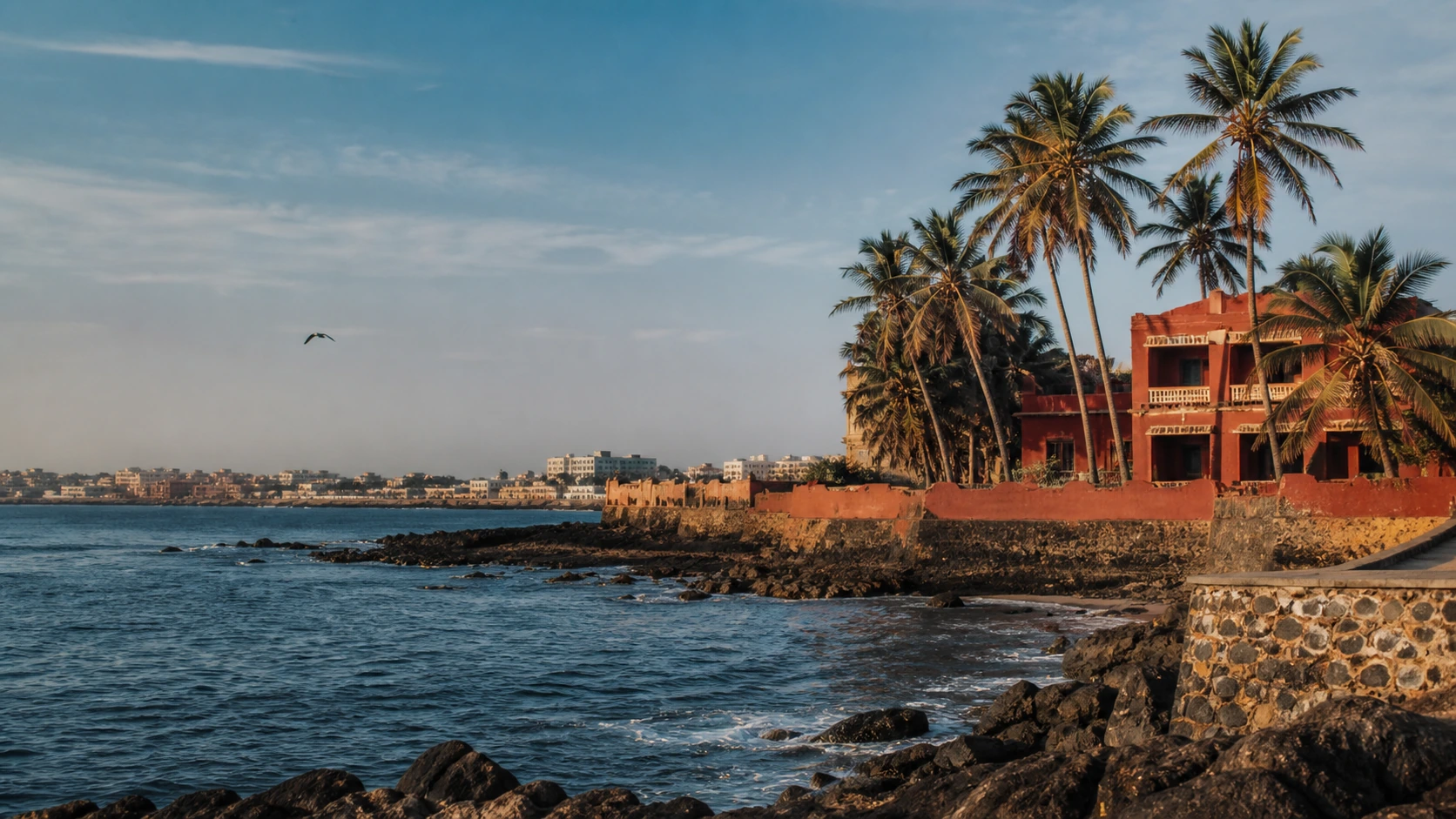
São Vicente is barren, and it produced the country's music anyway. Mindelo was a British coaling station, and the mix of sailors, Portuguese and Africans in its bars produced morna, listed by UNESCO in 2019, which Cesária Évora took barefoot from those bars to Carnegie Hall. The town keeps a colonial waterfront, the best carnival in the country, and live music most nights that owes nothing to tourism.

Grogue, Coffee and the Farms

Cabo Verde grows things in improbable places, and this expedition goes to them: the arabica planted inside the Fogo caldera in volcanic ash, the manecom wine the crater families make, and the trapiches of Paul and Ribeira Grande on Santo Antão, where sugarcane is still crushed by ox-driven press and distilled into grogue in copper stills, mostly for the valley itself rather than for export.

The Expedition

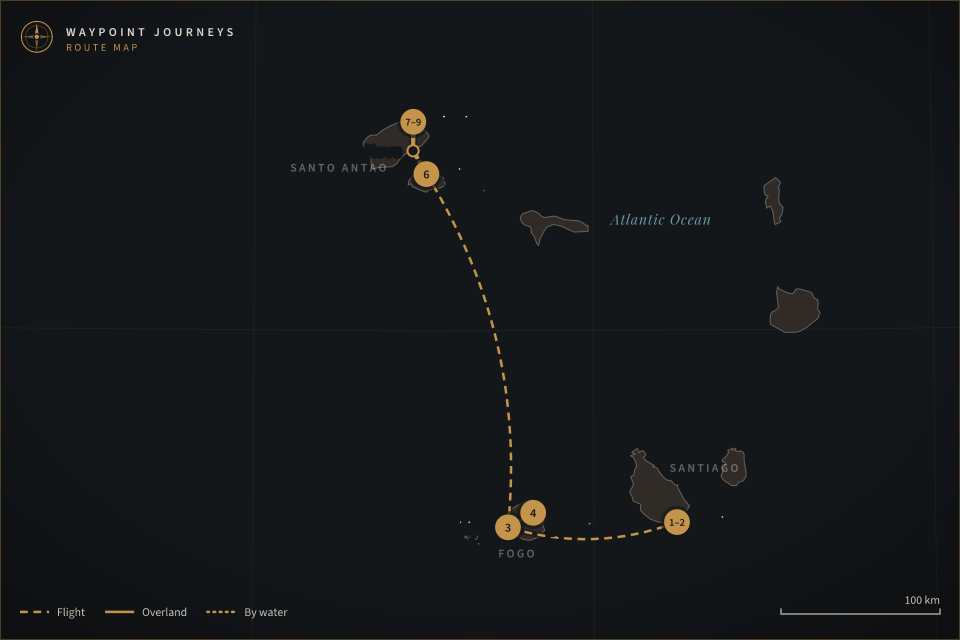
Ten days across four islands by air and ferry: the historic south, a night inside a volcano, the music town, and four days walking Santo Antão.

Day 1
Santiago · arrival in Praia

Arrive at Praia on Santiago, the largest island and the seat of government, and settle into the Plateau, the colonial grid on the bluff above the harbour. The afternoon walks it: the Presidential Palace, the Ethnographic Museum, the Praça Alexandre Albuquerque, and then down into the Sucupira market, a vast, loud, entirely unsentimental African market that is the best possible correction to any preconception about what this country looks like. Dinner and a first cachupa.

Day 2
Santiago · Cidade Velha and the interior

West along the coast to Cidade Velha, founded in 1462 as the first European town in the tropics and now UNESCO-listed: the pillory in the square, the ruined cathedral, the rua Banana, and the Fortaleza Real de São Filipe on the ridge above, looking down on the bay that was the hinge of the Atlantic slave trade. In the afternoon, over the mountains through Assomada and the Serra Malagueta to the north of the island, where the country is green and agricultural and nobody stops.

Day 3
Santiago → Fogo · São Filipe

The short flight west to Fogo lands beneath a volcano that is the entire island. São Filipe is one of the handsomest towns in the country: two-storey sobrado merchant houses with wooden balconies and interior courtyards, stacked on a black-sand cliff above the sea, with the cone permanently behind them. The afternoon is spent walking it, with the municipal market, the old Portuguese quarter and sunset from the clifftop over the Atlantic, and Brava lying across the channel.

Day 4
Fogo · into the caldera

Up into the volcano. The road climbs to the caldera rim at 1,600 metres and drops through a gap in the wall onto the crater floor, which is a black plain of ash and lava with a thousand people living on it. The 2014 eruption buried Portela and Bangaeira; the families rebuilt on top of the flow, and you walk it with someone who did. The afternoon takes in the vineyards planted in ash, the coffee, the manecom wine and the community cooperative, and you sleep inside the caldera.

Day 5
Fogo · Pico do Fogo at dawn

Out before light for the cone: 1,100 metres of ascent in about three hours on ash and rock to the crater rim at 2,829 metres, the highest point in the country, with the whole caldera and the ocean beneath and the sulphur still venting from the 2014 vent below. The descent is the part people remember, forty minutes of running down a scree slope in enormous strides. Back down to São Filipe in the afternoon, sore and pleased.

Day 6
Fogo → São Vicente · Mindelo

The flight north to São Vicente, usually via Praia, and into Mindelo, which is the country's cultural capital and knows it. The afternoon is the town: the colonial waterfront and the Torre de Belém replica, the fish and fruit markets, the Praça Nova where the whole town walks in the evening, and the Cesária Évora house. Then dinner, and out to one of the small live-music places off the square, where the morna and coladeira start late and are played for the room rather than for visitors.

Day 7
São Vicente → Santo Antão · the Estrada da Corda

The morning ferry crosses the channel in an hour to Porto Novo, and then comes one of the great roads: the Estrada da Corda, cobbled by hand, climbing from the dry south over the spine of the island to 1,600 metres at the Cova crater and dropping into the green north. You stop at the rim to look down into Cova, a farmed volcanic crater with its floor under cultivation, then descend into Ribeira Grande and settle in on the north coast for four nights.

Day 8
Santo Antão · the Paul Valley

The best walking day in Cabo Verde. A vehicle takes you back up to the Cova rim, and from there the route drops the whole length of the Paul Valley to the sea: five hours of continuous descent through terraces of sugarcane, banana, coffee, mango and yam stacked on both walls, past aqueducts and hamlets linked only by cobbled paths. You stop at a trapiche where cane is still crushed by an ox-driven press and distilled into grogue in a copper still, and taste both it and the ponche.

Day 9
Santo Antão · Ponta do Sol to Cruzinha

The coast walk. From Ponta do Sol an old cobbled path traverses the cliff face above the Atlantic, and around the first headland Fontainhas appears: a green spur with a village built on it and a few hundred metres of air below. On to Corvo, then the longer stretch to Cruzinha da Garça, three to four hours in all with the ocean below the whole way and a vehicle waiting at the far end. The afternoon is free in Ribeira Grande or Ponta do Sol.

Day 10
Santo Antão → São Vicente · departure

The morning ferry back across the channel to Mindelo, timed with margin against your flight. If the day allows, we take the road up Monte Verde for the view over the whole island and the channel you have just crossed, or spend a last hour in the market. Then the transfer to São Pedro airport. Cabo Verde connects to Lisbon, Boston and increasingly to West Africa, and we are glad to build a Sal or Boa Vista beach finish, or our Senegal & The Gambia expedition, onto the end.

The farmed floor of the Cova crater, Santo Antão, Cabo Verde

Small Group Expedition

Everything Here Arrived by Ship.
Then Became Its Own.

What's Included

Duration10 days / 9 nights: two nights Santiago, three Fogo, one São Vicente, three Santo Antão
Group SizeSmall group expedition: maximum 5 guests
AccommodationThe Plateau in Praia, a sobrado guesthouse in São Filipe, a family guesthouse inside the Fogo caldera, a boutique hotel in Mindelo and a small hotel on Santo Antão's north coast. Characterful and locally owned rather than resort standard
Internal FlightsBoth domestic flights are included and booked well in advance: Praia–Fogo and Fogo–São Vicente. Seat capacity on these routes is genuinely limited, which is why we hold them early
Included ExperiencesPraia and the Sucupira market; UNESCO Cidade Velha and the Fortaleza; São Filipe and the sobrado quarter; Chã das Caldeiras with a crater-family visit and a wine and coffee tasting; the guided dawn ascent of Pico do Fogo; Mindelo and a live morna evening; the Estrada da Corda and the Cova crater; the full Paul Valley descent with a working grogue trapiche; the Ponta do Sol–Fontainhas–Cruzinha coast path
TransportPrivate vehicles with drivers on all four islands, both inter-island ferries between São Vicente and Santo Antão, and every airport and port transfer
GuideAn English-speaking Cabo Verdean expedition leader throughout, plus a licensed mountain guide on Pico do Fogo and local walking guides on Santo Antão
MealsDaily breakfast, all meals inside the Fogo caldera, lunch on both Santo Antão walking days and a farewell dinner in Mindelo. Other meals are left free
FitnessThis is a walking trip. Pico do Fogo is 1,100 m of ascent over about three hours; the Paul Valley is five hours downhill; the coast path is three to four hours undulating. Each has a vehicle-based alternative if you would rather not
Best SeasonNovember to June. The islands are dry and warm year-round, with the best walking weather from December to April; August to October can bring brief heavy rain that occasionally closes mountain roads on Santo Antão
PaymentsCabo Verde runs largely on cash outside Praia and Mindelo; the escudo is pegged to the euro and euros are widely accepted. ATMs exist on all four islands but are unreliable on Fogo and Santo Antão, so we brief you on what to carry and change
Not IncludedInternational flights to Praia and out of São Vicente, the airport security tax, travel insurance, free-time meals, alcohol and personal expenses. No visa is required for EU, UK, US and many other nationalities; a pre-registration (EASE) and airport fee applies

FREQUENTLY ASKED QUESTIONS

Common Questions About This Expedition

Harder than a beach holiday and easier than a trek. Pico do Fogo is the one serious effort: 1,100 metres of ascent on loose ash in about three hours, with a fast scree descent. The Paul Valley is five hours but entirely downhill on cobbled paths, and the coast path is three to four hours of gentle up and down with sheer drops beside it, which matters more if you dislike exposure than if you are unfit. Every walking day has a vehicle alternative, and taking one does not unbalance the trip.
Geography and reliability. Praia–Fogo and Fogo–São Vicente are long open-water crossings with infrequent, uncomfortable and often cancelled ferry services, so we fly them and book months ahead, because seat capacity on Cabo Verde's domestic network is the single tightest constraint in the country. São Vicente–Santo Antão, by contrast, is a one-hour crossing on a modern ferry that runs several times daily and is genuinely the best way to arrive.
Sal and Boa Vista are, and this expedition deliberately does not go to them. The four islands here are the historical, volcanic and mountain ones: colonial Santiago, the Fogo caldera, the music of Mindelo and the vertical valleys of Santo Antão. If you would like beach days too, we are glad to add three or four nights on Sal or Boa Vista at the end, which is an easy connection and a good decompression after the walking.
None, but a little Portuguese goes a long way. Portuguese is the official language and Cabo Verdean Creole is what people actually speak; English is common in Mindelo and among younger people, and patchy elsewhere. Your expedition leader is English-speaking throughout and with you every day, so nothing depends on your Portuguese, but the effort of a few words is noticed and rewarded here more than in most places.

Expedition Investment

$4,250USD

per person, twin share

Fully inclusive of nine nights' accommodation across four islands including a night inside the Fogo caldera; both domestic flights (Praia–Fogo, Fogo–São Vicente) booked well ahead; both Santo Antão ferry crossings; an English-speaking Cabo Verdean expedition leader throughout with a licensed mountain guide on Pico do Fogo; private vehicles and drivers on all four islands; every listed entrance and tasting; and daily breakfast, all caldera meals, both walking-day lunches and a farewell dinner

Excludes international flights (arrive Praia, depart São Vicente), the Cabo Verde airport security fee and EASE pre-registration, travel insurance, free-time meals, alcohol and personal expenses. Single supplement $850 USD

Reserve Your Spot
A Note on Safety & Logistics

Cabo Verde is one of the most stable and best-governed countries in Africa, and it is straightforward to travel in; petty theft occurs in Praia and Mindelo at the level of any small city and we brief on it, but violent crime against visitors is rare. The real considerations here are terrain and logistics. The walking is genuinely exposed in places, the coast path to Fontainhas above all, and we walk it with local guides who know it in every condition and will turn back rather than push it. Pico do Fogo is an active volcano that last erupted in 2014, monitored continuously, and we take the mountain guide's word as final. Mountain roads on Santo Antão and Fogo are cobbled, narrow and steep, so we drive them in daylight with experienced local drivers. The domestic flight network is thin and does occasionally shift; we build slack into the itinerary rather than pretend it will not. Medical facilities are basic outside Praia and Mindelo, so comprehensive insurance with evacuation cover is required.