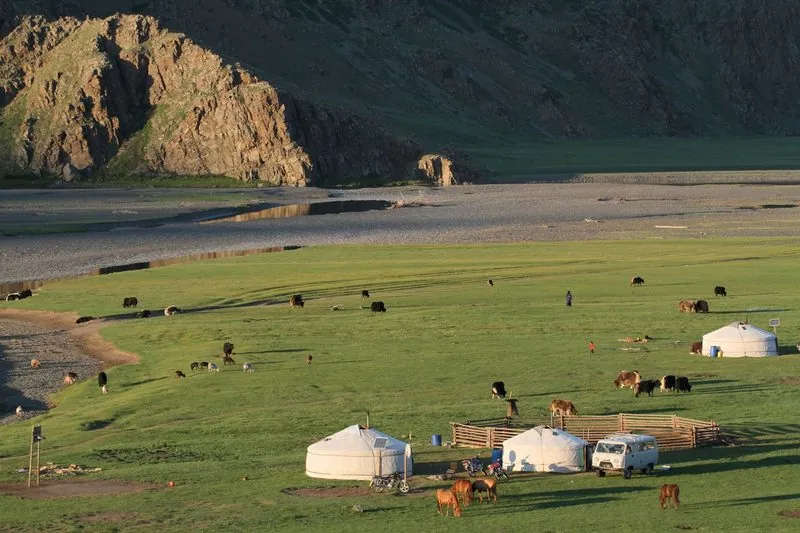
The tour bus stops at the same ger camp where thirty other travelers will sleep tonight. You take photos of the same "authentic" nomad family that poses for dozens of groups each week. The Naadam Festival viewing area is packed with hundreds of other tourists craning for the same shot.
This is Mongolia according to most group tours. But Mongolia has another face entirely.
The Problem with Standard Mongolia Tours
Most Mongolia expeditions follow identical routes. Ulaanbaatar to Terelj National Park. The standard ger camp circuit. Karakorum ruins with forty other people. The same festival viewing areas, the same "traditional" demonstrations, the same photo opportunities.
Twenty-person groups move like small armies across the steppe. They require massive logistics, predetermined stops, and experiences scaled for crowds. The Mongolia you see is real, but it's Mongolia performing for tourism rather than Mongolia simply being itself.
Small group travel to Mongolia changes everything.
What Happens When Only Five People Cross the Gobi
With maximum five travelers, you don't follow routes. You create them.
Your driver spots eagle hunters working the Altai Mountains and stops. No schedule pressure, no group consensus needed. You spend three hours learning traditional hunting techniques from a family that's never posed for tour photos.
In the Gobi Desert, you camp where the landscape demands it, not where tour infrastructure allows it. Your local guide, a herder who knows every water source across 500 kilometers, leads you to singing dunes that tour groups never reach because the access requires local knowledge and flexible timing.
The difference isn't just comfort. It's access to the Mongolia that exists between the scheduled stops.
The Real Naadam Festival Experience
Most travelers experience Naadam from tourist viewing areas in Ulaanbaatar, watching from stands alongside hundreds of other visitors. The wrestling, horse racing, and archery competitions happen, but you're watching a performance designed for mass consumption.
Private expeditions reach regional Naadam festivals in places like Khovd Province or Arkhangai. These celebrations happen for local communities, not tourists. You sit with herding families who've traveled days to attend. Children compete on horses they've trained themselves. The wrestling matches carry real personal stakes: family honor, local rivalries, genuine competition.
The difference: you're witnessing culture rather than consuming it.
Nomadic Life Beyond the Tourist Circuit
Standard tours visit "nomadic families" who live in permanent locations near tourist routes. They demonstrate traditional crafts and serve meals to multiple groups daily. The experience is educational but scripted.
Small group expeditions reach working herding families deep in places like the Khangai Mountains or the remote Uvs Province. These families move seasonally, following ancient migration patterns. They're not performing nomadic life. They're living it.
You help move sheep between pastures. You learn to milk yaks at dawn. You understand why certain camping spots have been used for centuries and others avoided. The insights come from participation, not observation.
Logistics That Make the Impossible Possible
Mongolia's vastness creates logistical challenges that most tour operators solve through standardization. Fixed routes, established camps, predictable schedules.
Private expeditions solve these challenges through expertise and flexibility. Your expedition team includes drivers who know unmarked tracks across the steppe, guides who understand seasonal animal movements, and local contacts who can arrange access to restricted areas.
When weather closes mountain passes, you don't cancel activities. You discover alternatives. When your group expresses interest in traditional medicine, your guide arranges meetings with shamanic healers. The expedition adapts to opportunities rather than adhering to predetermined itineraries.
The Altai Mountains Without Crowds
The Altai region draws travelers for its dramatic peaks and eagle hunting culture. Most tours visit the same accessible valleys and meet the same few hunters who work with tourism operators.
Small groups can reach hunting families in remote valleys that require days of travel from any road. You learn eagle hunting techniques passed down through generations, not demonstrated for cameras. You understand the relationship between hunters, eagles, and the harsh mountain environment through direct experience.
The Altai has valleys where your group might be the only outsiders visiting that year.
Mongolia in 2026: Beyond the Beaten Path
Mongolia's tourism infrastructure continues developing, making remote areas more accessible while maintaining their essential character. New regional airports reduce travel time to distant provinces. Improved communications allow real-time coordination with local guides.
But the most significant change is Mongolia's growing confidence in sharing authentic experiences rather than performing for tourists. Herding families increasingly welcome small groups that demonstrate genuine interest in their way of life.
The window for experiencing Mongolia before mass tourism transforms it completely remains open, but it's narrowing.
Why Five People Changes Everything
Group size determines experience quality in Mongolia more than in most destinations. The steppe's scale and the nomadic culture's intimacy both demand small numbers.
With five people maximum, you can stay in traditional gers with herding families rather than tourist camps. You can follow animal migrations that don't accommodate large groups. You can participate in daily activities rather than observing them.
Most importantly, you can move at Mongolia's pace rather than tourism's schedule.
Building Your Mongolia Expedition
Every Mongolia expedition begins with understanding what draws you to the country. The vast landscapes? The nomadic culture? The historical significance of the Mongol Empire? The wildlife and natural phenomena?
Your interests determine the route, timing, and focus. A photography-focused expedition follows different paths than one centered on cultural immersion or historical exploration. The expedition builds around your goals rather than adapting your goals to a standard itinerary.
Mongolia rewards preparation, local expertise, and flexibility. It punishes rigid schedules and one-size-fits-all approaches.
The Mongolia Most People Never See
Standard tours show you Mongolia's highlights. Private expeditions reveal Mongolia's character.
You experience the profound silence of the Gobi at night, broken only by wind across dunes. You understand why Mongolians navigate by stars and landscape features rather than roads. You witness the relationship between herders and their animals: not romantic, but practical, respectful, and essential for survival.
These insights don't come from scheduled activities. They emerge from time, attention, and the kind of access that only small groups can achieve.
Mongolia remains one of the few places where authentic expedition travel is still possible. But it requires choosing experience over convenience, depth over coverage, and genuine exploration over comfortable tourism.
Ready to Start Planning?