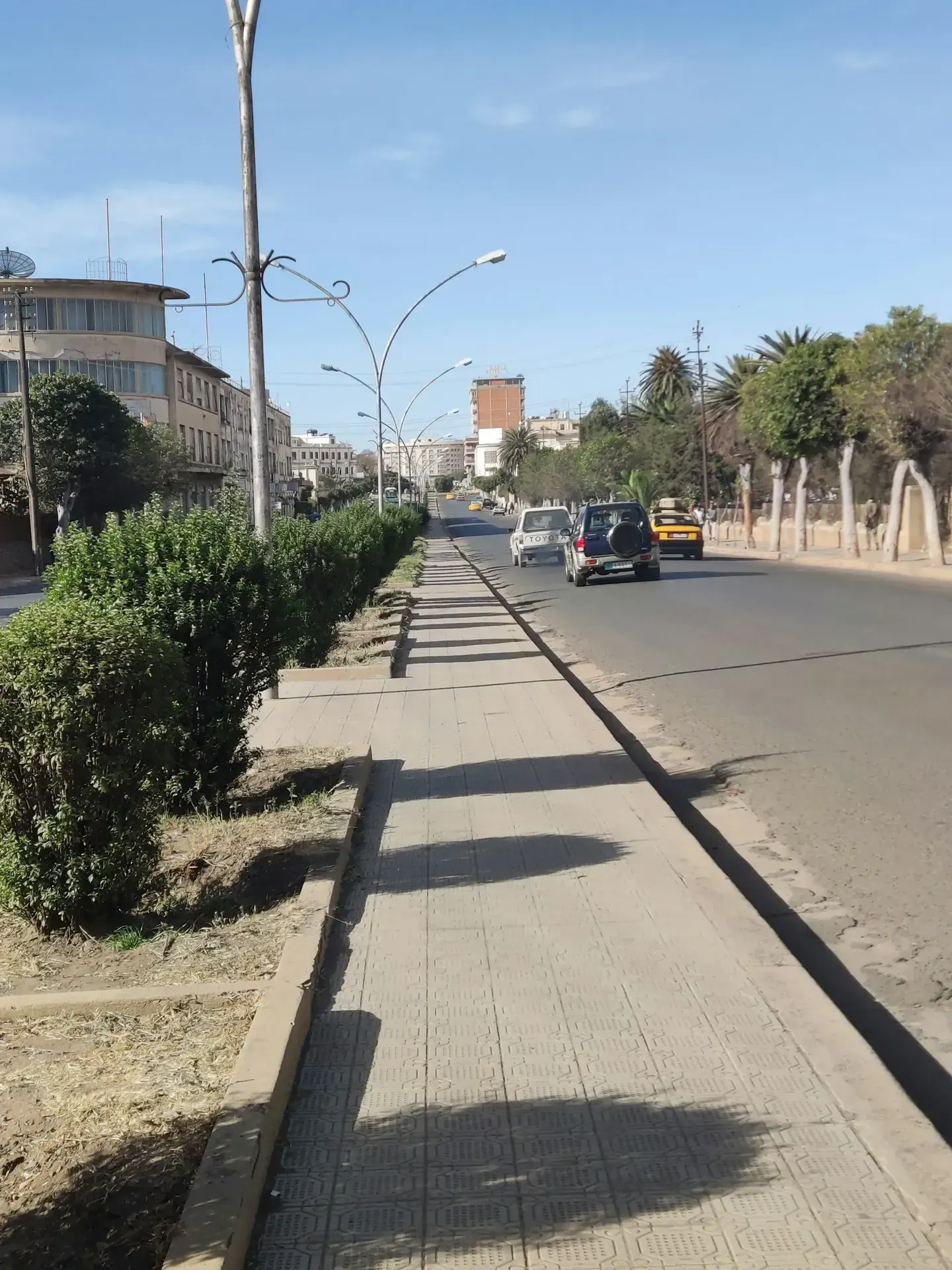
The Quietest Country in Africa
Eritrea receives fewer foreign tourists in a year than some boutique hotels host in a month. There is no line at immigration, no coach parked outside the cathedral, no souvenir economy to negotiate. For a certain kind of traveler, that paragraph is the entire pitch.
The country occupies a strip of the Horn of Africa along the Red Sea, facing Saudi Arabia and Yemen across the water. Its coastline traded with Arabia in the days of the Aksumite empire. The Ottomans held Massawa for centuries, the Egyptians passed through, and the Italians spent three decades building themselves a highland capital. Then came a thirty-year war for independence, won in 1993, followed by a long period of self-imposed isolation. The result is a country that mass tourism simply never reached.
That isolation preserved something extraordinary. Asmara, the capital, is the most complete early modernist city on Earth, recognized by UNESCO in 2017. Two hours down the escarpment, Massawa is a coral-stone Ottoman port slowly crumbling into the Red Sea. Three hours north, Keren hosts one of the great livestock markets in East Africa every Monday, as it has for longer than anyone can document. Five days covers the essential triangle. This guide covers what you will see and how the practicalities work, because in Eritrea the practicalities are half the story.
Asmara: A Modernist City Frozen on a Plateau
Asmara sits at 2,325 meters, which surprises people who expect the Horn of Africa to be hot. The climate is closer to a Mediterranean spring: crisp mornings, bright dry days, evenings that ask for a light jacket. It is a city built for walking, and walking is how it should be seen.
The Italians ruled Eritrea from 1890 to 1941, and in the 1930s they used Asmara as a laboratory for the most experimental architecture of the age. Rationalist office blocks, Futurist cinemas, and Art Deco villas went up street after street, and then history froze them in place. Decades of war and isolation meant almost nothing was demolished and almost nothing new was built. In 2017 UNESCO listed the entire city center as the most complete surviving example of early 20th-century modernist urbanism anywhere in the world.
The building everyone comes for is the Fiat Tagliero, a service station completed in 1938 by Giuseppe Pettazzi and designed to look like an aircraft, its concrete wings cantilevered into open air with no supports at all. It still functions as a service station. Cinema Impero still shows films beneath its original interior. The pastel cafes of Harnet Avenue still pull espresso on machines the Italians left behind, for elderly men in pressed suits taking a macchiato at a marble counter exactly as their fathers did.
Give the city at least a full day, ideally two. The Medeber market on the edge of downtown is where the walking tour should end: an open-air workshop where craftsmen cut old tin cans into oil lamps and truck parts into furniture, loud with hammering and completely uninterested in whether you photograph it.
The Coffee Ceremony
Eritrea's coffee ceremony shares its lineage with Ethiopia's, and it is not a performance staged for visitors. Green beans are roasted over coals, ground by hand, and brewed in a clay jebena, then served in three successive rounds with popcorn, with incense drifting through the room. Accepting all three rounds is the polite move and the correct one. Plan on the better part of an afternoon, and count it among the best things you will do in the country.
Down the Escarpment to Massawa
The road from Asmara to Massawa drops 2,300 meters in about two hours, one of the great descents in Africa. You leave a cool highland morning, wind down through switchbacks and drifting cloud, and step out into the salt heat of the Red Sea, having crossed what feels like three separate climates before lunch.
Massawa was the pearl of the Red Sea when Ottoman governors ran it, and its old town is built of coral stone: arcaded merchant houses, carved wooden balconies, mosques whose foundations reach back toward the dawn of Islam. It is half-ruined and half-lived-in. Shell damage from the independence war still scars the old palaces, laundry hangs between Ottoman arches, and nobody has restored any of it, which is precisely why it still feels honest. Walk it in the late afternoon when the stone goes gold and the port stirs back to life.
A short boat ride reaches Green Island for swimming and snorkeling in warm, clear water. Back on the waterfront, the seafood is the best in the country. Evenings are the point of Massawa: the heat softens, families come out, and the old town feels like what it is, a port that has watched empires arrive and leave for two thousand years.
Keren: Camels, Silver, and a Baobab Shrine
Keren, three hours north of Asmara, is Eritrea's second city and its greatest market town. Every Monday, herders walk camels, cattle, and goats into the dry riverbed on the edge of town for a livestock market that has met on the same ground since long before colonial memory. Nearby, silver traders and grain sellers work beneath a fig tree taller than most buildings in town. It is one of the great ethnographic markets in East Africa, and if your dates can possibly include a Monday in Keren, build the trip around it.
Just outside town stands Mariam Dearit, a chapel set inside the hollow trunk of a centuries-old baobab with a shrine to the Madonna within. Pilgrims of more than one faith leave offerings here. It is among the most unusual sacred sites on the continent, and the kind of place Eritrea produces without ceremony: no ticket booth, no interpretive signage, just a tree, a shrine, and whoever happens to be praying.
Practicalities: The Visa, the Permits, the Cash
Start the visa early
Eritrea issues visas the old way: a paper application through an embassy (Washington, London, and a handful of others), an invitation letter from a licensed local operator, a fee of roughly 50 US dollars, and a wait that routinely passes three weeks. There is no eVisa and no visa on arrival. Start six to eight weeks before travel, and let your operator drive the paperwork; applications without an invitation letter tend to stall indefinitely.
Permits for everywhere beyond Asmara
You can walk Asmara freely. Travel beyond the capital requires a permit for each destination, issued in advance and checked at roadblocks along the way: Massawa, Keren, everywhere. It sounds heavier than it feels. With permits pre-arranged, checkpoints take minutes. But it does mean the itinerary must be fixed before you land, and spontaneous detours are not part of the deal. In Eritrea, flexibility happens at the planning stage.
Bring cash, and count on nothing electronic
Eritrea runs on cash. The currency is the nakfa, cards are effectively useless nationwide, and there are no international ATMs. Bring US dollars or euros in clean notes, exchange officially, keep the receipts, and budget for everything in cash, including hotel extras. Connectivity deserves the same expectation-setting: internet access is scarce and slow, and roaming barely exists. Treat five days in Eritrea as five days genuinely offline, which most of our guests come to regard as a feature.
When to go and how to get in
December through February is the finest window: cool and dry in the highlands, warm rather than punishing on the coast, and Keren's market at its liveliest. Asmara's altitude keeps it pleasant most of the year, but Massawa in high summer ranks among the hottest inhabited places on Earth, so midwinter is when the full route works. Asmara International is the only practical gateway, served by a small set of regional connections that change often; most travelers currently route through Cairo or the Gulf. Confirm routings close to departure, and pad your connections.
How We Run Eritrea
Our Eritrea expedition is five days: Asmara's modernist core, the descent to Massawa, the Monday market at Keren, and back to the capital for a final espresso on Harnet Avenue. Like every trip we run outside the cruises, Antarctic camps and the Battle Abbey lodge in British Columbia, it is capped at five guests. $2,550 USD covers the hotels, a private 4WD with an experienced Eritrean driver-guide, breakfasts and dinners from trattoria pasta to Massawa seafood, and every travel permit arranged before you land. We issue the invitation letter through our partner in Asmara and walk you through the embassy process step by step.
Eritrea also pairs naturally with its neighbor and old adversary. The highlands share food, faith, and the coffee ceremony with Ethiopia, and flight connections through the region make a combined journey straightforward. Read our Ethiopian Highlands guide or see the full Ethiopia expedition if you are tempted to make it one trip.
Eritrea at a Glance
| Location | Horn of Africa, on the Red Sea |
| Capital | Asmara, at 2,325 meters |
| Best time to visit | December to February |
| Getting there | Fly to Asmara, usually via Cairo or the Gulf |
| Visa | Advance embassy application; slow; invitation letter needed |
| Permits | Required for all travel beyond Asmara |
| Currency | Nakfa; cash only, no international ATMs |
| Languages | Tigrinya, Arabic, English widely used in cities |
| Typical expedition length | 5 days |
| Group size | Capped at 5 guests |
Frequently Asked Questions
Is Eritrea safe for tourists?
Eritrea is one of the safer countries in East Africa for visitors. Violent crime is rare, Asmara is a comfortable walking city, and the routes between the main sites are well traveled. The controls that make headlines, the permits and the paperwork, are bureaucratic rather than threatening. Read your own government's current advice before booking, but on the ground the country is calm, orderly, and welcoming.
How long does an Eritrean visa take?
Plan on around three weeks once an embassy has your application, and start the process six to eight weeks before travel. You will need an invitation letter from a licensed Eritrean operator, which we arrange for every guest. There is no eVisa and no visa on arrival.
Can I travel outside Asmara without a permit?
No. Foreign visitors need a travel permit for each destination beyond the capital, arranged in advance and checked at roadblocks along the way. With the permits sorted before arrival the checkpoints take minutes, but the itinerary has to be fixed before you land. Spontaneous route changes are not realistic in Eritrea.
Do credit cards work in Eritrea?
No. Eritrea is a cash economy. Cards are effectively useless nationwide and there are no international ATMs. Bring US dollars or euros in clean notes, exchange them officially into nakfa, and keep the receipts. Budget for everything in cash, including hotel extras.
When is the best time to visit Eritrea?
December through February is the best window: cool, dry, and clear in the highlands, warm rather than punishing in Massawa. Asmara's altitude keeps it pleasant most of the year, but the coast becomes seriously hot from June to September, so midwinter is when the full route works best.
See It While It Is Still Quiet