The Lost World Is a Real Place
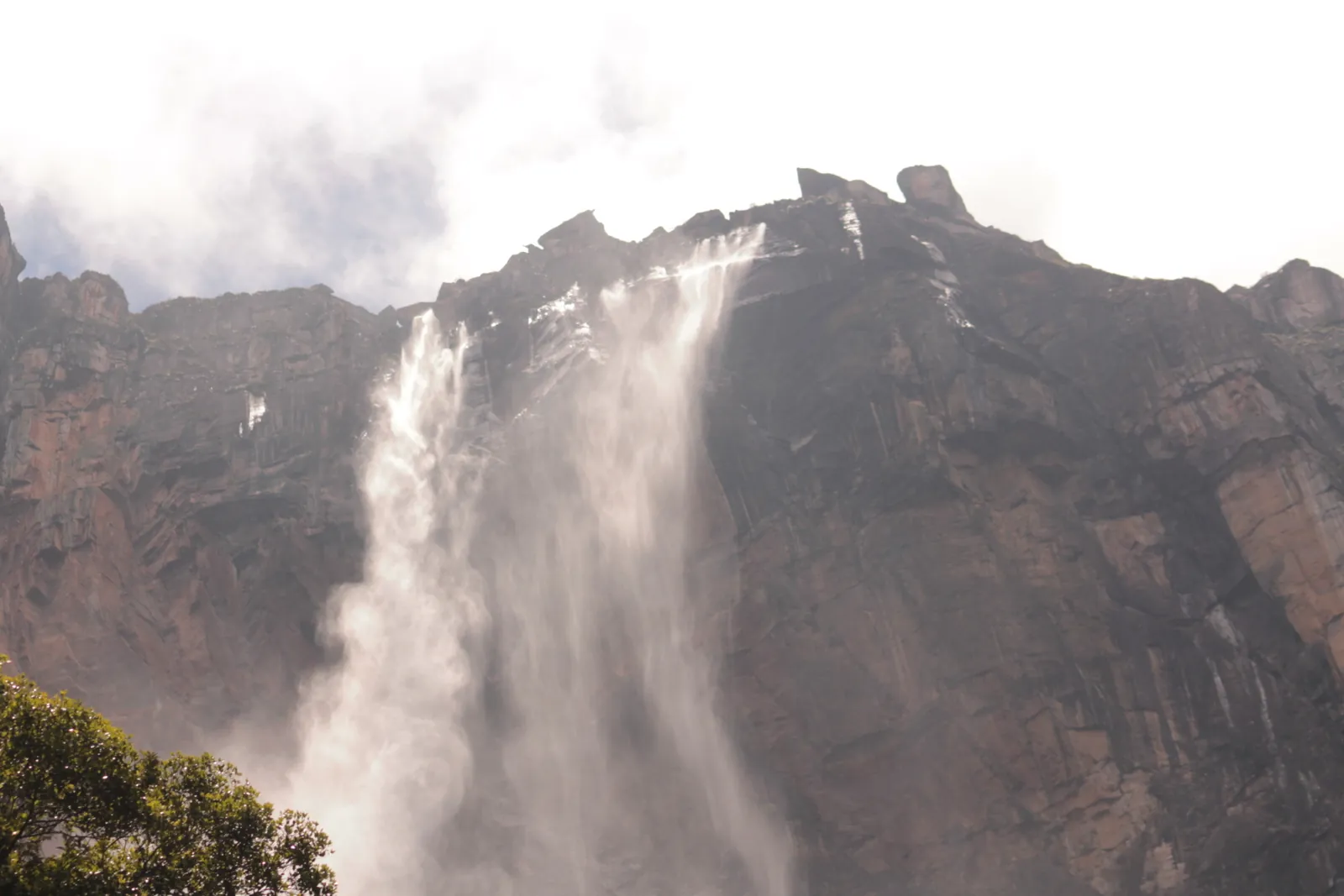
In the southeast of Venezuela, the savanna of the Gran Sabana runs flat to the horizon, and then, without foothills or apology, the tepuis rise out of it: sheer-walled sandstone table mountains, some of the oldest exposed rock on Earth, their summits lost in their own weather. Arthur Conan Doyle put dinosaurs on top of one and called it The Lost World. Off the rim of the largest, Auyan-tepui, the longest uninterrupted drop of falling water on the planet falls nearly a kilometer before it touches anything. Angel Falls is not a metaphor. It is a place you can stand beneath.
Almost nobody does. Venezuela's political and economic crisis pushed it off the travel map for a decade, and the country now receives a fraction of the visitors of anywhere else in South America. The landscapes did not get the memo. Canaima's lagoon still glows pink at the sand line. The Orinoco Delta still breathes through ten thousand channels. And the travelers who do come find themselves nearly alone at sights that would draw millions anywhere else.
This guide covers the country's three great set pieces, Angel Falls and Canaima, the Orinoco Delta, and Caracas beneath El Avila, and then talks honestly about the part most write-ups dodge: the safety picture, and how a well-built expedition actually manages it.
Angel Falls: By River and By Air
The numbers first, because they are worth absorbing. Angel Falls, Kerepakupai Meru in the Pemon language, drops 979 meters from the rim of Auyan-tepui, nearly three times the height of the Empire State Building. The water falls so far that in drier months it dissolves into mist before reaching the ground. The falls carry the name of Jimmie Angel, an American bush pilot who crash-landed his plane on top of the tepui in 1937 and walked out with a story nobody believed until they checked.
The river ascent
The classic approach is by water. From Canaima, motorized dugout canoes called curiaras run a full day up the Carrao and Churun rivers, threading rapids with the walls of the tepuis closing in on both sides. A forest trail then climbs to the viewpoint at the base, where the sound arrives before the sight does. Standing under a kilometer of falling water, soaked in its spray, is one of the great physical experiences in South America.
The overflight
The second approach is by light aircraft, tracing the wall of Auyan-tepui until the falls unspool below the wingtip. The river route depends on water levels; the flight does not. A well-designed itinerary includes both, plus a buffer day at Canaima for weather, because clouds own these mountains and they keep their own schedule. Between the river and the air, you see the falls.
Canaima: The Lagoon and the Tepuis
Canaima itself would justify the journey if the falls did not exist. The lagoon is ringed by its own arc of waterfalls, the sand shades pink from ground quartz, and the flat silhouettes of the tepuis stand across the water like a horizon drawn with a ruler. At Salto El Sapo, a trail passes directly behind the curtain of a waterfall, the whole weight of the river roaring an arm's length from your face. You come out the far side soaked and grinning like a child.
The tepuis deserve a slower look than most visitors give them. Each summit has been isolated from the forest floor for millions of years, evolving plants and frogs found on that one mountain and nowhere else, which is why biologists describe them as islands in the sky. Canaima National Park, which contains them, is a UNESCO World Heritage Site roughly the size of Belgium.
The Orinoco Delta and the Warao
A thousand kilometers northeast, Venezuela performs its opposite trick. The Orinoco, one of the great rivers of the world, unravels before the Atlantic into a delta the size of a small country: black-water channels called canos, corridors of moriche palm, and a silence broken by red howler monkeys at dawn and scarlet ibis crossing in flocks at dusk. River dolphins surface beside the boat. Caimans' eyes catch the torch beam after dark.
The delta is home to the Warao, the boat people, among the oldest cultures in South America. They have lived above the water in stilt houses for thousands of years, moving by dugout almost from birth; early European visitors thought the villages looked like a little Venice, and the name Venezuela stuck to the whole country. Days here move by boat between lodge and palafito villages and flooded forest, and the delta asks nothing of you except attention.
Caracas and El Avila
Most itineraries treat Caracas as an airport with a city attached. Handled correctly, it deserves a day. The capital runs along a single valley beneath El Avila, the green mountain wall the Caracas cable car climbs for a view over the entire city to the Caribbean beyond. On the city's edge, the colonial village of El Hatillo keeps its cobbles and painted houses, a quiet counterpoint to the towers below. Our time in the capital is guided, in daylight, and concentrated in its safer districts, which is the honest way to describe how any responsible operator handles Caracas at the moment.
The Honest Section: Safety, Advisories, and How This Works
We will not talk around it. Most Western governments hold elevated travel advisories for Venezuela, some at their highest caution levels, citing crime, political volatility, and thin consular support. Anyone selling you a Venezuela trip without mentioning that is not being straight with you.
Here is what an advisory cannot see: the difference between the country's cities and its national parks, and the difference between wandering and being run by people who know the ground. A well-built Venezuela expedition concentrates on Canaima and the delta, regions that function on their own rhythms far from urban trouble. It flies over the road network instead of driving it. It keeps city time short, guided, and in daylight. And it runs on long-standing local operators, the same handful of teams who have worked these parks through every phase of the crisis, whose pilots, boatmen, and camp staff are the actual infrastructure of the trip.
That is how we run ours, with conditions monitored continuously and a detailed briefing for every confirmed traveler before departure. We would rather lose a booking than gloss over the caveats. Venezuela right now is a destination for prepared, well-guided travelers, and for them it is one of the great wild journeys on the continent.
Practicalities: Timing, Entry, Money
Timing turns on water. The wet season, roughly June to November, fills the rivers and makes the curiara ascent to Angel Falls reliable; the falls run at full thunder. In the drier months the river thins and the overflight carries more of the weight. The delta is rewarding year-round. Heat and humidity are constants; pack for both.
Entry is simple for many European passport holders, who receive an entry stamp on arrival; US citizens need a Venezuelan visa issued online in advance, not on arrival (as of September 2026). Rules shift, so confirm yours before departure. Bring clean US dollars in small bills for park fees, tips, and incidentals, because international cards rarely work. Book a travel health consultation well before departure and raise yellow fever vaccination for the jungle regions along with the standard tropical precautions. Comprehensive insurance with medical evacuation is non-negotiable.
How We Run Venezuela
Our Venezuela expedition is ten days: Caracas and the Avila cable car, three nights at Canaima with the river ascent to Angel Falls and the overflight, then the Orinoco Delta with two nights in a river lodge among the Warao channels. $4,150 USD covers the internal flights, both approaches to the falls, accommodation throughout, an expert English-speaking guide, and all ground, river, and boat transport, with the group capped at five guests, as on every trip we run outside the cruises, Antarctic camps and the Battle Abbey lodge in British Columbia.
If the far side of the continent's wild north appeals, the trip pairs naturally with our Guyana and Suriname expedition, six days through the forgotten coast next door: same untraveled corner of South America, entirely different story.
Venezuela at a Glance
| Location | Northern South America, on the Caribbean |
| Capital | Caracas |
| Best time for Angel Falls | June to November, when rivers run full |
| Getting there | Fly to Caracas (Maiquetia); internal flights beyond |
| Entry | Entry stamp on arrival for many European passports; US citizens need an online visa in advance |
| Money | US dollars in cash; cards rarely work |
| Language | Spanish; indigenous languages in the delta |
| Advisories | Elevated; travel with an experienced operator |
| Typical expedition length | 10 days |
| Group size | Capped at 5 guests |
Frequently Asked Questions
Is it safe to visit Venezuela?
Government advisories for Venezuela are elevated, and we do not pretend otherwise. What makes the trip workable is its design: it concentrates on Canaima and the Orinoco Delta rather than the cities, flies over the road network, keeps time in Caracas guided, in daylight, and in its safer districts, and runs entirely through trusted local operators we have vetted in person. This is a destination for prepared, well-guided travelers, not independent wandering.
Can you see Angel Falls year-round?
The falls exist year-round; the river route to them does not. In the wet season, roughly June to November, the rivers run full and the curiaras can reach the base. In the drier months the flow thins and the river ascent may not be possible, which is why a light-aircraft overflight and a weather buffer day belong in any good itinerary. Between the river and the air, you see the falls.
How do you get to Canaima and Angel Falls?
There is no road. Canaima is reached by light aircraft from Caracas or Ciudad Bolivar, landing on an airstrip beside the lagoon. From the Canaima camp, Angel Falls is a full-day river journey by motorized curiara up the Carrao and Churun rivers, with a forest walk to the viewpoint at the base.
What money should I bring to Venezuela?
Clean US dollar bills in small denominations. Dollars are the practical currency for park fees, tips, and incidentals, and international cards rarely work. Bring what you need in cash for the whole trip and keep it split between bags.
How fit do I need to be for this trip?
Moderately. Expect long days in open boats, tropical heat, light-aircraft flights, and a short but steep forest walk to the Angel Falls viewpoint. No technical skills are needed. A reasonable fitness level and tolerance for rustic camps and lodges matter more than athleticism.
Stand Under a Kilometer of Falling Water