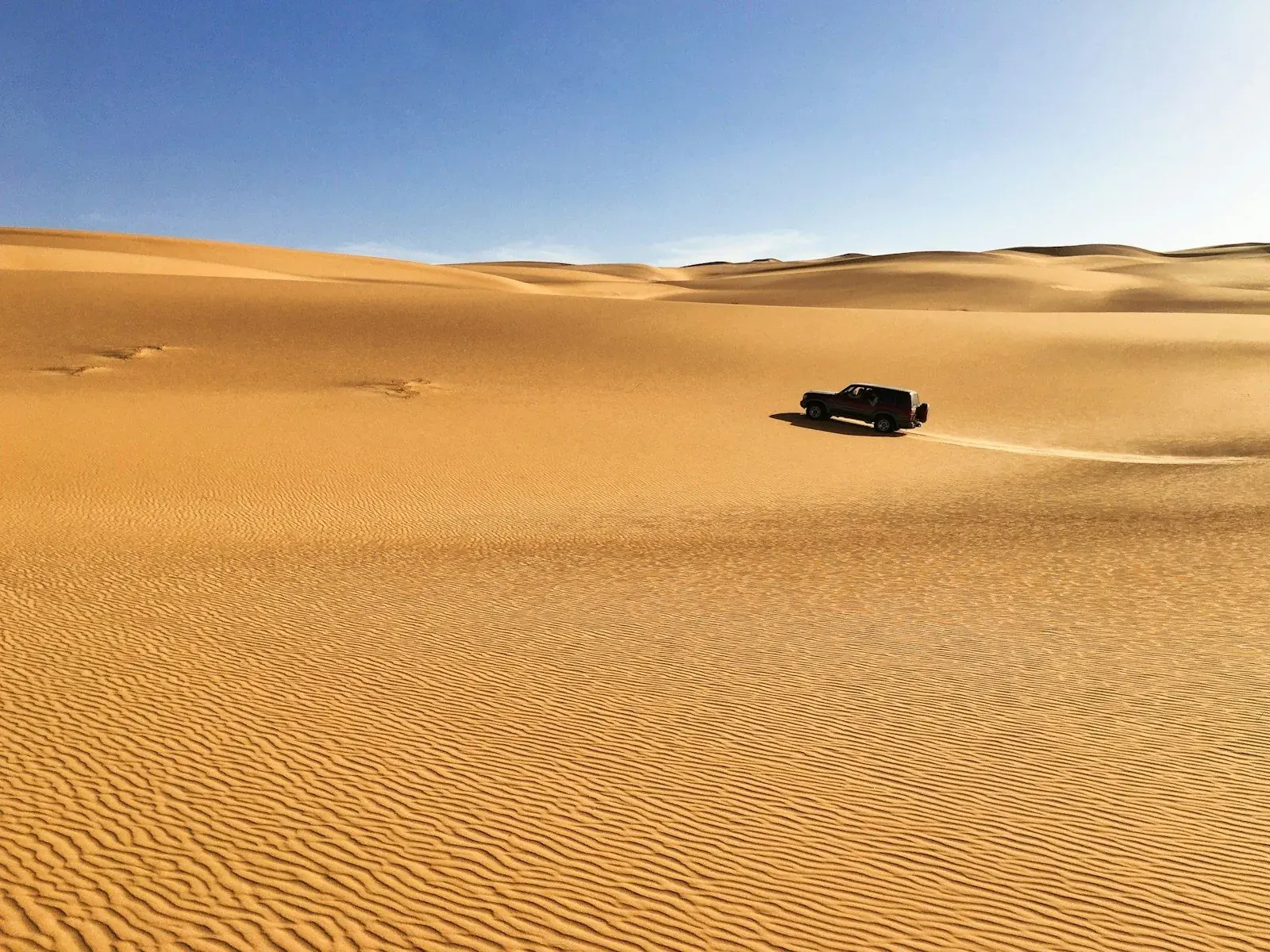
Deserts Punish Overpacking Like Nowhere Else
This guide comes from the back of a Land Cruiser: the dunes and rock art of the Libyan Sahara, the caravan cities and nomad camps of Mauritania, and the Karakum in Turkmenistan, where the desert burns a seventy-meter hole in itself. Different countries, same physics. Heat that empties you by noon, cold that surprises you at midnight, and sand that gets into everything you failed to seal.
Packing for that environment is a discipline, not a shopping list. Every item earns its place or stays home. Here is what the desert miles have taught our team, with opinions included at no extra charge.
The One-Bag Rule of 4x4 Travel
Start with the constraint that shapes everything else. On a desert expedition your bag shares a 4x4 load bed with other guests’ bags, camp equipment, food, and the water supply for the whole group. Space is not negotiable, so the rule is one soft duffel per person, squashable and zippered, plus a small daypack that lives at your feet. Aim for somewhere around 15 kilograms. If you cannot carry your duffel 200 meters across soft sand without stopping, it is too heavy.
Hard-shell wheeled suitcases are the enemy of the load bed. They waste space, rattle against everything, and their wheels are theater in sand. Leave them at the hotel in the capital with your city clothes; most operators, ourselves included, can arrange exactly that.
Layering for 35°C Days and Near-Zero Nights
The desert cliche is heat. The desert surprise is cold. In winter and the shoulder seasons, a Saharan or Karakum night can drop within a few degrees of freezing while the same afternoon touched 35°C in the sun. You are packing for a 30-degree daily swing, and layers are the only answer that works.
Daytime: loose, long, and light beats short and exposed. Long sleeves and long trousers in thin, breathable fabric protect you from sun better than sunscreen ever will and keep you cooler than shorts by noon. Night: a proper insulated jacket, a fleece or wool midlayer, a beanie, and a warm base layer to sleep in. Nobody has ever told us they regretted bringing the down jacket. Plenty have regretted the opposite.
Sun Is a Strategy, Not a Product
Sunscreen is the last line of defense, not the first. The first lines are cover and timing: a wide-brimmed hat with a chin strap (the wind has opinions), a cotton scarf or cheche you can wrap Saharan-style (buy one in a Nouakchott market for almost nothing and wear it home as the best souvenir you own), long sleeves, and sunglasses that seal from the sides, because glare comes off the sand as much as from the sky. High-SPF lip balm, and sunscreen for the backs of your hands, the spot every driver and photographer forgets.
Footwear: The Truths Nobody Prints
You do not need heavy hiking boots for dunes, whatever the gear guides say. Sand is soft; what you need is a closed, lightweight trail shoe that drains heat and shakes out easily, because sand will get in no matter what you wear and the winning move is accepting it. Add sandals for camp, and something with real grip if your route crosses rocky plateaus like the Adrar or the sandstone of the Acacus. Gaiters divide opinion; try them once and decide. And climb at least one dune barefoot at sunset, which is not packing advice, just correct behavior.
Sand-Proofing Cameras and Electronics
Desert sand is airborne abrasive, and it will find every gap. The system that works: everything lives in zip-seal bags or a roll-top dry bag inside your daypack, always closed. Choose one versatile zoom lens and commit to it, because changing lenses in open desert air is how sensors die. Clean with a blower, never a cloth; wiping grinds grit into glass. On windy days your phone works fine from inside a clear zip bag, and it will thank you.
Power is the other half. Wild camps have no outlets; charging happens off the vehicle while driving and at guesthouse stops between desert stretches. Bring a large power bank, spare camera batteries (cold nights drain them faster than you expect), short cables, and a headlamp with a red mode that spares the night vision of everyone else around the fire under a very dark sky.
Water Discipline
The expedition carries the water; the discipline is yours. Plan on drinking three to four liters a day, on a schedule rather than on thirst, because thirst in dry air lags behind what your body has already lost. Electrolyte sachets once a day, not just on the day you feel wrecked. An insulated bottle earns its space by keeping water drinkable instead of tea-warm by 2 p.m. Coffee and whatever evening drink you smuggled both count against you, not toward you; balance accordingly.
What the Camps Provide, So You Can Pack Less
Here is the pleasant surprise: on a well-run desert expedition, the heavy gear is not your problem. Our Sahara-style camps travel with tents, mattresses, blankets, cooking equipment, and a crew that produces hot meals and sweet tea out of apparent nothingness. You are not backpacking. That means no tent, no sleeping mat, no cookware in your duffel; a sleeping bag liner if you like your own layer against the blankets, and a small pillowcase to stuff with a fleece. Ask any operator for their provided-equipment list before you buy anything expensive, and pack to fill the gaps, not to duplicate the truck.
Leave These Behind
Jeans, which hold heat all day and cold all night and dry sometime next week. A second pair of boots; one pair of trail shoes covers the trip. White clothing, which surrenders to dust within an hour of arrival. A hair dryer, for reasons of both wattage and dignity. Valuable jewelry, which has no audience out there and one more way to be lost. And the drone: several desert countries prohibit them outright or demand permits you will not get as a tourist, and confiscation at an airport is a bad first chapter for any trip. When in doubt about an item, the answer is the lighter one.
The List, Condensed
- One soft duffel around 15 kg, plus a daypack
- Loose long-sleeved shirts and trousers in breathable fabric
- Insulated jacket, fleece midlayer, beanie, warm sleep layer
- Wide-brimmed hat with strap, cotton scarf or cheche, side-sealing sunglasses
- Lightweight closed trail shoes, camp sandals, grippy shoes for rock if your route needs them
- High-SPF sunscreen and lip balm
- Zip-seal bags and a dry bag for all electronics
- One camera, one zoom lens, blower, spare batteries
- Large power bank, short cables, headlamp with red mode
- Insulated water bottle and daily electrolyte sachets
- Sleeping bag liner, small pillowcase, compact towel, wet wipes
- Basic first-aid kit, personal medications, blister care
The Test Before You Zip It
Lay everything out the night before you pack, then remove a fifth of it. You will not miss what you cut; you will bless the lighter bag every single day. Desert packing rewards subtraction the way the desert itself does: what remains matters more. If the trip is part of a longer route across several countries, our multi-week expedition planning guide covers the logistics beyond the duffel.
Frequently Asked Questions
Do I need a sleeping bag on a desert expedition?
Usually not on ours: the camps carry tents, mattresses, and blankets, so a liner is enough if you want your own layer. Equipment varies by operator, so ask for the provided-gear list before buying anything.
How cold do desert nights actually get?
Colder than almost everyone expects. In winter and the shoulder seasons, Saharan and Central Asian desert nights can approach freezing, a swing of 30 degrees or more from the afternoon. Pack for both ends of the swing, not the average.
Can I charge camera batteries during the trip?
Yes, from the vehicles while driving and at guesthouses between desert stretches. Wild camps have no outlets, so a large power bank and spare camera batteries cover the gaps.
Are contact lenses workable in the desert?
Workable but demanding: wind and dust make daily disposables plus rewetting drops the only sensible version, and you should carry glasses as a full backup, not a token one.
Should I bring a duffel or a suitcase?
A soft duffel, always. It squashes into the 4x4 load bed alongside camp gear and water; a hard wheeled case wastes space, rattles, and its wheels are useless in sand. Leave the suitcase at your city hotel.
What about laundry on a desert expedition?
Rarely and briefly, at guesthouse stops. Pack quick-dry clothing in colors that forgive dust, plan to re-wear, and treat a sink wash at a guesthouse as a bonus rather than a schedule item.
Packing for Somewhere Specific?